
Reviewed · SEVILLE BIKE TOURS
From Seville: Half-Day Guided Bike Trip to Italica
Itálica is the kind of Roman site that rewards the journey. Instead of arriving by bus and stepping straight into the ruins, you pedal out from Seville through quieter streets, villages, and countryside before walking into a city where emperors Trajan and Hadrian were born. The massive amphitheater is the headline, but the mosaics and remains of private houses may surprise you even more.
I like the easy pace and the chance to see Seville from a bicycle, not just through a coach window. I also like that guides such as Rigo, Danny, Natasha, and Tim add plenty of local history along the way, not just a speech inside Itálica. The main consideration is simple: this is still a five-hour cycling outing, so bring layers, prepare for the weather, and remember that the electric motor helps with effort but does not remove the need to ride.
Key points before you book
- The ride uses electric bikes and mostly bike paths: You get assistance on the way to Santiponce, with much of the route away from busy traffic.
- Itálica is far larger than many visitors expect: The site includes an amphitheater, bathhouse remains, private homes, and striking mosaic floors.
- The archaeological visit has real historical weight: Trajan and Hadrian were born in this Roman city, giving the ruins a direct connection to the Roman Empire’s leadership.
- The route adds a second experience: You see parts of Seville, smaller towns, and countryside instead of treating Itálica as an isolated day trip.
- A traditional Andalusian breakfast is optional: You can stop in Santiponce before entering the archaeological site, but food and drinks cost extra.
- The tour is best for active sightseers: Wheelchair users cannot join, and you need to be comfortable cycling for several hours.
Why Itálica makes a strong half-day trip from Seville
Seville has more than enough sights for several days, but its city center can become a parade of palaces, churches, tiled courtyards, and crowded lanes. Itálica gives you a useful change of rhythm. You leave the old center by bicycle and reach an ancient Roman city without spending half the day in transit.
Itálica was founded as a Roman settlement and later became the birthplace of Emperor Trajan and Emperor Hadrian. Your guide puts the site into that larger story, explaining how Roman life worked in this part of Andalusia and pointing out details that are easy to miss when you walk alone.
The site is not just one surviving monument. It is a broad archaeological area with streets, houses, mosaics, bath facilities, and the amphitheater. Much remains underground or unexcavated, and some important artworks have been moved to museums or private buildings elsewhere. Even so, the exposed sections give you a strong sense of the size and wealth of the ancient city.
That scale is part of the appeal. You are not viewing a single column or a reconstructed wall. You are walking through the remains of an urban center, with enough preserved flooring and building plans to picture how people lived.
More Italica Roman City Tours:
- From Seville: Italica Roman City & Medieval Monastery Tour
★ 4.5 · 1,051 reviews - Historical Italica: Half-Day Guided Tour from Seville
★ 4.5 · 416 reviews - Seville: Game of Thrones and Roman Empire Italica Tour
★ 4.3 · 372 reviews
The ride out from Seville
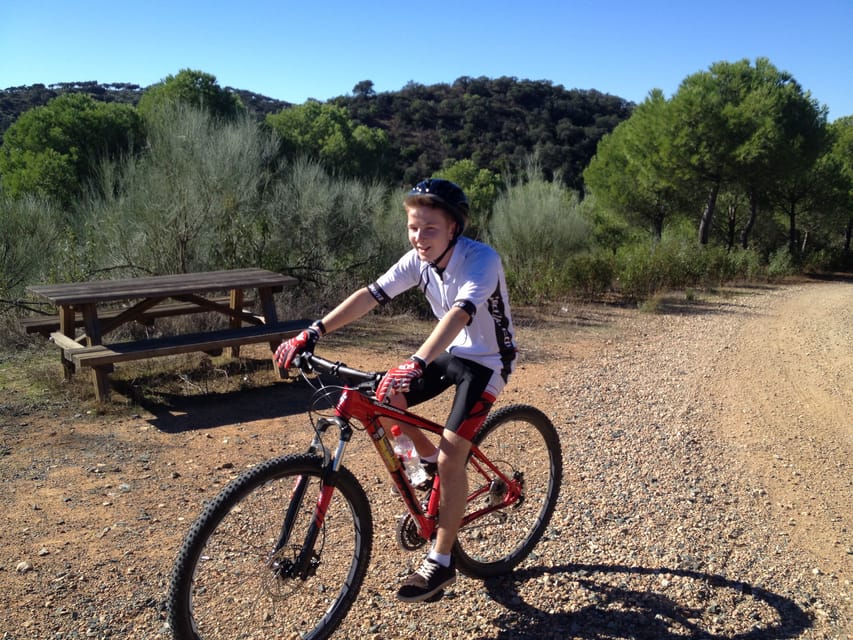
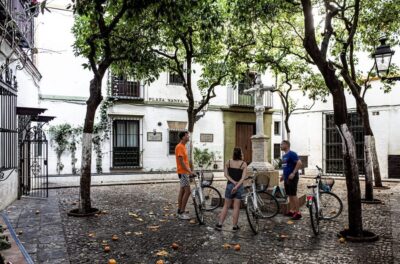
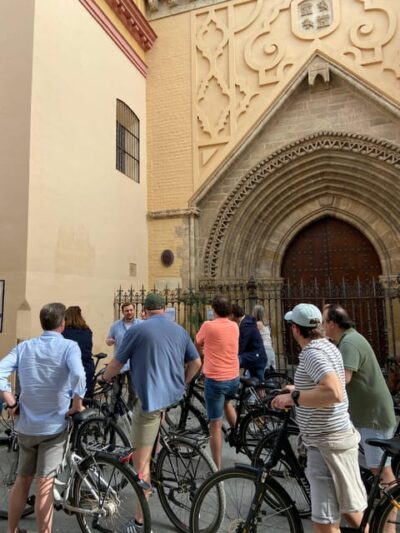
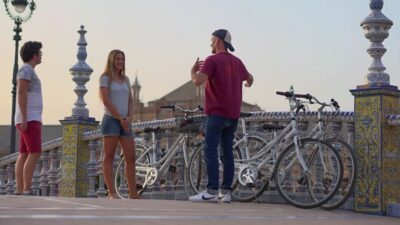
The meeting point is the ATD Bikes shop on a pedestrian street. Allow a little time to find it and get fitted to your bike. The operator provides an electric bike, helmet, and bottled water, and the guide gives you the basic riding instructions before the group leaves.
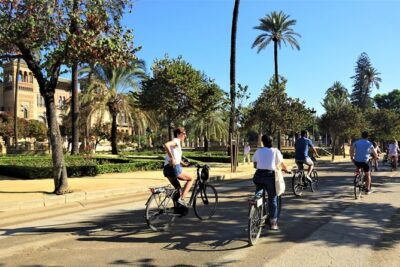
The ride is one of the tour’s best features. Much of the route uses Seville’s extensive cycle network, and the reported route includes bike paths rather than a long stretch beside fast traffic. That makes the outing more approachable if you enjoy cycling but do not want a demanding road ride.
You still need to pay attention. You are riding as part of a group through an urban area, and an electric bicycle can gather speed quickly. The guides help the group move safely through central Seville, with stops at points of interest along the way.
The route out is not simply transport to the ruins. Guides have used the ride to explain parts of Seville that you might miss on a walking tour. Depending on the exact route and group, you may also ride along part of the Camino de Santiago, the historic pilgrimage route through Spain.
Several accounts describe a relaxed pace. That matters because you have time to look around rather than race toward Itálica. The electric assistance also lets you choose how much effort to use. You can rely on the motor, or pedal more actively if you want exercise.
Santiponce and the optional breakfast stop
Santiponce is the modern village beside Itálica. Reaching it by bicycle gives the visit a more local feel than arriving at the archaeological entrance in a taxi or tour bus.
The tour includes time to learn about the village’s traditions and culture. You may also choose to stop for a classic Andalusian breakfast before entering the archaeological site. Breakfast is not included in the $53 price, and the same applies to other food and drinks.
The breakfast stop is a useful option if you have not eaten before setting out. One past outing included a simple local breakfast that was described as inexpensive, and another included time for coffee after reaching the ruins. These stops should be treated as possible parts of the morning rather than guaranteed inclusions, since the listing specifically says food and drinks are extra.
If you want every minute inside Itálica, you can skip breakfast. If you prefer a slower morning and a taste of ordinary Andalusian life, the stop adds something worthwhile.
Entering Itálica’s Roman city
The archaeological site is where the bike tour becomes a walking tour. You leave the bicycles and follow your guide through the Roman remains. The English-language commentary is important here because the ruins need explanation. Small signs can identify a building, but they rarely explain how the pieces fit together.
The private homes are a major highlight. Their remaining floor plans and mosaics show that this was not a poor or marginal settlement. Some houses were large, with multiple rooms and decorative floors. The mosaics are among the most memorable details at the site, especially when you realize that they formed part of everyday domestic space rather than a museum display.
You also see the remains of a large communal bath complex. Roman bathhouses were social spaces as well as places to wash, and the size of the remains helps explain the city’s public life.
The city is only partly excavated. That creates an unusual contrast: the exposed streets and houses are impressive, but you can also see how much is still hidden. Some original pieces are now in museums in Madrid, in aristocratic buildings in Seville, or beneath the modern settlement of New Itálica. The site is therefore not a perfectly preserved time capsule. It is a substantial archaeological record with gaps, removals, and layers of later history.
A guide such as Rigo or Danny can make those gaps easier to understand. Past guide teams have included Natasha, Tim, Luce, Teun, and others, so the exact person depends on your departure date. The common thread is an English-speaking guide who explains Roman customs, local history, and what you are seeing at ground level.
More Seville Bike Tours:
- Seville Highlights Bike Tour (English)
★ 5.0 · 2,225 reviews - Seville: Highlights City Bike Tour
★ 4.8 · 2,168 reviews - Seville: Relaxing City Bike Tour with a Tour Guide
★ 4.8 · 1,588 reviews - Seville: City Sightseeing and Local Culture Bike Tour
★ 4.9 · 1,120 reviews
The amphitheater and its enormous scale
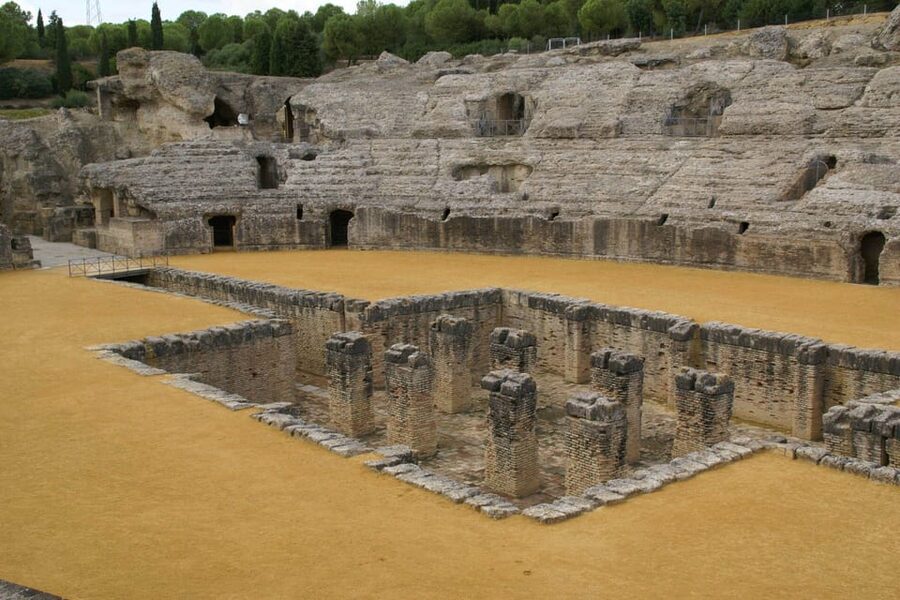
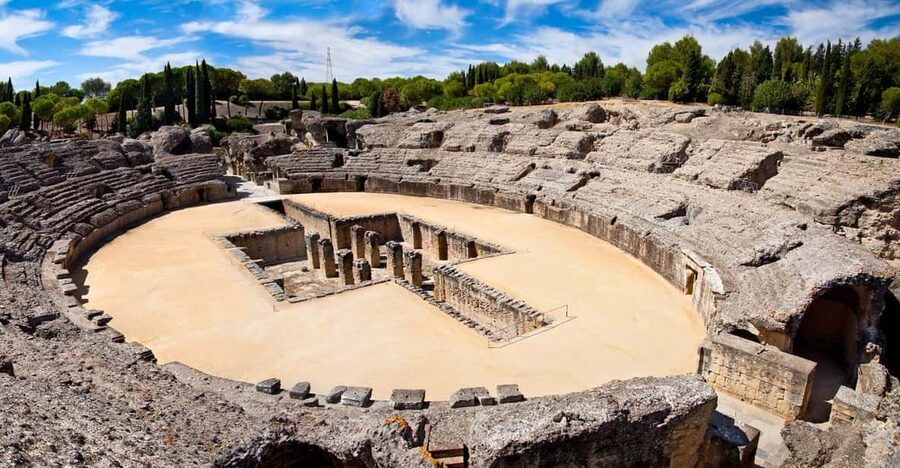
The amphitheater is the emotional center of the visit. It could hold about 25,000 spectators, a striking figure when you compare it with the relatively quiet archaeological site you see today.
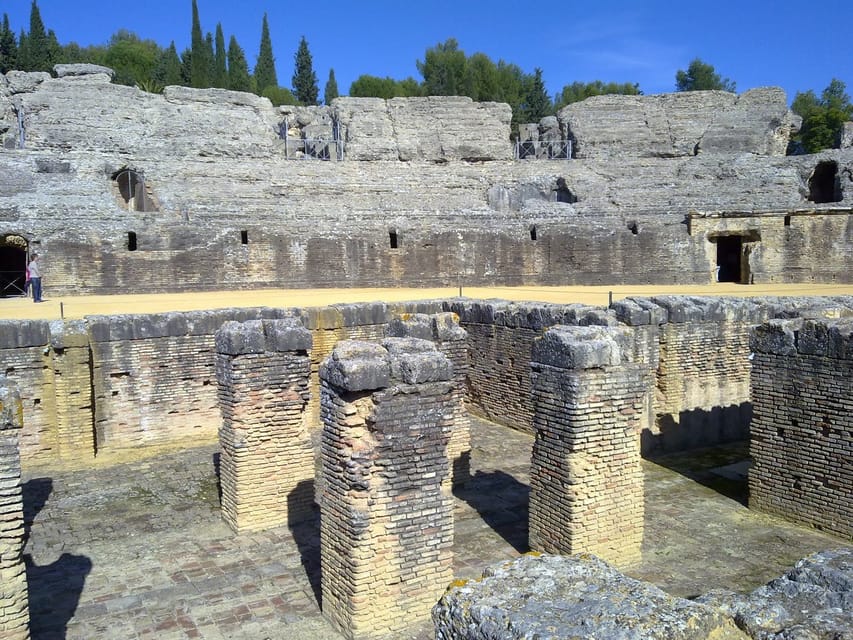
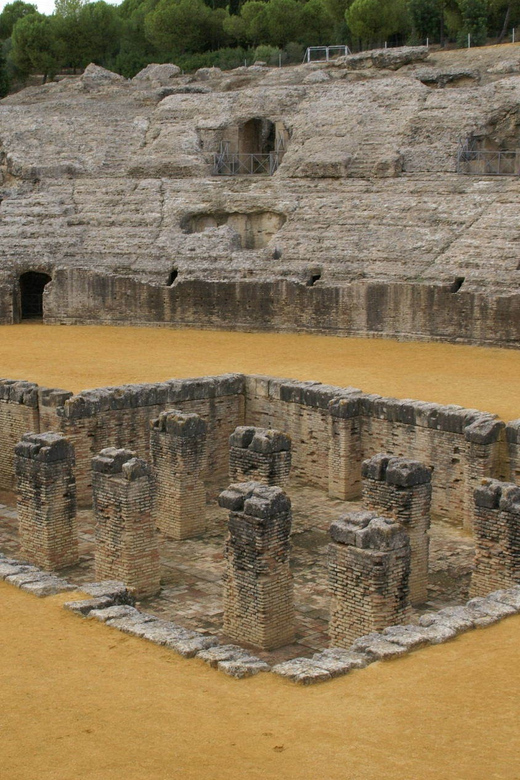
The structure gives you a clear sense of how public entertainment worked in the Roman world. You can look across the arena, walk through passageways, and see the spaces connected with the gladiators. One particularly memorable detail is the route used by fighters and the room where they waited before entering the arena.
The building’s size also helps you understand Itálica’s importance. This was not a tiny provincial outpost with a modest public square. It was a major Roman city with the resources to build large public facilities and elaborate private homes.
The amphitheater has also appeared in modern television, including scenes associated with Game of Thrones. That may be a fun extra for some people, but the ancient structure is more interesting when you consider its original purpose and the people who once filled its seating.
Your guide’s explanation is especially useful here. Without context, you can admire the arches and arena but miss the practical organization behind them. With context, the amphitheater becomes a working venue with entrances, holding areas, crowd movement, and a clear place in Roman public life.
How the five-hour schedule feels
The stated duration is five hours, including the ride from Seville, the visit to Santiponce and Itálica, and the return journey. It is long enough to make the trip feel substantial without taking a full day away from Seville.
The schedule also gives you variety. You cycle through the city, move into quieter surroundings, stop in or near Santiponce, walk among Roman remains, and then ride back. That variety helps the time pass quickly, but it also means you should not think of this as a short museum visit with a brief bicycle transfer.
The return route may differ from the route out. That gives you another look at the area rather than repeating the same streets. You also see more of Seville by bike on the way back, which can help you get your bearings in the city.
The pace is generally described as relaxed, but group size and guide style can affect the day. You should be ready to follow instructions, stay with the group, and pause when the guide explains a site. The electric bike reduces physical strain, yet you remain outside for much of the experience.
What to wear and bring
The best clothing depends heavily on the season. Summer in Andalusia can be hot, while winter mornings can feel cold on a moving bicycle. One winter rider recommended gloves and layers, and that is sensible advice.
Wear comfortable clothing that allows you to pedal and walk around the ruins. You do not need serious cycling gear, and the electric assistance means the ride should not require a hard workout. Still, closed, comfortable shoes are a practical choice because you will walk around the archaeological site after cycling.
Bring sun protection in warm weather and an extra layer in cooler months. The operator provides bottled water and a helmet. A small bag for personal belongings is available on the bike according to one detailed account, but it is best to pack lightly.
Rain can affect the experience. The route is outdoors, and the ruins offer limited shelter. Check the forecast before leaving and dress for conditions rather than relying on the word half-day to mean low effort or low exposure.
Is $53 good value?
At $53 per person, the tour is priced above simply taking public transport to Santiponce and paying the site entrance. But the comparison is not quite that simple.
Your fee covers the electric bike, helmet, bottled water, and an English-speaking guide. It also buys the ride through Seville and the countryside, the safety support of a group route, and the historical explanation at Itálica. You are getting transport, an activity, and a guided archaeological visit in one five-hour package.
One past participant noted an Itálica entrance price of €1.50, though current admission rules and prices can change. Since entrance is not listed among the included items, check whether you need to pay it separately when booking or arriving.
Breakfast, lunch, and other drinks are also extra. Add those costs if you plan to eat in Santiponce. Even with that allowance, the tour can make good financial sense if you value the guide and the bike route. It is less attractive if you only want a quick look at the amphitheater and already have easy transport arranged.
The high overall rating of 4.9 from 126 ratings reflects strong satisfaction, but your decision should rest on the format. The main value is not a luxury vehicle or a private archaeological lecture. It is the combination of active sightseeing, local scenery, and useful historical context.
Who should book this bike trip?
I would recommend it to people who like history but do not want to spend every day indoors. It suits couples, friends, and families with older children who can cycle and follow a guide through city streets.
It is also a good choice if you have already seen Seville’s main center and want a different half-day. You will see parts of the city and surrounding area that do not fit neatly into a standard walking route.
You should think twice if cycling is uncomfortable, if you want a completely private schedule, or if you need step-free access. The activity is not suitable for wheelchair users. It is also not the best pick for someone who wants a short, low-commitment visit to Itálica.
The guide makes a real difference. Names have included Rigo, Danny, Natasha, Tim, Luce, Teun, and Eduardo, depending on the date. Their approach has included Roman history, Sevillian culture, local points of interest, and practical help during the ride.
Should you book the Itálica e-bike tour?
Book it if you want Itálica with context and a change of pace from Seville’s crowded center. The electric-bike route makes the distance manageable, while the archaeological visit gives you more than a quick photo stop.
Skip it if you dislike cycling, need wheelchair access, or prefer to explore the ruins at your own speed without a fixed five-hour schedule. For everyone else, this is a smart way to pair Roman history with everyday Andalusia, especially if the chance to see mosaics, village life, the Camino de Santiago, and one huge amphitheater in a single outing appeals to you.
FAQ
How long does the Itálica bike tour last?
The tour lasts five hours, including the bicycle journey from Seville, the visit to Santiponce and Itálica, and the return ride.
What language is the tour conducted in?
The live tour guide speaks English.
Are electric bikes provided?
Yes. The tour includes an electric bike, along with a helmet and bottled water.
Is food included in the price?
No. Lunch and other food and drinks are not included. You have the option of stopping for a classic Andalusian breakfast in Santiponce, but you pay for it separately.
Where does the tour meet?
The meeting point is the ATD Bikes shop on a pedestrian street in Seville.
Is the Itálica entrance fee included?
The listed inclusions do not mention archaeological-site admission. Check the current entrance arrangements when booking, as admission prices can change.
Is the tour suitable for wheelchair users?
No. The activity is listed as unsuitable for wheelchair users.
Can I cancel the booking?
You can cancel up to 24 hours in advance for a full refund. The activity also offers reserve now and pay later booking.
More Half-Day in Seville
- Seville: Half-Day Flamenco & Tapas Night
★ 4.8 · 27 reviews - Bull Breeding Farm: Guided Half-Day Tour from Seville
★ 4.5 · 24 reviews - Half-Day Wine Tour in Andalusia in small group
★ 4.1 · 19 reviews - Seville Half-Day Walking Tour
★ 5.0 · 12 reviews
Just added around Seville
- The Villages of Andalusia: Full-Day Trip from Seville★ 4.8 · 19 reviews
- From Seville: White Villages Tour★ 5.0 · 9 reviews
- White Villages & Ronda 2-Days Trip & Overnight Stay★ 4.6 · 5 reviews
- Triana Market Tapas Tour★ 4.9 · 12 reviews
- Seville: Guided visit of the Casa de Pilatos with entrance tickets★ 4.3 · 18 reviews
- Your Photo Story in Seville★ 5.0 · 16 reviews
- From Seville: Wine Tourism Half Day Tour★ 4.0 · 17 reviews
- Wine tourism, visit to a traditional winery and wine tasting★ 5.0 · 3 reviews
Seville Bike Tours, compared.
Browse the lists this tour appears in