
Reviewed · SEVILLE BIKE TOURS
Seville: Electric Bike City Tour
Seville is spread out enough that a walking tour can leave you choosing between major sights. This two-hour electric bike tour solves that problem by linking the river, Triana, María Luisa Park, Plaza de España, and the old center in one quick circuit. You get a useful first look at the city without spending the whole day on foot.
I like the route for two reasons: you cover more ground than on a walking tour, and the stops include Seville’s big architectural stars as well as smaller squares and local corners. Guides such as Luis and Fran are praised for clear storytelling, humor, and a real feel for Seville’s past. The main consideration is that riding can feel stop-and-go, and some road sections may make nervous riders less comfortable.
Key points to know before you book
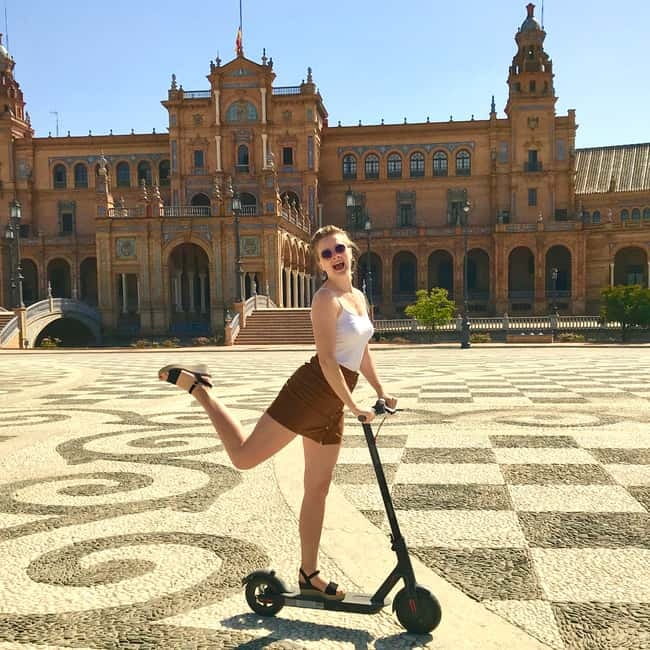
- Plaza de España gets a full 20-minute stop, enough time to look around rather than simply roll past.
- The route connects Seville’s main quarters, including Triana, the riverfront, María Luisa Park, and the old city.
- Luis and Fran are especially strong guides, with English-language tours, lively explanations, and useful restaurant suggestions.
- The electric bike helps in Seville’s heat, but you still need to feel comfortable steering, braking, and riding near traffic.
- This is an orientation tour, not a ticketed interior visit, so the Alcázar, Cathedral, and other monuments are viewed from outside.
- The tour returns to the starting point, the Scoonet store inside Centro Comercial Galería.
Why an electric bike works well in Seville
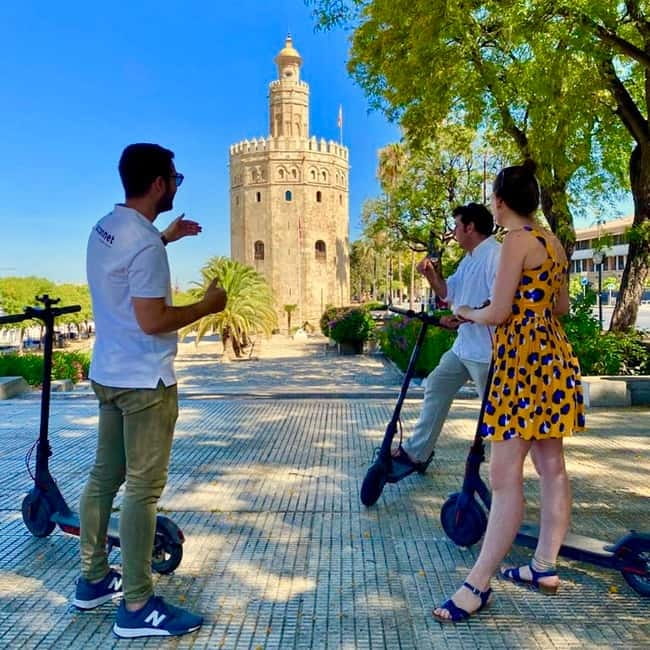
Seville rewards a tour that keeps moving. Its grand sights are not all gathered around one plaza. The Torre del Oro sits beside the Guadalquivir, Plaza de España is in María Luisa Park, and the Cathedral, Alcázar, and Archive of the Indies form another cluster in the historic center.
On foot, you can certainly visit these places, but the distances and summer heat add up. The electric bike gives you a broader introduction in a short time. You ride between sights, then stop for a brief explanation and a look around. That makes this particularly useful on your first day, when you want to understand how Seville fits together before choosing where to spend more time.
The pace is practical rather than leisurely. You are not stopping for long museum visits or sitting down for food. The guide manages the route, points out buildings, and explains why each place matters. Think of it as a moving city lesson with wheels, not a substitute for visiting the Alcázar or Cathedral inside.
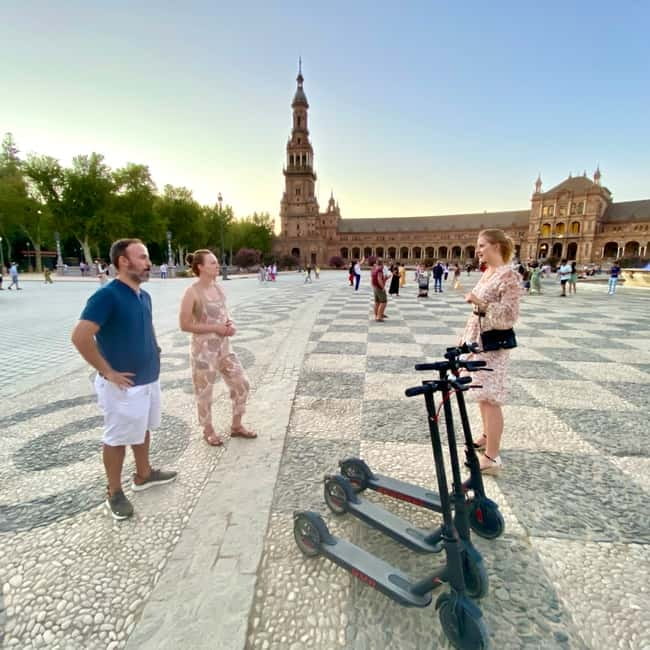
The supplied information calls the experience an electric bike tour, while several comments refer to electric scooters. Because the vehicle description is not entirely consistent, I would confirm the exact equipment when booking. Either way, the important practical point is the same: you will be operating a small electric vehicle and should be comfortable with basic steering and braking.
More Seville Bike Tours:
- Seville Highlights Bike Tour (English)
★ 5.0 · 2,225 reviews - Seville: Highlights City Bike Tour
★ 4.8 · 2,168 reviews - Seville: Relaxing City Bike Tour with a Tour Guide
★ 4.8 · 1,588 reviews
Starting at Scoonet and heading to the river
The meeting point is the Scoonet store, located in Centro Comercial Galería. Look for the shop called SCOONET rather than relying only on a general map pin. The activity ends back at this same meeting point, so you do not need to arrange a separate return transfer.
After a short introduction to the equipment, the route heads toward the Guadalquivir and the Torre del Oro. The tour includes equipment, but hotel pickup, drop-off, food, and drinks are not included. Plan to arrive ready to ride, since the two-hour schedule includes a substantial number of stops.
The guide leads the group, which matters on city streets and at crossings. Luis is often singled out for his grasp of Seville’s history, architecture, and dates. Fran is also praised for clear English, energy, and a friendly approach. The guide language is English or Spanish, depending on the departure you select.
Torre del Oro: Seville’s riverfront marker
The first planned stop is the Torre del Oro, with about 15 minutes to look and listen. This compact riverside tower is one of Seville’s most recognizable landmarks, and its position helps explain the importance of the Guadalquivir to the city.
The stop is valuable because it gives the tour a geographic anchor. From here, you can begin to see Seville not just as a collection of monuments but as a river city connected to trade, travel, and defense. The guide’s explanation adds the context that a quick photograph would miss.
You should not expect an extended visit inside the tower. This is a short exterior stop within a larger route, so keep your camera ready and listen closely. The tour is designed to give you the story and location, then move on.
Puente de Isabel II and the Triana connection
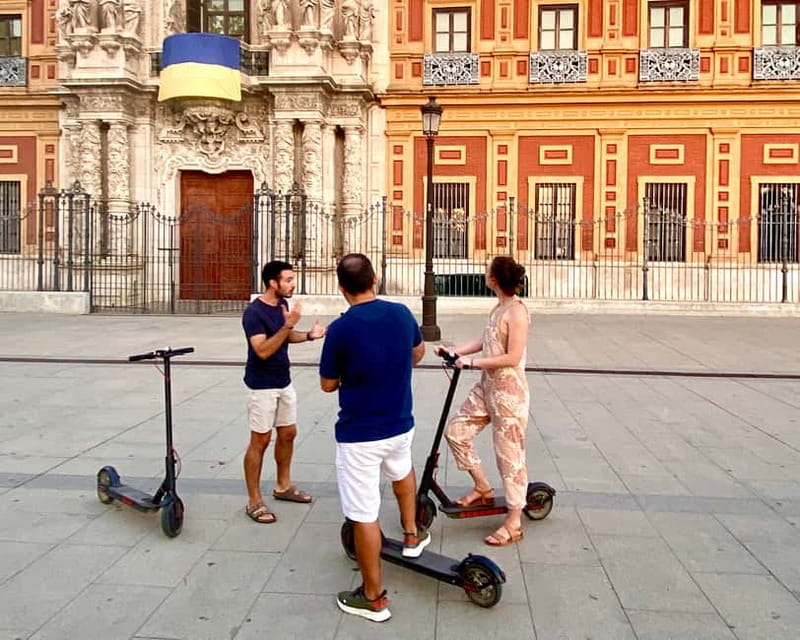
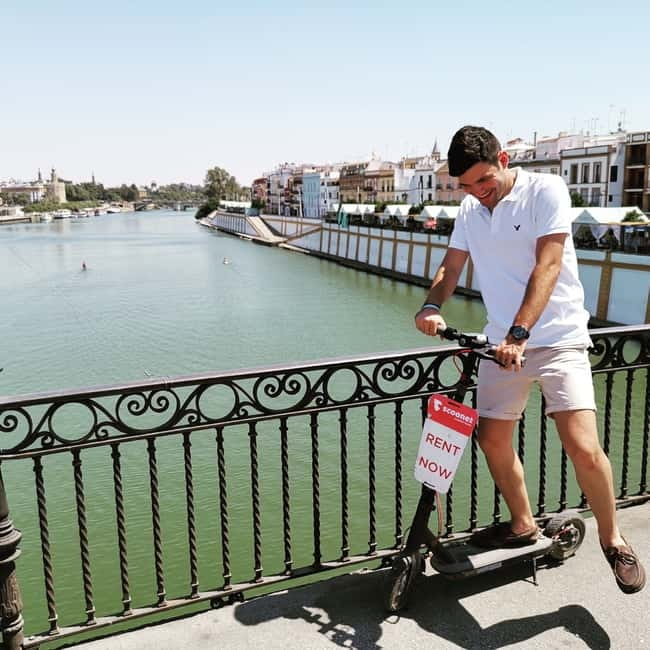
The route then reaches Puente de Isabel II, better known as the Triana Bridge, for about 10 minutes. It is the city’s most popular bridge and a useful crossing point between central Seville and the Triana district.
This is one of the more enjoyable parts of the ride because the bridge offers a clear sense of the city’s two sides. You get river views, a look toward the historic center, and a feel for how Triana relates to Seville proper. The bridge also makes a good photo stop without requiring a long pause.
The short timing means you will not linger. If you are especially interested in Triana’s ceramics, markets, or neighborhood life, mark the area for a later visit. The bike tour gives you the connection, not a full neighborhood walk.
A different sort of afternoon in Seville:
- Seville: Royal Alcázar Entry Ticket
★ 4.6 · 28,378 reviews - Seville: Cathedral and La Giralda Entry Ticket
★ 4.5 · 24,592 reviews - Seville: Live Flamenco Dancing Show Ticket at the Theater
★ 4.7 · 16,396 reviews - Seville: 1-Hour Guadalquivir River Sightseeing Eco Cruise
★ 4.2 · 10,281 reviews
San Telmo Palace and the route into María Luisa Park
The next stop is San Telmo Palace, with roughly 10 minutes. Its ornate exterior adds a different note to the route, shifting from river views to Seville’s grand civic and aristocratic architecture.
The guide’s role matters here. A palace façade can blur into the background when you are moving quickly through a city, but a short explanation gives you a reason to stop and notice its details. The tour is strongest when it links buildings to the wider story of Seville rather than simply naming them.
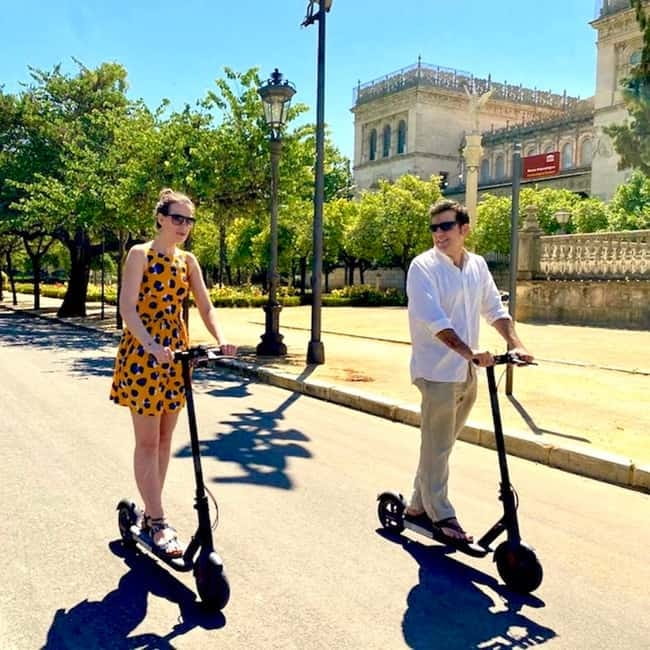
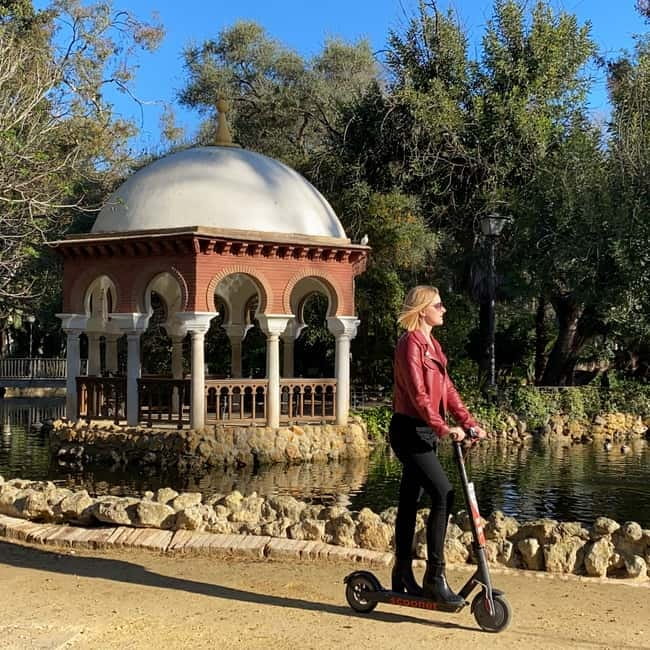
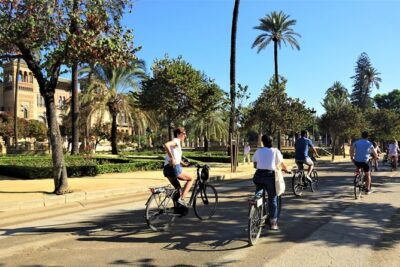
From San Telmo, you continue toward María Luisa Park. This is a welcome change of pace. The park gives you more room to ride and is likely to feel easier for anyone still getting used to the electric vehicle. One rider specifically found the park the least stressful place to ride, compared with sections on the road.
María Luisa Park and Plaza de España
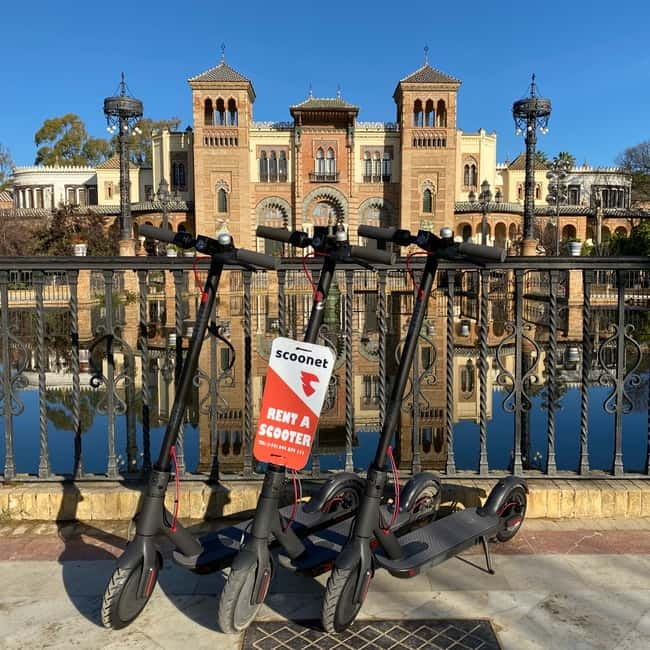
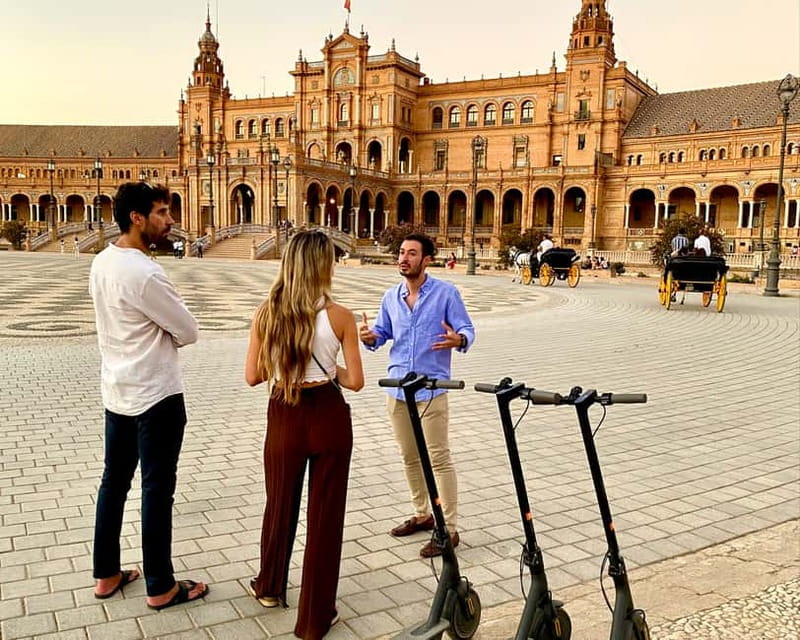
The park receives about 20 minutes, followed by another 20 minutes at Plaza de España. That is generous by quick city-tour standards and gives this part of the itinerary the attention it deserves.
María Luisa Park is not only a green break in the city. It provides the setting for some of Seville’s best-known public architecture and makes the ride feel less like a street transfer. The guide can keep the history flowing while you take in the paths, open spaces, and nearby monuments.
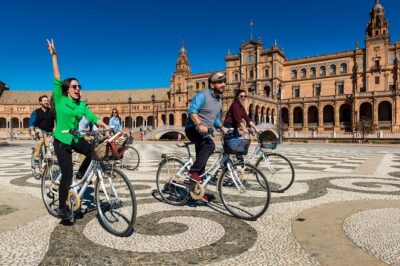
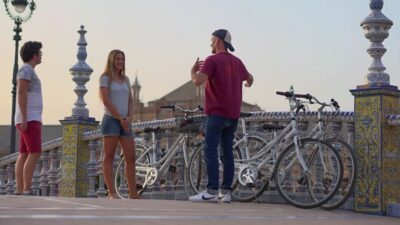
Plaza de España is the visual high point for many people. Its long curved building, tiled alcoves, towers, and open central space make it easy to understand why the plaza is a must-see. You will have enough time to walk around briefly, take photographs, and hear the background before moving on.
This is also the part of the route that works best for families and teenagers. The riding keeps younger visitors engaged, while the plaza offers an immediate visual reward. Several families found that the format held their children’s attention better than a standard walking tour.
Still, do not mistake 20 minutes for a full visit. Plaza de España deserves more time if you want to study the tile work, wander all the way around, or enjoy the park at a slow pace. Use the tour to get oriented, then return later if it becomes a favorite.
The former Tobacco Factory and Seville’s working past
The Antigua Fábrica de Tabacos, or former Royal Tobacco Factory, is scheduled for about 15 minutes. Its scale and formal design show another side of Seville, one tied to industry, administration, and the city’s role in the tobacco trade.
This stop helps break up the run of palaces and religious buildings. You are not seeing only postcard Seville. You are also getting a glimpse of the institutions that shaped daily work and the city’s economy.
Again, the visit is primarily an exterior explanation rather than a long indoor tour. If your main interest is the building’s interior or its later institutional use, you will need separate time beyond this activity. The advantage here is that the guide places it in the route and gives it enough attention to make it memorable.
The Alcázar, Cathedral, and Archive of the Indies
The tour then moves into Seville’s historic center, where three major sights appear close together: the Real Alcázar, Seville Cathedral, and the General Archive of the Indies.
The Alcázar receives about 15 minutes. Its walls and entrances hint at the layers of rulers, styles, and periods that shaped Seville. The guide can point out the relationship between the palace complex and the surrounding old quarter, but you will not have time to explore its courtyards and gardens during this stop.
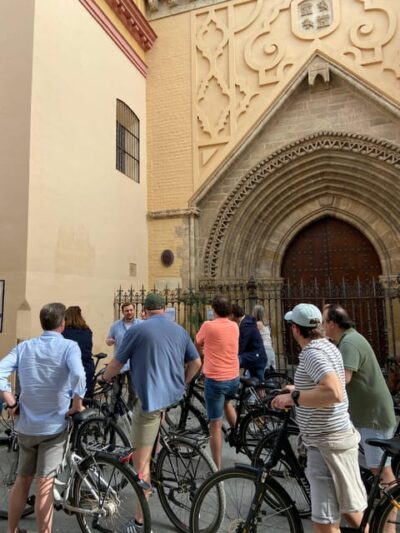
The Cathedral follows, with about 10 minutes. Its scale is difficult to grasp from a single photograph, so even a brief stop is useful. Your guide can explain its place in the city and help you spot key architectural features before you decide if you want a longer interior visit.
The Archive of the Indies is a five-minute photo stop and the shortest scheduled visit. That timing tells you what to expect: a quick look and a concise explanation, not a full exploration. It is a good example of the tour’s overall approach, showing you many important places so you can return to the ones that catch your interest.
These three monuments are close enough that the bike is particularly useful. You do not lose much time walking between them, but you also avoid arriving at the end of the tour having seen only one district.
What the two-hour format really gives you
The listed stops add up to a busy circuit, with only short transfers between some locations. The guide must keep the group moving to fit everything in, so explanations are likely to be focused rather than lengthy.
That is a strength if you want a first look at Seville. In two hours, you see the river, Triana Bridge, San Telmo Palace, María Luisa Park, Plaza de España, the former Tobacco Factory, the Alcázar, Cathedral, and Archive of the Indies. You also get a sense of where each district sits.
It is less suitable if you want long pauses, detailed architectural study, or time inside the monuments. I would book this early in your stay, then use the route as a planning map for the rest of your visit. Several riders found it especially useful on the first day because the guide’s explanations changed how they viewed the city afterward.
The tour can also be stop-and-go. That is normal for a sightseeing route, but people hoping for a continuous ride may find the rhythm less exciting. You spend time listening, standing, repositioning, and riding again.
Riding comfort, children, and safety
The electric bike makes the city easier to cover, but it does not remove the need for attention. You should know how to use the brakes and be ready for road sections. One family had a child fall from a scooter, and the operator helped, but the practical lesson is clear: children need a careful briefing and close attention.
Families with older children and teenagers are likely to get the most from the format. The ride adds variety to the history, and the stops are short enough to keep the day from feeling like a lecture. The tour is also suitable for older adults who are comfortable riding. A couple in their sixties found the route manageable and appreciated the ability to see more than they could have covered on foot.
It is not suitable for people with mobility impairments. That restriction is important because the activity requires you to mount, steer, brake, and ride for much of the two hours. If you are a nervous rider, the park sections may feel easier than the road portions, and you should mention your concerns to the guide at the start.
Guide quality and the value of local stories
The strongest part of this experience is the guide. Luis is repeatedly praised for remembering dates, explaining architecture, answering questions, and making the material entertaining. His background in education comes through in the way he turns facts into a clear story rather than reciting names.
Fran is also noted for excellent English, enthusiasm, and careful organization. Other comments describe guides who were friendly, funny, and able to offer restaurant suggestions at the end. That final advice can be useful, especially when you have just arrived and want something better than the first restaurant near your hotel.
The tour works best when you treat the guide as your introduction to Seville. Ask questions, note the places you want to revisit, and listen for neighborhood and food suggestions. The value is not only the vehicle. It is the combination of orientation, local explanation, and efficient movement.
Is $34 good value for Seville?
At $34 per person, the tour is reasonably priced for a two-hour guided introduction that includes the electric equipment. You are paying for access to a vehicle, a route covering several parts of the city, and a live guide in English or Spanish.
The value is strongest if you are short on time, visiting in hot weather, traveling with children, or arriving in Seville without a clear plan. A walking tour may cost less in some cases, but it will not necessarily cover the riverfront, Triana, María Luisa Park, and the historic center in the same window.
The price does not include monument tickets, meals, drinks, or hotel transfers. Since the scheduled stops are exterior visits and photo stops, budget separately if you want to enter the Alcázar, Cathedral, or another attraction later.
Free cancellation is available up to 24 hours before the activity for a full refund, and you can reserve now and pay later. Those terms help if your schedule in Seville is still changing.
Who should book this Seville ride?
I would choose this tour for first-time visitors who want a quick map of the city. It is also a smart pick for families, teenagers, and anyone who finds a long walking tour tiring or dull.
Book it if you enjoy hearing stories while moving through a city and are happy with short stops. Choose a slower walking tour instead if your main goal is detailed monument interiors, quiet photography, or a deep study of one neighborhood.
For the best use of your time, schedule it near the beginning of your stay. Let the route show you where to return, then revisit Plaza de España, the Alcázar, the Cathedral, or Triana at your own pace.
FAQ
How long does the electric bike tour last?
The tour lasts two hours. Starting times vary, so you need to check availability when booking.
Where does the tour start?
It starts at the Scoonet store inside Centro Comercial Galería. The activity ends back at the same meeting point.
Which languages are available?
The live guide speaks English or Spanish.
Does the tour enter the Alcázar or Cathedral?
The route stops at the Alcázar and Cathedral, but the activity information describes these as sightseeing stops, not interior visits with admission. Monument entry is not listed as included.
Is equipment provided?
Yes. Equipment is included in the tour price.
Are hotel pickup, food, or drinks included?
No. Hotel pickup and drop-off, food, and drinks are not included.
Is the activity suitable for people with mobility impairments?
No. The activity is not suitable for people with mobility impairments because you need to operate the electric bike during the tour.
Should you book it?
Book this tour if you want to see Seville’s main districts quickly, hear useful local history, and keep children or teenagers interested. The route is broad, the price is fair, and guides such as Luis and Fran add much of the experience’s value.
Skip it if you want long, quiet visits inside the monuments or if riding near traffic makes you uneasy. For most visitors who are comfortable on an electric bike, it is a smart first-day introduction, with enough history and practical local advice to shape the rest of your Seville visit.
Just added around Seville
- The Villages of Andalusia: Full-Day Trip from Seville★ 4.8 · 19 reviews
- From Seville: White Villages Tour★ 5.0 · 9 reviews
- White Villages & Ronda 2-Days Trip & Overnight Stay★ 4.6 · 5 reviews
- Your Photo Story in Seville★ 5.0 · 16 reviews
- Triana Market Tapas Tour★ 4.9 · 12 reviews
- Seville: Guided visit of the Casa de Pilatos with entrance tickets★ 4.3 · 18 reviews
- Yoga at María Luisa Park in Seville★ 5.0 · 17 reviews
- From Seville: Wine Tourism Half Day Tour★ 4.0 · 17 reviews
Seville Bike Tours, compared.
Browse the lists this tour appears in