
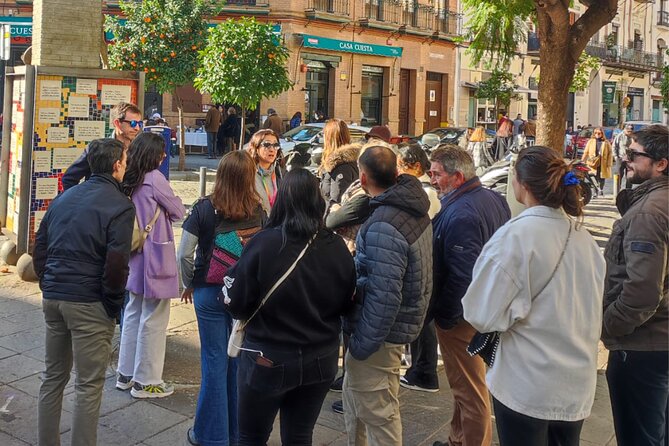
Reviewed · TRIANA TOURS
Complete Triana Tour “Corrales included”.
Triana’s best stories are not all on the postcard route. This two-hour walk crosses the river from the Torre del Oro and goes into old courtyards, former artisan spaces, churches, ceramic workshops, and streets where flamenco, fishing, and neighborhood life still shape the local character. The corrales de vecinos, shared residential courtyards, are the real reason to consider it.
I like the way the tour connects grand sights with small details, from the Triana Bridge and San Jorge Castle to quiet squares and old houses open to the sky. I also like the price: $14 is strong value if you want a guided introduction rather than a quick stroll along Betis Street. The main consideration is pace. The route includes many stops in only two hours, and the tour is conducted in Spanish, so it may feel brisk if you want long church visits or detailed translation.
Key points to know before booking
- Corrales de vecinos: See traditional shared courtyards that reveal how working families once lived together.
- A full Triana route: Cover churches, bridges, market streets, former soap-making tunnels, ceramics, and local religious traditions.
- Spanish-speaking guide: José is specifically praised for explaining Triana’s customs and history with clear communication.
- Mostly easy walking: The route is described as accessible and comfortable, with no hills.
- Best for local context: Choose it if you want more than photographs of the bridge and a plate of tapas.
- Summer planning tip: Stops are made in shade during summer, while winter stops favor sunny spots.
Why Triana is more than a bridge and a row of bars

Triana sits across the Guadalquivir from Seville’s central monuments, but it has long had its own identity. This is a neighborhood of sailors, potters, fishermen, religious brotherhoods, flamenco families, and small workshops. The tour makes that clear by moving between famous views and places you could easily miss on your own.
You begin beside the Torre del Oro, near the naval museum and the cannons at the tower gate. Be careful with the meeting point: the guide waits at the gate next to the cannons, not down by the river. From there, the walk uses the bridges and riverfront as a visual introduction before heading into Triana proper.
I appreciate this structure. You first get your bearings, then learn why the neighborhood feels separate from the old center even though it is only a short walk away. The route is not simply a photo hunt. It explains how the river, port activity, religious life, and crafts shaped Triana.
More Triana Tours:
- Seville: Live Flamenco Show at “Teatro Flamenco Triana”
★ 4.6 · 3,290 reviews - Seville: Baraka Sala Flamenca Show with Drink in Triana
★ 4.8 · 1,761 reviews - Spanish Cooking Class & Triana Market Tour in Sevilla
★ 5.0 · 760 reviews
From the Torre del Oro to San Telmo Bridge
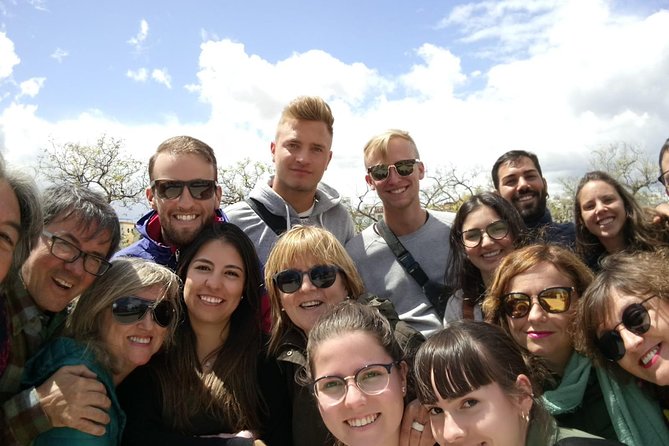
The Torre del Oro is a fitting starting point. Its defensive form recalls Seville’s days as a major river port, and the nearby bridges give you a clear sense of how the city is divided and connected. The guide gives context here before leading you toward the Puente de San Telmo.
At San Telmo Bridge, expect a guided stop rather than a long visit inside a monument. The value is the view and the transition. You are moving from Seville’s monumental riverfront toward Triana’s streets, with the water acting as a historical boundary and a daily meeting place.
The route then reaches the Puente de Isabel II, better known as the Triana Bridge. This is one of Seville’s most photographed crossings, but the tour treats it as more than scenery. You hear what the bridge hides, how it relates to the old fishing port, and why it remains one of Triana’s symbols.
Allow yourself a moment to look back toward the Torre del Oro and forward toward the neighborhood. The bridge is a useful orientation point, and the guide’s local stories should help turn a familiar view into something more specific.
Santa Ana and the religious heart of Triana
The walk continues to the Plazuela de Santa Ana and the Real Parroquia de Señora Santa Ana. Santa Ana is one of the most important religious landmarks in the area, and the stop helps explain why Triana’s identity is tied so closely to churches and brotherhoods.
You then reach the Hermandad de la Estrella, followed by the Chapel of Sailors. The latter is closely linked with the Esperanza de Triana, one of the neighborhood’s most devoted religious traditions. The guide discusses sacred art and local devotion, giving you a look at a side of Seville that does not fit neatly into a standard sightseeing route.
This part will suit you if you enjoy learning how faith works inside daily life. You are not only looking at architecture. You are hearing about processions, local loyalty, and the emotional ties that make a church important to its neighborhood.
The tradeoff is time. With Santa Ana, the brotherhood, the Chapel of Sailors, and later San Jacinto included in a two-hour route, stops may be fairly short. If you want to study every altarpiece or sit quietly inside each church, plan a separate visit afterward.
Corrales, courtyards, and the quieter side of Triana
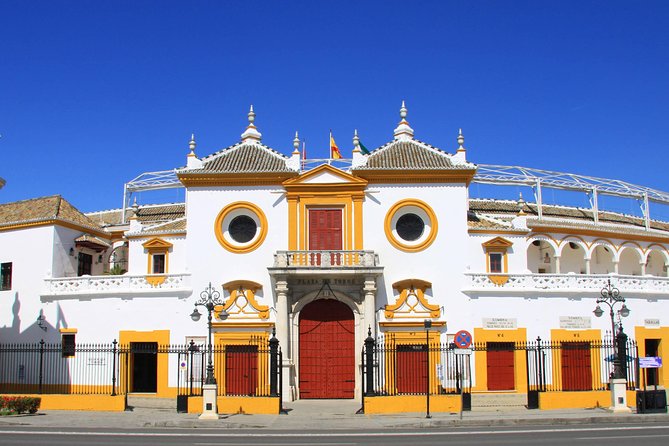
The most distinctive part of the walk is its attention to corrales de vecinos. These shared courtyards were old residential communities built around open central spaces. They offered common areas and close contact among residents, a very different arrangement from the private apartments many visitors know today.
The tour includes traditional courtyards of old houses open to the sky, including the Patio de la Espartería. These spaces help you picture Triana as a lived-in neighborhood, not just a backdrop for flamenco photographs. Look for the contrast between the shared courtyard and the surrounding street, where daily life once unfolded at close range.
I would choose this tour for the corrales alone if your interest is local architecture and ordinary life. Their importance is not flashy. You may find the courtyards modest, worn, or quiet, but that is precisely their appeal. They show how people made homes, community, and privacy within a compact urban setting.
Access can depend on what is open at the time of the walk, so treat these visits as part of the guided route rather than a guarantee of extended private access. The supplied details describe the corrales as included, but do not promise a fixed visit length.
A different sort of afternoon in Seville:
- Seville: Royal Alcázar Entry Ticket
★ 4.6 · 28,378 reviews - Seville: Cathedral and La Giralda Entry Ticket
★ 4.5 · 24,592 reviews - Seville: Live Flamenco Dancing Show Ticket at the Theater
★ 4.7 · 16,396 reviews - Seville: 1-Hour Guadalquivir River Sightseeing Eco Cruise
★ 4.2 · 10,281 reviews
San Jacinto, old soap works, and ceramic craft

The route brings in the old Dominican Convent of San Jacinto, a calmer stop after the streets and bridges. The convent represents the religious orders that left their mark on Triana, and the guide places it within the neighborhood’s wider story.
Another unusual subject is the Royal Almohad Almonas. These former soap-making works are connected with tunnels and with soap that became popular across Europe and America. This is the sort of detail that makes the walk worthwhile. You get a sense of Triana as a place of production and trade, not only worship and entertainment.
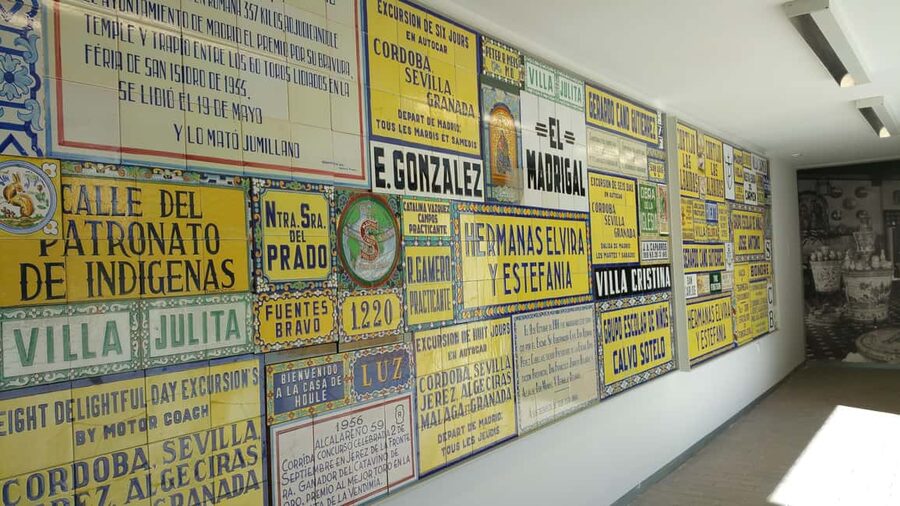
The stop at the Santa Ana Ceramic Factory adds another layer. Triana has long been associated with pottery and tile work, and the factory keeps that craft tradition visible. You should not expect a full hands-on workshop based on the information provided. Instead, the point is to understand why ceramics are part of the neighborhood’s visual identity.
These stops also explain why Triana feels different from Seville’s grand central avenues. Its character comes from work carried out in courtyards, factories, workshops, religious houses, and riverside spaces.
Betis, San Jacinto, and the local food map
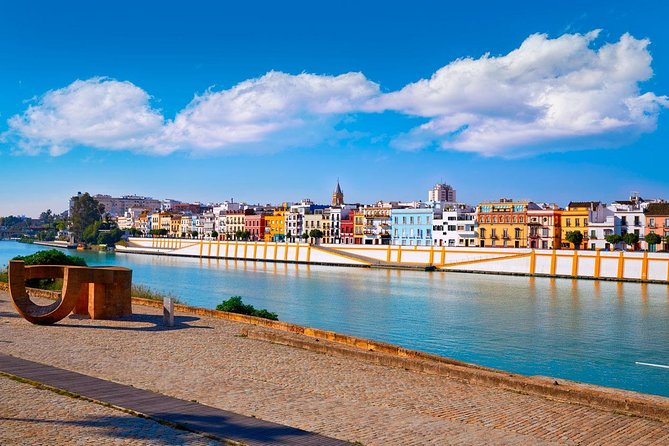
Betis and San Jacinto streets bring you back to the lively public side of Triana. Bars, stories, legends, and everyday movement fill this section of the route. Betis is especially useful for orientation, since it runs beside the river and offers familiar views of Seville.
The guide also gives practical advice about food. You learn where to look for Triana tapas, Sevillian dishes, and food connected with gypsy traditions. This is a valuable feature because the walk ends around the market and Altozano area, where you can continue eating after the guide leaves.
Do not expect the tour price to include tapas. The food advice is part of the guiding, not a tasting program. I would write down recommendations or save them on your phone as you go. Since the tour is in Spanish, ask the guide to repeat the names of places or dishes if needed.
The old fishing port adds another piece to the picture. It links the neighborhood to the river and to the working life that existed before Triana became a popular stop for visitors. The combination of port, bars, churches, and workshops gives the route a useful balance.
San Jorge Castle and the weight of the past
The stop at San Jorge Castle shifts the mood. The site recalls the Spanish Inquisition and the painful history associated with it. The walk does not present Triana as only cheerful flamenco and colorful tiles. It also acknowledges fear, punishment, and the darker chapters connected with this part of Seville.
That balance matters. A good neighborhood tour should let you enjoy the music, food, and local pride without ignoring the suffering that shaped the place. The guide uses San Jorge to connect the physical site with the passage of time.
From there, Calle San Jorge leads you toward the market and Altozano. This is a practical end point because you are left in one of Triana’s most useful areas for food, browsing, and further independent wandering.
The Triana Market and Capillita del Carmen

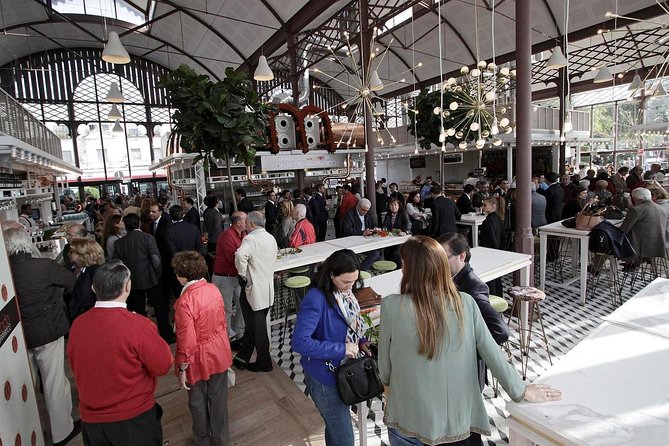
The Triana Market is one of the final essential stops. It gives you a chance to see the neighborhood as a place where people shop and eat, not only as a historic district. The market also makes a good reference point for returning later on your own.
The Capillita del Carmen, near the bridge area, brings the walk back to local devotion. Its small scale contrasts with the larger churches earlier in the route. The guide explains its secrets and why it matters to Triana, showing how an intimate chapel can hold a strong place in neighborhood life.
The route is advertised as ending in the Triana Market area, with the stated finish at Pl. del Altozano, 16A. Another activity note says it ends back at the meeting point, so confirm the exact finishing point when you book or when the guide contacts you. In either case, include a phone with WhatsApp. The operator uses it to send meeting instructions and contact you if you are delayed or lost.
Is two hours enough for this many places?
Two hours is enough for an introduction, but not for long visits at every stop. The route lists the Torre del Oro, two bridges, Santa Ana, two religious sites, the Chapel of Sailors, the market, San Jorge Castle, Calle San Jorge, ceramics, courtyards, soap works, and more.
That is a lot. You should expect a walking overview with guided explanations, not a slow architectural inspection. The advantage is range. You see how the pieces connect, then return later to the places that interest you most.
The route is described as accessible and comfortable, without hills, and wheelchair accessible. Children and teenagers occupy a seat, so include everyone in the reservation count. Speakers are not allowed, which suits the quiet courtyards and religious sites.
The guide speaks Spanish. José is praised for communicating the neighborhood’s traditions, customs, and history clearly. If you do not understand Spanish, this is not the best choice for detailed historical content, though the sights can still be enjoyed visually.
What you get for $14
At $14 per person, this is a low-cost way to add structure and local context to a day in Seville. You are paying for a guide through places that are easy to pass without understanding, especially the corrales, old production areas, and religious landmarks.
The value is strongest if you are new to Triana. You get a broad map of the neighborhood, food suggestions, and enough background to make a later independent visit more rewarding. It is less useful if you already know Triana well or prefer to spend an hour inside one church or museum.
Free cancellation up to 24 hours before the activity and reserve-now, pay-later booking make it easier to fit into a changing schedule. Check the available start times, and keep the summer shade plan or winter sun plan in mind when choosing your day.
Who should book this Triana walk?
Book it if you want a Spanish-language neighborhood tour with local customs, religious traditions, crafts, and food advice. It is especially suitable for first-time visitors who have seen Seville’s center and want a fuller sense of the city across the river.
Families can use it as a manageable introduction, since the route has no hills and is wheelchair accessible. People interested in flamenco, ceramics, old housing, churches, and urban history will get the most from it.
Skip it if you need an English-speaking guide, a slow museum-style visit, or guaranteed long access inside every building. The route is broad and brisk. Still, for $14, it offers a smart way to understand why Triana feels like much more than a pretty bridge and a row of riverside bars.
FAQ
Where does the tour start?
Meet at the gate of the Torre del Oro, next to the cannons. The meeting point is not down by the river.
Where does the tour finish?
The route information places the finish around Triana Market and at Pl. del Altozano, 16A. Another activity note says it ends back at the meeting point, so confirm the exact finish with the operator.
How long does the tour last?
The walking tour lasts two hours.
What language is the tour in?
The live guide speaks Spanish.
Is the tour wheelchair accessible?
Yes. The route is described as accessible and comfortable, with no hills.
Does the tour include Triana’s old courtyards?
Yes. The experience includes corrales de vecinos and traditional courtyards of old houses open to the sky.
What major places are visited?
Stops include the Torre del Oro, San Telmo Bridge, Triana Bridge, Santa Ana, the Chapel of Sailors, the Hermandad de la Estrella, Triana Market, San Jorge Castle, Calle San Jorge, and the Capillita del Carmen.
Is food included?
No food or tapas are listed as included. The guide provides advice about where to eat Triana, Sevillian, and gypsy tapas.
What should I include when booking?
Include a mobile phone with WhatsApp. The operator uses it to send directions and contact you the day before or the day of the tour.
Just added around Seville
- The Villages of Andalusia: Full-Day Trip from Seville★ 4.8 · 19 reviews
- From Seville: White Villages Tour★ 5.0 · 9 reviews
- White Villages & Ronda 2-Days Trip & Overnight Stay★ 4.6 · 5 reviews
- Triana Market Tapas Tour★ 4.9 · 12 reviews
- Seville: Guided visit of the Casa de Pilatos with entrance tickets★ 4.3 · 18 reviews
- Your Photo Story in Seville★ 5.0 · 16 reviews
- From Seville: Wine Tourism Half Day Tour★ 4.0 · 17 reviews
- Wine tourism, visit to a traditional winery and wine tasting★ 5.0 · 3 reviews
Triana Tours, compared.
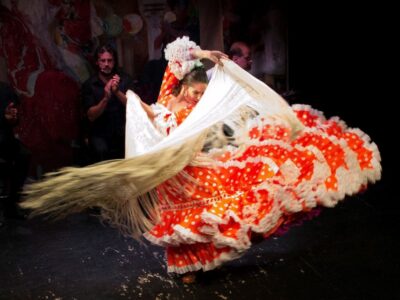
Live Flamenco Show at “Teatro Flamenco Triana”
Read our review →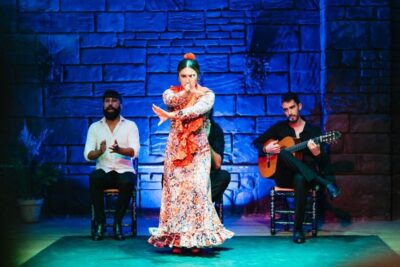
Baraka Sala Flamenca Show with Drink in Triana
Read our review →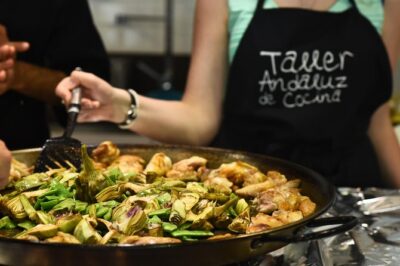
Spanish Cooking Class & Triana Market Tour in Sevilla
Read our review →
3.5-Hour Spanish Cooking Class & Triana Market Tour
Read our review →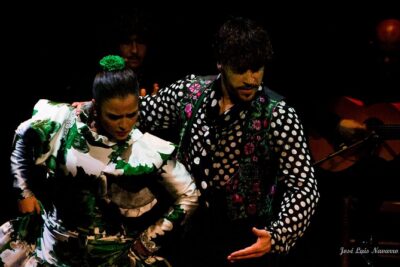
Flamenco Show Tickets to the Triana Flamenco Theater
Read our review →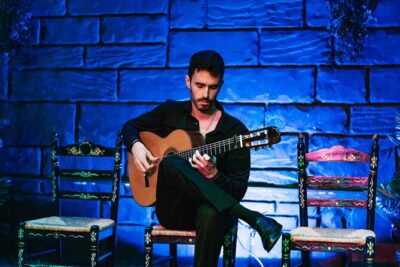
Browse the lists this tour appears in