
Reviewed · SEVILLE GAME OF THRONES TOURS
Seville: Game of Thrones and Roman Empire Italica Tour
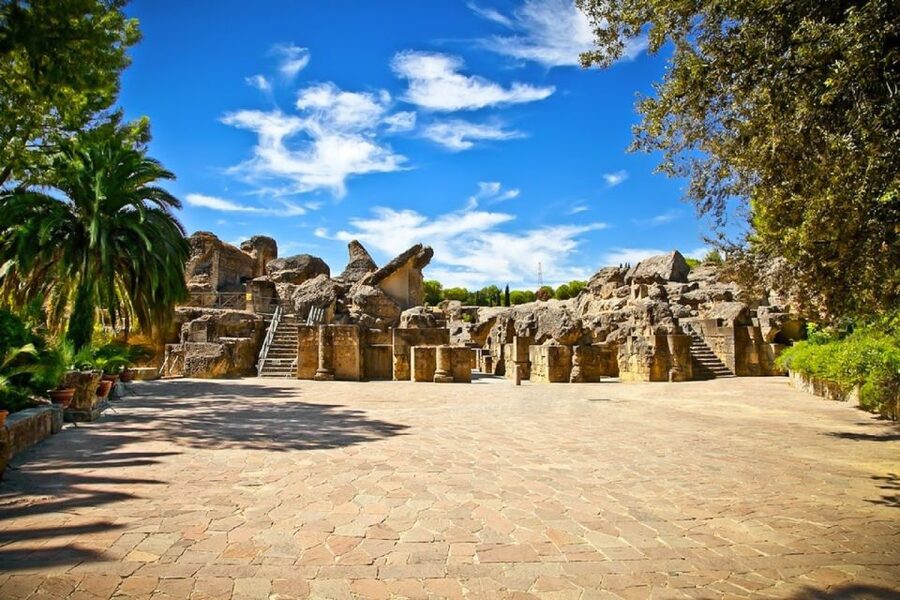
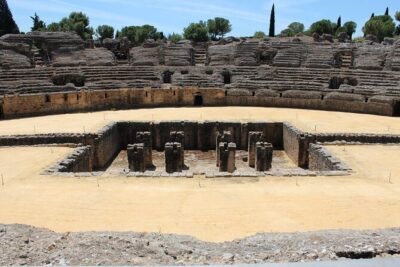
The most striking part of this tour is the Roman amphitheater at Itálica, where Daenerys, Jon Snow, Cersei, and other characters met in Game of Thrones. You can walk through the arena and its surrounding passages, standing in the place used for the Dragonpit scenes.
I like the combination of television spectacle and serious archaeology. I also like the guides, especially Jesús and Carlos, who are praised for their humor, clear explanations, and talent for turning broken walls into a readable story. The main drawback is simple: this is mostly a Roman ruins tour, with only a brief Game of Thrones connection.
Key points to know
- The amphitheater is the main attraction: Walk around the arena and see the tunnels and spaces used in the show.
- Roman history takes most of the tour: Expect information about homes, mosaics, citizens, gladiators, and the ancient city.
- The mosaics are a highlight: Casa del Mosaico Planetario and the other Roman houses show how richly decorated Itálica once was.
- Guides make the difference: Jesús, Carlos, Alberto, Patricia, and other guides have received strong praise for lively storytelling.
- Transport is not included: You must reach the archaeological site in Santiponce yourself from Seville.
- The 90-minute schedule can run longer: Allow extra time if you have another booking afterward.
Itálica: Roman ruins with a television afterlife
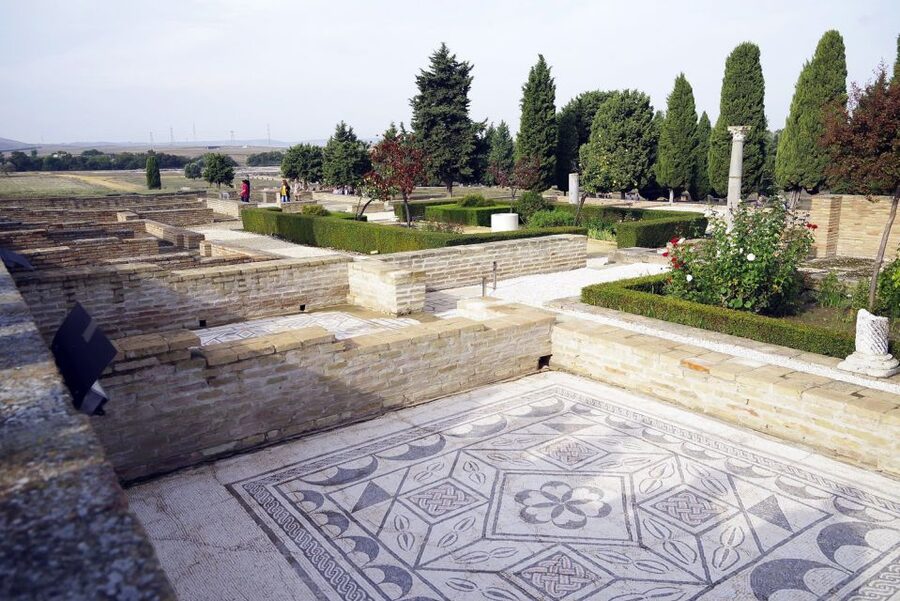
Itálica sits in Santiponce, outside Seville, and gives you a rare chance to walk through a Roman city rather than simply view a single monument. The site includes streets, large private homes, mosaic floors, marble remains, and an amphitheater built for crowds of about 25,000 people.
That scale helps explain why the location worked so well for Game of Thrones. The amphitheater already had the drama the production needed: a broad stone arena, dark passageways, and enough space to suggest a meeting place for rival rulers facing a common threat.
Still, you should set your expectations correctly. The television connection is the hook, but Roman archaeology is the substance. The Game of Thrones material may take only a short portion of the visit. If you arrive expecting a scene-by-scene production tour, you may feel shortchanged. If you are happy to use the show as an introduction to an ancient site, the balance works much better.
The tour begins at the main entrance of the archaeological complex. Your guide gives a short introduction before leading you through the remains. The route is compact, but it covers several important areas and includes time for photographs.
More Seville Game of Thrones Tours:
- Full Alcázar History Seville and introduction Game of Thrones Tour
★ 4.0 · 34 reviews - Seville: Games of Thrones and Roman Empire Italica Tour
★ 4.5 · 30 reviews - Seville Royal Palace and Game of Thrones Tour
★ 3.8 · 29 reviews
The amphitheater and the Dragonpit scenes
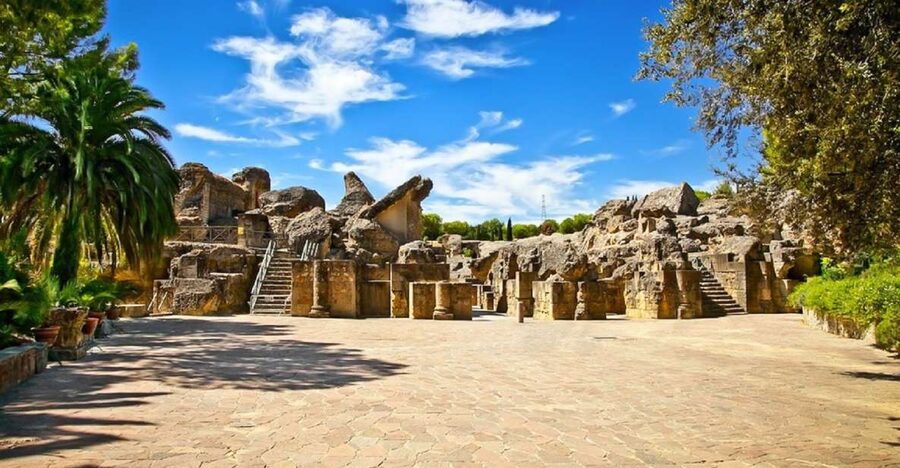
The amphitheater is the strongest part of the visit, both for television fans and for anyone interested in Roman public life. You first see the arena as an ancient building, then recognize it as the setting used for the Dragonpit in the seventh and eighth seasons of Game of Thrones.
The filming connection is easy to understand once you are inside. The stone seating and arena create a powerful sense of scale, while the underground passages add a darker, more cinematic feel. The tour allows you to walk around the amphitheater and see the tunnels circling the arena, an especially good detail if you want more than a quick photo from the entrance.
I would save your best photographs for this part. The amphitheater is more impressive in person than a television still can suggest, and the open space makes it easier to appreciate how many people the building once held.
The Roman story matters here. This was not simply a backdrop for fictional kings and queens. It was a working public venue connected to the Roman taste for spectacle, including gladiatorial contests. The guide helps you picture how the structure functioned, rather than leaving you to look at a few large stones without context.
One practical point: the amphitheater comes late in the route according to the planned schedule. Do not assume you can leave after the opening section and still see the main filming location. Stay with the group until this final major stop.
Domus Exedra and the homes of Roman citizens
After the initial introduction, the tour moves through the remains of Roman houses, or domus. Domus Exedra helps show how the wealthier residents of Itálica lived and how a private home could include formal rooms arranged around decorative spaces.
The value of this stop is not just the surviving walls. It gives you a way to read the entire city. Public monuments tend to dominate visits to Roman sites, but the houses explain daily life, social status, decoration, and domestic comfort.
Much of the site is in ruins, so you need the guide to point out what each section once meant. Several visitors have found that a guided visit makes a major difference here. Without explanation, you may see foundations and fragments. With a clear account, those remains become rooms, courtyards, and a home used two thousand years ago.
The guides also add a human touch. Jesús has been praised for mixing useful facts with humor, while Carlos is often described as a strong storyteller. That style suits Itálica, where imagination is needed to connect the surviving stones with the finished Roman city.
Domus de Neptuno and Itálica’s mosaic floors
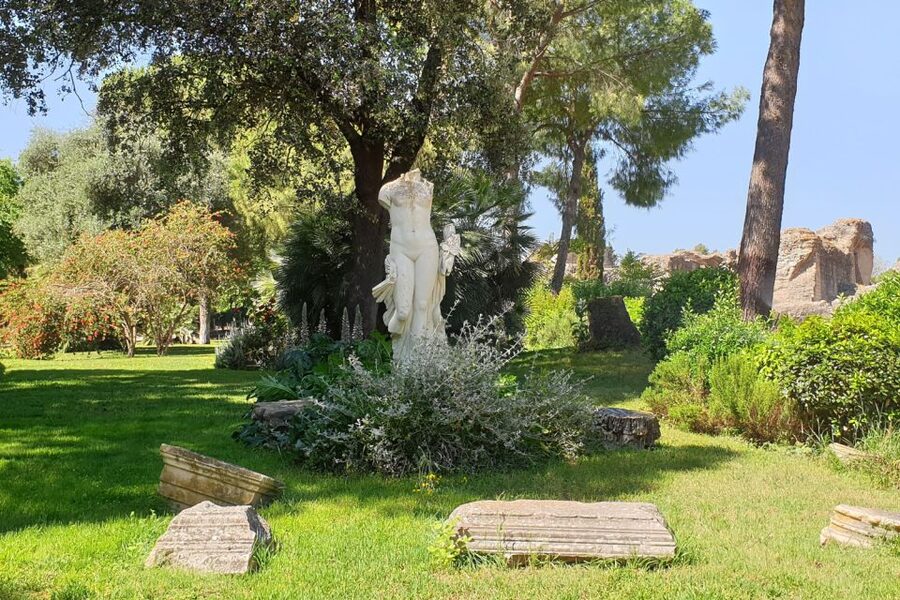
Domus de Neptuno is one of the stops that makes the archaeological site feel more than a collection of walls. It forms part of Itálica’s notable group of mosaic floors, which rank among the best preserved and most interesting features of the complex.
Mosaics can be easy to rush past, especially on a hot day. Do not. Look at the patterns, the layout of the rooms, and the amount of work required to create a decorated floor from thousands of small pieces. These surfaces offer a direct look at Roman taste and wealth.
Your guide explains what you are seeing and places the decoration within the wider setting of Roman domestic life. That context is important because the mosaics are not isolated works of art. They belonged to houses designed to impress, and they help show how residents used decoration to signal status.
The stop is also a reminder that restoration continues at Itálica. Archaeological work is still revealing details, and some areas may feel less finished than a polished museum display. For me, that is part of the appeal, though visitors seeking a fully reconstructed Roman city should expect a more fragmentary experience.
More Italica Roman City Tours:
- From Seville: Italica Roman City & Medieval Monastery Tour
★ 4.5 · 1,051 reviews - Historical Italica: Half-Day Guided Tour from Seville
★ 4.5 · 416 reviews - Visit to Italica Roman Ruins Tour tickets included
★ 4.5 · 285 reviews - Seville: Italica Roman Ruins City Tour
★ 4.2 · 147 reviews
Casa de los Pájaros and the shape of a Roman neighborhood
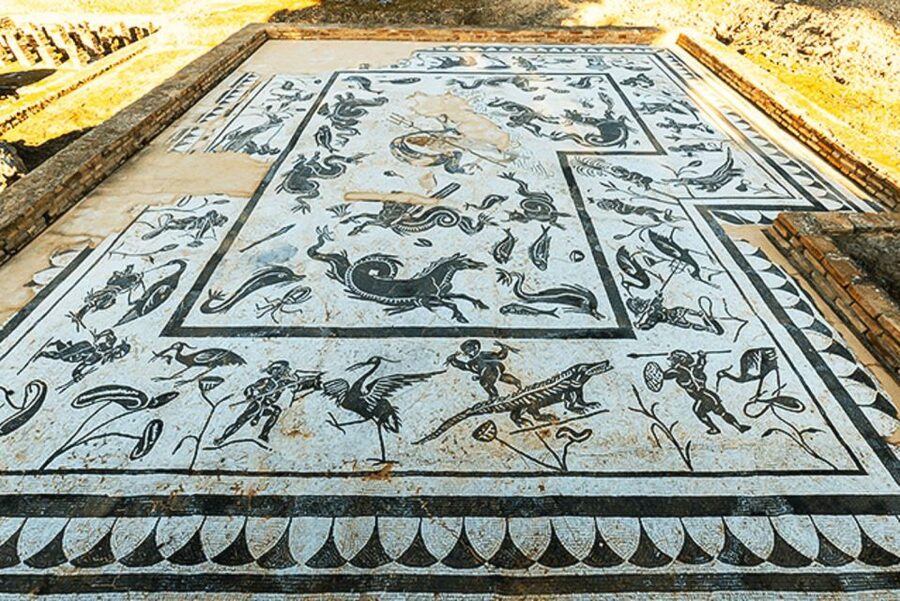
Casa de los Pájaros offers another look at private Roman architecture. The house helps you understand how rooms were arranged and how the ancient neighborhood fitted together.
The tour does not simply rush from one famous feature to the next. It moves across the residential area, which gives you a sense of Itálica as a community. You can see that this was not only an amphitheater with a few nearby ruins. It was a substantial Roman settlement with homes and public spaces.
I find this part especially useful for visitors who have already seen major Roman monuments in Italy or Greece. The scale may not match Rome’s biggest sites, but the surviving homes and floors can be remarkably rewarding. One visitor compared the preservation favorably with Roman ruins in Italy and Greece, particularly because the mosaics and domestic remains remain easy to appreciate.
The drawback is that the site can be visually subtle. Some rooms are represented by low walls or partial foundations, and the experience depends heavily on the guide’s explanation. This is not a place where every stop explains itself.
Casa del Mosaico Planetario and the final Roman details
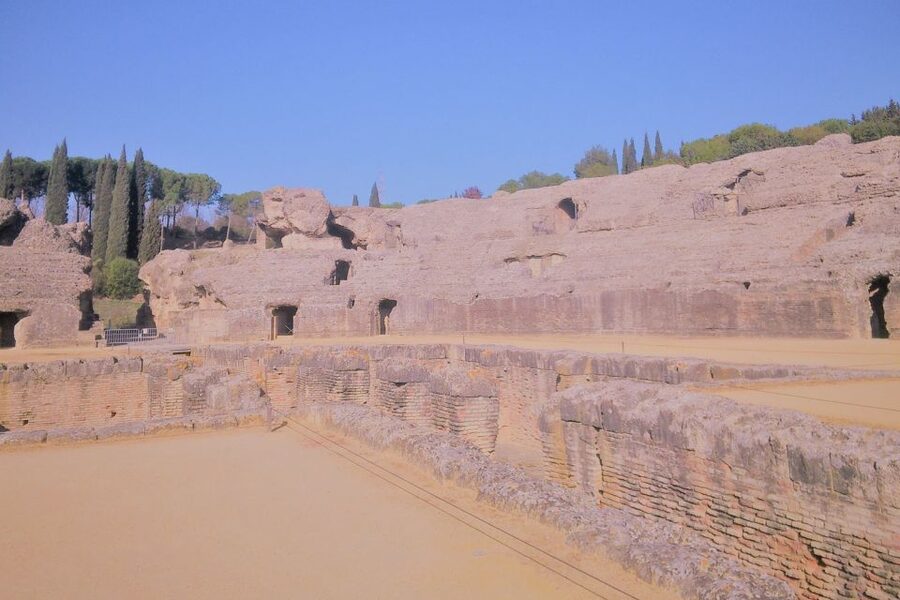
Casa del Mosaico Planetario is another important mosaic stop and helps round out the tour’s picture of Roman decoration. The name points to its planetary design, giving you a chance to see how themes, patterns, and imagery were used in an affluent home.
By this point, the sequence of houses makes more sense. You have already seen the amphitheater and learned about public spectacle. These domestic spaces shift attention to private life, showing what residents might have valued inside their own homes.
The route is planned as several short guided visits of roughly 15 minutes each, followed by about 30 minutes at the amphitheater. In practice, the total visit may take longer than the stated 90 minutes. One visitor found that the tour ran past two hours, while another found the 90-minute version just right.
Plan with some flexibility. If you have a tightly timed lunch, museum entry, or return trip, avoid scheduling it immediately afterward. The guide may pause for questions, photographs, or extra explanation, and that is part of what makes a guided visit worthwhile.
What the guides add to the visit
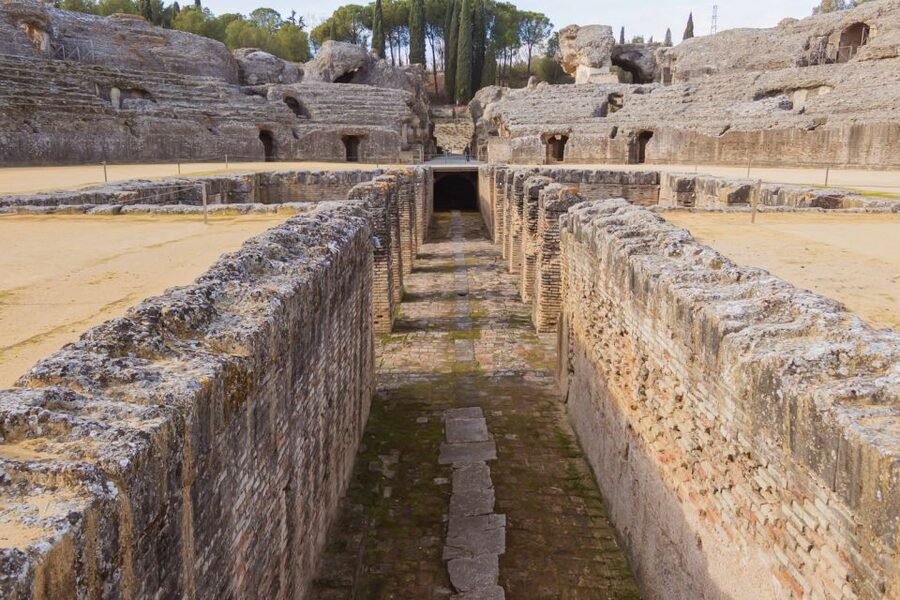
A good guide is particularly valuable at Itálica because the site does not present a complete ancient city at a glance. You need help connecting scattered walls, room plans, mosaics, and the amphitheater into one story.
The strongest praise has gone to guides including Jesús, Carlos, Alberto, and Patricia. Jesús is often described as funny, engaging, and ready to answer questions. Carlos has been singled out for strong storytelling and a clear passion for archaeology. Alberto has also been praised for his energy and broad knowledge of the area.
The guide language options are Spanish, English, French, and Italian. Make sure you select the language that suits you when booking, since the quality of the experience depends on being able to follow the explanations.
The tone appears friendly rather than stiff. That suits a site where a dry lecture could make low walls feel dull. At the same time, the best reason to book is not entertainment alone. The guides explain what you are looking at and help you picture the Roman city behind the remains.
The Game of Thrones question: is it really a TV tour?
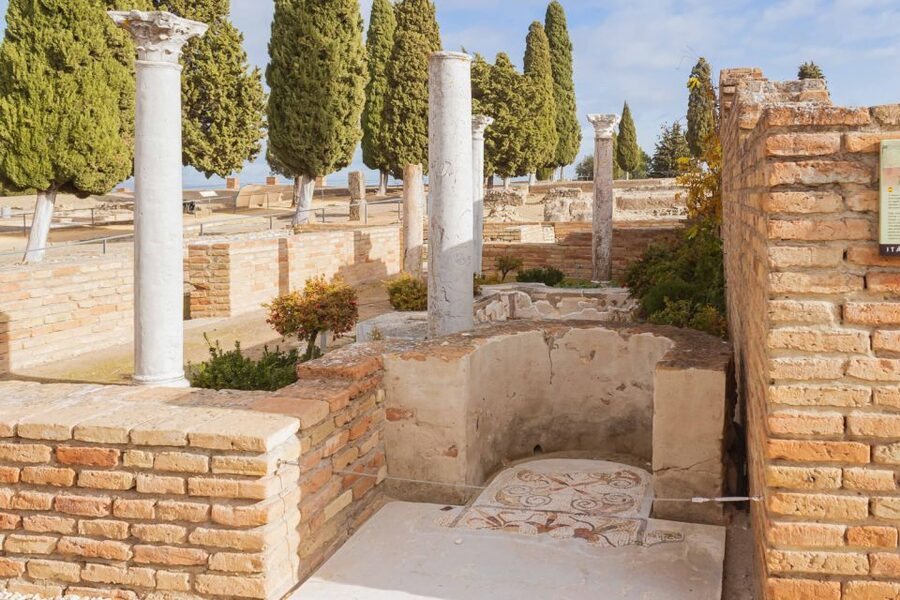
This is the most important issue to settle before you book. The tour title gives Game of Thrones top billing, but the actual visit focuses on Itálica’s Roman past.
You will see the amphitheater used for the Dragonpit scenes, and that is a genuine highlight. You can stand in the arena, take photographs, and connect the space with the meeting involving Daenerys, Jon Snow, Cersei, and the other major characters.
What you should not expect is a long production talk about filming techniques, costumes, actors, or a detailed breakdown of every scene. The Game of Thrones discussion may be limited to a short explanation of the location. Several visitors who enjoyed the tour still felt the television label promised more than the visit delivered.
My advice is to book this if you like Roman history and also enjoy Game of Thrones. Do not book it solely for behind-the-scenes television information. The Roman content is not a filler between filming locations. It is the main event.
Price, timing, and getting to Santiponce
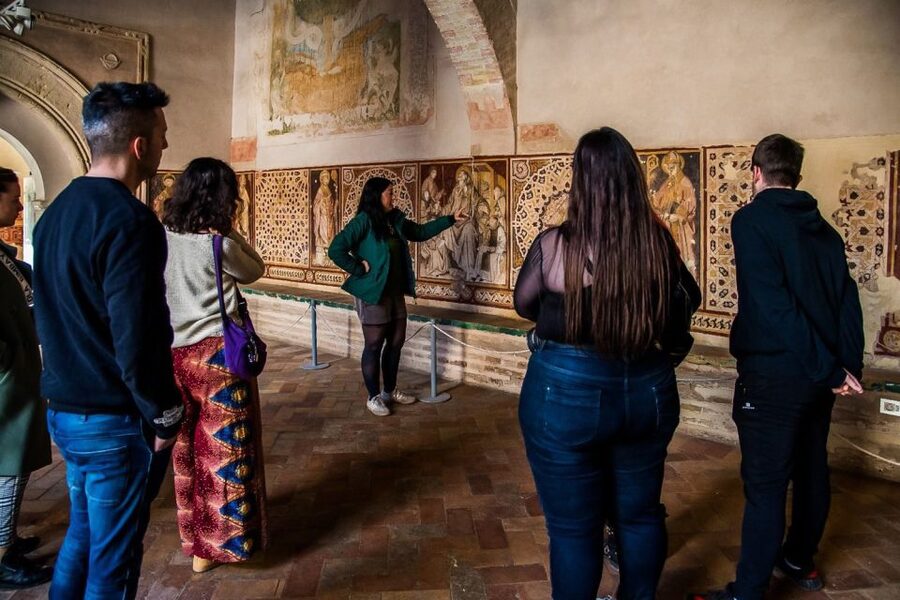
At about $21 per person, the tour offers good value if you want a guide and admission included. You are paying for entry to the archaeological complex, a live guide, and a focused route through the most important areas.
The price is less compelling if you only want to take a quick photograph at the amphitheater. You could visit Itálica without this tour, but the houses and mosaics can be difficult to understand without explanation. The guided format is most useful for a first visit or for anyone with limited time.
Transport is not included. The meeting point is the main entrance at Avenida Extremadura, 2, in Santiponce. The site is outside central Seville, and one visitor estimated a taxi ride of about 20 minutes. You need to arrange your own way there and back, so include that travel time when planning your day.
A separate visit to the nearby monastery has been mentioned as an option, but it is not part of this tour. Do not assume transportation to that additional site is covered. If you plan to use a bus, check the payment details in advance, since cash may be needed.
The cancellation policy is flexible: you can cancel up to 24 hours before the start for a full refund, and you can reserve now and pay later. Those terms are useful if your Seville plans are still shifting.
Heat, footwear, and practical comfort
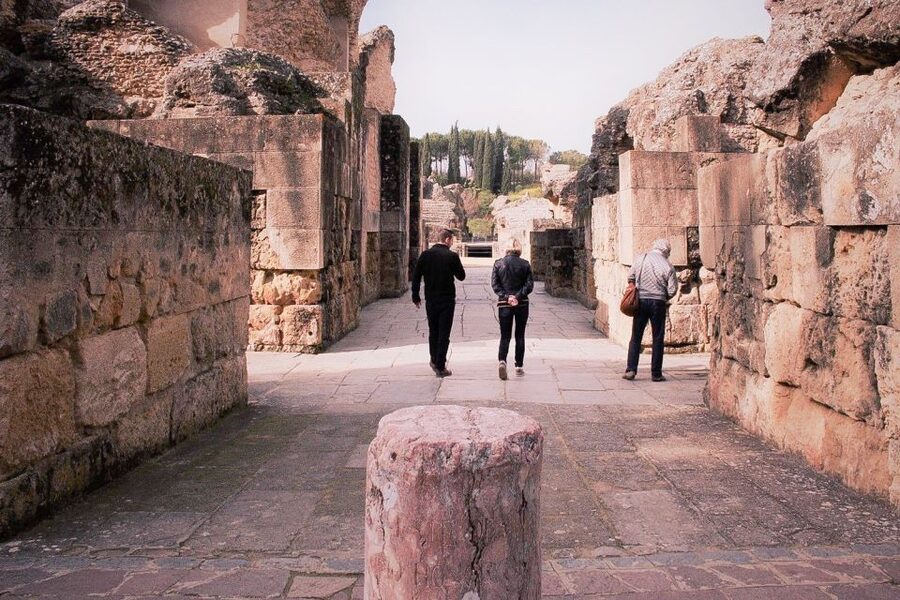
Bring comfortable shoes. The route includes outdoor ruins, uneven ground, and enough walking that flimsy footwear will make the visit less pleasant.
Bring sunglasses, a hat, and sunscreen. The site is exposed, and the Andalusian sun can be strong. Even a short visit can feel longer when you are standing in open archaeological areas with little shade.
Water and food are not included. Plan around the 90-minute visit and carry what you need, especially if you are visiting during a hot part of the day. The tour is not designed as a meal stop.
Arrive at the correct entrance and allow time to find the group. One past visitor had trouble locating the meeting point inside the complex and needed several phone calls to find the guide. Meeting at the main entrance should be straightforward, but it is still wise to confirm the exact spot before you set out.
Who should book the Itálica tour?
I would recommend this experience to:
- Game of Thrones fans who also enjoy archaeology
- First-time visitors to Itálica who want the ruins explained
- Anyone interested in Roman homes, mosaics, and public buildings
- Visitors looking for an affordable half-day addition to a Seville stay
- Families or mixed groups who need a lively guide to keep the site engaging
I would be more cautious if you want a pure Game of Thrones production tour. You may find the television material too brief.
I would also think twice if you dislike outdoor ruins or have a very tight schedule. The tour can extend beyond 90 minutes, and getting to Santiponce takes extra planning.
Should you book this tour?
Book it if you want to see the Dragonpit location but are genuinely interested in Roman Spain. The amphitheater is memorable, the mosaic floors add real substance, and a strong guide can turn partial ruins into a clear picture of ancient life.
Skip it if your main goal is a long Game of Thrones scene-by-scene tour. For most visitors, the best way to view this experience is as a guided Itálica visit with a valuable television connection, not the other way around.
At around $21, included admission and a lively guide make it a sensible buy for a first visit. Go for the Roman city, stay for the amphitheater, and treat the Dragonpit connection as the bonus.
FAQ
Where does the tour meet?
The meeting point is the main entrance to the Conjunto Arqueológico de Itálica at Avenida Extremadura, 2, 41970 Santiponce, Seville, Spain.
How long does the tour last?
The stated duration is 1.5 hours. The visit can sometimes run longer, so allow extra time if you have another activity booked afterward.
Is transportation from Seville included?
No. Transport is not included, and you must make your own way to the archaeological site in Santiponce.
Is the entrance ticket included?
Yes. Admission to the monuments is included in the tour price.
Which languages are available?
The tour is offered in Spanish, English, French, and Italian.
How much Game of Thrones content should I expect?
You will visit the amphitheater used for the Dragonpit scenes from seasons seven and eight. The tour is mainly about Roman history and archaeology, so the Game of Thrones discussion may be brief.
What should I bring?
Wear comfortable shoes and bring sunglasses, a sun hat, and sunscreen. Food and drinks are not included.
Can I cancel the booking?
Yes. You can cancel up to 24 hours in advance for a full refund. You can also reserve now and pay later.
Just added around Seville
- The Villages of Andalusia: Full-Day Trip from Seville★ 4.8 · 19 reviews
- From Seville: White Villages Tour★ 5.0 · 9 reviews
- White Villages & Ronda 2-Days Trip & Overnight Stay★ 4.6 · 5 reviews
- Your Photo Story in Seville★ 5.0 · 16 reviews
- Triana Market Tapas Tour★ 4.9 · 12 reviews
- Seville: Guided visit of the Casa de Pilatos with entrance tickets★ 4.3 · 18 reviews
- From Seville: Wine Tourism Half Day Tour★ 4.0 · 17 reviews
- Wine tourism, visit to a traditional winery and wine tasting★ 5.0 · 3 reviews
Seville Game of Thrones Tours, compared.
Full Alcázar History Seville and introduction Game of Thrones Tour
Read our review →
Game of Thrones filming locations, Itálica, Seville
Read our review →Browse the lists this tour appears in