
Reviewed · WALKING TOURS
Enchanted Seville Walking Tour
Seville gets especially intriguing after sunset, when its narrow lanes and quiet squares suit old legends better than bright daylight. This two-hour evening walk moves from Plaza del Triunfo through the former Jewish quarter, past Roman columns and Muslim-era passages, and ends beneath the modern Las Setas.
I like the strong route through Santa Cruz and the Judería, and I like that the tour connects Roman, Muslim, Jewish, Christian, and modern Seville in one compact outing. Guides such as Emilio and Valentine have been praised for making the stories lively and answering questions. The main caution is that one outing finished after about 90 minutes and at a different place, so confirm the route and end point when you meet your guide.
Key things to know before booking
- Plaza del Triunfo begins the story: Learn why the square has its name and how the 1755 Lisbon earthquake affected Seville.
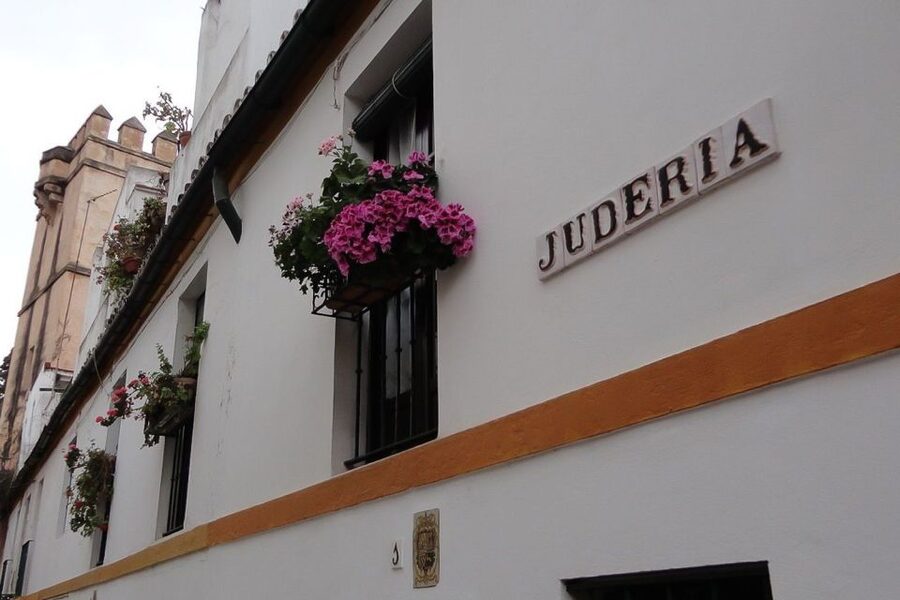
- The Judería gets the best storytelling: Narrow lanes, small squares, haunted-house tales, and events reaching from 1248 to the present fill this part of the walk.
- Roman and Muslim traces appear along the way: See the columns on Calle Mármoles and hear about underground passages around Alfalfa.
- The night setting changes the mood: Sunset and evening quiet make the legends easier to picture, though dim streets can make details harder to see.
- The tour ends at modern Las Setas: Plaza de la Encarnación gives you a sharp contrast with the old quarter.
- At $17, it is a low-cost orientation walk: You pay for a guide and stories, not entry to monuments, food, or drinks.
Why Seville’s legends work best after dark
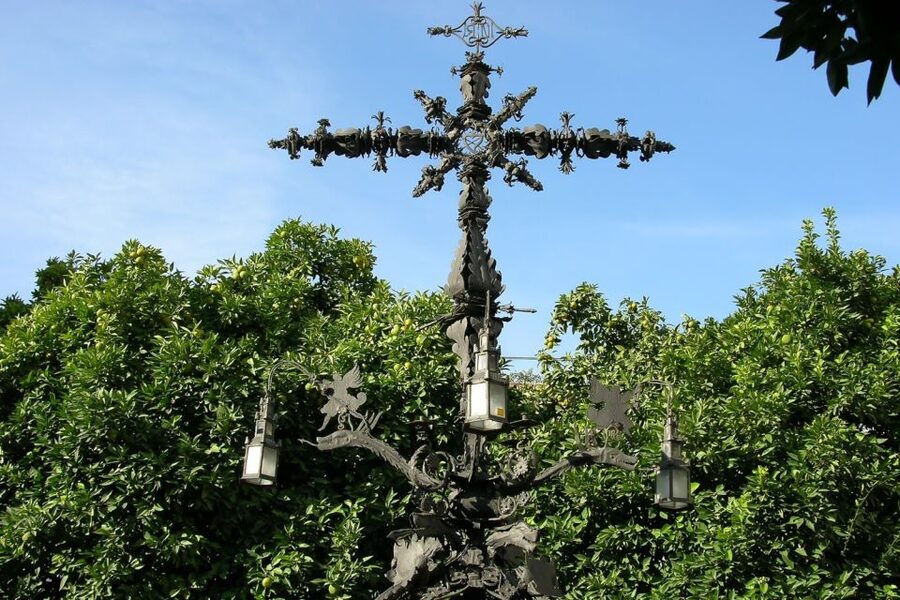
This is not a museum tour with long stops inside grand buildings. It is a storytelling walk through the streets, and its appeal comes from seeing how Seville’s past is layered into ordinary-looking corners.
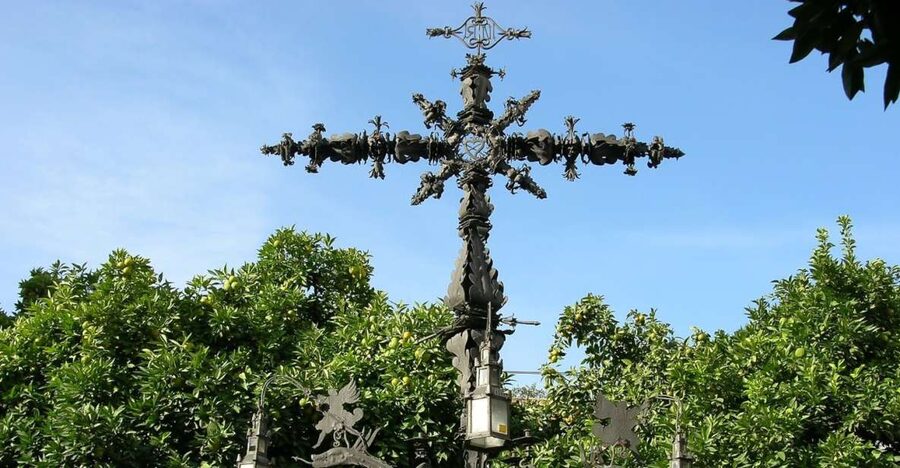
The route begins by the statue of the Immaculate Conception in Plaza del Triunfo. This is a useful meeting place because it sits among several major historic buildings, and the guide uses the square to explain the name Triunfo. The 1755 Lisbon earthquake is part of that opening story. Although the earthquake was centered far away, it was felt in Seville, giving the square an eventful link to the wider history of the Iberian Peninsula.
From there, you move toward the old Jewish quarter, usually called the Judería or Santa Cruz. At night, the streets can feel cooler and less exposed than they do during the day. You will still be walking on hard surfaces and through narrow lanes, so comfortable shoes matter more than stylish ones.
The tour is offered in Spanish or English. The guide is the heart of the experience. Emilio has been described as friendly, entertaining, and good at making the walk both informative and fun. Valentine has also handled detailed questions well and has research behind his explanations. Your guide may be someone else, but those names are useful indicators of the personal style available from Naturanda Turismo Ambiental.
More Walking Tours in Seville:
- Seville: Small-Group City Highlights Walking Tour
★ 5.0 · 1,204 reviews - Cultural Walking Tour of Seville Monumental
★ 5.0 · 861 reviews - Seville: Tapas, Taverns, and History Walking Tour
★ 4.9 · 676 reviews
Plaza del Triunfo and Patio de Banderas
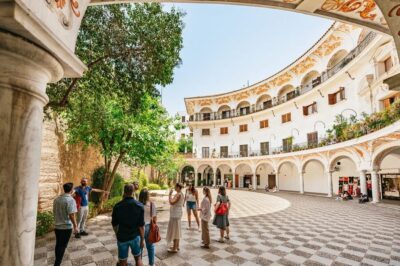
The opening stop gives you a quick orientation to Seville’s central historic district. The guide discusses the reason for the square’s name and the history of the three important buildings around it. The supplied plan gives about 10 minutes to Patio de Banderas, a natural continuation of the opening explanation.
I like this start because it gives you a framework before the story becomes more local and personal. Rather than hearing disconnected ghost tales, you first get a sense of how the city’s major eras sit side by side.
You should not expect a full architectural tour of every building in the square. The stop is short, and the walk covers many locations. If you want detailed information about each monument, you will need a separate cathedral, palace, or city-history tour.
The Judería: Doña Elvira, Susona, and Alfaro
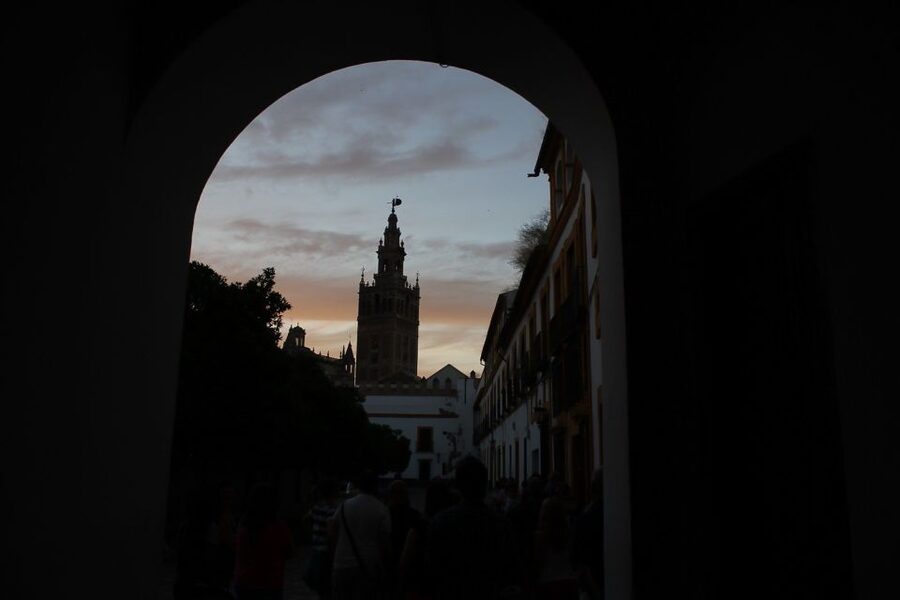
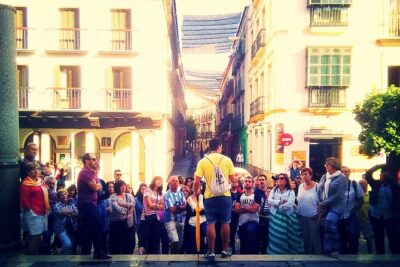
The most atmospheric part of the route comes through the former Jewish quarter. The streets are narrow, the squares are small, and the route turns often. This is where the evening timing helps. The walk is designed around stories of people, betrayals, romances, violence, and unusual events rather than dates alone.
At Plaza de Doña Elvira, the guide spends around 10 minutes. The square gives you a pause from the lanes and a chance to connect the setting with the local tales. After that, Calle Susona and Plaza de Susona bring another layer of legend.
The story associated with Susona is one of the reasons this route feels different from a standard sightseeing loop. You are not just looking at a pretty street. You are hearing how a name, a house, or a small corner became part of Seville’s memory. The tour’s focus on haunted houses and unusual stories is likely to appeal to you if you enjoy history with a dramatic edge.
At Plaza de Alfaro, the guide again has about 10 minutes to explain the square and its place in the quarter. This stop is less about checking off a monument and more about learning how the old district developed. The guide discusses events from the Christian conquest in 1248 through later periods and into modern Seville.
That broad time span is one of the tour’s strengths. You get more than a medieval snapshot. The route shows how the quarter changed after 1248 and how old stories remain attached to streets still used today.
Calle Aire and the texture of the old quarter
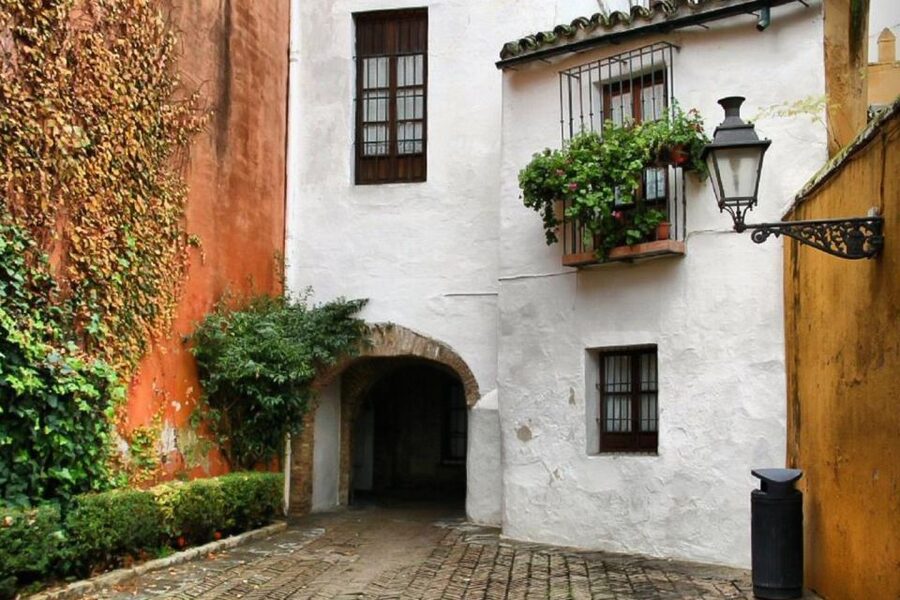
Calle Aire receives a longer stop of about 15 minutes. That extra time allows the guide to explain more of the neighborhood’s unusual stories and details.
The Judería can be confusing if you explore it alone. Many lanes look similar, and the area rewards slow wandering more than rapid navigation. With a guide, you can pay attention to the stories instead of constantly checking a map.
This is also the portion where group size matters. A small group is easier to manage in narrow streets, and it lets you ask questions without holding up a large crowd. One particularly positive outing had a small group, with the guide answering questions and adjusting to the group’s interests. Group size is not fixed in the information provided, so you should not assume every departure will be intimate.
The evening setting comes with a tradeoff. You may get a more atmospheric walk, but low light can make architectural details less clear. If you care most about façades, carvings, and colors, consider returning in daylight. If you care about legends and mood, the night schedule makes sense.
A different sort of afternoon in Seville:
- Seville: Royal Alcázar Entry Ticket
★ 4.6 · 28,378 reviews - Seville: Cathedral and La Giralda Entry Ticket
★ 4.5 · 24,592 reviews - Seville: Live Flamenco Dancing Show Ticket at the Theater
★ 4.7 · 16,396 reviews - Seville: 1-Hour Guadalquivir River Sightseeing Eco Cruise
★ 4.2 · 10,281 reviews
Roman columns on Calle Mármoles
After leaving the Judería, the route reaches Calle Mármoles, where Roman columns provide a direct link to ancient Seville. The stop is planned for about 10 minutes.
This is a good reminder that Seville’s oldest traces are not always inside a formal archaeological site. A few surviving columns in a city street can raise useful questions about the scale and age of the Roman settlement. The guide supplies the context that a quick solo glance would miss.
The stop is brief, so think of it as an introduction rather than a full Roman-history lesson. You will see the columns from the public street, and food, drinks, and admission tickets are not part of the activity.
The tale of Cabeza del Rey Don Pedro
The route then continues to Calle Cabeza del Rey Don Pedro, where the guide tells the remarkable story connected with the street’s name. This is one of the more unusual stops because a street sign becomes the starting point for a tale of royal power and personal conflict.
The value here is not simply memorizing the story. It is seeing how Seville’s legends are fixed to specific places. A name on a map can preserve an incident long after the people involved are gone.
You should expect a spoken explanation rather than a staged performance. Guides such as Emilio have been praised for being engaging and for making the history enjoyable, but the experience depends on listening as you walk. This suits you if you like a guide who can turn small details into a larger story.
Alfalfa and the city below street level
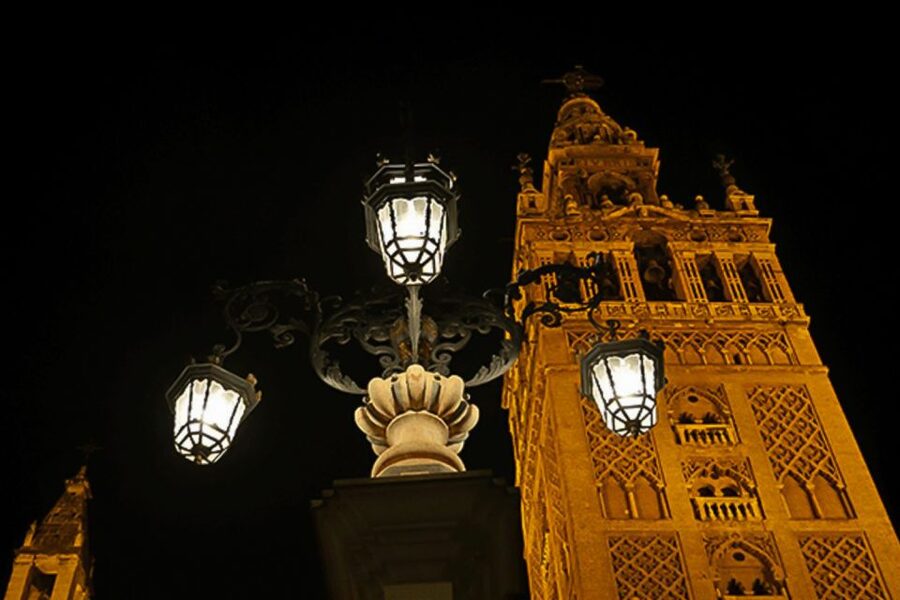
At Plaza de la Alfalfa, the focus shifts to traces of the Muslim period. The guide discusses underground passages and small shops created during that era.
This is an important change in subject. The tour has moved from Jewish-quarter legends and Roman remains to the Islamic foundations of Seville. You begin to see the city as a series of layers rather than a single old-town style.
The wording of the tour suggests that you will hear about underground passages and historic shop spaces, not necessarily enter them. Do not book this expecting a subterranean attraction or a long indoor visit. The appeal is the explanation of what may be beneath and around the modern plaza.
Alfalfa also helps break up the quieter lanes with a more open urban space. From here, the route continues toward Plaza de la Encarnación, taking you out of the oldest part of the walk and into a more modern section of the city center.
Finishing beneath Las Setas
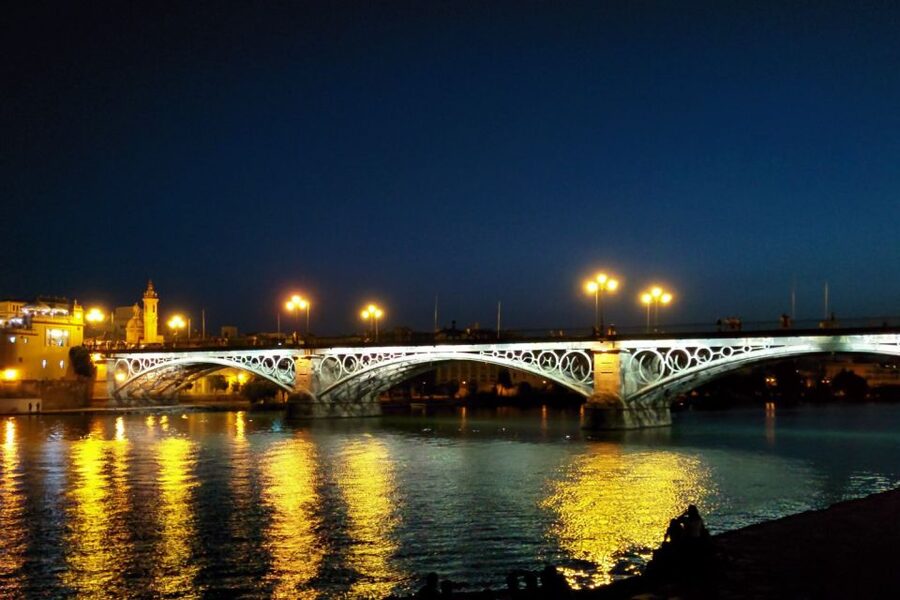
The final stop is Plaza de la Encarnación, home to Las Setas, Seville’s large modern wooden structure. After the Roman columns, medieval lanes, and Muslim-era references, this contemporary landmark makes a deliberate closing image.
I like the contrast. The tour does not pretend Seville ended in the past. It finishes with a modern public space in the middle of the historic city, showing that the old center is still changing.
The stated schedule gives this final stop about 15 minutes within the two-hour route. One practical issue deserves attention: the published stop information contains an obvious timing error that lists 15 hours, while the activity itself is described as two hours. Treat the overall duration as approximately two hours and confirm the exact finishing point with the guide.
The listed finish is Calle Laraña, 5, while the route description presents Las Setas as the final destination. One past outing ended at a different place, so do not schedule a tight dinner reservation or another tour immediately afterward. Allow a little time to orient yourself.
Is $17 good value for Seville?
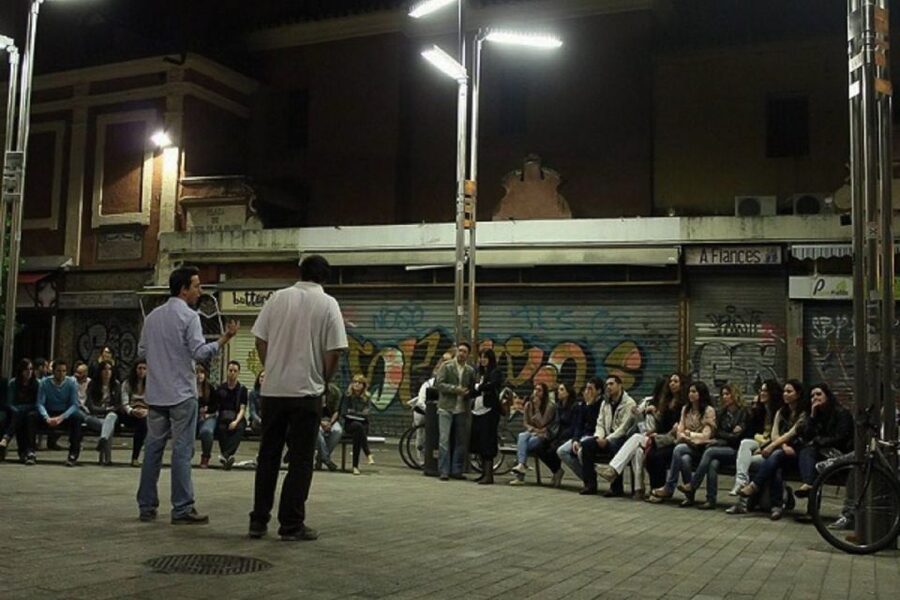
At $17 per person, this is inexpensive for a guided two-hour walk in central Seville. You are paying for a professional local guide, explanations in Spanish or English, and a carefully linked route through several historic areas. Taxes are included.
The value is strongest if you are new to Seville and want a quick introduction before exploring on your own. A guide can explain why the streets matter, point out details you might miss, and give you story hooks to remember when you return during daylight.
The price does not include food or drinks, and there are no stated admissions to monuments. That keeps the cost low, but it also means you should not expect access to interiors or a full evening program.
For a visitor who wants a formal history lecture, the tour may feel light. For someone who wants local legends, street-level history, and a pleasant evening route, $17 is fair.
Who will enjoy this evening walk?
I would choose this tour for:
- First-time visitors who want a fast introduction to Seville’s old center
- Couples and friends who enjoy legends, unusual stories, and evening walks
- Families with older children who can manage a two-hour walk
- Visitors who want to understand the Jewish, Roman, Muslim, Christian, and modern layers of the city
- Anyone looking for a low-cost activity after a day of sightseeing
It is suitable for participants of all ages, but it is not suitable for wheelchair users. The narrow lanes and walking route make mobility a real consideration.
Wear comfortable shoes. You will cover several central neighborhoods on foot, with repeated stops and movement between them. Bring water if you need it, since food and drinks are not supplied.
The tour has a current rating of 4.8 from 41 ratings, with especially strong praise for friendly, engaging guides. Emilio receives repeated positive attention for making the outing informative and fun, while Valentine is noted for answering questions carefully. That emphasis matters because this experience depends more on the guide’s storytelling than on any single monument.
Should you book the Enchanted Seville Walking Tour?
Book it if you want Seville after dark, a guide-led introduction to the Judería, and a mix of history and local legend for a modest price. It is especially useful early in your stay, when the route can help you get your bearings and identify places worth revisiting in daylight.
Skip it if you need wheelchair access, guaranteed monument interiors, or a precise finish at a fixed time. You should also allow flexibility in case the route is shortened or the final stop changes.
For most able walkers who enjoy stories tied to real streets, this is a good-value evening orientation. Confirm the meeting point at the Immaculate statue, wear sensible shoes, and leave room in your schedule after the stated two hours.
FAQ
Where does the tour begin?
The meeting point is Plaza del Triunfo, by the Immaculate statue in Seville.
Where does the tour finish?
The route description finishes at Las Setas in Plaza de la Encarnación, while the listed finishing address is Calle Laraña, 5, 41003 Sevilla. Confirm the exact end point with your guide.
How long does the tour last?
The activity is described as an approximately two-hour historical walking tour.
What languages are available?
The tour is offered in Spanish and English with a live local guide.
What does the $17 price include?
The price includes the walking tour, a professional local guide, and all taxes.
Are food and drinks included?
No. Food and drinks are not included.
What should I bring?
Bring comfortable shoes suitable for an approximately two-hour city walk.
Is the tour suitable for wheelchair users?
No. The activity is not suitable for wheelchair users.
Just added around Seville
- The Villages of Andalusia: Full-Day Trip from Seville★ 4.8 · 19 reviews
- From Seville: White Villages Tour★ 5.0 · 9 reviews
- White Villages & Ronda 2-Days Trip & Overnight Stay★ 4.6 · 5 reviews
- Your Photo Story in Seville★ 5.0 · 16 reviews
- Triana Market Tapas Tour★ 4.9 · 12 reviews
- Seville: Guided visit of the Casa de Pilatos with entrance tickets★ 4.3 · 18 reviews
- From Seville: Wine Tourism Half Day Tour★ 4.0 · 17 reviews
- Wine tourism, visit to a traditional winery and wine tasting★ 5.0 · 3 reviews
Walking Tours, compared.
Small-Group Jewish Quarter Discovery Walking Tour
Read our review →
Seville Private Walking Tour with Alcazar & Cathedral Tickets
Read our review →
Seville Small-Group Monumental Highlights Walking Tour
Read our review →
Browse the lists this tour appears in