Reviewed · TOURS
Tour Sevilla de las 3 Culturas
Seville’s story becomes more interesting when you stop treating it as one historic city. This two-hour walk connects its Roman, Muslim, Jewish, Christian, Gypsy, and American chapters, from the old Medina and Santa Cruz to the Arenal and Torre del Oro. I like the way one short route links several Seville neighborhoods, and the $7 price makes it an easy first look at the city.
I also like the practical shape of the walk. It is flat, wheelchair accessible, and led by an official guide in Spanish. José, one of the named guides, is specifically praised for answering questions. The main consideration is language: the tour is offered in Spanish only, and its fast two-hour schedule means most sights are viewed from outside rather than entered.
Key points to know
- Six versions of Seville: Roman, Visigoth, Muslim, Jewish, Christian, and Gypsy traditions all appear along the route.
- A flat two-hour walk: The route has no slopes, but you should still wear comfortable shoes.
- A useful first-day introduction: The walk links major sights with smaller streets and squares in Santa Cruz.
- Spanish-speaking official guides: José is one guide named in the feedback, with praise for answering questions.
- Good low-cost value: At $7, you pay for context and orientation rather than admission to monuments.
- Seasonal comfort tip: Stops are in shade during summer and sun during winter, so bring water and plan for the weather.
Why the three cultures idea works in Seville
The name points to Seville’s Muslim, Jewish, and Christian past, but the actual route reaches further. You will also hear about Roman and Visigoth Seville, the Gypsy community of Triana, and the city’s role as Europe’s port for the Americas.
That broader frame matters. Seville was an administrative and commercial center under Rome, an important city in Al-Andalus, and especially powerful under Almohad rule. After Ferdinand III took the city, Seville became a major Christian center. The Jewish community left a clear mark, particularly in what is now Santa Cruz.
I like this approach because it avoids making Seville’s past look like a single clean handover from one kingdom to another. The streets show layers. A tower may be linked to Islamic Seville, a nearby church to Christian rule, and a narrow lane to Jewish memory. The guide’s job is to connect those pieces while you walk.
The word coexisted needs some care. The city’s communities shaped one another, but their relationships were not always peaceful or equal. A good guide can give you the stories, conflicts, legends, and changes without turning the past into a simple tale of harmony. The supplied description promises exactly that sort of story-led treatment, including enigmas, characters, curiosities, and local legends.
Other Seville days people weigh up beside this one:
- Seville: Royal Alcázar Entry Ticket
★ 4.6 · 28,378 reviews - Seville: Cathedral and La Giralda Entry Ticket
★ 4.5 · 24,592 reviews - Seville: Live Flamenco Dancing Show Ticket at the Theater
★ 4.7 · 16,396 reviews
Starting at Plaza de San Francisco
The meeting point is at the Fuente de Mercurio, at Plaza de San Francisco, 17. This is a sensible place to begin because you are close to Seville’s civic center and several major sights.
The opening stop is Plaza de San Francisco itself. From here, the walk moves toward the Banco de España, giving the guide room to introduce Seville as a city of administration, trade, faith, and public power. Do not expect a long formal lecture at the start. With only two hours and many stops, the value comes from short explanations as the city changes around you.
You should add a phone number with WhatsApp when booking. The company uses it to send the exact meeting point, which is useful in a busy central area. Arrive with a little time to find the fountain rather than relying on a last-minute dash.
From the Giralda to Christian Seville
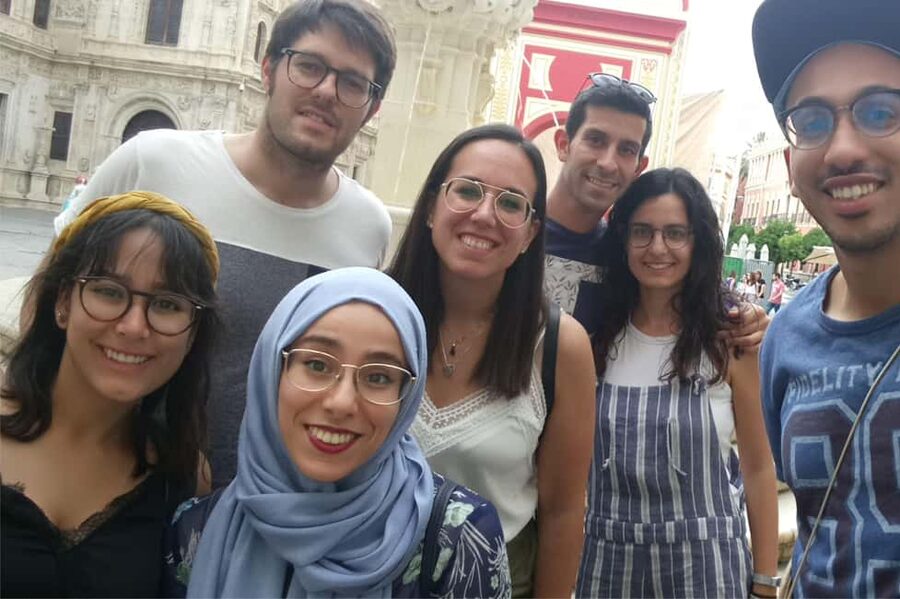
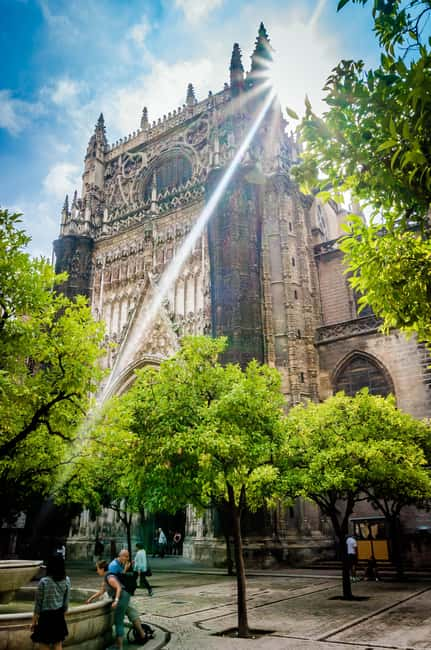
The route then reaches the Giralda and Seville Cathedral. These are among the city’s most recognizable sights, but this walk treats them as pieces of a longer story rather than isolated photo stops.
The Giralda is especially useful for understanding the transition from Muslim to Christian Seville. Its presence recalls the city’s Almohad period, while its later form reflects Christian change. The cathedral nearby signals the power of the post-Reconquest city and its place in Catholic Europe.
The Palacio Arzobispal adds another layer. It is connected to the authority of Christian Seville, and the guide can help you read the area as a center of religious power rather than just a collection of grand facades. The walk does not promise entry into the cathedral, Giralda, or palace, so plan a separate visit if you want interiors or tower views.
One useful feature is the stated skip-the-ticket-line provision. Since this is primarily an outdoor walking route, confirm exactly what it applies to when you book. The supplied details do not promise admission to each monument, and you should not assume that a walking stop includes an interior visit.
Into the old Jewish Quarter
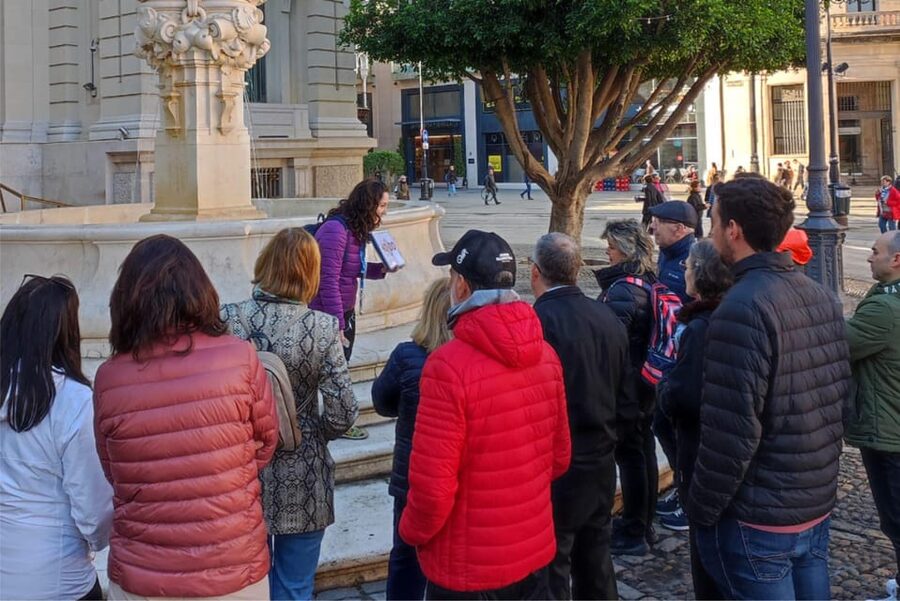
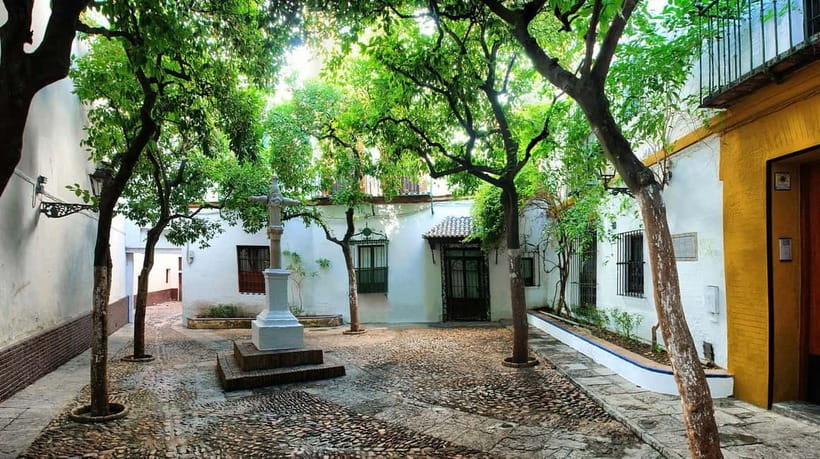
The route becomes more intimate when it turns into the Juderia and Santa Cruz. Here, narrow lanes, arches, small squares, and irregular corners replace the broad civic spaces near Plaza de San Francisco.
Plaza de la Alianza and Plaza Doña Elvira are the kind of places where the guide’s storytelling can make a real difference. On your own, you may notice flowers, white walls, tiled surfaces, and tight passages. With context, those spaces become part of the old Jewish quarter and its changing identity.
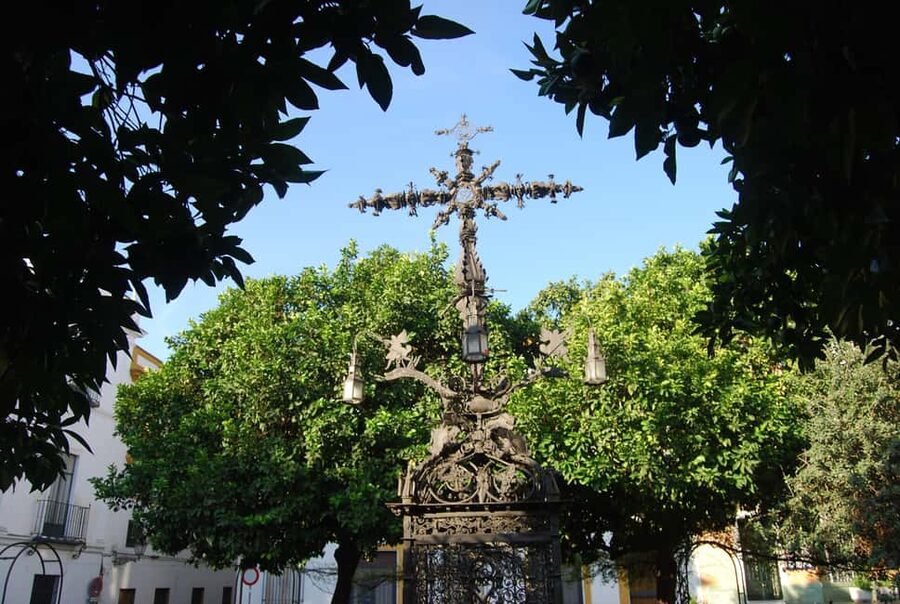
Calle Susona and Calle Vida add a more personal, story-driven side to the walk. The description points to legends and characters associated with these streets, so this is where you can expect local tales rather than a list of dates. Legends should be treated as part of Seville’s memory, not always as proven fact, but they can explain why certain lanes carry such strong associations.
Santa Cruz is also where the route’s practical design helps. The streets are narrow, and the guide can help you keep moving without missing the small details. I would not expect much time for lingering photographs at every turn. If you want relaxed pictures, return later after you know the layout.
A different sort of afternoon in Seville:
- Seville: 1-Hour Guadalquivir River Sightseeing Eco Cruise
★ 4.2 · 10,281 reviews - Seville: Cathedral, Giralda, and Royal Alcázar Guided Tour
★ 4.7 · 9,165 reviews - Seville: Setas de Sevilla Entry Ticket
★ 4.6 · 8,901 reviews - Seville: Cathedral, Giralda & Alcazar Entry With Guided Tour
★ 4.6 · 8,560 reviews
Patio de Banderas and the Alcazar gateway
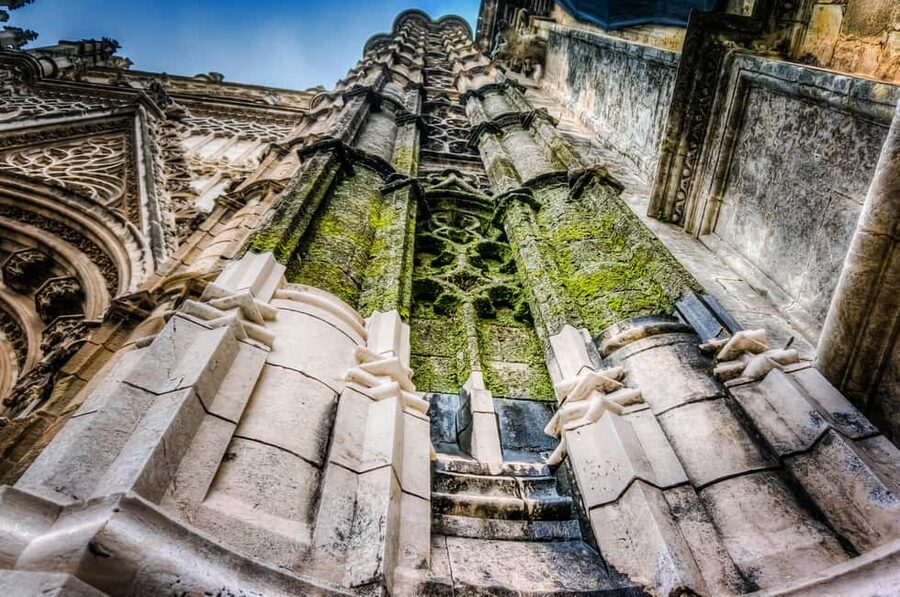
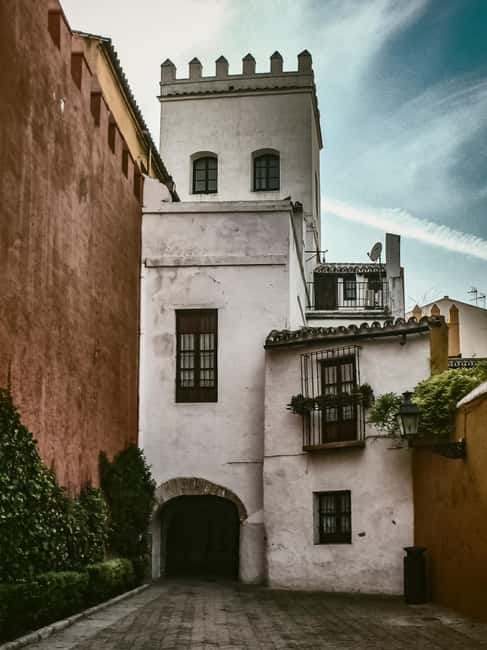
At the Patio de Banderas, the walk reaches one of the best points for seeing how Seville’s royal and religious history overlap. From there, it continues to the Puerta del León, the entrance area of the Real Alcázar.
The route gives you an outside view of a major palace complex and places it within the city’s Muslim and Christian story. The Alcázar is not simply a palace stop here. It helps explain how power was displayed, reused, and reshaped after the Christian conquest.
This is another place where the two-hour limit matters. The walk can point out the gate and explain its setting, but it is not a substitute for visiting the Alcázar. If the palace is high on your list, reserve separate time and check admission details independently.
The Indies, Giraldillo, and Seville’s global turn
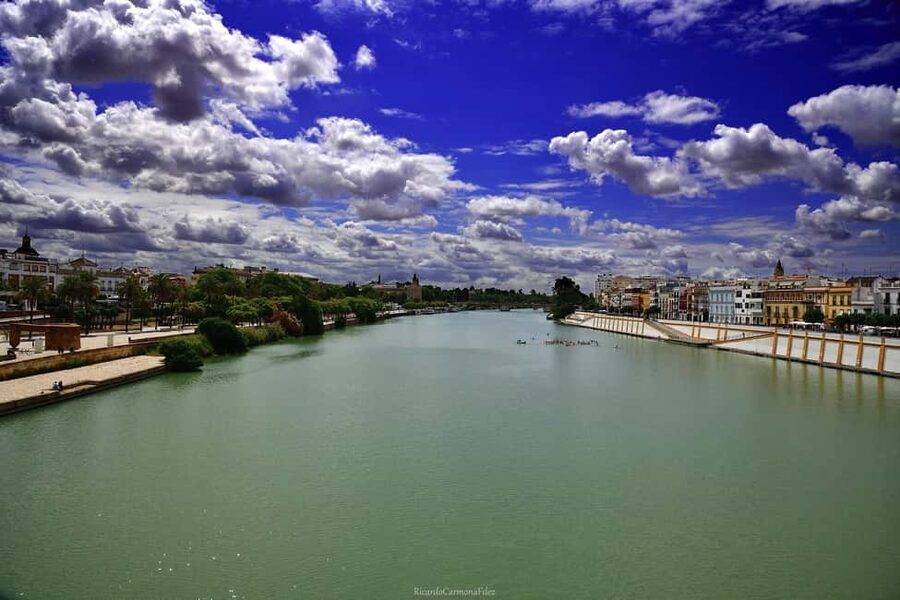
The General Archive of the Indies marks a later phase in the city’s story. Seville became Europe’s port for trade with the Americas, bringing wealth and influence, along with serious exploitation and inequality. The route presents this as the Seville of the Indies, with both its light and its shadows.
That balance is important. Grand buildings around the center can make the overseas empire look like a purely glorious chapter. A guide who addresses both sides gives you a more useful way to understand why these buildings exist and what their success depended on.
You will also pass the Immaculate Conception Monument and see El Giraldillo. The monument reflects the city’s Catholic identity, while El Giraldillo crowns the Giralda and has become one of Seville’s best-known symbols. These stops are brief but help tie together the city’s religious and civic imagery.
I like this section because it shows how Seville kept changing after the medieval periods. The tour is not only about old walls and legends. It also explains how the city looked outward and became tied to a much larger world.
Arenal, Plaza del Cabildo, and the river
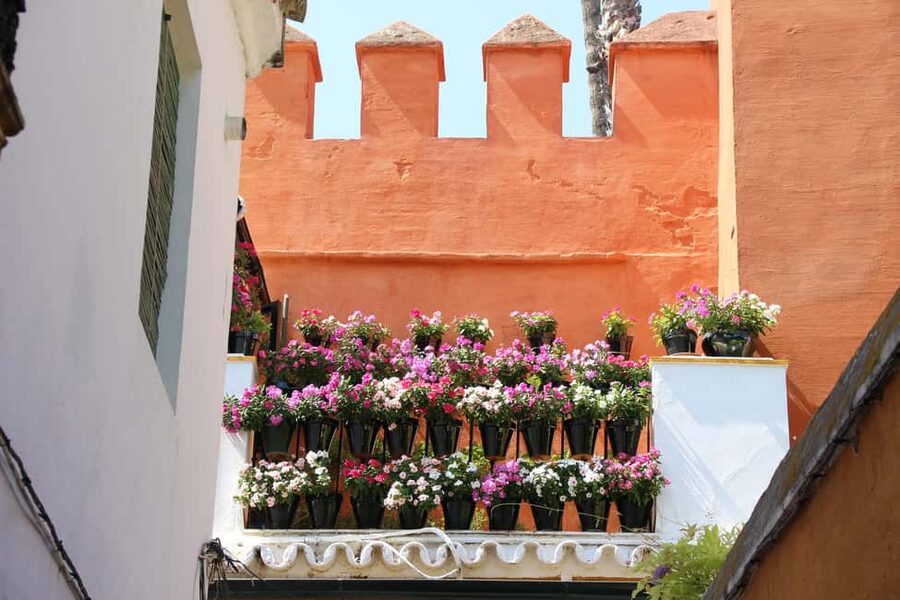
The final stretch moves through El Arenal, Plaza del Cabildo, and the Mercado Artesanía El Postigo before reaching the riverfront. Arenal was closely linked to Seville’s port activity, so it is a natural place to discuss trade, ships, and the city’s connection with the Americas.
Plaza del Cabildo offers a change of scale and mood from the tight lanes of Santa Cruz. The craft market provides a more present-day note, though the tour is not described as a shopping experience. You can look, listen, and keep moving. If you want time to browse stalls, plan to return after the walk.
The route then reaches the Puente de Isabel II and Torre del Oro. The bridge connects the center with Triana, an area strongly associated with the city’s Gypsy community, which settled there from the 15th century. That gives the final section an important cultural link rather than making the river merely a scenic ending.
Torre del Oro brings the route back to Seville’s Islamic and defensive past. Its position beside the water helps you picture the old port and the city’s control of river traffic. The listed finish is at Torre del Oro, while the booking information also says the activity ends back at the meeting point. Because those details differ, confirm the exact end point with the operator through WhatsApp.
What the $7 price really buys you
At $7 per person, this is inexpensive for a two-hour guided walk in central Seville. The value is not in admission tickets or long monument visits. You are paying for a route, a Spanish-speaking official guide, and the connections between places that can otherwise feel separate.
I would judge the price against your plans. If you want a quick orientation on your first day, it is strong value. You can learn where Santa Cruz, the Cathedral, Arenal, and Torre del Oro sit in relation to one another, then return to the places that interest you most.
If you already know Seville well, the appeal is different. The focus on legends, curiosities, Jewish streets, Gypsy Triana, and the city’s many cultural layers may give you new angles. But the tour will still move through familiar central sights, so do not book it expecting a specialist archaeological walk or a museum visit.
The small number of published ratings is worth keeping in mind. The score is perfect, and the comments praise the experience as interesting, with José singled out for answering questions. That is encouraging, but it is not enough information to judge every guide, group size, or the exact pace on every date.
Spanish language, pace, and comfort
The live guide speaks Spanish. That makes this a clear choice for Spanish speakers and for anyone comfortable following historical explanations in Spanish. If you need English or another language, this is not the right booking based on the information provided.
The route is described as comfortable and entirely flat, with no slopes. It is wheelchair accessible, which is useful in a city where old districts can sometimes be awkward to navigate. Still, narrow historic streets and a two-hour walking schedule can require steady movement, so contact the provider if you need more details about specific surfaces or stopping points.
The company says all stops are shaded in summer and sunny in winter. That is a useful seasonal note, but you should still bring water and wear comfortable shoes. In summer, shade helps but does not remove the need for hydration. In winter, the sunny route may feel pleasant, yet you should prepare for the day’s conditions.
Free cancellation is available up to 24 hours before the start for a full refund. You can also reserve and pay later, which helps if your Seville schedule is still taking shape.
Who should choose this walk
I would recommend it most to a first-time visitor who wants the city to make sense before tackling the major interiors. It also suits Spanish-speaking visitors who enjoy local legends and want more than a standard monument checklist.
Families and mixed-age groups may appreciate the flat route and short two-hour format. History-minded people will like the broad sweep from Rome and Al-Andalus to the Christian kingdom, the Jewish quarter, Triana, and the Americas.
I would be more cautious if you want extensive time inside the Cathedral, Giralda, or Alcázar. This experience moves among many places, so its strength is connection and context, not depth at any single monument.
Should you book Tour Sevilla de las 3 Culturas?
Book it if you want an affordable, guided introduction to Seville’s different communities and historical periods. The route covers an impressive amount of ground for $7, and the stops in Santa Cruz, the old Jewish quarter, Arenal, and beside the river give you a useful map of the city.
Skip it if you need an English tour, a slow photography walk, or guaranteed interior access to the monuments. For everyone else, I would place it early in a Seville visit, bring water, wear good shoes, and use the guide’s stories to decide which places deserve a longer return visit.
FAQ
How long does Tour Sevilla de las 3 Culturas last?
The tour lasts two hours.
What is the price?
The listed price is $7 per person.
Where does the tour start?
It starts at Plaza de San Francisco, 17, beside the Fuente de Mercurio.
Where does the tour finish?
The itinerary lists Torre del Oro as the finish. The activity information also says it ends back at the meeting point, so confirm the final meeting location with the provider.
What language is the tour in?
The live tour guide speaks Spanish.
Is the route wheelchair accessible?
Yes, the activity is listed as wheelchair accessible.
Is the route flat?
Yes. The route is described as comfortable and flat, with no slopes.
What should I bring?
Bring water and wear comfortable shoes.
Can I cancel for a full refund?
Yes. You can cancel up to 24 hours in advance for a full refund.
Can I reserve now and pay later?
Yes. The activity allows you to reserve your place and pay later.
Just added around Seville
- The Villages of Andalusia: Full-Day Trip from Seville★ 4.8 · 19 reviews
- From Seville: White Villages Tour★ 5.0 · 9 reviews
- White Villages & Ronda 2-Days Trip & Overnight Stay★ 4.6 · 5 reviews
- Your Photo Story in Seville★ 5.0 · 16 reviews
- Triana Market Tapas Tour★ 4.9 · 12 reviews
- Seville: Guided visit of the Casa de Pilatos with entrance tickets★ 4.3 · 18 reviews
- Wine tourism, visit to a traditional winery and wine tasting★ 5.0 · 3 reviews
- Yoga at María Luisa Park in Seville★ 5.0 · 17 reviews
Tours, compared.
Cathedral, Giralda, and Royal Alcázar Guided Tour
Read our review →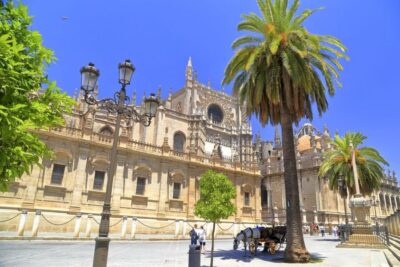
Cathedral, Giralda & Alcazar Entry With Guided Tour
Read our review →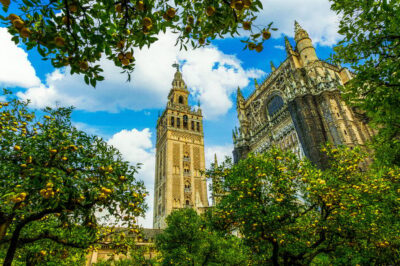
Priority Access Cathedral, Giralda & Alcázar Tour
Read our review →
Alcázar and Cathedral Entry Ticket and Guided Tour
Read our review →
Alcazar and Cathedral of Seville Tour with Skip the Line Tickets
Read our review →
Alcázar of Seville Skip-the-Line Tickets and Guided Tour
Read our review →