
Reviewed · TRIANA TOURS
Seville Triana Quarter and River Small-Group Walking Tour
The most revealing part of this Seville walk is the move from the riverfront into Triana, a district with its own traditions, crafts, food, churches, and strong local identity. You begin at the Golden Tower and finish at Santa Ana Church, using the short crossing of the Guadalquivir to connect Seville’s wider story with one of its most distinctive neighborhoods.
I like the small group limit of 10, which gives you a better chance to ask questions and hear the guide clearly. I also like the mix of history and everyday life, from the traditional market and ceramic work to the Castle of San Jorge and Holy Week traditions. The main consideration is the short 90-minute format: you get a useful introduction, but not much time for long visits or unhurried stops.
Key points at a glance
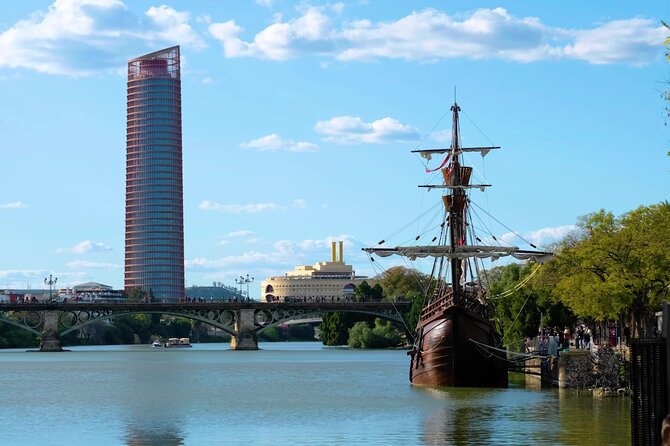
- Start at an 800-year-old watchtower: The Golden Tower gives the walk an immediate connection to Seville’s river defenses and trading past.
- Cross the Guadalquivir by Seville’s first fixed bridge: The 19th-century iron bridge explains how Triana was linked more firmly to the city.
- See Triana through food and craft: The market and ceramic traditions show how local work shaped daily life and Mediterranean cooking.
- Enter the Castle of San Jorge: This former defensive site was also the headquarters of the Inquisition in the area.
- Connect with Seville’s Holy Week: A small chapel and its brotherhoods introduce one of the city’s most important religious traditions.
- Finish at the Cathedral of Triana: Santa Ana Church dates from after the Christian conquest of 1248 and is a major example of Mudéjar architecture.
From the Golden Tower into Triana
The meeting point is the Golden Tower, or Torre del Oro, on Paseo de Cristóbal Colón. This old watchtower was built more than 800 years ago to defend access for ships coming along the Guadalquivir. It is a strong starting point because you begin with the river itself, not with a detached list of dates.
I like this opening for travelers who want to understand why Seville grew where it did. The river was a route for trade, travel, and defense, and the tower helps place Triana in that setting. Your guide can use the riverfront to explain how the two sides of Seville developed in relation to each other.
The walk then turns toward a modern monument representing the different cultures that have made Seville home and lived together there for centuries. The supplied details do not name the monument, so you should think of this stop mainly as a prompt for discussing Seville’s changing population and cultural layers.
That approach is useful, but the stop may depend heavily on your guide. Marta has been singled out for making the history of Seville and Triana clear and lively, while Miguel has been described as connecting Spanish and European events with present-day questions. Clara has also been praised for keeping the experience smooth and entertaining rather than turning it into a long lecture.
More Triana Tours:
- Seville: Live Flamenco Show at “Teatro Flamenco Triana”
★ 4.6 · 3,290 reviews - Seville: Baraka Sala Flamenca Show with Drink in Triana
★ 4.8 · 1,761 reviews - Spanish Cooking Class & Triana Market Tour in Sevilla
★ 5.0 · 760 reviews
Crossing the Guadalquivir on the 19th-century bridge
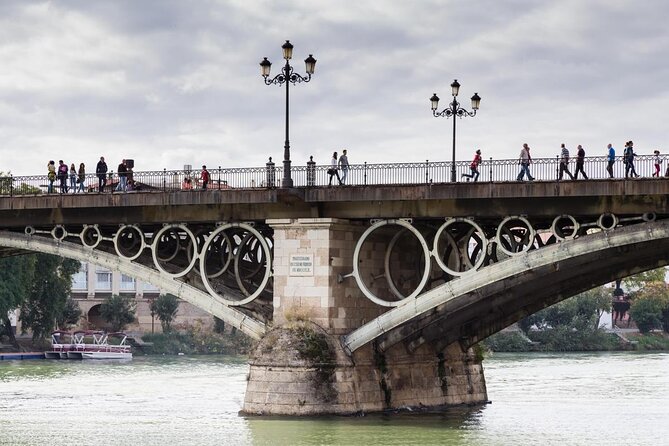
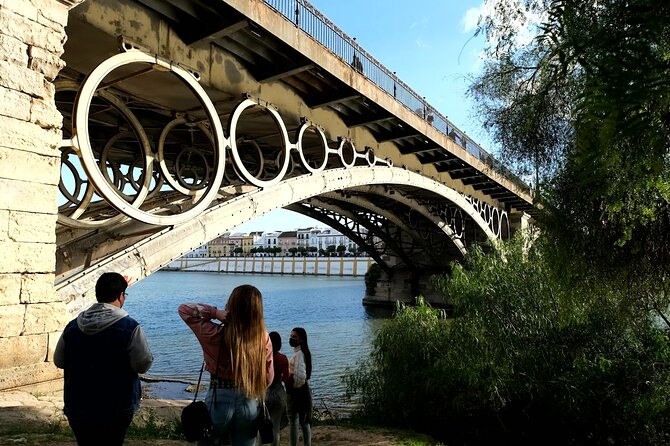
The route reaches Seville’s first fixed bridge, built to replace the earlier floating bridge connecting the city with Triana. This is the bridge’s main historical value. It was not simply a crossing for pedestrians and traffic, but a sign that the connection between Seville and Triana was becoming more permanent.
The bridge is also a good example of 1800s iron architecture. You can look at it as both a practical piece of city infrastructure and a marker of technological change. The walk is flat and easy to navigate, which matters in Seville’s heat and makes this route suitable for most people who can participate in a normal walking tour.
The bridge crossing should give you a useful change of view. On one side is the historic center and riverfront; on the other is Triana, with its own neighborhood character. Do not expect a long architectural study of the bridge. In a 90-minute tour, the guide will likely use it as a compact lesson before moving into the district.
The Triana market and the taste of local life
The traditional market is one of the most useful stops because it moves the tour away from monuments. Here, the conversation turns to local products and the role they have played in Mediterranean cooking.
I like this part for the simple reason that markets explain a place in a way grand buildings cannot. You get a sense of what people buy, prepare, and value. The stop also gives your guide room to connect food with geography and the river, rather than treating cuisine as a separate subject.
The market is not presented as a dedicated food tasting, so you should not book this expecting a meal or a series of samples. It is a cultural stop within a walking tour. If you want more time to browse stalls or eat, plan to return after the tour ends.
This is also where the tour’s short length becomes noticeable. The market can easily reward a slow visit, but the group needs to keep moving to cover the rest of Triana. If you enjoy food markets, consider noting what catches your eye and coming back later.
Triana ceramics and local craft
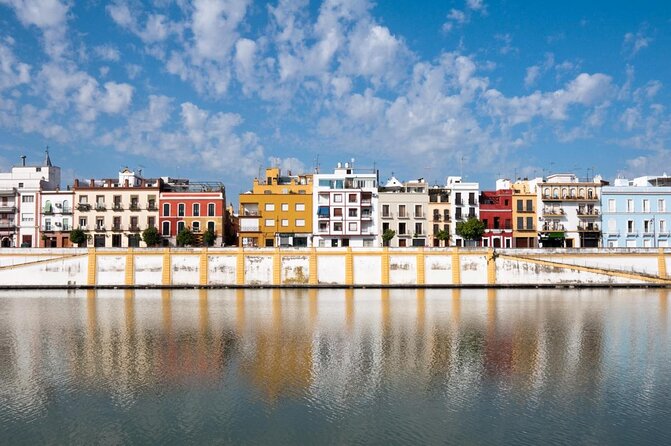
Triana is closely associated with ceramics, and the walk uses that tradition to explain the area’s contribution to the arts. You may see how traditional artisan workshops continue to give the district a strong connection to ceramic work.
This is a valuable stop because it ties art to working life. Instead of treating tiles and pottery as decoration alone, the tour presents craft as part of the neighborhood’s identity and economy. That helps explain why Triana feels different from a standard monument circuit through Seville’s center.
The information provided does not promise a workshop demonstration or a chance to make pottery yourself. You are learning about the craft and its importance, with the possibility of seeing traditional artisan activity along the way. If ceramics are a major interest, ask your guide for recommendations on where to look more closely after the walk.
The English-language format should suit visitors who want context without arranging a private guide. The group limit helps here. With no more than 10 people, you have a better chance of hearing an explanation while standing near a shop, workshop, or street feature.
More Walking Tours in Seville:
- Seville: Small-Group City Highlights Walking Tour
★ 5.0 · 1,204 reviews - Cultural Walking Tour of Seville Monumental
★ 5.0 · 861 reviews - Seville: Tapas, Taverns, and History Walking Tour
★ 4.9 · 676 reviews - Seville: Tapas, Taverns and History Guided Walking Tour
★ 4.9 · 515 reviews
Castle of San Jorge and the Inquisition
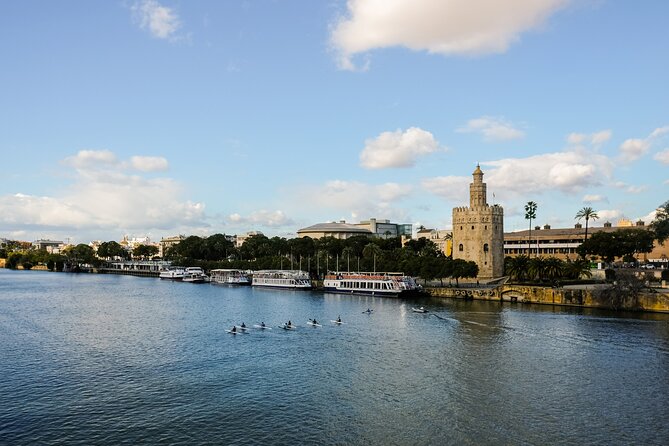
The route continues into the Castle of San Jorge, described as the only defensive structure in the area. The castle also served as the headquarters of the Inquisition, making this one of the heaviest historical stops on the walk.
This is where the tour moves from defense and trade into religious authority. Your guide will explain the Inquisition and its importance in local history. That subject can be difficult, but it is important for understanding the institutions that shaped Seville and Spain.
You should expect historical explanation rather than a large intact fortress. The castle’s value here is tied to what happened on the site and what it reveals about power, faith, and control. The stop adds depth to a neighborhood that could otherwise be reduced to food, tiles, and picturesque streets.
For history lovers, this may be the strongest part of the route. Miguel has been described as especially good at placing Spanish events within a wider European setting and relating past events to current affairs. Your guide will determine the tone, but the presence of this stop means the walk does not avoid difficult subjects.
Holy Week at a Triana chapel
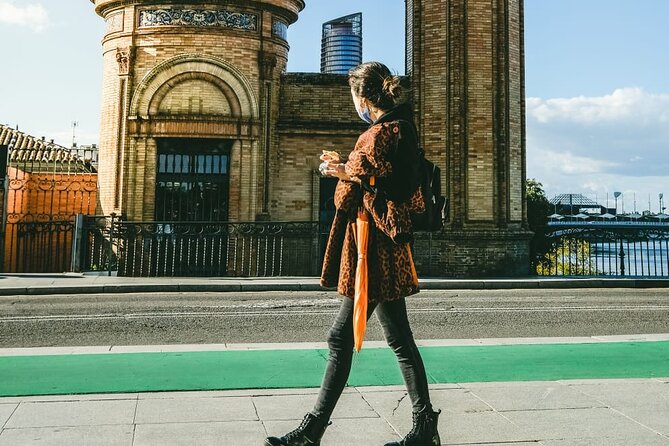
A small church on the route introduces Seville’s Holy Week traditions. It is connected with some of Triana’s most beloved brotherhoods and remains an important stop for people visiting the district.
This is a good reminder that Seville’s religious life is not confined to its largest churches. Holy Week involves neighborhood groups, processions, chapels, and long-standing local loyalties. A stop here helps you understand why Triana’s religious identity is closely tied to community life.
The supplied details do not name the chapel, and the tour does not promise a special ceremony or event. You are visiting as part of a historical and cultural walk. If you happen to be in Seville around Holy Week, the subject may carry particular weight, but the tour is designed as a general introduction that can work at any time.
I would pay attention to the guide’s explanation of the brotherhoods. This is the sort of information that can make later encounters with Seville’s processions and religious imagery easier to understand. It also gives you a better sense of why certain churches matter far beyond their size.
Santa Ana Church, the Cathedral of Triana
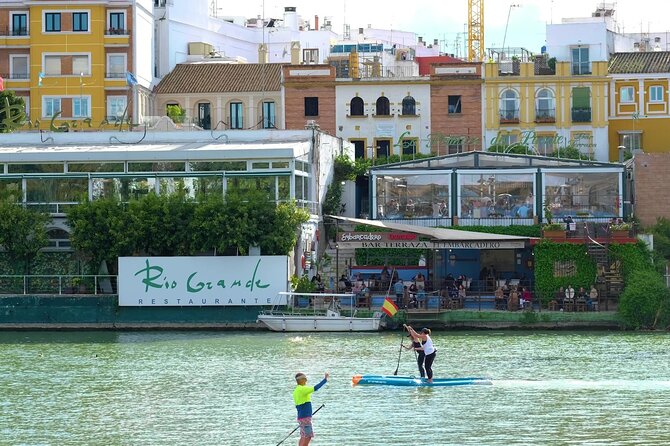
The final stop is the Real Parroquia de Señora Santa Ana, where the tour ends on Párroco don Eugenio Street. This is described as the most important church in Triana and the first built after the Christian conquest of 1248.
Santa Ana is also a notable example of Mudéjar architecture, a style associated with Christian buildings that retain or reflect Islamic artistic influence. Locals have traditionally called it the Cathedral of Triana, a nickname that signals its importance to the neighborhood.
Ending here works well. The walk begins with military defense at the Golden Tower and finishes with religious architecture and community identity. Along the way, you have covered the river, bridge, food, craft, the Inquisition, Holy Week, and the district’s main church.
The church is the tour’s endpoint rather than the beginning of a long guided visit through Seville’s major monuments. If you want extensive time inside, check how much of the visit is possible on your date. The experience is best understood as a guided introduction to Triana, not as a full church tour.
What the $30.04 price delivers
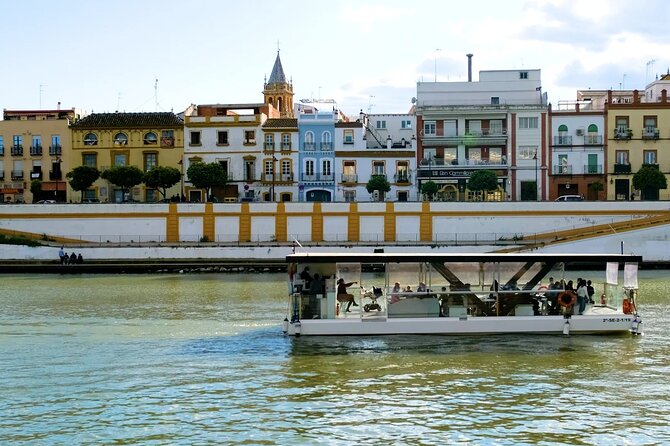
At $30.04 per person, this is priced as an accessible introduction rather than a full-day experience. You receive about 90 minutes with an English-speaking guide, a route through several historically important sites, and a group capped at 10 people.
The value is strongest if you are new to Seville and want a clear orientation to Triana. A guide can connect places that might otherwise seem unrelated: the river tower, the bridge, market life, ceramics, the Inquisition, Holy Week, and Santa Ana. That context is hard to gather from a quick independent stroll.
The value is less obvious if you already know Triana well or prefer to explore markets and churches at your own speed. You will have limited time at each stop, and the tour does not include a full meal or a separate workshop activity.
The small-group limit makes the price easier to justify. A group of 10 is still large enough to have energy but small enough for questions and conversation. On one scheduled walk, only one person attended, turning it into a private experience at the normal small-group price. That cannot be counted on, but it shows how the group format can sometimes work in your favor.
Guides, pace, and practical fit
Named guides associated with this experience include Marta, Miguel, and Clara. Marta has been recognized for clear explanations and strong local feeling for Triana. Miguel brings broad Spanish and European context, along with an interest in current events. Clara is known for keeping the presentation lively and easy to follow.
Those differences matter because a history walk depends as much on delivery as on the route. The same stop can feel dry or memorable depending on how the guide connects it to the street in front of you. The available feedback gives this experience a 4.8 rating from 30 reviews, with 93 percent recommending it.
You can choose a morning or afternoon departure. That flexibility helps you fit the walk around sightseeing, meals, or a siesta. I would choose the cooler option when possible, since Seville’s sun can make even a flat route tiring.
The tour is offered in English and uses a mobile ticket. Confirmation is provided at booking. The meeting point is near public transportation, and service animals are allowed. Most people can participate, but you should still be prepared for 90 minutes on foot.
Free cancellation is available if you cancel at least 24 hours before the scheduled start time. Changes or cancellations inside that window are not accepted for a refund, and the cut-off follows local Seville time.
Who should book this Triana walk?
I would choose this tour if you are visiting Seville for the first time, enjoy history, and want more than a quick photo by the river. It is especially useful early in your stay because it can give you a better sense of where Triana sits within the city and which parts deserve a return visit.
It also suits you if you like local crafts, food traditions, religious history, and neighborhood stories. The tour is not only about famous buildings. Its best moments come from seeing how the market, ceramics, brotherhoods, and churches connect to daily life.
You may want another option if you need long interior visits, a food tasting, or a slow photography walk. The 90-minute schedule is efficient, but it requires steady movement. You will get a broad introduction rather than exhaustive detail at every stop.
Should you book it?
Book this walk if you want a well-priced, English-language introduction to Triana with a genuinely small group. The strongest reasons are the range of subjects, the easy route, the chance to enter the Castle of San Jorge, and the clear endpoint at Santa Ana Church.
I would especially recommend it to history lovers who want to understand Seville’s river, religious institutions, and local identity in one compact outing. If you already know Triana or prefer to linger in markets and churches, use the tour as a starting point, then return on your own.
FAQ
Where does the Triana walking tour begin?
It begins at the Golden Tower, Torre del Oro, on Paseo de Cristóbal Colón in Seville.
Where does the tour end?
The tour ends at the Real Parroquia de Señora Santa Ana on Párroco don Eugenio Street in Triana.
How long does the experience last?
The walk lasts approximately 1 hour and 30 minutes.
How many people can join the tour?
The experience has a maximum of 10 participants.
Is the tour offered in English?
Yes. The tour is offered in English.
Are morning and afternoon start times available?
Yes. You can choose between morning and afternoon departure times.
Can I cancel for a full refund?
Yes, if you cancel at least 24 hours before the scheduled start time. Cancellations or changes made less than 24 hours before the start time are not refunded or accepted.
Just added around Seville
- The Villages of Andalusia: Full-Day Trip from Seville★ 4.8 · 19 reviews
- From Seville: White Villages Tour★ 5.0 · 9 reviews
- White Villages & Ronda 2-Days Trip & Overnight Stay★ 4.6 · 5 reviews
- Your Photo Story in Seville★ 5.0 · 16 reviews
- Triana Market Tapas Tour★ 4.9 · 12 reviews
- Seville: Guided visit of the Casa de Pilatos with entrance tickets★ 4.3 · 18 reviews
- From Seville: Wine Tourism Half Day Tour★ 4.0 · 17 reviews
- Wine tourism, visit to a traditional winery and wine tasting★ 5.0 · 3 reviews
Triana Tours, compared.
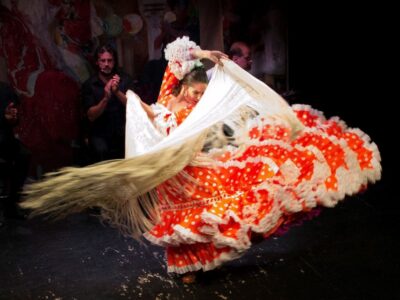
Live Flamenco Show at “Teatro Flamenco Triana”
Read our review →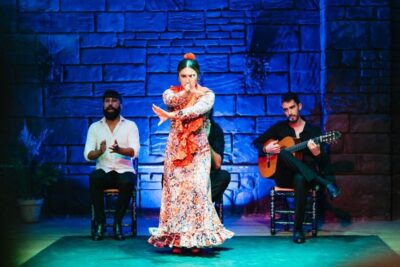
Baraka Sala Flamenca Show with Drink in Triana
Read our review →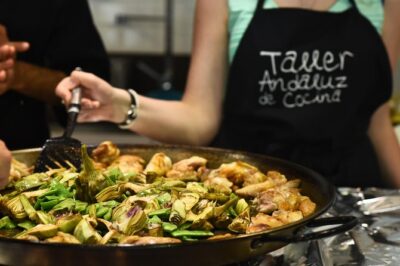
Spanish Cooking Class & Triana Market Tour in Sevilla
Read our review →
3.5-Hour Spanish Cooking Class & Triana Market Tour
Read our review →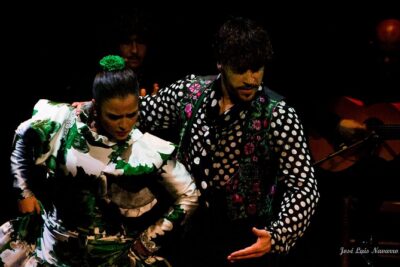
Flamenco Show Tickets to the Triana Flamenco Theater
Read our review →
Browse the lists this tour appears in