
Reviewed · TRIANA TOURS
Complete Triana Tour “Corrales included”
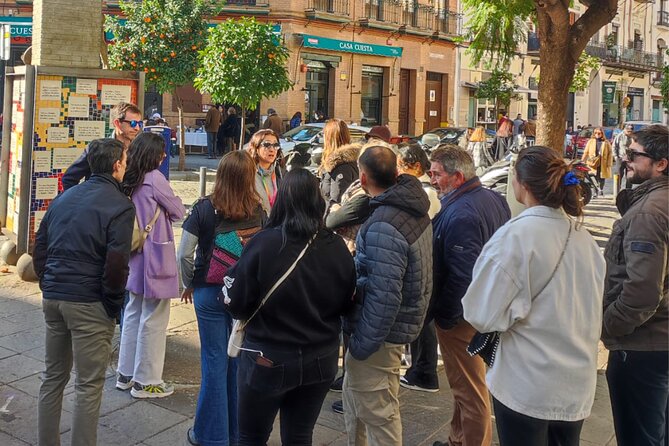
Triana feels like Seville’s neighbor with its own rules, stories, and swagger. This two-hour walk moves from the riverfront and the famous Triana Bridge into old courtyards, flamenco landmarks, churches, ceramic workshops, and the market. The best part is the mix of everyday streets and major history, from Carmen the cigarette maker to the Spanish Inquisition.
I like the low price, and I like the range: you get views, religious art, ceramics, local legends, and food advice in one compact walk. Guide Jose is described as friendly and lively, making the two hours pass quickly. The main caution is operational: one booking ended with the guide not appearing, so confirm the meeting details and guide before setting out.
Key points about the Complete Triana walk
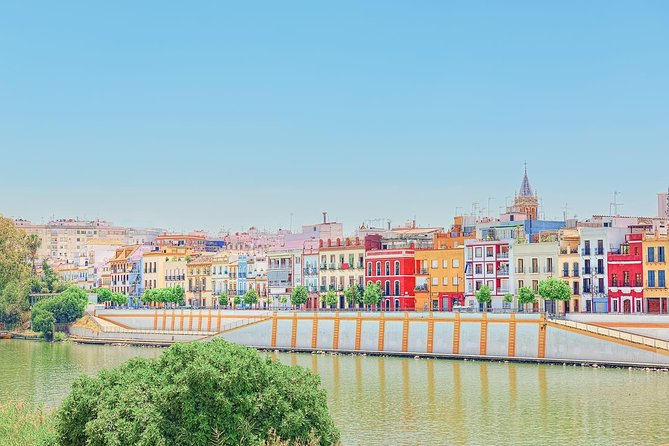
- Triana beyond the postcard: See the riverfront, Calle Betis, old patios, churches, market, and working streets rather than only the famous bridge.
- A strong history route: The walk covers the Castle of St. George, the Inquisition, the Royal Almohad soap works, the first world voyage, and old industrial sites.
- Flamenco and brotherhoods: Visit the Santa Ana area, the Chapel of the Sailors, the Hope of Triana, and the monument to flamenco.
- Ceramics are central: The route includes old furnace sites, small workshops, and the Centro Cerámica Triana.
- Good value at $9.49: Two hours and up to 30 people make this an inexpensive introduction to the district.
- Check the start point: The route names the Gold Tower, while the booking details give Monumento al Arte Flamenco near Puente de Isabel II.
Why Triana deserves a separate walk
Seville is often reduced to the cathedral, Alcázar, and Plaza de España. Triana gives you a different side of the city. It sits across the Guadalquivir, with a long identity tied to sailors, potters, flamenco artists, religious brotherhoods, workers, and river trade.
The route helps explain that separation. You do not simply cross the river and collect a few scenic photographs. You follow the old connection between Seville and Triana, then walk into the district where narrow streets, tiled facades, bars, chapels, and courtyards give the place its own character.
The tour lasts about two hours, with most stops taking three to five minutes. That means you keep moving, and you will hear many short stories rather than spend long periods inside one monument. It is a good format for a first visit, but you should not expect extended interior visits or a detailed museum tour.
More Triana Tours:
- Seville: Live Flamenco Show at “Teatro Flamenco Triana”
★ 4.6 · 3,290 reviews - Seville: Baraka Sala Flamenca Show with Drink in Triana
★ 4.8 · 1,761 reviews - Spanish Cooking Class & Triana Market Tour in Sevilla
★ 5.0 · 760 reviews
From the Gold Tower to Triana’s river views
The published route begins at the Torre del Oro, Seville’s Golden Tower. This defensive tower and former beacon gives the walk a useful starting point beside the river. You get an early look at how water, trade, and defense shaped Seville.
The next step is across the San Telmo Bridge. The crossing takes only a few minutes, but it offers the first broad view toward Triana and central Seville. Bring a camera, but also listen to the guide here, since the river is the key to understanding why Triana developed as a separate community.
The itinerary also includes the Monumento Milla Cero de la Tierra, a marker recalling the expedition that began the first voyage around the world. The April Fair is nearby, so this is also a chance to connect Triana with one of Seville’s biggest annual celebrations.
There is an important practical wrinkle. The listed meeting information identifies Monumento al Arte Flamenco near Puente de Isabel II, at Puente de Isabel II, 23, while the route itself says to meet at the front door of the Gold Tower. Check the current confirmation carefully. Do not assume the first stop and the formal meeting point are identical.
Calle Betis and the stories of Carmen
Calle Betis is one of Triana’s best-known streets, running beside the river with views back toward Seville. It is an attractive place, but the value here is not just the scenery. The guide uses it to explain the old divide between the two sides of the Guadalquivir.
From there, the walk turns toward Calle Troya and the literary connection with Miguel de Cervantes. The stop is brief, yet it adds a useful reminder that Triana has inspired writers as well as singers, dancers, and painters.
At El Embarcadero, you hear about the old port and the women who left Triana to work at Seville’s Tobacco Factory. The story connects the district to Carmen and the cigarette makers, a famous image that has traveled far beyond Seville.
This is one of the tour’s strengths. Instead of presenting history as a list of dates, it ties places to people and working life. The drawback is that each stop lasts only a few minutes, so you will need to keep your questions focused.
The Triana Bridge and old neighborhood courtyards
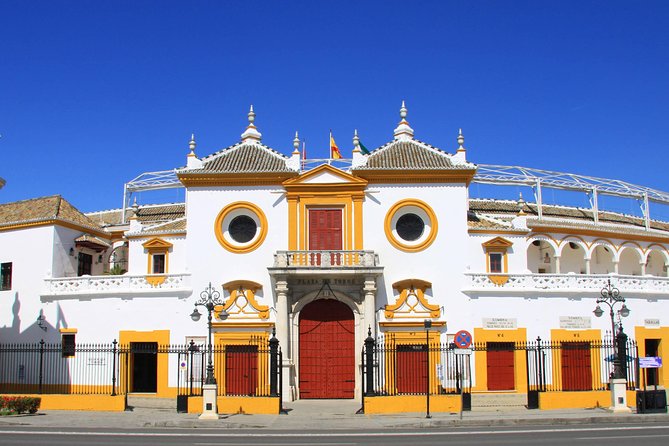
The Puente de Isabel II, usually called the Triana Bridge, is the route’s most recognizable structure. Built in 1852, it is described here as the oldest preserved iron bridge in Spain. The bridge is more than a photo stop. It marks the practical entrance to the district and gives you a clear sense of Triana’s position beside the river.
The route then turns toward the old corrales, shared courtyard housing that once formed an important part of neighborhood life. More than 100 are said to have existed, with about 15 remaining today. You may not enter every courtyard, but the guide explains how these spaces worked and why patios mattered so much to local communities.
At Plazuela de Santa Ana, the pace becomes more personal. This small square was a meeting point connected with flamenco life. The itinerary calls it one of the district’s key corners, and it is a good place to pause and notice the scale change from the open riverfront to intimate neighborhood streets.
A different sort of afternoon in Seville:
- Seville: Royal Alcázar Entry Ticket
★ 4.6 · 28,378 reviews - Seville: Cathedral and La Giralda Entry Ticket
★ 4.5 · 24,592 reviews - Seville: Live Flamenco Dancing Show Ticket at the Theater
★ 4.7 · 16,396 reviews - Seville: 1-Hour Guadalquivir River Sightseeing Eco Cruise
★ 4.2 · 10,281 reviews
Santa Ana, the Hope of Triana, and San Jacinto

The Real Parroquia de Señora Santa Ana is at the center of old Triana. Its history includes the local Gypsy community, legends, and the religious life of the district. You should see this stop as an introduction rather than a full church visit, since the scheduled time is about five minutes.
At the Capilla de los Marineros, the focus shifts to the Hope of Triana. The district has five brotherhoods, and this chapel is one of the most important places on the route. The image draws intense devotion, and the guide explains why it matters to local religious culture.
The former Dominican Convent of San Jacinto adds a darker note. It once belonged to a hospital, and the surrounding area was used as a mass grave during one of the plague epidemics. That detail gives the busy neighborhood a sobering historical layer. It also shows why a walking route can reveal more than a quick visit to a famous church.
San Jacinto pedestrian street is one of the district’s main arteries. You will hear about places to stop for a drink and about the former Hispano-Aviación factory, where the first Spanish jet was made. This combination of food, industry, and street life keeps the tour from becoming only a religious or artistic walk.
The nearby Chapel of the Star Brotherhood honors the former shippers of the port. The explanation reaches back to the sixteenth and seventeenth centuries, when religion shaped much of daily life. On Calle San Jacinto, look for old courtyards, tiled fronts, bars, and the steady flow of local activity.
Carmen, flamenco, and Triana’s public symbols
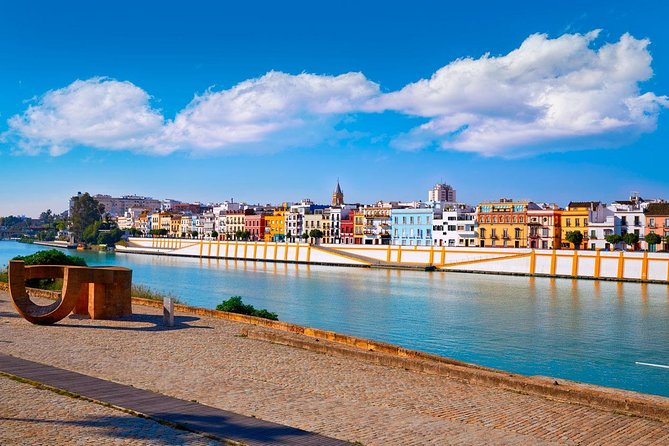
Near the river, the Chapel of the Virgin of Carmen is linked to Aníbal González, the architect associated with Seville’s 1929 Ibero-American Exposition and Plaza de España. It is a small stop, but it connects Triana to the grand civic image most people associate with Seville.
The Monument to Juan Belmonte recalls Triana’s connection with bullfighting. You do not need to be a fan of the sport to understand why the figure matters. The stop shows how local identity has been shaped by public heroes and neighborhood pride.
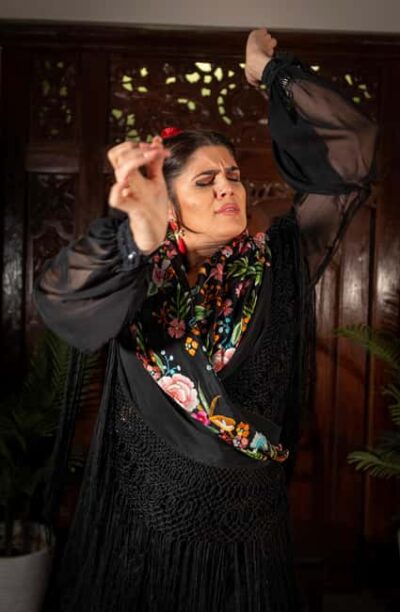
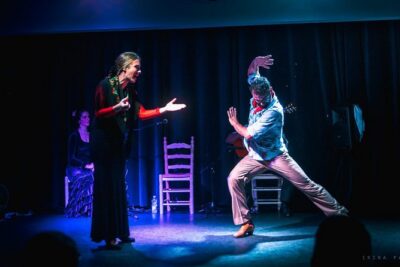
The Monument to Triana and Flamenco turns to singing, dance, guitar, and palmas. Flamenco is recognized as an intangible cultural heritage, and Triana is one of the places where its social and artistic importance remains visible. This is not a performance, so book a separate flamenco show if live music is your main goal. Here, you get context and a place-based introduction.
The market, Inquisition, and Triana ceramics
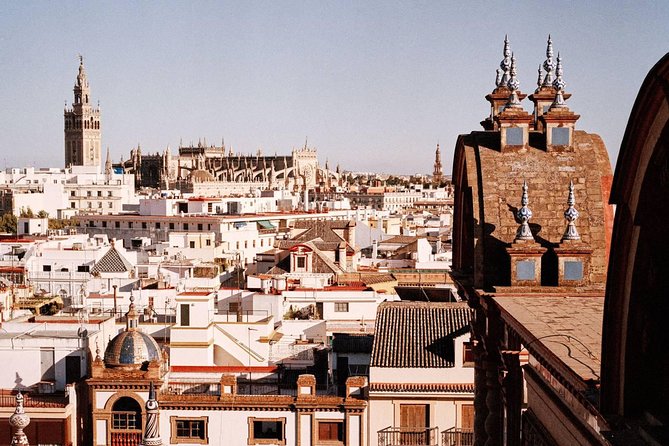
The Triana Market is the final practical anchor of the walk. It is a good place to end because the district’s food culture comes into view after the history and monuments. The guide also recommends tapas in the neighborhood, which is useful if you want to continue on your own.
The market is built near the site of the Castillo de San Jorge. The castle carries a much heavier story. The Catholic Monarchs established the Inquisition there, and the stop recalls persecution connected with Seville’s many communities and traditions.
Calle San Jorge then brings you back to the district’s craft identity. Large ceramic furnaces once operated in neighborhood courtyards, and some small workshops still survive. The Centro Cerámica Triana gives you a more formal look at this tradition. The route lists the center as a stop, but it does not promise an included admission ticket, so treat it as an exterior or orientation stop unless your guide confirms entry.
Ceramics are not a decorative side note here. Tiles and pottery help you read the neighborhood. Look at the facades, signs, courtyards, and religious images as you walk. The craft connects domestic life, public streets, and Seville’s visual style.
The final stretch toward the market
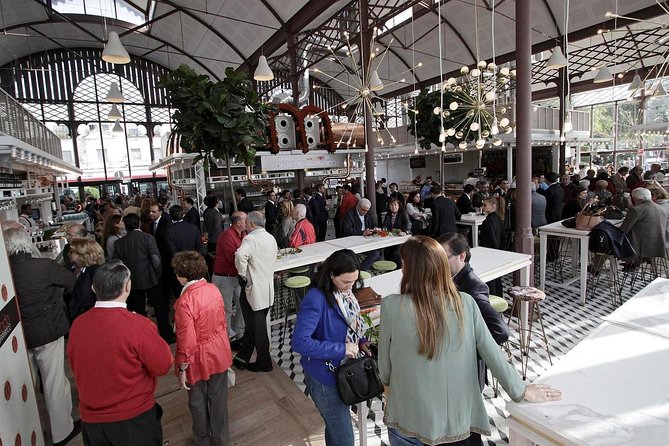
The itinerary ends with a broad reference to Isla de La Cartuja and the evolution of Triana through Calle Pagés del Corro. The point is to place old Triana, present-day Triana, and the district’s future in the same picture.
The formal end point is C. Arfian, 13, near the Triana Market. That is convenient if you want to eat, browse, or continue walking after the tour. It also means the route finishes in the middle of the neighborhood rather than sending you back across the river.
The schedule is tightly packed. Twenty-three listed stops may sound like a lot, and they are. Some receive only three to five minutes. You get breadth, not long contemplation. Wear comfortable shoes, arrive ready to walk, and accept that you may want to return later to the church, market, or ceramic center that interests you most.
Is $9.49 good value?
At $9.49 per person, this is inexpensive for a two-hour guided walk in Seville. The price makes sense if you want orientation, local stories, and a list of places to explore later. You get far more than a bridge photograph, including religious sites, industrial memories, flamenco references, old housing, ceramics, and food suggestions.
The value depends on your expectations. This is not a private tour, and the group can reach 30 people. A group that size may make quiet courtyards or narrow streets feel less intimate. The low price also suggests a brisk route rather than a highly customized experience.
The average booking time is about 14 days ahead, so the walk may fit naturally into a planned Seville visit. Confirmation is sent at booking, and mobile tickets make the arrangement simple. Service animals are allowed, public transportation is nearby, and most people can take part.
There is one serious reliability concern. One booking resulted in the guide not arriving, with no explanation. Another account specifically praised Jose as friendly and entertaining. If Jose is your assigned guide, you can reasonably expect an easygoing presentation based on that description, but guide assignments can change. Confirm the meeting point and keep the provider contact details available.
Free cancellation is offered up to 24 hours before the start time. Inside that window, the payment is not refunded. The tour also depends on good weather and a minimum number of participants. If the operator cancels for either reason, you are offered another date or experience, or a full refund.
Who should book this Triana tour?
I would choose this walk if you are visiting Seville for the first time and want a quick map of Triana before exploring alone. It suits anyone interested in flamenco, religious brotherhoods, ceramics, and local history, especially if you prefer street-level stories to a long museum visit.
It also works well for a short stay. Two hours is enough to see the district’s main landmarks without consuming half a day. The market ending is useful, since you can turn the tour into an afternoon of tapas and independent wandering.
I would hesitate if you need guaranteed interior access, a slow pace, or a highly specialized guide. The schedule is tight, the group may be as large as 30, and the meeting-point information needs checking. Still, at $9.49, the risk is limited, provided you confirm the arrangements before leaving.
FAQ
How long does the Complete Triana Tour last?
The tour lasts approximately two hours.
How much does the tour cost?
The listed price is $9.49 per person.
Where does the tour start?
The route description names the Torre del Oro, at the monument’s front door. The meeting information also gives Monumento al Arte Flamenco near Puente de Isabel II, 23. Check your booking confirmation for the current start point.
Where does the tour end?
The tour ends at C. Arfian, 13, near the Triana Market in the center of the neighborhood.
What places are included on the route?
Stops include the Gold Tower, San Telmo Bridge, Calle Betis, the Triana Bridge, Santa Ana Church, the Chapel of the Sailors, San Jacinto, the Chapel of Carmen, flamenco and Juan Belmonte monuments, Triana Market, Castillo de San Jorge, and ceramic sites.
Is the Triana Market included?
The route ends at the Triana Market and includes it as a stop. The tour also offers recommendations for tapas in the neighborhood.
How many people can join the tour?
The maximum group size is 30 participants.
Can I cancel for a full refund?
Yes. You must cancel at least 24 hours before the experience start time for a full refund. Cancellations or changes made within 24 hours are not refunded.
Just added around Seville
- The Villages of Andalusia: Full-Day Trip from Seville★ 4.8 · 19 reviews
- From Seville: White Villages Tour★ 5.0 · 9 reviews
- White Villages & Ronda 2-Days Trip & Overnight Stay★ 4.6 · 5 reviews
- Triana Market Tapas Tour★ 4.9 · 12 reviews
- Seville: Guided visit of the Casa de Pilatos with entrance tickets★ 4.3 · 18 reviews
- Your Photo Story in Seville★ 5.0 · 16 reviews
- From Seville: Wine Tourism Half Day Tour★ 4.0 · 17 reviews
- Wine tourism, visit to a traditional winery and wine tasting★ 5.0 · 3 reviews
Triana Tours, compared.
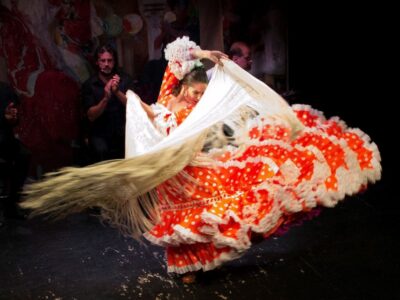
Live Flamenco Show at “Teatro Flamenco Triana”
Read our review →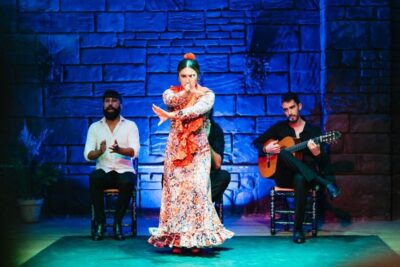
Baraka Sala Flamenca Show with Drink in Triana
Read our review →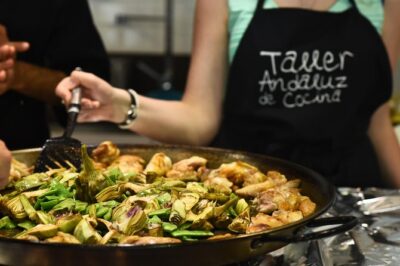
Spanish Cooking Class & Triana Market Tour in Sevilla
Read our review →
3.5-Hour Spanish Cooking Class & Triana Market Tour
Read our review →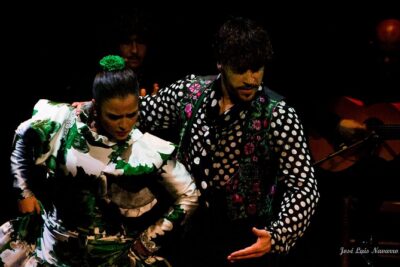
Flamenco Show Tickets to the Triana Flamenco Theater
Read our review →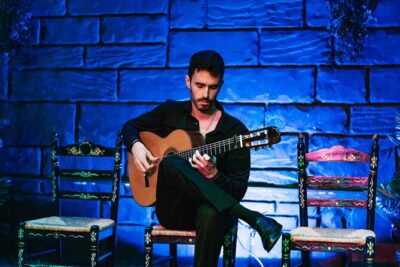
Browse the lists this tour appears in