
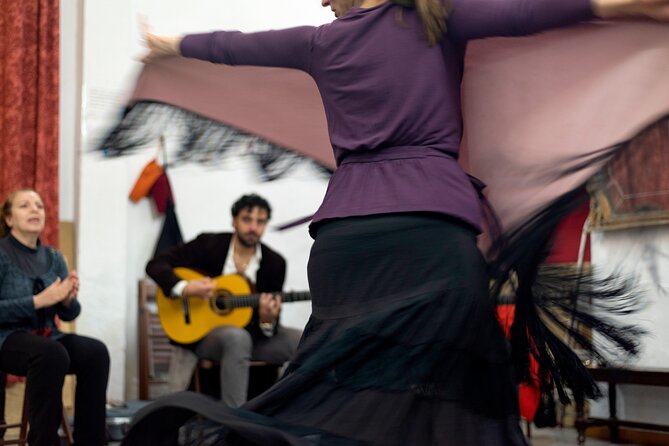
Reviewed · SEVILLE
Flamenco Behind The Scenes: Sit in on a Rehearsal in Seville
The best part of this Seville experience is the lack of a polished stage show. You sit close to dancers, guitarists, and a singer as they work through footwork, choreography, clapping, singing, and new ideas in a real rehearsal studio. The floor may vibrate beneath you, and the performance can change as the artists create together.
I like the small group limit of six to eight people, which gives the session a personal feel. I also like the chance to ask questions and learn how guitar, voice, rhythm, and dance fit together rather than simply watching a finished number. The main drawback is that this is a rehearsal, not a complete theatrical performance, so the action may feel spontaneous and unfinished by design.
Key points at a glance
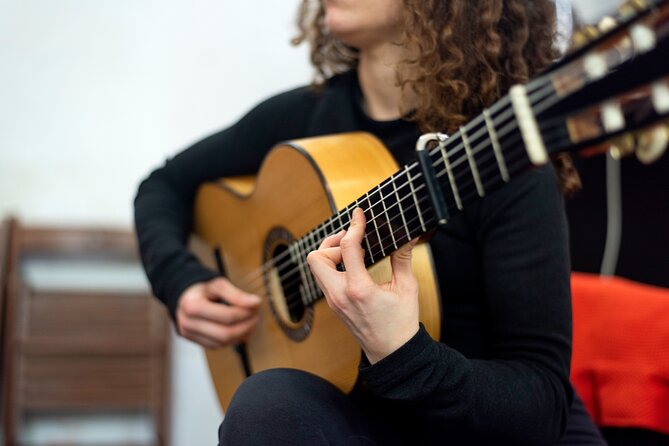
- Two-minute walk from Plaza San Marcos: The studio is close to the meeting point but tucked away in Seville’s old artisan quarter.
- No costumes or stage makeup: You see the working side of flamenco, with the artists focused on practice and creation.
- Live collaboration: Dancers, guitarists, and a singer build their work together through rhythm, footwork, choreography, and song.
- Explanations throughout: The artists discuss flamenco styles, rhythms, and their creative process in English, Spanish, Dutch, or French.
- Maximum of eight people: The small setting makes it easier to hear explanations and ask questions.
- About $17.36 per person: For roughly an hour of close-up access and conversation, this is a modest price for a specialized Seville experience.
Why a rehearsal can tell you more than a flamenco show
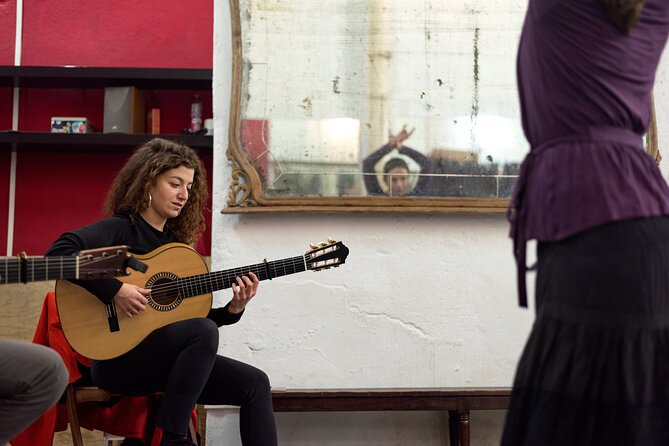
A finished flamenco performance is designed for an audience. This session shows you the work that comes before it: repeated footwork, changing rhythms, vocal lines, guitar parts, and the quick decisions made between performers.
That difference matters. You are not simply watching a dance routine from a seat several rows away. You are close enough to notice how the dancers and musicians respond to each other. A singer may set a mood, the guitar may guide the pace, and the dancer may answer with a change in movement or a burst of footwork.
The artists explain what they are doing before and during the rehearsal. If you know little about flamenco, this gives you a useful way into an art form that can otherwise seem difficult to read. You can ask about rhythms, styles, choreography, and the relationship between singing, guitar, clapping, and dance.
I especially like that the session focuses on the artists’ daily work rather than presenting flamenco as a fixed souvenir of Seville. You get a sense of practice, concentration, and trial and error. The experience is less about receiving a polished product and more about seeing how one takes shape.
Other Seville days people weigh up beside this one:
- Seville: Royal Alcázar Entry Ticket
★ 4.6 · 28,378 reviews - Seville: Cathedral and La Giralda Entry Ticket
★ 4.5 · 24,592 reviews - Seville: Live Flamenco Dancing Show Ticket at the Theater
★ 4.7 · 16,396 reviews
From Plaza San Marcos to the studio
You meet at Plaza San Marcos in Seville’s Casco Antiguo at 12:00 p.m. From there, the group walks about two minutes to the rehearsal studio.
The walk is short, but the setting is part of the point. The studio is off the main tourist route, in an old artisan quarter. You are not being led into a large performance hall with a formal entrance and rows of seats. Instead, the route takes you from a public square to a working space where artists rehearse.
Because the walk is so brief, this activity is easy to fit into a morning or early afternoon in the historic center. You return to the same meeting point at the end, so you do not need to arrange a separate pickup or work out where the session finishes.
The meeting point is near public transportation. Confirmation is provided when you book, so check the exact meeting instructions before setting out. The experience starts at noon, and it lasts about one hour.
Inside an old Seville rehearsal room
The studio is intentionally plain. There are no costumes, stage lights, or theatrical makeup to create distance between you and the performers. You see the dancers as they work, with the room itself helping you understand the physical demands of flamenco.
The floor is an important part of the experience. The sound and force of the footwork are not just something you hear from a distance. You may feel the floor vibrate as the dancers strike it, which makes the effort behind the dance much easier to grasp.
That closeness also brings a practical tradeoff. A rehearsal space is not designed like a major show venue, so the viewing arrangement may feel informal. The action may not always face you, and the artists may pause, repeat a section, or work through an idea instead of performing a complete piece from start to finish.
For me, that is exactly why the session has value. You see concentration and adjustment rather than only confidence and polish. The artists are working on their compositions, footwork, singing, and choreography in real time.
Watching three parts become one
The session includes a group of flamenco dancers, guitarists, and a singer. Each part has its own role, but flamenco depends on their exchange.
The guitar provides more than background music. It helps shape the rhythm and gives the dancer a structure to answer. The singer brings another layer of timing and feeling, while the dancer turns the sound into movement through posture, gestures, and footwork.
You also learn about clapping and rhythm. Even a short explanation can help you hear details that might otherwise pass unnoticed. Instead of seeing a dancer move while musicians play, you begin to notice the conversation between the parts.
The rehearsal may include several people working at once. One moment may focus on a dancer’s steps. Another may bring in the guitar and singing. Then the group may repeat a passage to adjust the timing or choreography. The attraction is the shared process, not a guaranteed sequence of famous numbers.
If you have attended flamenco before, this offers a useful second angle. A formal show lets you appreciate the finished performance. This rehearsal lets you see the difficult and beautiful work behind it, including the moments when the artists are still searching for the right choice.
A different sort of afternoon in Seville:
- Seville: 1-Hour Guadalquivir River Sightseeing Eco Cruise
★ 4.2 · 10,281 reviews - Seville: Cathedral, Giralda, and Royal Alcázar Guided Tour
★ 4.7 · 9,165 reviews - Seville: Setas de Sevilla Entry Ticket
★ 4.6 · 8,901 reviews - Seville: Cathedral, Giralda & Alcazar Entry With Guided Tour
★ 4.6 · 8,560 reviews
Explanations in four languages
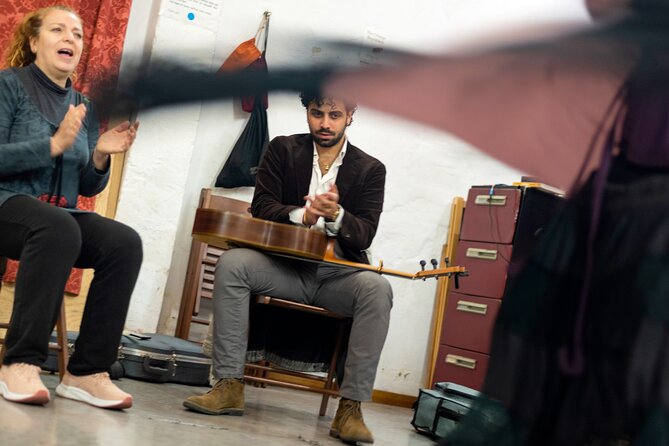
Explanations are available in English, Spanish, Dutch, or French. That is a real advantage because the session is built around understanding, not just watching.
You are invited to ask questions before and during the rehearsal. You might ask about a rhythm, the role of the guitar, how dancers coordinate with the singer, or how a piece develops. The available information does not promise a fixed question-and-answer segment, so think of the conversation as part of the session rather than a separate lecture.
The explanations also help balance the raw energy of the rehearsal. Without context, a visitor unfamiliar with flamenco might simply hear fast footwork and see dramatic movement. With guidance, you can follow the links between rhythm, song, guitar, and choreography.
The experience provider is Eva y la hora. Eva is also associated with Sevillanas instruction, including classes that cover all four pasos. If learning the dance interests you, you may want to ask about related instruction, but the activity described here is a rehearsal visit, not a dance class.
How the small group changes the experience
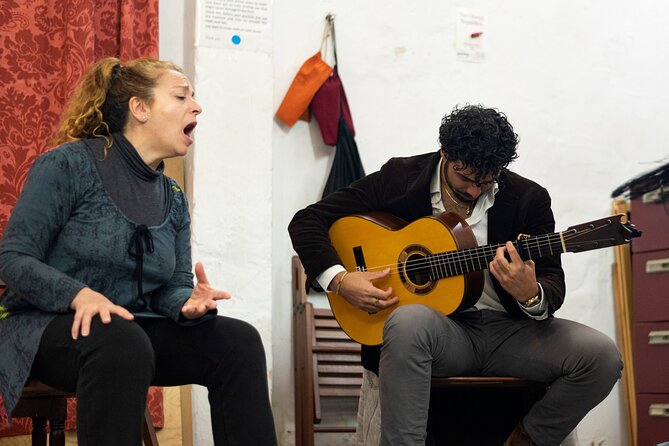
The maximum group size is eight people, with the stated ideal size described as six to eight. That is small enough for the artists’ explanations to remain personal and for questions to feel natural.
A compact group also suits the studio. You are not filling a large room or competing with dozens of people for a clear view. The point is to sit close, listen, and watch the working details.
There is one practical limitation: small-group activities can feel more dependent on the exact mix of people present. If everyone asks questions, the session may feel conversational. If the group is quiet, you may spend more time simply watching. Neither is a problem, but your expectations should match the format.
The group cap makes the $17.36 price easier to justify. You are paying for about an hour of access to a specialized working space, explanations in several languages, and a close view of live collaboration. It is not the cheapest way to see flamenco if your only goal is a long stage performance, but it is good value for a personal behind-the-scenes introduction.
Who will enjoy this most
I would choose this for you if you want to understand flamenco rather than simply check it off a Seville list. It suits people who enjoy craft, rehearsal, and conversation, as well as anyone who has seen a flamenco show and wants to know how the finished work comes together.
It is also a good pick for first-time flamenco viewers who want clear explanations. The small group and multilingual guidance should make the art form less mysterious, especially if you are unsure how to tell the guitar, singing, clapping, and footwork apart.
Families and mixed-interest groups may find the hour manageable because it is short and active. The powerful footwork, live music, and changing rehearsal process offer more movement than a standard talk.
You may prefer a traditional show instead if you want costumes, dramatic lighting, a set program, and a performance that begins and ends with a clear presentation. This activity does not promise that. It offers the working room, not the finished theater.
The activity information says most people can participate, and service animals are allowed. It is near public transportation. No special physical requirements are stated, but the session takes place in a rehearsal studio, so contact the provider if you need precise information about seating or access.
Timing, price, and planning advice
At $17.36 per person, the price is low compared with many organized cultural activities in Seville. The value comes from access and scale. You are not paying for a long tour or a large production. You are paying for a focused hour with artists who explain how they work.
The noon start is worth noting. This is not an evening flamenco outing, so it can leave your night open for dinner or a separate performance. It also works well as a cultural activity before an afternoon of sightseeing in the old center.
The mobile ticket is convenient. Keep your booking confirmation available on your phone, and arrive at Plaza San Marcos with enough time to find the meeting point. Since the studio is only two minutes away but off the main path, do not assume you should go directly to a venue entrance.
Free cancellation is available if you cancel at least 24 hours before the local start time. Changes made less than 24 hours in advance are not accepted, and late cancellations are not refunded. The experience requires good weather, so if poor weather forces a cancellation, you are offered another date or a full refund.
What the best parts really are
The strongest feature is the feeling of being close to the physical work. The floor vibration gives you a direct sense of the dancers’ effort, while the absence of makeup and costumes keeps attention on movement and sound.
The second strength is the mix of art forms. You do not see dance in isolation. Live singing, guitar playing, clapping, and choreography happen together, so the session explains why flamenco is a group conversation as much as a solo display.
The third is spontaneity. The artists are not simply repeating a finished number for an audience. They are working on compositions and searching for ideas in the moment. That may produce a lively, high-energy hour, but it also means the shape of the rehearsal can vary.
The available feedback describes the session as an exciting behind-the-scenes look with multiple dancers, singers, and guitarists. Another account highlights the friendly atmosphere and the chance to see the difficult work behind a beautiful dance. Those points match what you should value here: energy, access, and context.
Should you book this Seville flamenco rehearsal?
Book it if you want a close, low-cost look at how flamenco is made. The two-minute walk, one-hour length, multilingual explanations, and group limit make it easy to fit into a Seville schedule. The chance to ask questions adds something a normal stage show cannot.
Skip it if you need a polished performance with costumes, lighting, and a fixed program. A rehearsal can pause, repeat, and change direction. That is its strength, but it is also the one thing that could disappoint someone expecting a full evening show.
For most people curious about the art behind Seville’s flamenco tradition, I would choose this as a useful first step or a smart companion to a later performance. At $17.36, it gives you a clear look at the work beneath the spectacle without taking much time or money.
FAQ
Where does the flamenco rehearsal begin?
The activity begins at Plaza San Marcos in Seville’s Casco Antiguo, at 12:00 p.m.
How far is the rehearsal studio from the meeting point?
The studio is about a two-minute walk from Plaza San Marcos. It is in an old artisan quarter and is described as being off the main tourist path.
How long does the experience last?
The rehearsal experience lasts approximately one hour.
What languages are used for the explanations?
The artists provide explanations in English, Spanish, Dutch, or French.
How many people can join?
The activity has a maximum of eight participants. The experience is intended to remain intimate and personal, with groups of about six to eight people.
Can I cancel for a refund?
Yes. You can cancel at least 24 hours before the local start time for a full refund. Cancellations or changes made less than 24 hours before the start are not accepted for a refund. If poor weather cancels the activity, you are offered another date or a full refund.
Just added around Seville
- The Villages of Andalusia: Full-Day Trip from Seville★ 4.8 · 19 reviews
- From Seville: White Villages Tour★ 5.0 · 9 reviews
- White Villages & Ronda 2-Days Trip & Overnight Stay★ 4.6 · 5 reviews
- Your Photo Story in Seville★ 5.0 · 16 reviews
- Triana Market Tapas Tour★ 4.9 · 12 reviews
- Seville: Guided visit of the Casa de Pilatos with entrance tickets★ 4.3 · 18 reviews
- From Seville: Wine Tourism Half Day Tour★ 4.0 · 17 reviews
- Wine tourism, visit to a traditional winery and wine tasting★ 5.0 · 3 reviews