
Reviewed · ITALICA ROMAN CITY TOURS
From Seville: Italica Roman City Tour
Italica gives you the rare chance to walk through an actual Roman city rather than simply admire a few scattered ruins. Founded in 206 B.C. by Publius Cornelius Scipio Africanus, it later produced emperors Trajan and Hadrian. The 25,000-seat amphitheater is the star, but the mosaics and old streets are what make the place feel like a city.
I like the easy ride from Seville and the way a good guide, including José Luis, Alberto, Miguel, or Nieves, can turn broken walls into a picture of Roman life. I also like the three hours at the archaeological site, enough time for the amphitheater, houses, baths, statues, and theater without making this an all-day outing. The main drawback is that a large group can make it hard to hear, and there may be little or no time to wander on your own.
Key points to know before booking
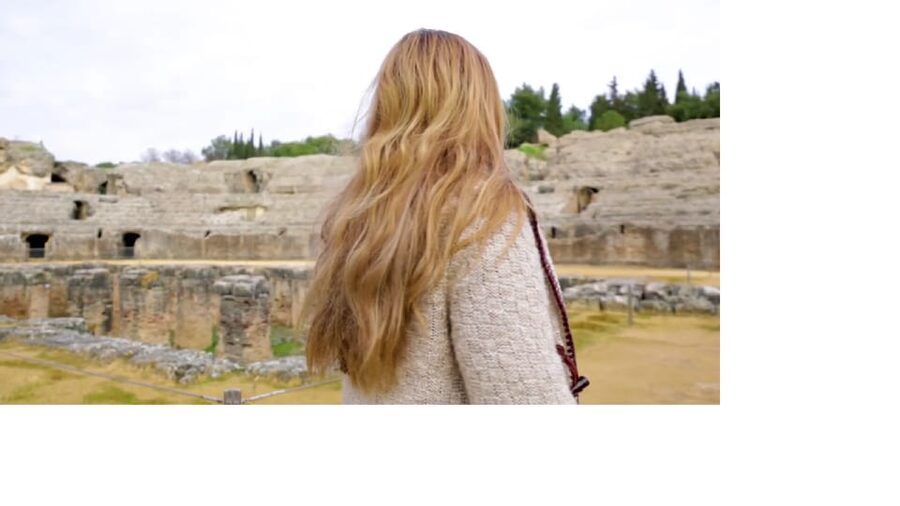
- The amphitheater is the main event: It held about 25,000 people and ranks among the largest in the Roman Empire.
- Mosaics reward careful looking: Floors in the Roman houses are among Italica’s most memorable sights.
- The ride is simple: Round-trip transport leaves from three central Seville pickup points.
- A guide adds real value: The best guides explain how the streets, baths, theater, and public buildings fit together.
- The tour moves at a steady pace: You get a guided three-hour visit, not a long stretch of unscheduled free time.
- The monastery may appear on some outings: Several past departures included it, but the published route centers on Italica and the theater.
Why Italica makes a strong half-day from Seville
Seville can keep you occupied for days, yet Italica offers a different kind of history just outside the city. Here, you are not looking at a single column in a museum. You are walking along an ancient street, passing house foundations, public buildings, baths, mosaics, and the remains of an arena built for mass entertainment.
The site is in Santiponce, about 15 minutes from Seville by location, though the organized transfer is listed as roughly 30 minutes each way. That longer timing allows for city pickup, traffic, and group arrangements. I see the bus as a plus. You avoid arranging a separate ride and return to central Seville after the visit.
At $51 per person, the price makes sense if you want transport, admission, and interpretation in one package. A self-guided visit may give you more freedom, but you would need to arrange transport and supply your own context. Italica’s ruins are easier to appreciate when someone explains what each open space once did.
This is especially useful for visitors who know the Roman Empire mainly through Rome, Pompeii, or museums. Italica shows how Roman life took root in Hispania, the Roman name for much of the Iberian Peninsula. The city also connects directly to two emperors, Trajan and Hadrian, both born here.
More Italica Roman City Tours:
- From Seville: Italica Roman City & Medieval Monastery Tour
★ 4.5 · 1,051 reviews - Historical Italica: Half-Day Guided Tour from Seville
★ 4.5 · 416 reviews - Seville: Game of Thrones and Roman Empire Italica Tour
★ 4.3 · 372 reviews
Central Seville pickup and the ride to Santiponce
You can choose from three pickup locations: Calle Trajano 6, Hotel Don Paco, or C. Rastro 12A. The listed morning times are 9:45 at Calle Rastro 12A, 9:50 at Hotel Don Paco, and 10:00 at Calle Trajano 6.
Arrive a little early and make sure you are at the correct point. Several pickup spots are close to central Seville sights, but the tour depends on getting the whole group aboard. The return uses the same three general locations, which is handy if you have evening plans nearby.
The transport is by bus or coach, with a roughly 30-minute ride in each direction. Past departures have used comfortable buses and vans, and one departure used an open-air bus. Vehicle type can vary, so I would not book this expecting a particular style of transport.
The ride also gives your guide a chance to introduce Italica before you arrive. That opening context matters. Without it, the site can first appear as a wide field of low stone walls. With a clear explanation, you begin to see streets, homes, public spaces, and an arena with a very specific purpose.
Walking the Archaeological Ensemble of Italica
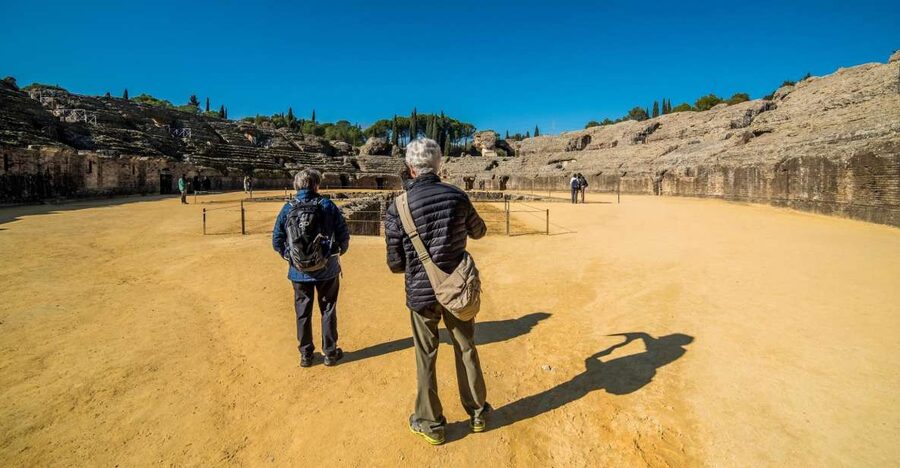
The guided visit lasts about three hours. Expect a walking tour over open archaeological ground, with stops at the main ruins rather than a quick photo visit. The order can change because of local conditions, and the tour may sometimes be conducted in two languages to make those changes easier.
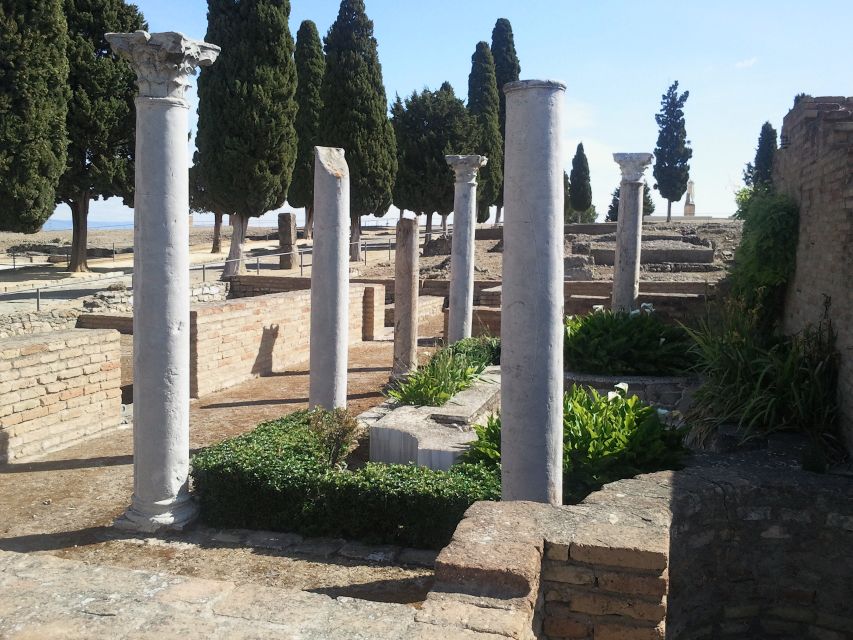
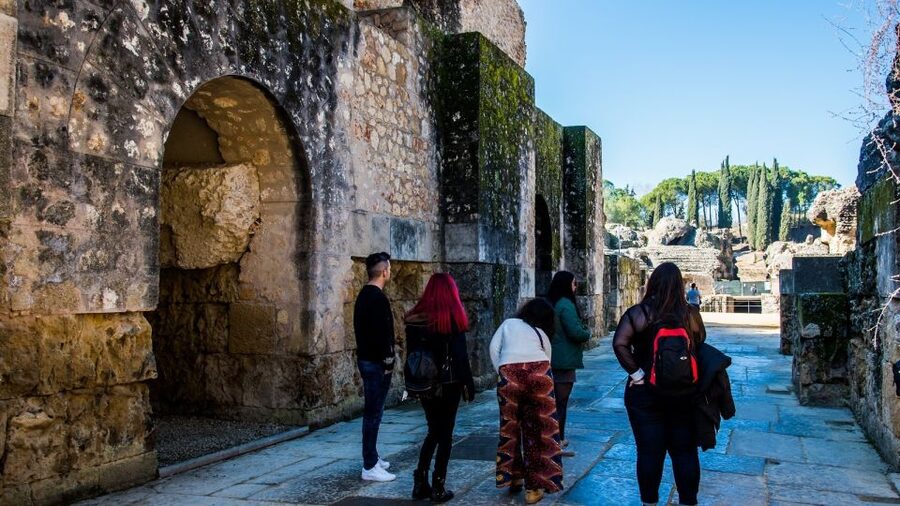
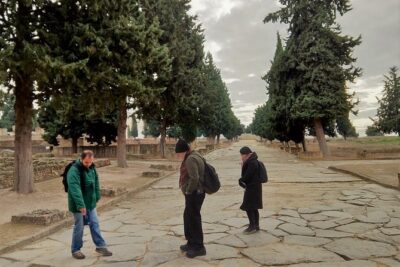
The old streets are one of the site’s quiet pleasures. They show the scale and planning of a Roman settlement better than a single monument can. You can picture people moving between homes, public baths, religious buildings, and places of entertainment.
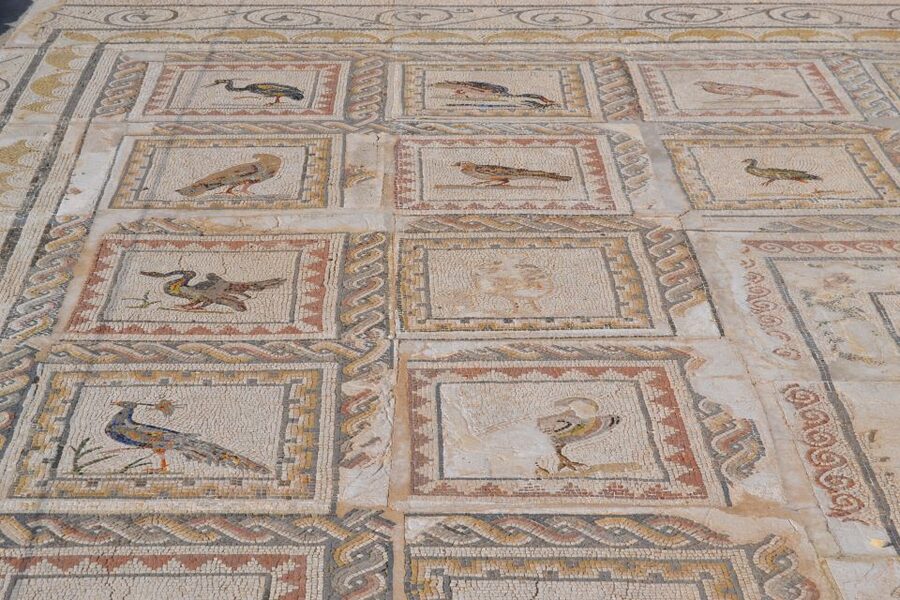
The Roman houses are especially rewarding because of their mosaic floors. These are not just decorative fragments. Their patterns and surviving sections give you a sense of the wealth and taste of the people who lived here. I would slow down at the mosaics, even if the group is ready to move on.
The tour also includes the Traianeum, a major public complex linked with Emperor Trajan. You will see statues associated with Diana, Venus, and Trajan, along with the remains of public baths. These stops help broaden the visit beyond the amphitheater. Italica was not only a place for spectacles. It was a functioning Roman city with religion, bathing, housing, and civic life.
A good guide can make a major difference here. Alberto is praised for answering questions clearly, while Miguel and José Luis are noted for mixing solid historical detail with humor. Nieves has been singled out for making the amphitheater’s past easy to picture. Guide quality can vary, but this is the sort of site where live explanation earns its keep.
Entering the 25,000-seat amphitheater
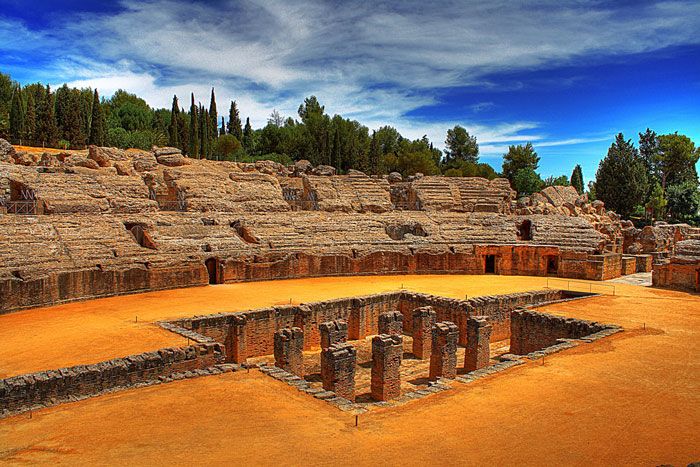
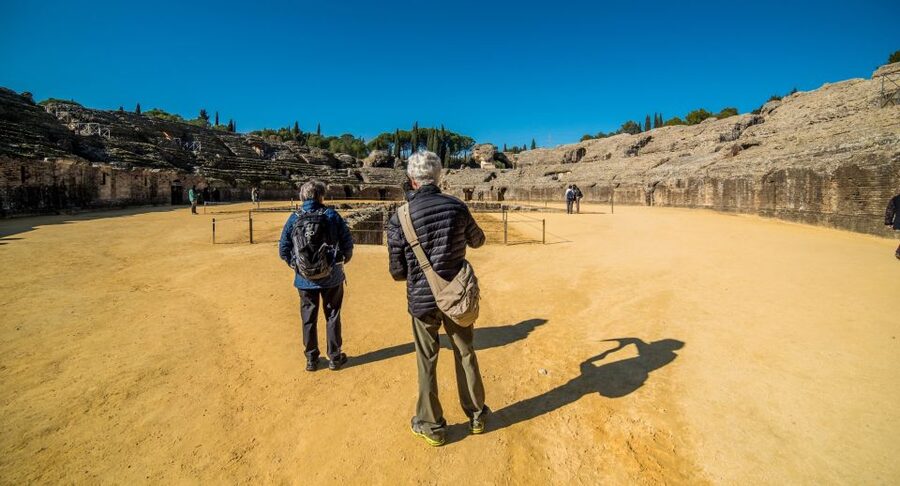
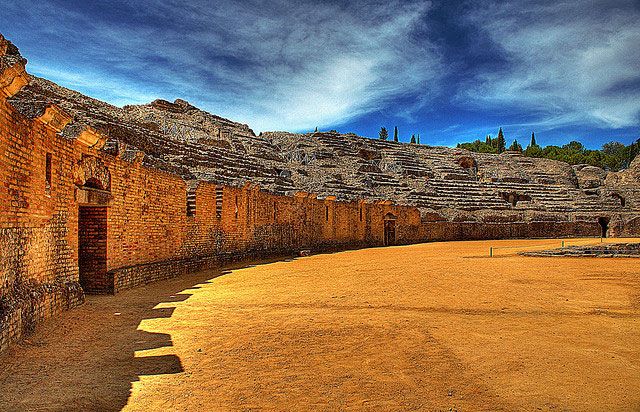
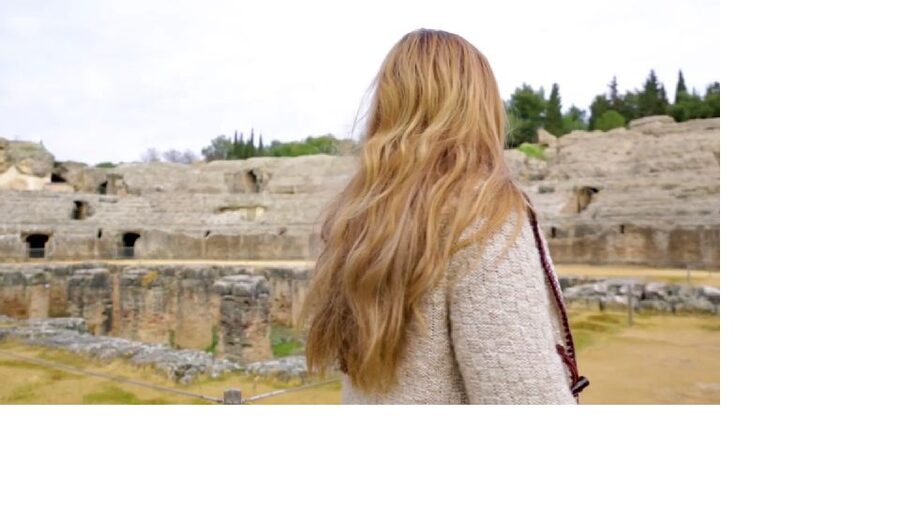
The amphitheater is the reason many people book this outing, and it does not disappoint. With seating for about 25,000 people, it was the third-largest in the Roman Empire according to the supplied tour information. Its size is striking even when you see it in a partly ruined state.
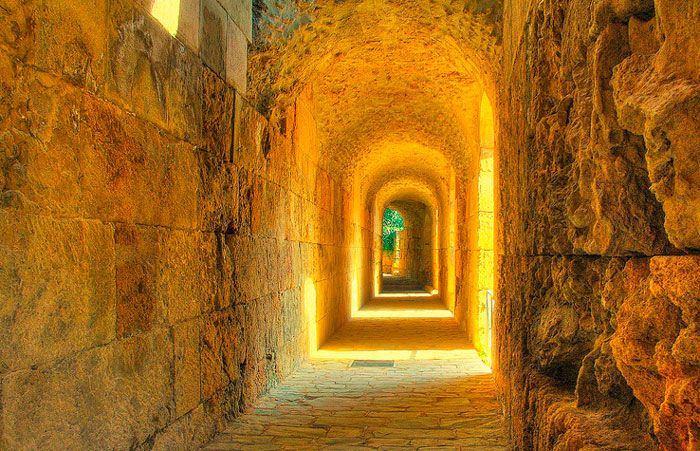
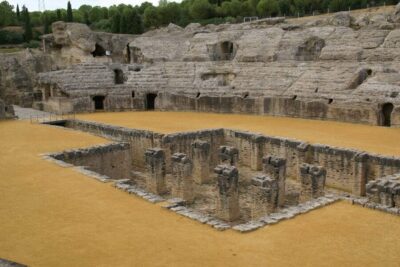
You can walk through areas beneath the seating, including the tunnels that once supported the arena’s operations. These passageways are a highlight because they shift your view from the grand public spectacle to the practical machinery below it. The arena above was designed for crowds. The tunnels below helped make the show possible.
This is also where a strong guide can add atmosphere without turning the visit into theater. You hear how the spaces worked and what the crowd would have seen, then the surviving stone gives the story weight. If you are visiting because of the site’s connection with Game of Thrones, you will still find plenty here beyond the screen association.
Allow yourself time to look upward and outward. The amphitheater is not just an enormous oval. It shows how Roman architecture controlled movement, seating, entrances, and public attention. The scale helps explain the importance of organized entertainment in Roman society.
The one practical issue is crowd spacing. On a busy departure, you may need to stay close to the guide, and it can be difficult to hear when the group spreads out. One past visitor specifically found a large group hard to follow. Stay near the guide and consider asking for a quieter position if you are struggling with the commentary.
More City Tours in Seville:
- Seville: City Sightseeing Hop-On Hop-Off Bus Tour
★ 4.0 · 4,633 reviews - City Sightseeing Seville Hop-On Hop-Off Bus Tour
★ 4.0 · 1,782 reviews - Seville: Small-Group City Highlights Walking Tour
★ 5.0 · 1,204 reviews - Seville: City Sightseeing and Local Culture Bike Tour
★ 4.9 · 1,120 reviews
Roman homes, baths, statues, and the Traianeum
After the amphitheater, the domestic and civic ruins provide a useful change of pace. The mosaics are the visual stars, but the remains of the houses help you understand that Italica was a place where people lived, not simply an imperial monument.
The public baths are another important stop. Roman baths were social spaces as well as places to wash, and their remains help explain the public services expected in a Roman city. You will not see every part intact, so listen for the guide’s explanation of how the structures once worked.
The statues of Diana, Venus, and Trajan add a human scale to the visit. A ruined wall can be hard to read. A figure, even one removed from its original setting, makes Roman belief, power, and taste easier to grasp.
The Traianeum gives the tour a political and religious dimension. Its presence connects Italica with Trajan, who was born here and later ruled the empire. Hadrian, another future emperor from Italica, adds another layer to the city’s importance.
I would not expect a museum-style display during the standard visit. One past departure would have liked the museum or display area included, so check the exact arrangement when booking if that matters to you. The main focus is the outdoor archaeological ensemble.
The Roman theater at Santiponce
The partly reconstructed Roman theater is another scheduled highlight. It provides a useful contrast with the amphitheater. The amphitheater was built for huge crowds and arena spectacles, while the theater points to staged performance and civic culture.
Because the theater is partially reconstructed, it is easier to read than some of the lower ruins. You can see how the seating and performance space relate to each other, then compare that design with the amphitheater’s more imposing scale.
The theater may be visited as part of the wider Santiponce portion of the outing. The order of stops can change, so do not assume it will come before the amphitheater or the houses. The guide will direct the sequence on the day.
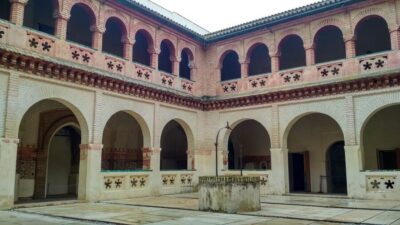
Several past departures also included a monastery visit, sometimes with a little bread, cheese, and wine. That sounds pleasant, and some people considered it a welcome extra. It is not the clearest part of the published core route, though, and at least one person would have preferred more time among the Italica ruins instead. Treat the monastery as a possible addition rather than the reason to book.
How much time do you really get?
The total outing lasts four hours, including the round-trip transfer. About three hours are set aside for the guided visit, which is a good balance for a half-day trip from Seville.
You should not expect a long period of independent wandering. The tour is structured around the guide’s route and commentary. One past visitor specifically wanted more free time, while another felt the visit was well paced and not rushed. Both reactions make sense: you cover a great deal, but the schedule leaves limited room to set your own pace.
Families can manage the outing. A past family brought a four-year-old and a one-and-a-half-year-old and found the experience workable, though a stroller was useful at times and could not be used everywhere. The ruins are not a place where a stroller will always move easily, so parents should expect to carry it or carry a child during some sections.
The hot months need care. The site is outdoors, and one past visitor noted that the weather required preparation even in manageable conditions. Bring water, sun protection, and shoes suited to uneven ground. These are basic precautions, but they matter more when most of the visit takes place outside.
Guide quality and group dynamics
The guide is the part of this tour that most affects the final experience. The strongest names associated with past departures include Alberto, Miguel, José Luis, Nieves, Sergio, Javier, Montse, and Jesus. Their reported strengths include clear explanations, humor, patience, and the ability to answer questions.
That does not mean every guide will deliver the same level of detail. One departure had a friendly and funny guide who offered less historical context than expected. Another group had difficulty hearing because of its size. I would book this as a guided orientation to Italica, not as a private archaeological lesson.
The live guide speaks Spanish or English. French, German, and Italian tours can be requested, though you should check with the local operator rather than assume availability. When a tour is conducted in two languages, explanations may take longer or feel less focused, but the arrangement can help the operator handle changes in the route.
Cancellation, lunch, and overall value
The $51 price includes round-trip transport, the entrance fee, and an official tourist guide. That is fair value for a four-hour outing, particularly if you want a simple departure from central Seville and do not want to plan the logistics yourself.
An optional lunch is available for €18. I would consider it only if you want the convenience of staying with the group. If Italica is your priority, confirm how much time lunch takes and whether it affects the time at the ruins.
You can cancel up to 24 hours before departure for a full refund, and you can reserve now while paying later. Those policies help if your Seville schedule is still shifting.
Should you book the Italica tour?
Book it if you want Roman history outside Seville, prefer a guided visit, and value easy transport over total freedom. It is also a smart choice if you enjoy mosaics, ancient architecture, and the human stories behind ruined buildings.
I would be more cautious if you want a quiet, self-paced archaeological visit or if you dislike staying with a group. The tour covers a lot in four hours, and the guide’s pace, group size, and possible extra stops can shape the day.
For most visitors, the amphitheater, tunnels, mosaics, and Roman streets justify the trip. Just go in knowing that Italica is the main attraction, the monastery may not be part of every departure, and independent exploration is limited. With those expectations, this is a practical and worthwhile half-day from Seville.
FAQ
How long is the Italica tour from Seville?
The experience lasts four hours, including transportation between Seville and Italica.
How far is Italica from Seville?
Italica is located about 15 minutes from Seville, while the organized bus or coach transfer is listed as approximately 30 minutes each way.
What is included in the price?
The price includes round-trip transportation, entrance to Italica, and an official tourist guide.
How much does the tour cost?
The listed price is $51 per person.
Where can I meet the tour?
Pickup is available at Calle Trajano 6, Hotel Don Paco, or C. Rastro 12A.
What time does pickup begin?
The listed pickup times are 9:45 at Calle Rastro 12A, 9:50 at Hotel Don Paco, and 10:00 at Calle Trajano 6.
Which languages are available?
The live tour is available in Spanish and English. French, German, and Italian tours may be available on request.
How much time do I spend at Italica?
The guided visit lasts about three hours, within the total four-hour outing.
Is lunch included?
Lunch is not included, but an optional lunch is available for €18.
Can I cancel the booking?
You can cancel up to 24 hours in advance for a full refund.
Just added around Seville
- The Villages of Andalusia: Full-Day Trip from Seville★ 4.8 · 19 reviews
- From Seville: White Villages Tour★ 5.0 · 9 reviews
- White Villages & Ronda 2-Days Trip & Overnight Stay★ 4.6 · 5 reviews
- Your Photo Story in Seville★ 5.0 · 16 reviews
- Triana Market Tapas Tour★ 4.9 · 12 reviews
- Seville: Guided visit of the Casa de Pilatos with entrance tickets★ 4.3 · 18 reviews
- From Seville: Wine Tourism Half Day Tour★ 4.0 · 17 reviews
- Wine tourism, visit to a traditional winery and wine tasting★ 5.0 · 3 reviews
Italica Roman City Tours, compared.
Historical Italica: Half-Day Guided Tour from Seville
Read our review →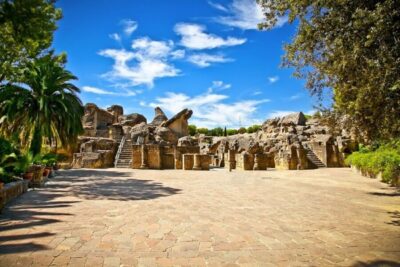
Visit to Italica Roman Ruins Tour tickets included
Read our review →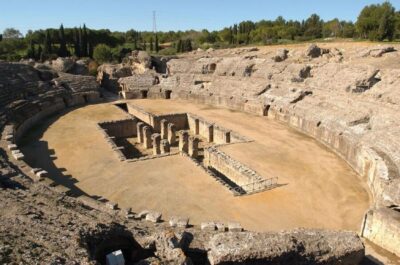
Private hald day tour to the historic roman city of Italica
Read our review →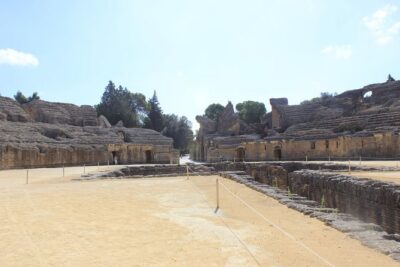
Browse the lists this tour appears in