
Reviewed · WALKING TOURS
Private Half Day Walking Tour of Seville
Seville’s story unfolds in layers on this private walk: Islamic medina, royal palace, Jewish quarter, Atlantic trade, opera, and modern architecture all appear within a few city blocks. You start at Puerta de Jerez and finish near the Cathedral, covering a large slice of the historic center in about two to three hours.
I like the private format, since your group can ask questions and set the pace without waiting for strangers. I also like the way the route links famous sights with smaller places, from Plaza del Cabildo and the Postigo Arch to the flower-filled lanes of Santa Cruz. The main drawback is clear: you see the interiors of the major monuments only from outside, so you will need separate tickets and time for the Cathedral, Alcázar, and other sites.
Key points at a glance
- A private walk from Puerta de Jerez to Plaza de San Francisco: Your group has the guide to itself, with no private transport included.
- A strong historical sweep: The route connects Seville’s Islamic, Jewish, royal, maritime, and Renaissance past.
- Major sights from the outside: You see the Cathedral, Giralda, Alcázar, Torre del Oro, Royal Tobacco Factory, and Archivo de Indias without interior admission.
- Personal guiding from Carlos or Fernando: The tour has been led by guides with decades of local experience and a lively storytelling style.
- A good orientation walk: You finish close to the Cathedral and City Hall, well placed for further sightseeing in central Seville.
- A serious amount of walking: Plan for a moderate fitness level, warm-weather protection, and comfortable shoes.
Why this route works for first-time Seville visits
This is not a single-monument tour. It is a city introduction built around Seville’s most recognizable sights. You move from the grand civic spaces around Puerta de Jerez into the old Jewish quarter, then through the commercial center toward the modern Setas de Sevilla.
That broad route matters because Seville can feel like a collection of separate districts at first. The guide ties them together. The former mosque explains the Giralda. Atlantic trade helps explain the Archive of the Indies and the city’s wealth. The old Jewish quarter gives Santa Cruz its narrow streets and small plazas. The 1929 exposition explains several grand buildings near Maria Luisa Park.
I would choose this tour early in a Seville stay, especially if you want help getting your bearings. It does not replace a full visit to the Alcázar or Cathedral, but it can help you decide where to spend your remaining time.
The guide is a major part of the experience. Carlos and Fernando are the named guides associated with this walk, and the experience has been praised for friendly conversation, humor, detailed local history, and storytelling. Carlos has been described as having 30 years of experience in Seville guiding. Fernando is noted for explaining Spanish history while staying attentive to practical needs such as shade, bathrooms, and local shopping.
Those details are useful in Seville’s summer heat. This is an outdoor walk, and the route includes open plazas and long stretches of pavement. A private guide can make sensible pauses, but the published information does not promise a fixed break schedule.
More Walking Tours in Seville:
- Seville: Small-Group City Highlights Walking Tour
★ 5.0 · 1,204 reviews - Cultural Walking Tour of Seville Monumental
★ 5.0 · 861 reviews - Seville: Tapas, Taverns, and History Walking Tour
★ 4.9 · 676 reviews
Puerta de Jerez and Seville’s grand southern entrance
The walk begins at Puerta de Jerez, one of the old entrances to Seville. From here, the route quickly brings you into the city’s grand ceremonial zone, where the Hotel Alfonso XIII, Palacio de San Telmo, former Tobacco Factory, and Torre del Oro sit within easy reach.
The Hotel Alfonso XIII was built for the Ibero-American Exposition of 1929. You see its exterior rather than entering, but the building helps set the tone for this part of Seville: monumental, decorative, and designed to present the city to the wider world.
The surrounding buildings also show how different chapters of Seville’s past overlap. The Palacio de San Telmo began as a school for navigators during the age of Atlantic exploration. It later became a residence of the Spanish royal family. Its gardens are now part of Maria Luisa Park, another major legacy of the 1929 exposition.
This opening section is especially useful if you want more than a list of names. The guide can explain how navigation, empire, royal power, and civic display shaped the city. Since the tour is private, you can ask for more detail about the buildings that interest you most.
The Tobacco Factory and the story behind Carmen
The former Royal Tobacco Factory is one of the largest historic buildings in Spain, described as second in size only to the Escorial. Today it houses the Rectorate of the University of Seville, so you see its exterior during the walk.
The building also connects Seville with opera. It was the setting associated with Carmen, the famous opera by Georges Bizet. That gives the stop a useful cultural hook. Even if you do not know the opera well, the contrast is memorable: a huge industrial building, once tied to tobacco production, now functioning as a university complex and linked in popular culture with one of opera’s best-known characters.
The drawback is that the tour does not include an interior visit. You get the architecture, setting, and explanation, but not a full look inside the former factory.
Torre del Oro and Seville’s river power
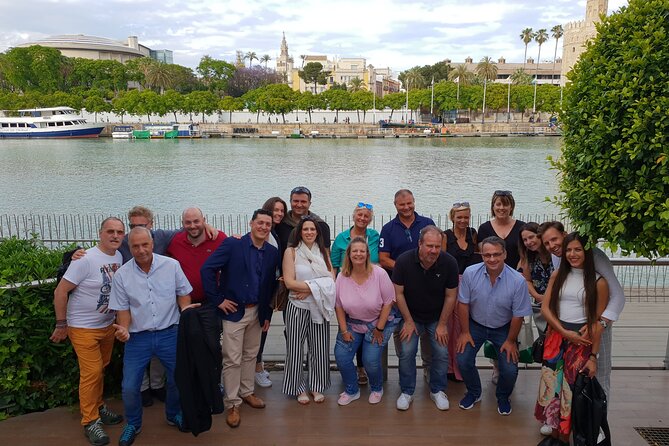
The Torre del Oro is one of Seville’s most familiar sights. This 13th-century Islamic tower played an important part in the city’s maritime defenses and river traffic. The route views it from outside.
Its position helps explain Seville’s old connection to the Guadalquivir River and the Atlantic. The tower is not simply a photogenic landmark. It points to the city’s role as a port and gateway for trade with the Americas.
If you want to enter the tower, you will need to arrange that separately. On this walk, the value comes from seeing it in relation to the old city, the river, and the other buildings around Puerta de Jerez.
More Private in Seville:
- Seville: Private City Tour by Eco Tuk Tuk
★ 4.8 · 963 reviews - Tour Welcome Seville with Local Guide in Eco Tuk Tuk Private
★ 5.0 · 786 reviews - Private Seville Tapas & History Tour
★ 5.0 · 380 reviews - Seville Private Walking Tour with Alcazar & Cathedral Tickets
★ 5.0 · 332 reviews
Postigo Arch and the Royal Shipyards
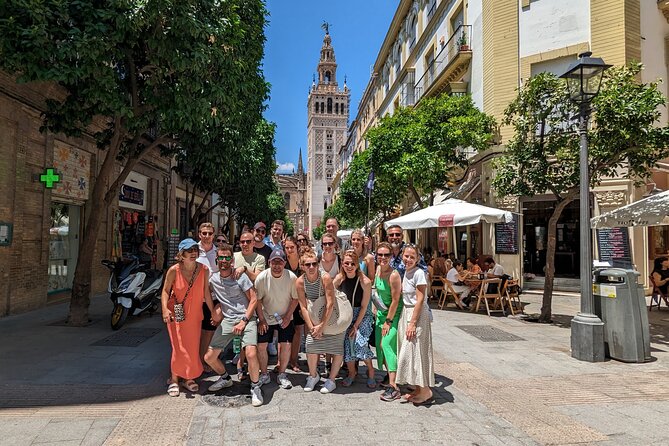
The Postigo Arch is another surviving entrance through Seville’s old walls. Nearby are the Royal Shipyards, where ships connected to voyages toward America were built.
This is one of the more revealing stops because it moves away from the postcard view of Seville. The arch and shipyards show how the city worked as a fortified, maritime center. The shipyards also gained renewed fame as a filming location for Game of Thrones.
The tour only covers the exteriors, so do not book this walk expecting a museum-style visit to the shipyards. You are getting context and street-level views, with the guide supplying the historical links.
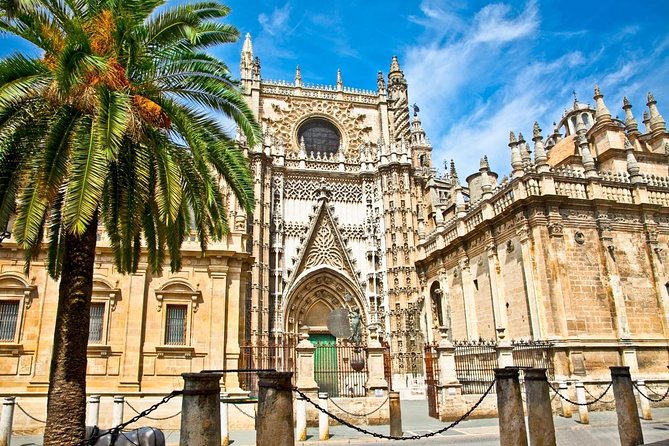
Plaza del Cabildo, Cathedral, and the Giralda
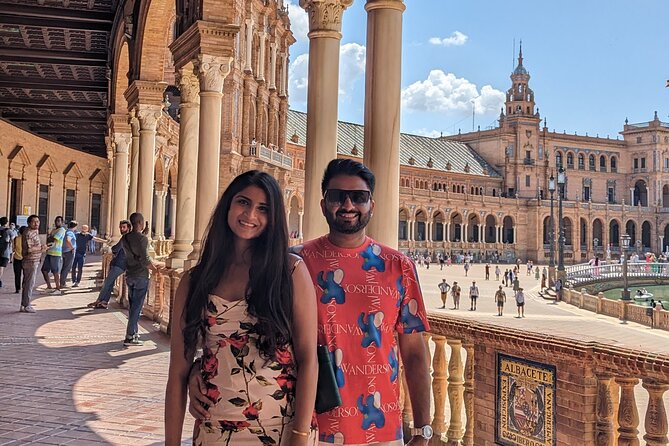
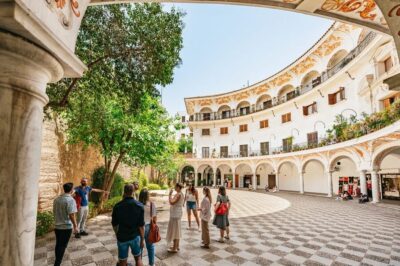
Plaza del Cabildo is a quiet, curved square near the Cathedral. It is associated with the canons of the Cathedral, and an antiques market is still held there on Sundays. This stop gives you a break from Seville’s larger plazas and crowded shopping streets.
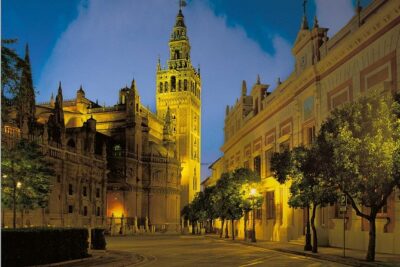
The Cathedral is next. It is the largest Gothic church in the world and became a UNESCO World Heritage Site in 1987. The building was constructed on the site of Seville’s main mosque, and its Islamic past remains central to understanding both the Cathedral and the Giralda.
You see the Cathedral from the outside. The guide can point out how Christian Gothic design was built around an earlier Islamic structure, making the exterior a visible record of Seville’s changing religious and political life.
The Giralda is the city’s symbol. It began as a 12th-century Islamic minaret and later became the Cathedral’s bell tower. Its lower structure preserves the memory of the mosque, while its later additions reflect the Christian transformation of the building.
This is one place where I would strongly consider adding a separate interior visit. The walking tour gives you the essential story and a good exterior view, but admission to the Cathedral and Giralda is not included. If you want to climb the tower or spend time inside the church, plan that for another part of your schedule.
Archive of the Indies and the Alcázar walls
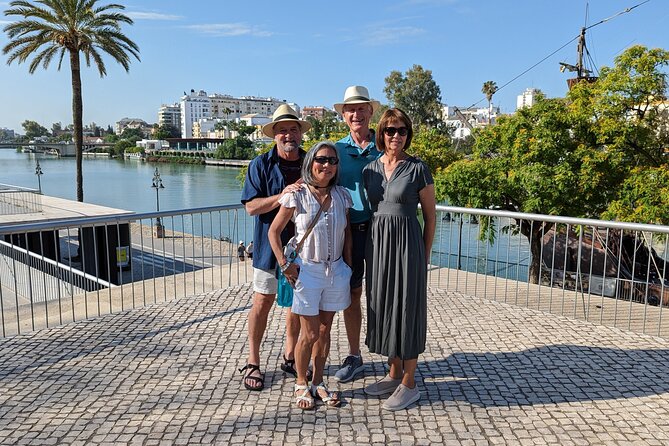
The General Archive of the Indies is another exterior stop, but its contents make the building important. Inside are more than 40,000 documents connected with the Americas, along with maps, the Treaty of Tordesillas, and handwritten material by Christopher Columbus.
The guide can use this building to explain Seville’s role as the port and gateway to the Americas during the city’s 16th-century high point. The stop works best as part of the larger story rather than as a stand-alone photo opportunity.
Next comes the Real Alcázar. It is a UNESCO World Heritage Site and the oldest royal palace in Europe still in use. You see the walls and hear stories about the monarchs connected with the palace. The guide also covers Dorne, one of the fictional kingdoms represented in Game of Thrones, filmed inside the Alcázar.
Again, the exterior-only format is the key limitation. The Alcázar’s courtyards, rooms, gardens, and decorative tilework deserve their own visit. This tour can help you understand why the palace matters, but it does not provide admission or an interior tour.
Santa Cruz, Seville’s former Jewish quarter
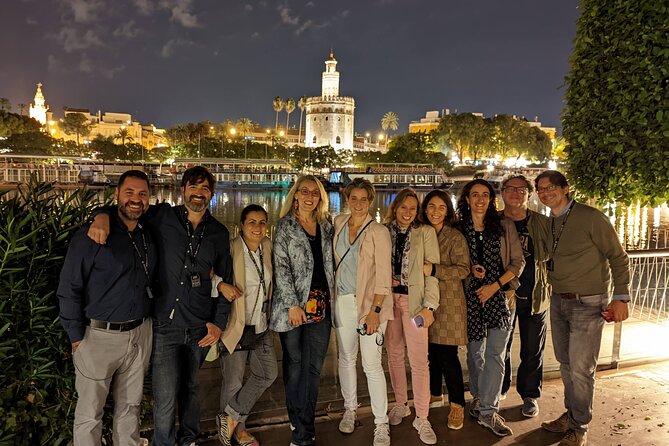
The route then enters Barrio de Santa Cruz, the old Jewish quarter and one of Seville’s most atmospheric districts. Here the pace becomes less about grand monuments and more about lanes, small squares, patios, flowers, and changing views.
You pass Plaza de Doña Elvira, Plaza de los Venerables, Plaza del Agua, Plaza de la Vida, and Plaza de Santa Cruz. The exact feel of Santa Cruz comes from the spaces between these squares: narrow streets, whitewashed walls, and turns that reveal another small plaza.
The quarter is also tied to opera. The Barber of Seville is among the works associated with the area. That connection adds a bit of theatrical flavor, but the streets remain enjoyable even if opera is not your interest.
Santa Cruz can be confusing on your own, especially when you are trying to connect it with the Cathedral and Alcázar. This is where a local guide is particularly useful. You get the broad story of the neighborhood and the small details that are easy to miss when walking without context.
City Hall, El Salvador, and the old medina
From Santa Cruz, the tour moves toward Seville City Hall. Built in the 16th century during the reign of Emperor Charles V, it is a fine example of Renaissance architecture in the city.
Its decoration reflects Seville’s prosperity when the city served as a major port for trade with the Americas. The exterior is the focus, so take time to look at the detailed stonework while the guide explains what the building says about Seville’s political and economic power.
The Church of El Salvador adds another layer. It began as Seville’s first mosque in the 9th century and was converted into a collegiate church in the 13th century during the reign of Ferdinand III. The church still preserves the old ablution courtyard.
Its location also helps you picture the former Islamic medina. Shops surround the church today, just as commercial activity once surrounded the mosque at the center of the old city. This is a compact stop, but it makes the transition from Islamic Seville to Christian Seville easier to understand.
Setas de Sevilla and Calle Sierpes
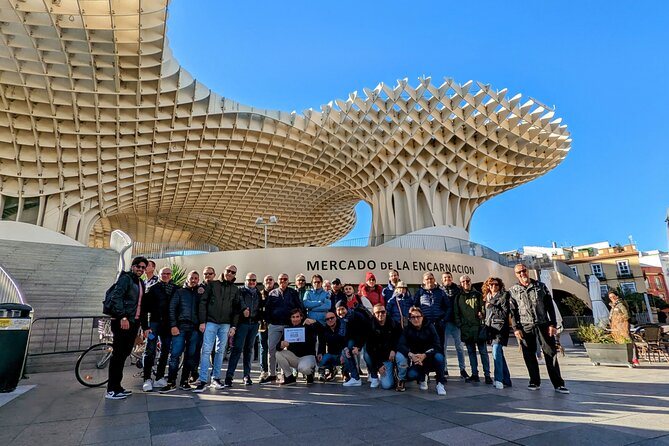
The walk continues through old Islamic streets that are now part of Seville’s main shopping area. At Plaza de la Encarnación, you reach the Metropol Parasol, commonly called the Setas de Sevilla, or Mushrooms of Seville.
Designed by German architect Jürgen Mayer, the structure is one of Seville’s most recognizable modern buildings. Its large wooden forms contrast sharply with the historic churches, palace walls, and medieval lanes earlier in the route.
This is a useful reminder that Seville is not frozen in the past. The city has added bold modern architecture to an old center, and the Setas has become a major attraction in its own right.
Calle Sierpes brings you back into the traditional commercial heart of Seville. The street is lined with shops and cafes, and its history includes the old Royal Prison where Miguel de Cervantes was held. You get a look at the city’s everyday shopping center alongside its older political and literary associations.
Ending at Plaza de San Francisco
The tour finishes at Plaza de San Francisco, near City Hall, the Cathedral, and the center of Seville. This is a practical ending point. You can continue exploring on foot, return to a central hotel, or use the surrounding area as a base for lunch and further sightseeing.
The start at Puerta de Jerez and finish at Plaza de San Francisco create a useful one-way route. You are not returned to the starting point, and private transportation is not included, but the walk ends in a central part of town rather than at an isolated pickup point.
Price, pace, and what you receive
The price is $133.03 per person, with group discounts available. For a small private group, that can be fair value if you want a personal guide and a city orientation rather than a large group lecture.
The fee includes an official professional Seville guide and tour photos. It does not include private transport or admission to the monuments. Keep that distinction in mind when comparing the price with a longer sightseeing package.
At two to three hours, the tour is long enough to cover the main historic center but too short for detailed interior visits. The pace is likely to feel active because the route includes Puerta de Jerez, the riverfront area, the Cathedral quarter, Santa Cruz, the shopping district, and Plaza de San Francisco.
The experience is offered in English and uses a mobile ticket. Confirmation is provided when you book. It is often reserved well ahead, with bookings averaging 117 days in advance, so early planning makes sense if your dates are fixed.
The activity requires moderate physical fitness. You should expect a substantial amount of walking, standing, and time outdoors. Service animals are allowed, and the meeting point is near public transportation. The tour needs good weather. If poor weather causes cancellation, you are offered another date or a full refund.
Who should book this Seville walking tour?
I would choose it for a first visit, a short stay, or a morning when you want a clear introduction before returning to the sights on your own. It is also a good fit for families and small groups who want to ask questions freely.
The tour suits you best if you enjoy history told through places, buildings, and stories. Carlos and Fernando are associated with a warm, personal style, with humor and plenty of explanation rather than a bare list of dates.
I would be more cautious if your priority is entering the Cathedral, climbing the Giralda, touring the Alcázar gardens, or examining the Archive of the Indies. Those admissions are not part of the experience. You would need to schedule them separately, perhaps before or after the walk.
Should you book it?
Book this private Seville walking tour if you want a well-planned introduction to the city with a guide who can connect Islamic, Jewish, Christian, royal, maritime, and modern Seville in one route. The private setup, central finish, and mix of major sights and smaller squares give it strong value for a first day.
Skip it if you prefer to spend your limited time inside monuments or if you dislike a brisk outdoor walk. For most visitors with two or three hours to spare, it works best as an orientation tour, followed by separate visits to the Cathedral, Giralda, and Alcázar.
FAQ
Where does the tour begin?
The tour begins at Puerta de Jerez in Seville’s old city center.
Where does the tour end?
It ends at Plaza de San Francisco, near City Hall and close to the Cathedral.
How long does the walking tour last?
The tour lasts approximately two to three hours.
Is this a private tour?
Yes. Only your group participates in the private activity.
Is the tour offered in English?
Yes. The experience is offered in English.
Does the price include private transportation?
No. Private transportation is not included.
Are monument entrance tickets included?
The tour covers the listed sights from the outside. Entrance fees are not included in the provided tour information.
Which major sights are seen from outside?
You see the Hotel Alfonso XIII, Royal Tobacco Factory, Palacio de San Telmo, Torre del Oro, Postigo Arch, Royal Shipyards, Cathedral, Archive of the Indies, Alcázar, Giralda, City Hall, Church of El Salvador, and Setas de Sevilla from outside.
Is the tour suitable for people with limited fitness?
A moderate level of physical fitness is advised because this is a walking tour covering many parts of central Seville.
What happens if the weather is poor?
The experience requires good weather. If it is canceled because of poor weather, you are offered a different date or a full refund.
Just added around Seville
- The Villages of Andalusia: Full-Day Trip from Seville★ 4.8 · 19 reviews
- From Seville: White Villages Tour★ 5.0 · 9 reviews
- White Villages & Ronda 2-Days Trip & Overnight Stay★ 4.6 · 5 reviews
- Your Photo Story in Seville★ 5.0 · 16 reviews
- Triana Market Tapas Tour★ 4.9 · 12 reviews
- Seville: Guided visit of the Casa de Pilatos with entrance tickets★ 4.3 · 18 reviews
- From Seville: Wine Tourism Half Day Tour★ 4.0 · 17 reviews
- Wine tourism, visit to a traditional winery and wine tasting★ 5.0 · 3 reviews
Walking Tours, compared.
Small-Group Jewish Quarter Discovery Walking Tour
Read our review →
Seville Private Walking Tour with Alcazar & Cathedral Tickets
Read our review →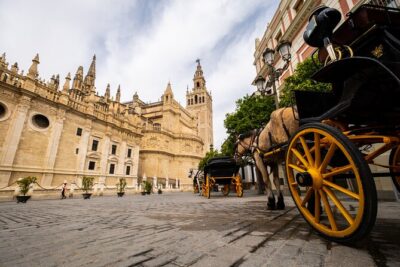
Seville Small-Group Monumental Highlights Walking Tour
Read our review →
Browse the lists this tour appears in