
Reviewed · SEVILLE MUSEUM AND GALLERY TICKETS
Private Tour of the Museum of Fine Arts, Seville
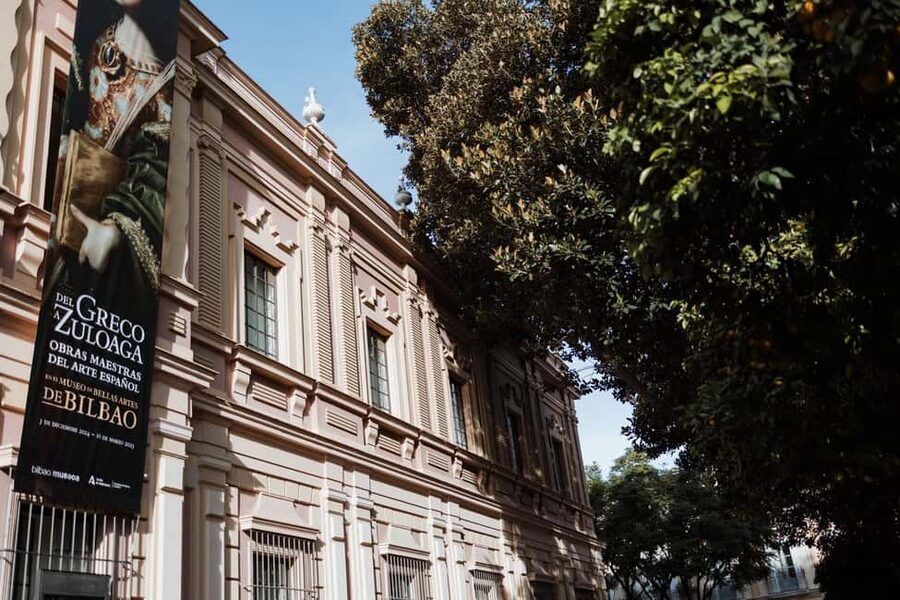
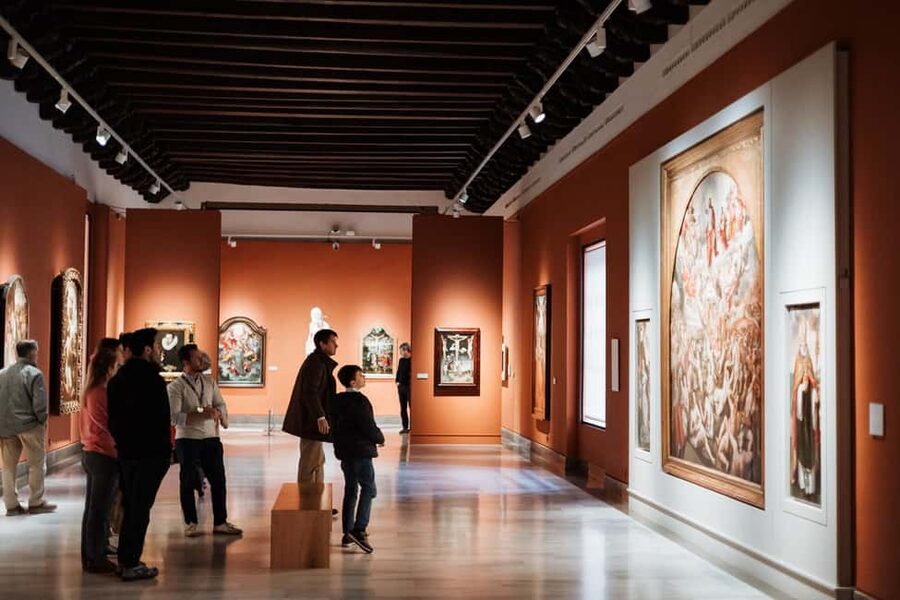
Seville’s Museum of Fine Arts is not just a quiet collection of paintings. It is housed in the former Convent of La Merced, where a spectacular former church now displays works by Murillo, Zurbarán, Valdés Leal, and other major Spanish artists. The setting gives the art a strong sense of place.
I like the private format, which lets your guide shape the two-hour visit around your interests, and I like the clear sweep through Seville’s art, from Gothic beginnings to 19th-century city scenes. Guide Julio earned especially strong praise for his historical explanations and personable manner.
The main consideration is price. At $261 for up to four people, the tour costs $65.25 per person with a full group, but much more if only one or two people book. Two hours also means you will see a focused selection rather than every room in detail.
Key points to know before you book
- The former convent is part of the attraction: La Merced’s Renaissance and Baroque spaces give the visit architectural weight.
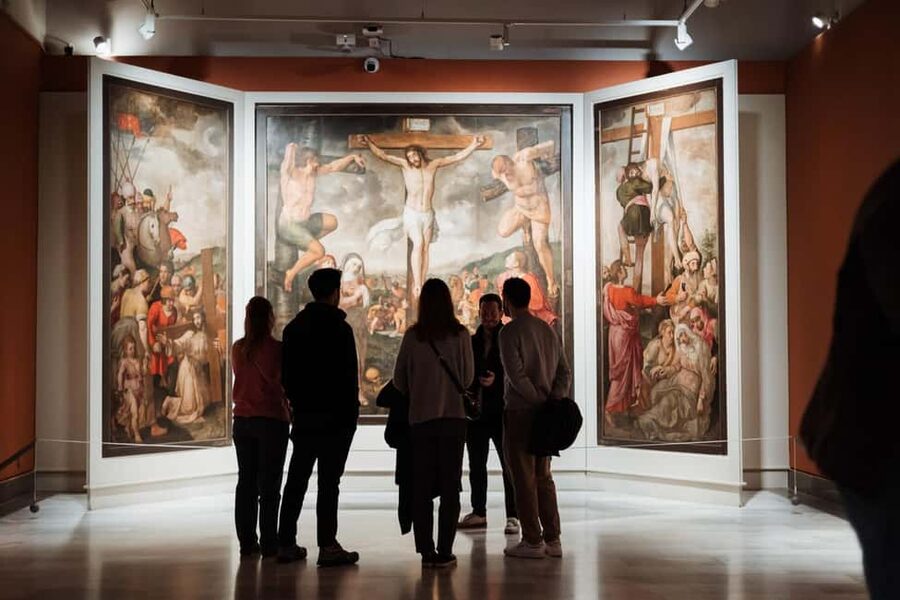
- Murillo gets a major setting: His works are shown in the old convent church, one of the tour’s most memorable rooms.
- You follow Seville’s artistic development: The route moves from Sevillian Gothic and Renaissance art to Baroque painting and 19th-century costumbrismo.
- Julio has drawn special praise: His tour style is personable, clear, and tied to the wider history of Seville and Europe.
- The tour is private and compact: It lasts two hours, includes museum admission, and is designed for a group of up to four.
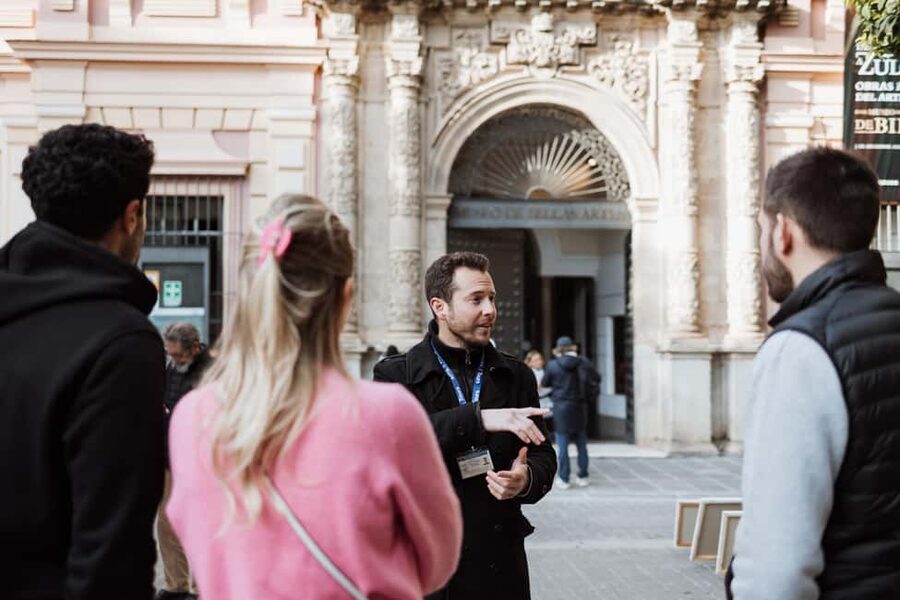
- The meeting point is simple: Start and finish at Plaza del Museo, where you look for a blue umbrella or a company name badge.
Why this museum deserves two hours
The Museum of Fine Arts of Seville is Spain’s second largest art gallery. That claim matters less as a ranking than as a warning about scale: this is not a small side museum you can sweep through in half an hour.
The collection is especially important for understanding Seville’s artistic identity. Religious commissions dominate many of the earlier rooms, reflecting the role of convents, churches, and religious orders in shaping local art. Later works show a more secular city, with artists recording people, customs, and public life in 19th-century Seville.
A guide helps connect those changes. Instead of seeing a sequence of attractive paintings, you can ask why certain subjects mattered, how artistic styles changed, and what Seville contributed to Spanish art. That wider frame is the real reason to choose a guided visit.
The building itself adds another layer. The former Convent of La Merced began in the 13th century and was remodeled in the 17th century. Its Renaissance and Baroque architecture makes the museum feel like a historic monument as well as a gallery.
More Seville Museum and Gallery Tickets:
- Seville: Puro Flamenco Show with Optional Museum Ticket
★ 4.8 · 6,088 reviews - Seville Aquarium Admission Ticket
★ 4.6 · 1,947 reviews - Seville: Museum of Illusions Entry Ticket
★ 4.2 · 1,196 reviews
Starting at Plaza del Museo
Your meeting point is Plaza del Museo, in Seville’s historic center. The guide waits with a blue umbrella or a name badge from Seville Guides & Tours, so you have a clear visual marker when you arrive.
The same plaza is used at the end, which keeps the logistics easy. You do not need to arrange a taxi, find another neighborhood, or work out a new meeting place after the visit.
The plaza also prepares you for the building ahead. You are not entering a modern exhibition hall. You are arriving at a former religious complex whose courtyards, church, and formal architecture help explain why the museum feels so different from a standard city gallery.
Because the tour lasts two hours, arriving ready to begin is useful. The experience is tightly focused, and time spent searching for the guide will reduce the time available for the collection.
From Sevillian Gothic to the Renaissance
The early part of the visit introduces the evolution of art in Seville. You may encounter Sevillian Gothic works before moving toward Renaissance pieces, allowing you to see changes in style rather than treating each painting as an isolated object.
One major highlight is Torrigiano’s San Jerónimo Penitente. The work is presented as a milestone in the Sevillian Renaissance, making it an important stop for anyone interested in sculpture as well as painting.
This is one advantage of taking the museum with a guide: the tour does not treat sculpture as a filler between famous canvases. Your guide can explain why San Jerónimo Penitente mattered and how it helped signal a new artistic direction in Seville.
The museum’s collection also includes work connected with religious orders. Pacheco’s series devoted to the Mercedarians San Pedro Nolasco and San Román Nonato represents Mannerism, a style that followed the Renaissance and favored more deliberate, stylized effects.
If you enjoy seeing art change over time, this section gives the tour a useful backbone. You are not simply ticking off names. You are watching local art move through distinct periods and purposes.
Pacheco, Valdés Leal, Zurbarán, and Alonso Cano
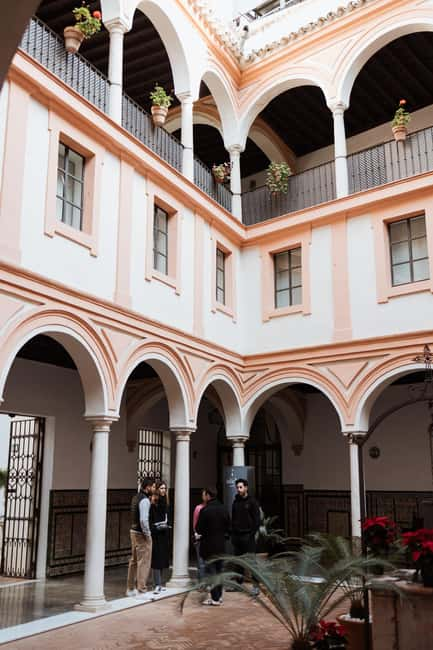
The Baroque rooms bring some of the museum’s best-known names into view. Francisco de Zurbarán, Juan de Valdés Leal, and Alonso Cano are central to the story of Spanish painting and sculpture in this period.
These works also show why religious art in Seville deserves more attention than a quick glance may suggest. Many pieces were made for specific religious settings, and their scale, emotion, and subject matter were shaped by the needs of churches and convents.
Valdés Leal is known for forceful religious imagery, while Zurbarán is closely associated with powerful, focused compositions and sacred figures. The tour gives your guide room to explain how these artists worked within the Baroque world and why their work mattered in Seville.
Alonso Cano adds another important name to the visit. Since the museum includes both paintings and sculpture, you get a broader sense of Spanish artistic production than you would from a painting-only route.
This is also the point where a strong guide can make a real difference. Julio was praised for connecting the art to Seville and to wider European developments. That kind of context helps you understand why a work belongs to a particular moment, not just whether you happen to like its appearance.
A different sort of afternoon in Seville:
- Seville: Royal Alcázar Entry Ticket
★ 4.6 · 28,378 reviews - Seville: Cathedral and La Giralda Entry Ticket
★ 4.5 · 24,592 reviews - Seville: Live Flamenco Dancing Show Ticket at the Theater
★ 4.7 · 16,396 reviews - Seville: 1-Hour Guadalquivir River Sightseeing Eco Cruise
★ 4.2 · 10,281 reviews
Murillo in the former convent church
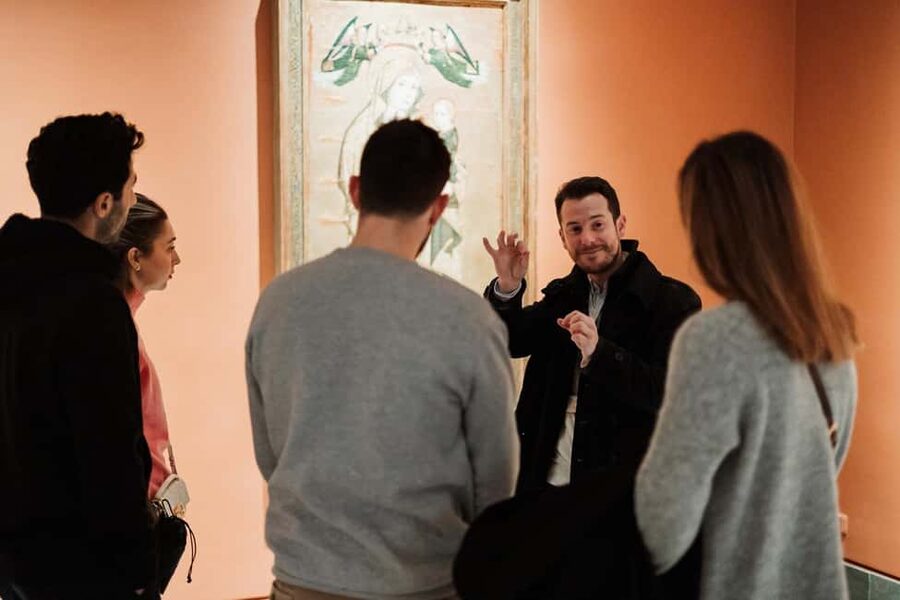
The room dedicated to Bartolomé Esteban Murillo occupies the former church of the convent. It is one of the most distinctive spaces on the tour because the architecture and the art remain closely linked.
Murillo is one of Seville’s signature artists, and placing his work in the old church gives the collection a fitting setting. You see paintings by an artist associated with the city inside a space that once served the religious community for which much of this kind of art was made.
I would give this room your full attention. Two hours is enough to see it properly with a guide, but not enough to stand before every work for a long time. Listen for the details that explain the intended setting, subject, and purpose of the paintings.
The former church is also a reminder that museums often change the meaning of art. A painting that once belonged to a working religious space is now viewed in a museum. The building helps you imagine that earlier role without requiring you to reconstruct it from labels alone.
If Murillo is the main reason you are visiting, tell your guide at the start. The private format makes it easier to give his work the emphasis you want.
Sculpture from Santa María de las Cuevas
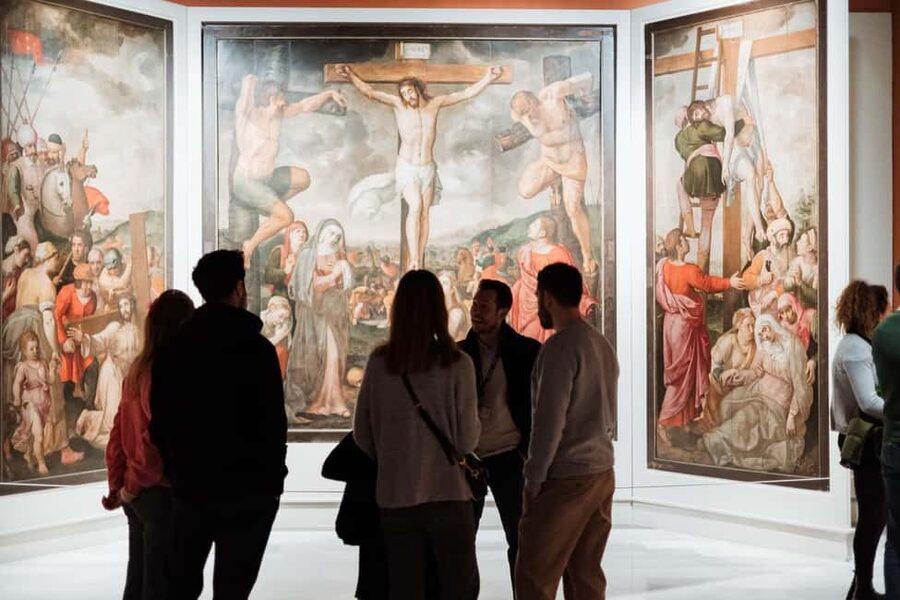
The tour also includes sculpture from the former Convent of Santa María de las Cuevas. Among the artists represented are Martínez Montañés and Juan de Mesa, two important names in Sevillian sculpture.
This stop broadens the experience beyond the better-known painting rooms. You can compare how religious feeling is expressed through carved form, posture, and facial detail rather than only through color and brushwork.
Martínez Montañés and Juan de Mesa are especially useful names to encounter in Seville because they represent the city’s strong sculptural tradition. Their work helps show that Seville’s artistic identity was built by sculptors as well as painters.
The former convent connection matters here, too. These sculptures come from a religious setting, so your guide can help explain how they functioned within that world. The museum is not presenting random pieces from unrelated places. Its collection tells a story about institutions that supported art and the artists who served them.
For visitors who usually rush past sculpture, this section is a good reason to slow down. Ask your guide to point out the details that separate a work by Martínez Montañés from one by Juan de Mesa.
Seville in the 19th century
The final part of the tour moves into 19th-century Sevillian costumbrismo. This art focuses on local customs, people, and scenes of everyday life, offering a different view of Seville from the earlier religious rooms.
Artists including Gonzalo Bilbao, Antonio María Esquivel, and José Villegas Cordero represent this later period. Their work helps you see how the city was being recorded and imagined as artistic attention shifted beyond convents and churches.
This change in subject is valuable because it gives the visit a clear ending. You begin with religious and historical commissions, then finish with a city that is more recognizable as a place of daily life and local character.
The contrast can also help you remember the earlier rooms. After seeing 19th-century scenes, you may better appreciate how much the role of art had changed. The tour is not just a parade of famous names. It is a compact account of changing tastes and changing ideas about what deserved to be painted.
What the private format adds
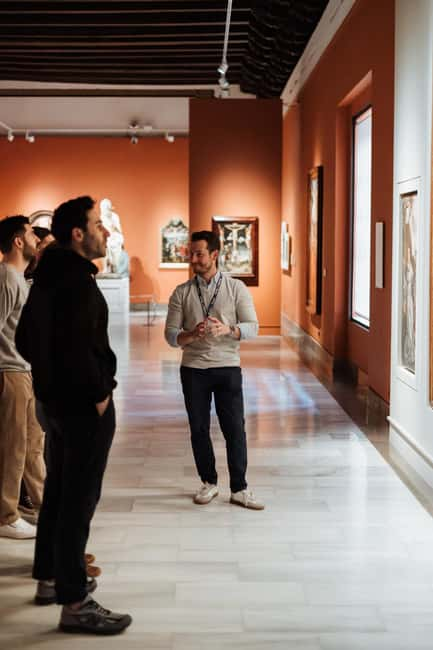
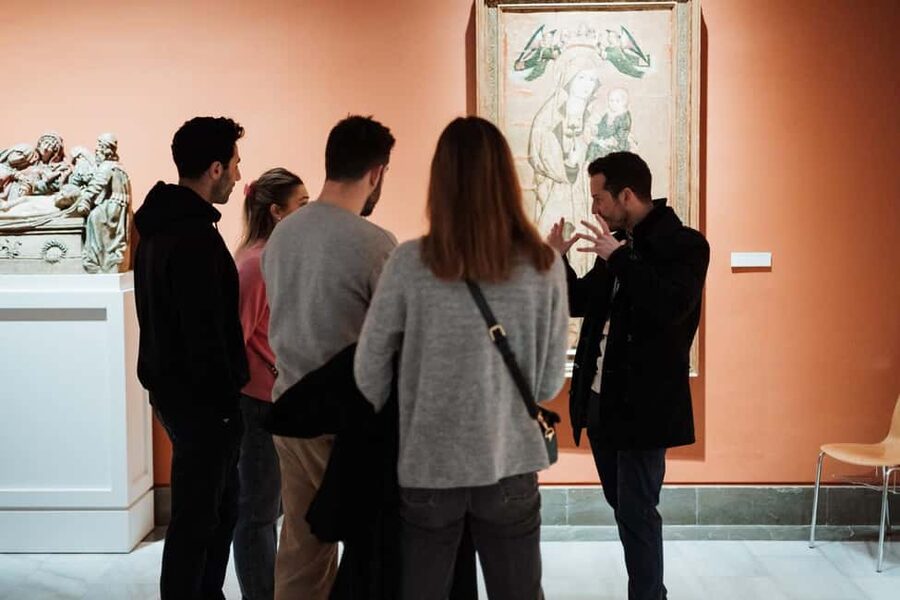
The private group is the strongest practical reason to book this experience instead of visiting on your own. You are not tied to the questions or pace of a large mixed group, and you can ask for more attention to painting, sculpture, architecture, or a particular artist.
The tour is offered in English or Spanish. If you choose English, you can expect the guide to explain the works and their context directly rather than leaving you to rely on labels.
Julio is the guide name most closely associated with the positive feedback supplied for this experience. His style was described as personable, gracious, and clear, with special strength in explaining the historical importance of the art to Seville and Europe.
That does not guarantee that Julio will lead every departure, so check the guide details when booking. Still, the praise points to the kind of tour this is designed to be: an interpretive visit, not simply an escort through the doors.
The private setup also suits families, couples, or a small group of friends who want to ask questions without feeling self-conscious. The experience is less appealing if you prefer to wander alone and set your own pace in every room.
Is $261 a fair price?
The listed cost is $261 per group of up to four people. With four people, that works out to $65.25 each for two hours, including museum admission and a live English or Spanish-speaking guide.
For two people, the effective cost is $130.50 per person. For one person, it is the full $261, so the value depends heavily on how many people share the booking.
The price is easier to justify if you care about interpretation. Admission alone gives you access to the building and collection, but it does not necessarily provide the same clear route through Gothic, Renaissance, Mannerist, Baroque, and 19th-century art.
I would consider it good value for a group of four with limited time in Seville, especially if you want to understand why the museum matters rather than simply see its most attractive rooms. A solo visitor on a strict budget may prefer an independent visit, particularly if the main goal is to see Murillo and leave.
The booking terms also give you some flexibility. You can reserve now and pay later, and cancellation is free up to 24 hours in advance for a full refund. Wheelchair access is available, which is useful to confirm as part of your planning.
Who should book this Seville museum tour?
I recommend it most strongly if you fit one of these descriptions:
- You want a clear introduction to Spanish and Sevillian art.
- You care about the building as much as the paintings.
- You are visiting Seville for a short time and want a focused museum visit.
- You prefer asking questions to a private guide rather than reading labels alone.
- You are traveling with up to three companions and can share the group price.
- You want to see both painting and sculpture, including works connected with former convents.
Art specialists may find two hours too short for a close study of the entire collection. The museum is Spain’s second largest art gallery, and this tour gives you a selected route rather than unlimited time in every room.
The experience may also be less suitable if you want a casual, unstructured visit. Its strength is the guide’s selection and explanation, so you should expect a planned museum tour rather than a free wander.
Should you book it?
Book this tour if you want Seville’s art explained through its buildings, religious institutions, artists, and changing city life. The Murillo room in the former church, Torrigiano’s Renaissance sculpture, the Baroque masters, and the 19th-century costumbrismo provide a well-shaped two-hour route.
I would book it for a group of four, when the cost becomes much easier to justify. If you are alone or traveling as a couple, compare the price with your own interest in guided context. For most first-time visitors who want more than a quick look, the private format and Julio’s praised approach make this a strong museum choice.
FAQ
Where does the tour begin?
The tour begins at Plaza del Museo in Seville.
Where does the tour end?
The activity ends back at the meeting point in Plaza del Museo.
How long does the tour last?
The guided visit lasts two hours.
What languages are available?
The live guide is available in English or Spanish.
Is museum admission included?
Yes. Entrance to the Museum of Fine Arts is included in the tour price.
How many people can join the private group?
The price covers a private group of up to four people.
Just added around Seville
- The Villages of Andalusia: Full-Day Trip from Seville★ 4.8 · 19 reviews
- From Seville: White Villages Tour★ 5.0 · 9 reviews
- White Villages & Ronda 2-Days Trip & Overnight Stay★ 4.6 · 5 reviews
- Your Photo Story in Seville★ 5.0 · 16 reviews
- Triana Market Tapas Tour★ 4.9 · 12 reviews
- Seville: Guided visit of the Casa de Pilatos with entrance tickets★ 4.3 · 18 reviews
- From Seville: Wine Tourism Half Day Tour★ 4.0 · 17 reviews
- Wine tourism, visit to a traditional winery and wine tasting★ 5.0 · 3 reviews
Seville Museum and Gallery Tickets, compared.
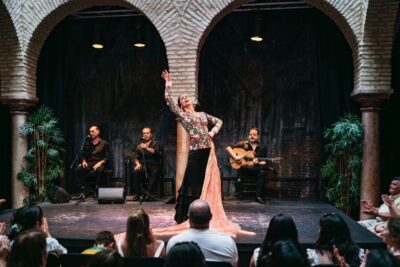
Puro Flamenco Show with Optional Museum Ticket
Read our review →



A Fantastic Visit To The Museum Of Illusions Seville
Read our review →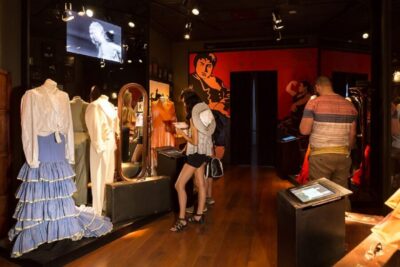
Combined ticket: Puro Flamenco Show + Flamenco Museum visit
Read our review →Browse the lists this tour appears in