
Reviewed · SEVILLE FLAMENCO SHOWS
Private walking tour to Seville with Flamenco Show
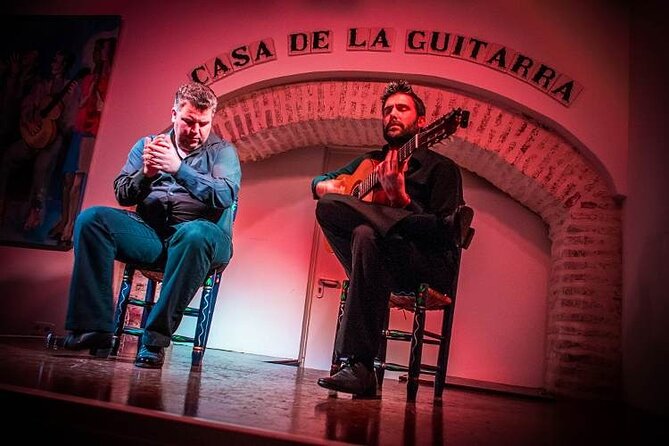
Seville’s best evening surprise comes at the end: Casa de la Guitarra, a tiny room where one dancer, one singer, and a guitarist perform close enough for you to catch every foot tap. I like that this is not a large dinner theater, and I like beginning at the Torre del Oro, where the Guadalquivir gives the city’s story a clear starting point.
I also like the small private-group format and guides such as Rosa and Vicente, who are praised for making Seville’s past easy to follow. The main drawback is important: the tour does not include entry to the Cathedral or Alcazar, and the walking portion may be shorter and less complete than the description suggests.
Key points to know before booking
- Small flamenco venue: Casa de la Guitarra uses a compact room with no microphone or amplifier, creating an intense, close-up performance.
- Exterior sightseeing: You see the Cathedral and Alcazar, but admission to either monument is not included.
- Strong local guiding: Rosa and Vicente are noted for clear history, humor, and a relaxed pace.
- Useful first-evening orientation: The route links the river, El Arenal, medieval towers, major monuments, and Santa Cruz.
- Hot late afternoon: The 5:15 pm start can still be very hot in summer, especially during a slow walking tour.
- Food is not part of the plan: You may have only a short break to grab food before the 9 pm flamenco show.
A small flamenco room with a big effect
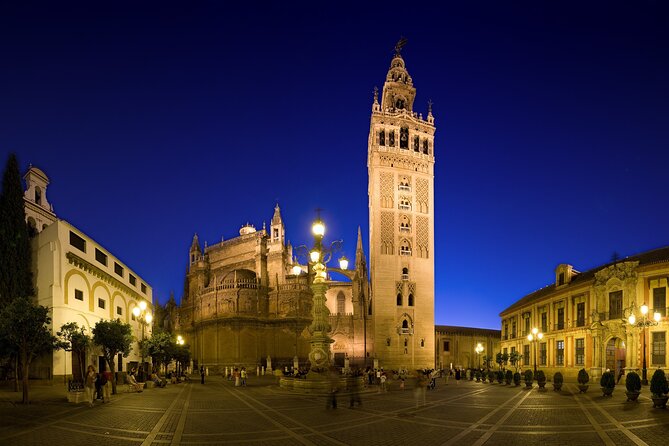
This experience works best as an introduction to Seville rather than as a full monument tour. You walk through the old center with a private guide, hear how Islamic, Christian, Jewish, and American connections shaped the city, then finish with live flamenco.
The show is the emotional high point. Casa de la Guitarra is small, and seating can put you close to the performer. That intimacy matters. You are not watching a distant stage production with a large cast and elaborate effects. You are watching the dancer’s feet, hearing the guitar in a quiet room, and seeing the singer and guitarist work together at close range.
The performance includes guitar, singing, and dance. The balance may vary. Some evenings appear to give a large share of the time to guitar and song, with one main dancer rather than a full company. If you want a grand production with several dancers, this may feel modest. If you want a concentrated introduction to traditional flamenco, the setting is a good fit.
The walking section gives the show useful context. You pass through areas tied to Seville’s Islamic past, Christian monarchy, Jewish quarter, and trade with the Americas. That makes the flamenco feel connected to the city instead of being an isolated evening performance.
More Seville Flamenco Shows:
- Seville: Puro Flamenco Show with Optional Museum Ticket
★ 4.8 · 6,088 reviews - Seville: Live Flamenco Show at “Teatro Flamenco Triana”
★ 4.6 · 3,290 reviews - Seville: Flamenco Show Ticket at Tablao Flamenco Las Setas
★ 4.8 · 2,214 reviews
Starting beside the Guadalquivir at 5:15 pm
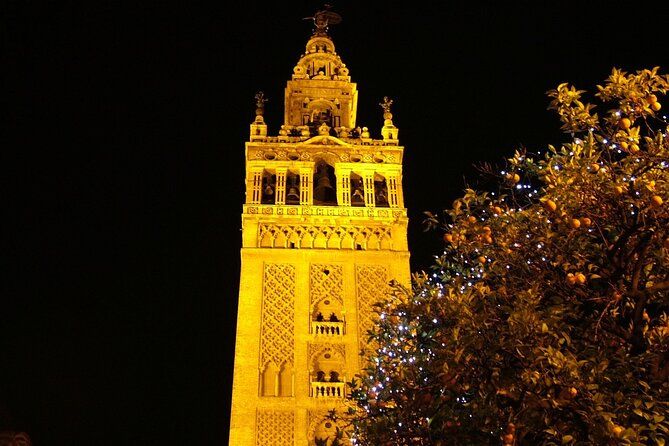
The meeting point is the Torre del Oro, on Paseo de Cristóbal Colón beside the Guadalquivir. Arrive early. The riverfront can be busy, and finding the guide has caused confusion, particularly because the guide may not be immediately obvious in the crowd.
The tower itself is an excellent place to begin. Built by the Almohads in 1221 and later enlarged under King Pedro I in 1369, it is a 36-meter watchtower that guarded the river. Its position helps explain Seville’s growth. The Guadalquivir gave the city access to inland Andalusia and, later, to Atlantic trade.
The guide uses the river to explain Seville’s development before leading you inland. I like this approach because you get a reason for the city’s importance, not just a list of buildings. The river was part of Seville’s economy, defense, and connection with the wider world.
The tour is offered in English, and the guide is private to your group. Some groups have been as small as six people. That size makes it easier to ask questions and pause for photographs, though it also means the pace may be deliberately gentle.
El Arenal and Seville’s medieval defenses
From the Torre del Oro, you move through El Arenal, the historic area between the river and the old center. Your guide points out how this part of Seville was tied to shipping, defense, and commerce.
You then encounter the Torre de la Plata, an octagonal military tower built during the Almohad Caliphate. It formed part of the city’s defensive system and gives you a physical reminder that Seville was once protected by walls and towers rather than open streets.
Another stop is the Torre de Abd al-Aziz, a hexagonal Almohad tower that marked one corner of the old city wall. Its name comes from Abd al-Aziz ibn Musa, who lived in Seville from 714 to 719. Details like this add texture to the walk. You begin to see Seville not only as a postcard city, but as a place repeatedly reshaped by different rulers.
The towers are viewed from outside. This is sightseeing and explanation, not an archaeological visit with interior access. If you like military history, the route offers worthwhile clues. If you want a long stop at every monument, the short format may feel rushed.
Seville Cathedral from the outside
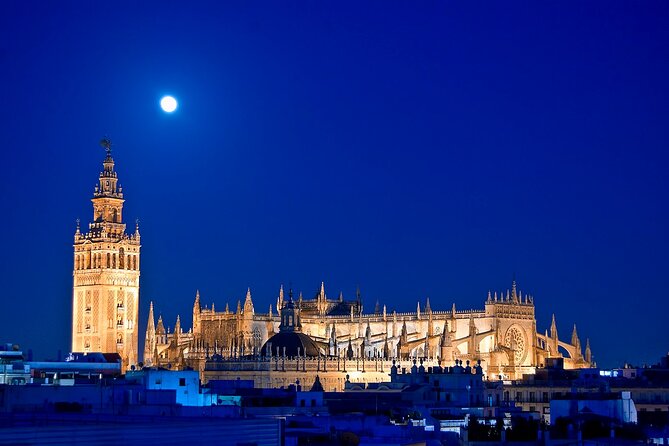
The route continues to the Cathedral of Seville, one of the city’s essential sights. It is the largest Gothic building in the world and became a UNESCO World Heritage Site in 1987.
Your guide stops at notable points along the façade and explains architectural features used in the building. That can be very useful before an independent visit because a guide helps you notice details you might otherwise walk past.
The Cathedral also connects Seville with the Catholic Monarchs and the city’s later role in Atlantic trade. The baptism of Juan of Aragon, the only son of Ferdinand II of Aragon and Isabella I of Castile, took place here in 1478.
Keep the limits in mind. Admission to the Cathedral is not included, and this experience does not replace a proper interior visit. You walk past or stop outside the building. If you want to see the nave, chapels, tombs, or other interior features, plan that separately and do it earlier in the day or on another visit.
This is the most important point to clarify before booking. The wording can give the impression that you are touring the Cathedral itself. In practice, the guide explains the exterior and its history.
A different sort of afternoon in Seville:
- Seville: Royal Alcázar Entry Ticket
★ 4.6 · 28,378 reviews - Seville: Cathedral and La Giralda Entry Ticket
★ 4.5 · 24,592 reviews - Seville: Live Flamenco Dancing Show Ticket at the Theater
★ 4.7 · 16,396 reviews - Seville: 1-Hour Guadalquivir River Sightseeing Eco Cruise
★ 4.2 · 10,281 reviews
The Alcazar, trade, and the American connection
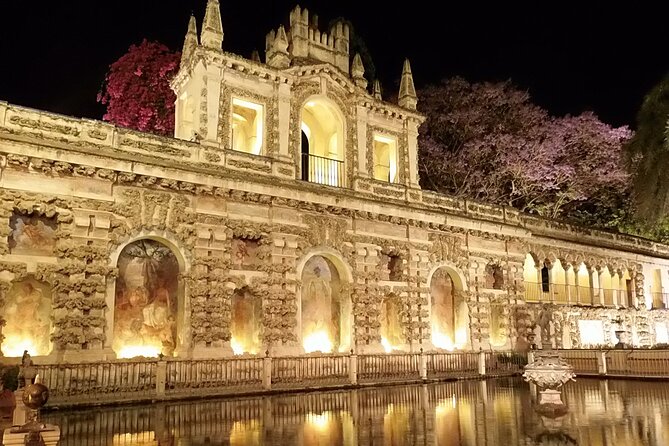
Near the Cathedral is the Alcazar of Seville, the royal palace associated with Peter of Castile. Christian builders created the palace on the site of an earlier Muslim residential fortress, producing one of the finest examples of Mudéjar architecture in the Iberian Peninsula.
The guide shares stories connected with the palace, but the walking tour does not include admission. You should think of this as an introduction to the Alcazar, not a palace visit.
That distinction matters because the Alcazar is one of Seville’s major time commitments. A proper visit requires time for the palace rooms, courtyards, gardens, and detailed decoration. If you have only one day in Seville, I would arrange an Alcazar visit separately and treat this walking tour as an evening overview.
The route also refers to Seville’s trade with the Americas and the building that housed the merchants’ exchange. This is the Archivo General de Indias, housed in the former merchants’ exchange. Its location near the Cathedral reflects Seville’s central role in Spain’s dealings with the American continent.
The guide’s value here is in connecting buildings that can otherwise seem unrelated. The Cathedral represents religious power, the Alcazar royal power, and the merchants’ exchange commercial power. You get a useful framework for understanding the center of Seville.
Santa Cruz and the walk toward flamenco
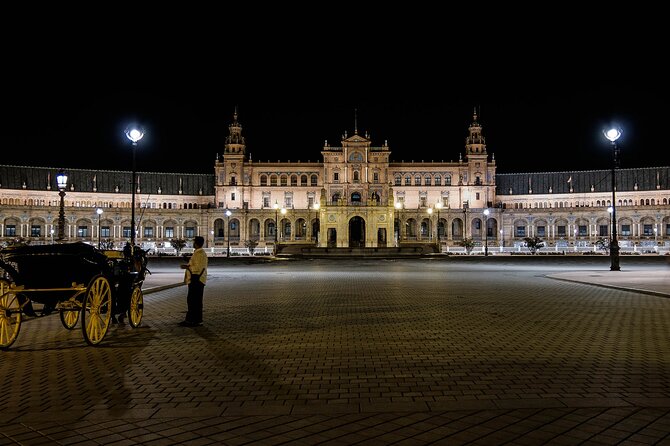
The final historic area is Santa Cruz, the former Jewish quarter of medieval Seville. Today it is one of the city’s most visited neighborhoods, with narrow streets and small squares.
This part of the route is particularly good for orientation. You get a feel for the old center’s scale and shape, and you can see why a guide helps. It is easy to wander in circles here, especially after sunset, and a local guide can point out connections that are not obvious on a map.
Still, do not expect a long, detailed neighborhood walk on every departure. One account describes only briefly entering Santa Cruz before continuing to the flamenco venue. Another describes a relaxed stroll through the most interesting central areas. The route can vary with the guide, heat, group pace, and the timing of the show.
That variability is worth accepting if you want a flexible introduction. It is less suitable if you have already planned your own detailed old-town walk and expect every listed sight to receive equal attention.
What happens at Casa de la Guitarra
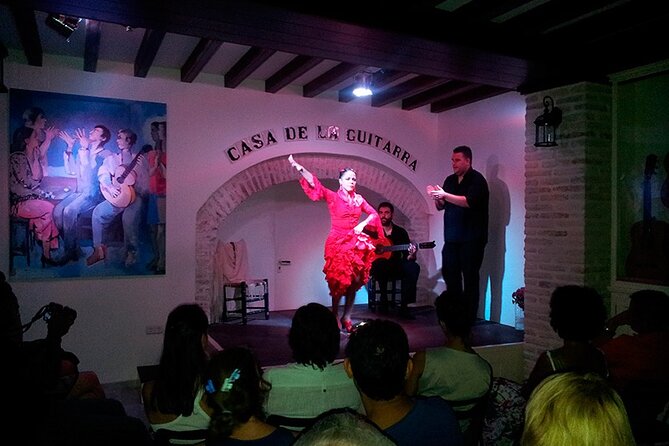
The flamenco portion lasts one hour, and admission is included. Casa de la Guitarra presents traditional flamenco in a small room with careful acoustics and no microphone or amplifier.
The lack of amplification changes the mood. You hear the natural sound of the guitar, voice, and footwork. In a small space, the dance can feel forceful and immediate, even though the production itself is simple.
The performance may feature a solo dancer, singer, and guitarist. That format gives the dancer the main visual focus, while the music carries much of the emotional weight. Some people will prefer more dancing and less guitar and singing. I would choose this show if you want to understand how the elements fit together, rather than if you need a large-scale stage spectacle.
There is no meal or drink service included during the performance. You may have roughly 20 minutes to get something to eat beforehand, and that is not much time for a full dinner. Plan to eat before meeting the guide or have a quick meal during the break if the evening schedule allows it.
The listed start time is 5:15 pm, while some departures have reached the show around 9 pm. The stated tour duration is about three hours, but the exact timing appears to vary. Ask for the expected end time and food break when you book, especially if you have a dinner reservation or an evening train.
How much walking and heat to expect
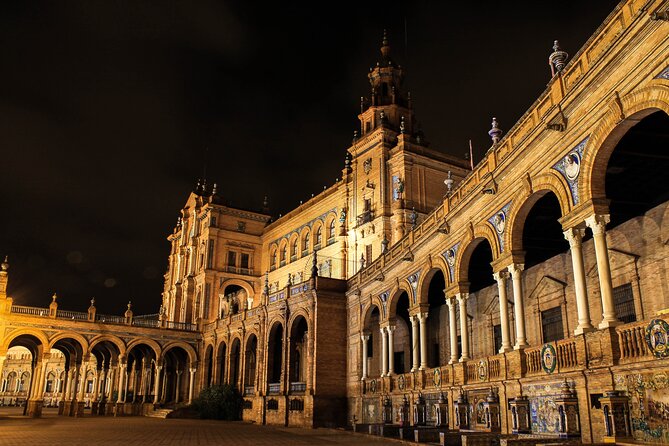
The walking is moderate, but the experience takes place outdoors for much of the first part. You should be comfortable walking through old streets and standing during explanations. A moderate fitness level is requested.
Summer heat is the bigger concern. In Seville, 5:15 pm can still be very hot, and one account specifically found the late-afternoon walk difficult because the sun remained strong. The leisurely pace helps, but it does not remove the heat.
I would bring water, wear light clothing, and use comfortable shoes. Since food and drinks are not included, you should carry water from the start. The route is easier when you treat it as a slow city walk rather than a fast sightseeing checklist.
The tour ends back at the meeting point according to the stated arrangements, though the flamenco venue is in the central area and one guide has walked the group there before leaving. Because timing and routing can differ, confirm how the evening finishes if you need to get back to a hotel outside the center.
Is $48.01 a fair price?
At $48.01 per person, the value depends on how you use the tour. You are paying for a private English-language guide, a city orientation, and admission to a flamenco performance. For a first evening in Seville, that combination is convenient.
The price is less attractive if you expect entry to the Cathedral and Alcazar. Those admissions are not included, and the walking tour does not give you time inside either monument. You would need to budget separately for them and arrange your schedule around their opening hours.
I see the strongest value in the guide and show together. Booking a walking tour and flamenco performance separately can take more planning, and this experience links the two. It also gives you a clear route through the center instead of leaving you to find a show on your own.
The private format adds value for couples, families, or small groups who want to ask questions and move at a comfortable pace. It is less compelling for people who want a fast, exhaustive tour of every major attraction.
Who should book this Seville evening?
I would choose this experience if you are visiting Seville for the first time and want a gentle introduction before exploring independently. It gives you the city’s main visual markers, some useful historical context, and a traditional performance in one evening.
It suits you especially well if:
- You want a small-group or private walk rather than a large scheduled group.
- You are interested in history but do not need to enter every monument that night.
- You want an intimate flamenco show instead of a large theater production.
- You appreciate guides such as Rosa and Vicente, who bring humor and clear explanations.
- You would rather have a planned evening than arrange the walk and show separately.
I would skip it if your main goal is an interior visit to the Cathedral or Alcazar. I would also reconsider in the hottest months if you dislike walking outdoors during the late afternoon.
The meeting point deserves extra care. The Torre del Oro is easy to identify, but finding the guide among the people near the river has caused confusion. Arrive early, keep the guide’s contact details available, and look for clear identification from the tour company.
Should you book this tour?
Book it for the compact flamenco setting and friendly private guiding, not for monument admission. The strongest version of the evening is a relaxed walk with Rosa, Vicente, or another well-prepared guide, followed by a close-up show at Casa de la Guitarra.
Before paying, make sure you understand three things: the Cathedral and Alcazar are exterior stops, the schedule may run later than the stated three-hour estimate, and food is not included. If those limits suit your plans, $48.01 is a reasonable way to get your bearings and finish with one of Seville’s most memorable art forms.
FAQ
Where does the tour begin?
It begins at the Torre del Oro on Paseo de Cristóbal Colón, beside the Guadalquivir River in Seville.
What time does the tour start?
The stated start time is 5:15 pm.
Is the tour offered in English?
Yes. A private local guide leads the experience in English or Spanish.
Are Cathedral and Alcazar admission tickets included?
No. The tour includes exterior explanations and stops near these monuments, but entrance tickets are not included.
How long is the flamenco show?
The Casa de la Guitarra performance lasts one hour.
What is included in the price?
The price includes the guided walking tour and admission to the Casa de la Guitarra flamenco show.
Are food and drinks included?
No. Food and drinks are not included, and there is no stated meal service during the performance.
Can the booking be canceled for a refund?
Yes. You can cancel at least 24 hours before the local start time for a full refund. Cancellations or changes made less than 24 hours before the start time are not accepted for a refund.
More Walking Tours in Seville
- Seville: Small-Group City Highlights Walking Tour
★ 5.0 · 1,204 reviews - Cultural Walking Tour of Seville Monumental
★ 5.0 · 861 reviews - Seville: Tapas, Taverns, and History Walking Tour
★ 4.9 · 676 reviews - Seville: Tapas, Taverns and History Guided Walking Tour
★ 4.9 · 515 reviews
Just added around Seville
- The Villages of Andalusia: Full-Day Trip from Seville★ 4.8 · 19 reviews
- From Seville: White Villages Tour★ 5.0 · 9 reviews
- White Villages & Ronda 2-Days Trip & Overnight Stay★ 4.6 · 5 reviews
- Your Photo Story in Seville★ 5.0 · 16 reviews
- Triana Market Tapas Tour★ 4.9 · 12 reviews
- Seville: Guided visit of the Casa de Pilatos with entrance tickets★ 4.3 · 18 reviews
- From Seville: Wine Tourism Half Day Tour★ 4.0 · 17 reviews
- Wine tourism, visit to a traditional winery and wine tasting★ 5.0 · 3 reviews
Seville Flamenco Shows, compared.
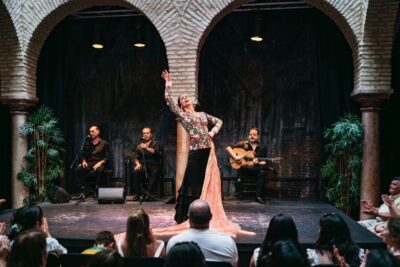
Puro Flamenco Show with Optional Museum Ticket
Read our review →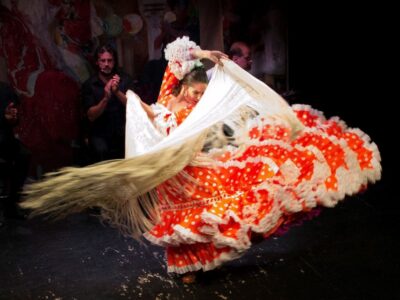
Live Flamenco Show at “Teatro Flamenco Triana”
Read our review →
Flamenco Show Ticket at Tablao Flamenco Las Setas
Read our review →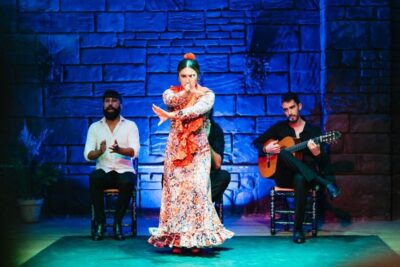
Baraka Sala Flamenca Show with Drink in Triana
Read our review →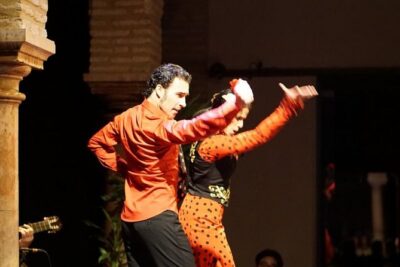
Authentic Flamenco Show with Tapas & Wine Guided Tour
Read our review →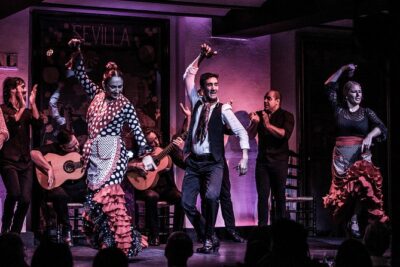
Flamenco Show at Tablao El Arenal with Drink and Optional Dinner or Tapas
Read our review →
Ticket to Flamenco Show at La Casa de la Guitarra
Read our review →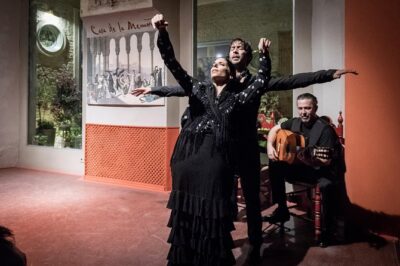
Flamenco Show at Casa de la Memoria Admission Ticket
Read our review →Browse the lists this tour appears in