
Reviewed · SEVILLE PALACE AND HISTORIC HOUSE TOURS
Seville: Casa de Pilatos Ground Floor Entry Ticket
Casa de Pilatos brings Seville’s past together in one compact palace: Roman sculptures, Islamic-influenced tilework, Christian architecture, Renaissance art, and quiet gardens. I especially like the ornate tiled courtyards and the chance to see a historic private residence without the crush found at the Royal Alcázar.
I also like that you can set your own pace with the audio guide, stopping for photos or sitting quietly in a courtyard. The main drawback is clear: the $14 ticket covers only the ground floor, and the audio guide can feel too detailed for visitors who prefer a quick, simple visit.
Key points to know before you go
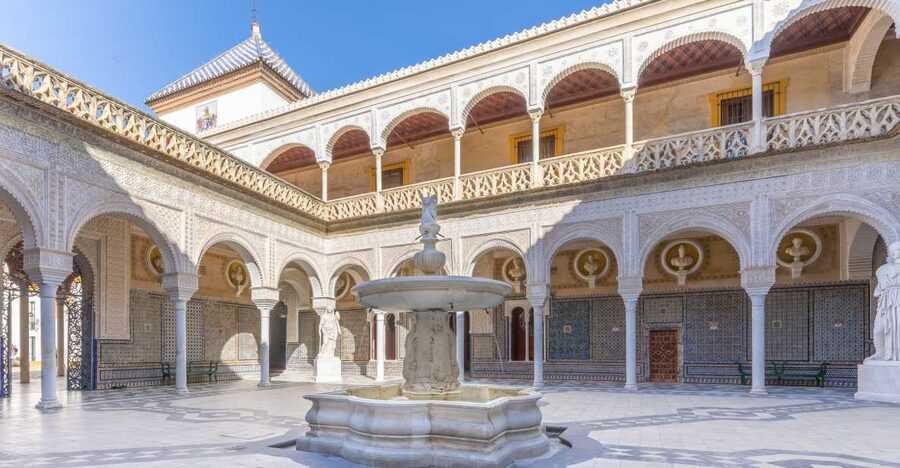
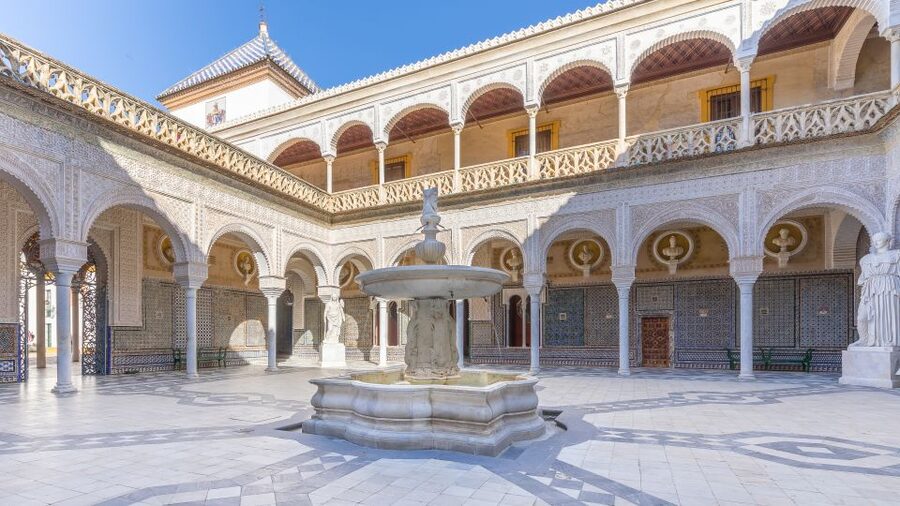
- Roman sculpture in an Andalusian courtyard: See 24 busts of Roman emperors, along with figures such as Hadrian, Aphrodite, and Apollo.
- A rare mix of styles: Mudejar-Gothic design meets Renaissance decoration in the chapel, courtyards, ceilings, and tilework.
- Ground floor access only: The standard ticket does not include the upper floor, though an upstairs visit may sometimes be available separately.
- Peaceful alternative to the Alcázar: The palace is often quieter, especially in the morning or around early afternoon.
- Audio guide in seven languages: Choose Spanish, French, English, Portuguese, German, Japanese, or Italian.
- Best for slow looking: Plan enough time for the gardens, ceilings, sculptures, and tile panels rather than racing through.
Why Casa de Pilatos feels different from Seville’s grandest palace
The Royal Alcázar gets most of the attention, and rightly so. But Casa de Pilatos offers a different experience. It is a private palace rather than a royal complex, and its scale feels more intimate. You move through rooms, patios, and gardens that still suggest a family home, not only a ceremonial monument.
The palace was developed by the Enríquez de Ribera family in the 15th century. Over time, it became the largest private residence in Seville. Its importance comes from the way it captures a turning point in the city. Islamic design traditions remained strong, while Gothic and Renaissance ideas were arriving from elsewhere in Europe.
I find that mixture more interesting than a building that follows one style from beginning to end. You may notice a pointed or ornamental arch, then a Renaissance marble detail, then a wall covered in glazed tiles. The palace works best when you slow down and look at how these elements sit together.
At $14 per person, the ticket is not the cheapest small attraction in Seville. Still, it offers a substantial visit if you enjoy architecture, sculpture, and decorative details. It is less compelling if you want a large royal collection or a long guided tour with a live historian.
More Seville Palace and Historic House Tours:
- Seville: Flamenco at El Palacio Andaluz with Optional Dinner
★ 4.5 · 1,119 reviews - Granada Day Trip: Alhambra & Nazaries Palaces from Seville
★ 4.5 · 292 reviews - “Las Dueñas” Palace ticket + Audioguide
★ 4.5 · 242 reviews
Enter through the Renaissance marble gate
Your visit begins at a detailed marble entrance in Renaissance style. It sets the tone immediately. This is not a plain doorway leading to a museum. The entrance announces the family’s wealth and their wish to connect themselves with the fashionable artistic ideas of Renaissance Europe.
Once inside, the palace quickly becomes a study in contrast. The building does not present its art as a series of isolated displays. Sculpture, tile, architecture, and water features are arranged together, so you look at the whole courtyard rather than one object at a time.
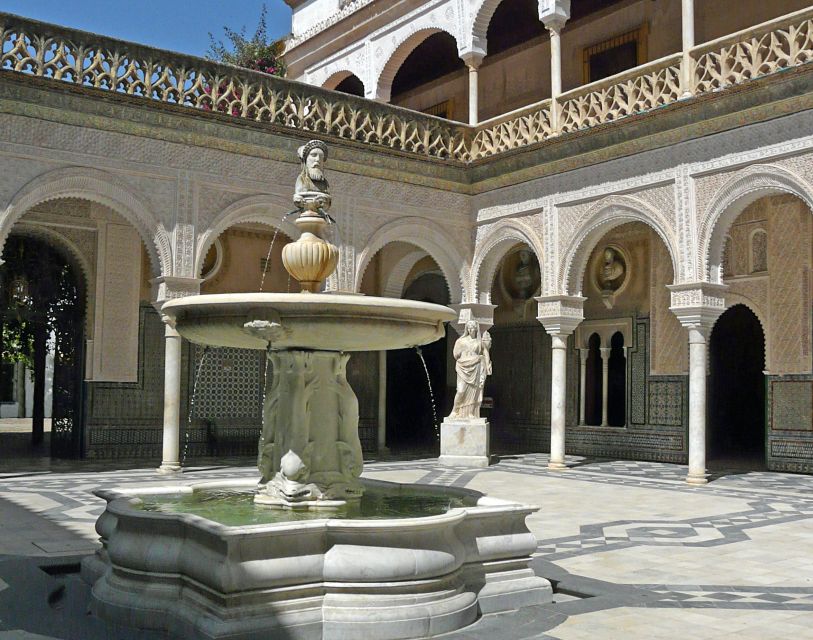
The main Andalusian courtyard is one of the most rewarding spaces. Its fountains and tiled surfaces create a calm center for the palace. Around it, you will see 24 busts of Roman emperors. Figures including Emperor Hadrian, Aphrodite, and Apollo connect the residence with the classical world.
This is a useful place to start the audio guide, but do not feel obliged to listen to every word before moving on. The audio program is generally easy to use and gives plenty of background. Some visitors find it too long or confusing in places, so I suggest listening to the main explanation first, then choosing only the details that interest you.
Study the tiles before looking up
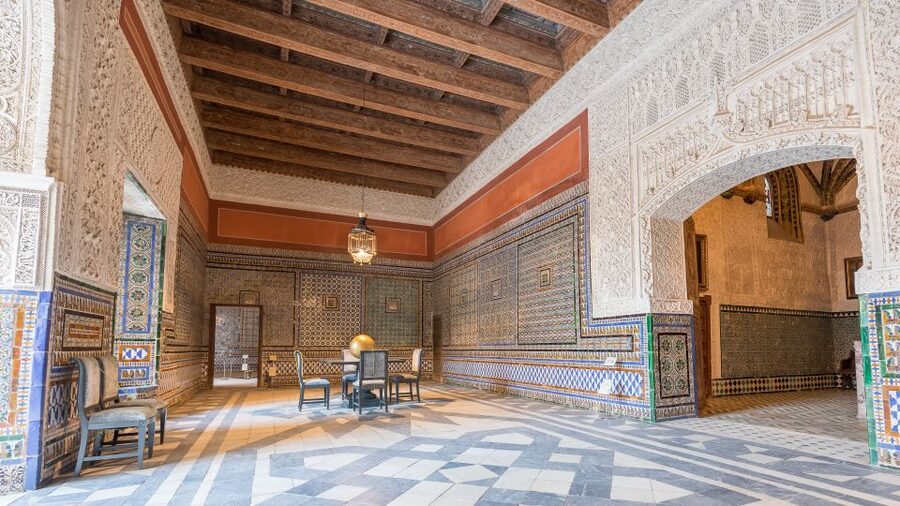
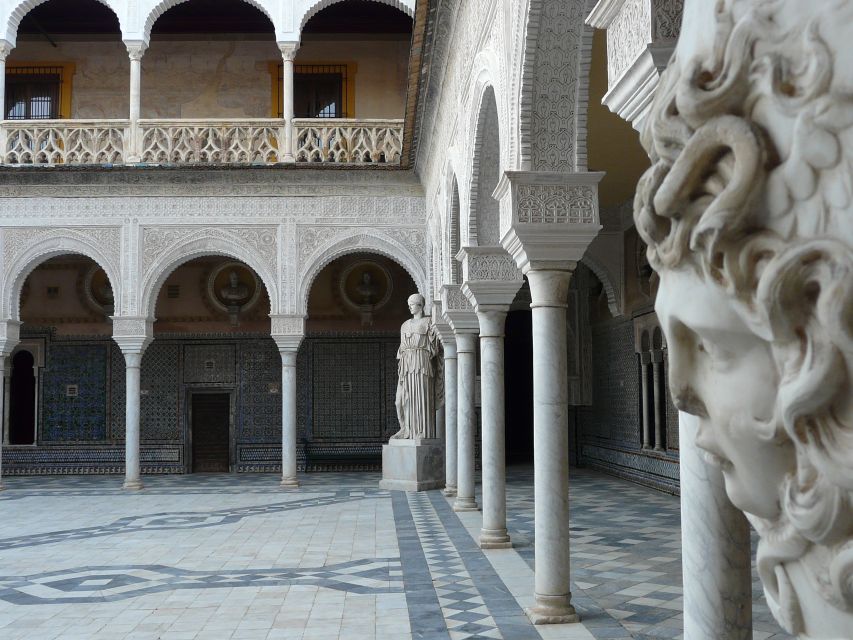
The glazed tiles are among Casa de Pilatos’s strongest features. They cover walls and floors in courtyards and rooms, adding color and pattern without making the palace feel gaudy. The tilework also helps you see the connection between Andalusian craft traditions and the palace’s later Renaissance decoration.
I would give the tiles more time than you might expect. At first glance, you may simply register blue, green, white, and yellow patterns. Then you begin to notice how individual panels fit around doors, corners, arches, and fountains.
The palace is also a good place to compare surfaces. Smooth marble, patterned ceramic, carved stone, painted wood, and plaster decoration appear close together. That mix gives each room a different mood.
Several people find the building especially good for photography. The courtyards offer strong lines, repeated patterns, and framed views into the gardens. The calm atmosphere helps, too. Morning visits and early afternoon visits can be especially pleasant when the palace is quiet.
The Chapel of Flagellation shows the palace’s oldest layers
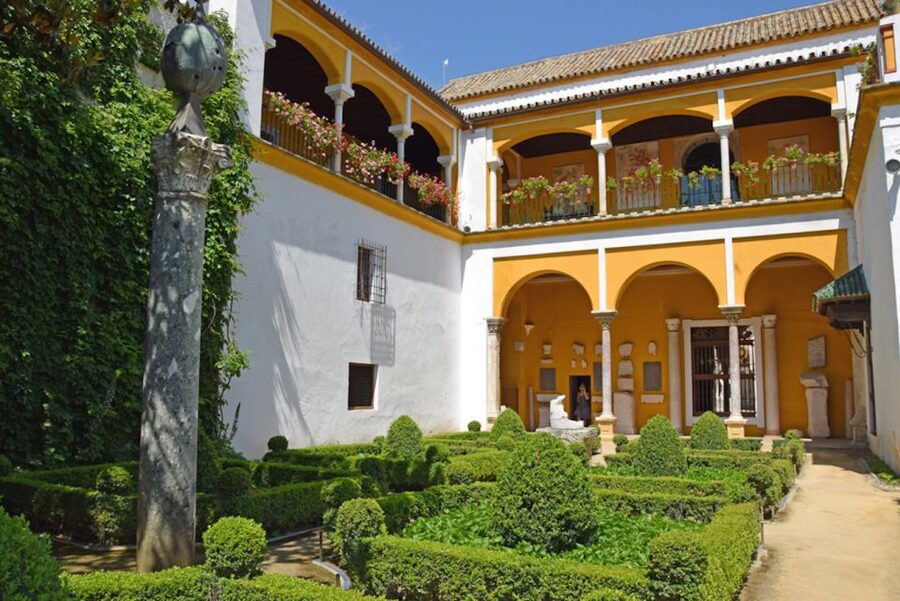
The Chapel of Flagellation is described as the oldest part of Casa de Pilatos. It is a small but important stop because it shows the building’s blend of Christian and Islamic-influenced design more clearly than the later rooms.
Look for the ornate basket-handle arch and the way the chapel brings together Mudejar-Gothic and Renaissance elements. The result is not a clean division between old and new. Instead, the styles overlap.
That overlap tells you something about Seville’s history. The city’s art did not suddenly change from Islamic to Christian or from medieval to Renaissance. Builders and owners reused local forms while adding new tastes and new political messages.
The audio guide can help here, particularly if you are not familiar with Mudejar architecture. You can select English, French, Spanish, Portuguese, German, Japanese, or Italian. The standard entry includes the audio guide, not a live guide, so you should expect to make your own way around.
More Tickets in Seville:
- Seville: Royal Alcázar Entry Ticket
★ 4.6 · 28,378 reviews - Seville: Cathedral and La Giralda Entry Ticket
★ 4.5 · 24,592 reviews - Seville: Live Flamenco Dancing Show Ticket at the Theater
★ 4.7 · 16,396 reviews - Seville: Setas de Sevilla Entry Ticket
★ 4.6 · 8,901 reviews
Renaissance rooms and the Salón del Pretorio
The drawing rooms provide a change of scale from the courtyard. Here, you can focus on the palace’s furnishings, artwork, ceilings, and formal decoration. The Duke of Alcalá collected fine Renaissance works, and that collection helps explain why Casa de Pilatos mattered as more than a private residence.
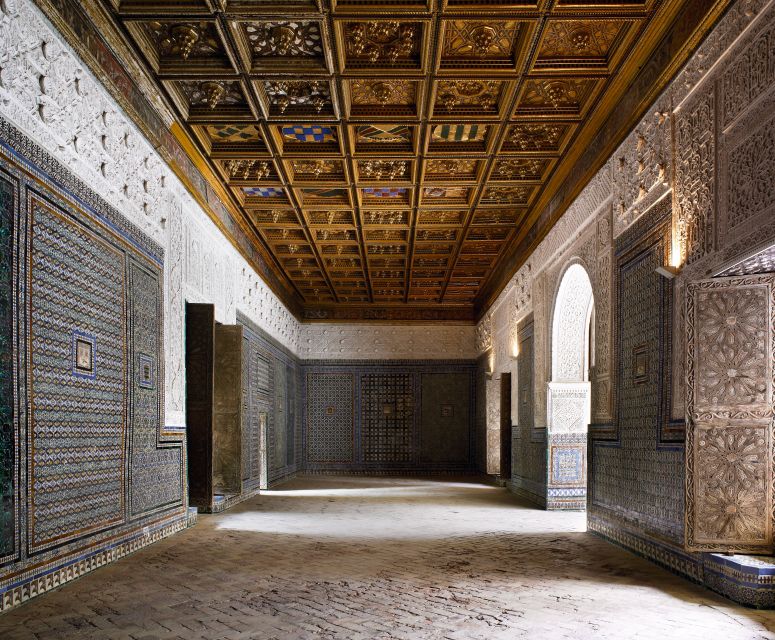
The Salón del Pretorio is a key interior stop. Its coffered ceiling is decorated with ornamental bows, and it rewards a slow look upward. Ceilings are easy to miss in historic buildings because people naturally focus on walls and floors. At Casa de Pilatos, that would be a mistake.
The palace’s ceilings range from carved and coffered designs to surfaces decorated with painted details. Some include murals, and the effect changes as you move between the rooms. The audio guide gives more information about the construction and decoration, though its detail can be more than you need.
I suggest using it selectively. Listen in the courtyard, chapel, and Salón del Pretorio, then walk through the next rooms at your own pace. If you want every historical explanation, the full guide is there. If you mainly want to appreciate the building, you can keep the visit more relaxed.
The sculpture collection adds a classical point of view
The sculptures are not simply background decoration. They show how the palace’s owners wanted to associate themselves with the values and learning of classical antiquity.
The figures of Roman emperors make the courtyard feel like an open-air history lesson. Apollo, linked with music, poetry, and art, is a fitting presence in a palace filled with artistic ambition. Aphrodite brings another classical reference, while the other busts create a sense of an organized collection rather than random pieces.
You will also see the war ornaments of Pallas Pacifera, including a stone-carved shield and helmet. This detail adds another layer to the palace’s visual message. The owners were presenting themselves as cultured patrons, but also as people connected with power, honor, and public life.
You do not need specialist art knowledge to enjoy the collection. The shapes, expressions, and placement make sense even if you know little about Roman sculpture. The audio guide supplies context, but the objects remain easy to appreciate on their own.
The gardens offer a quieter finish
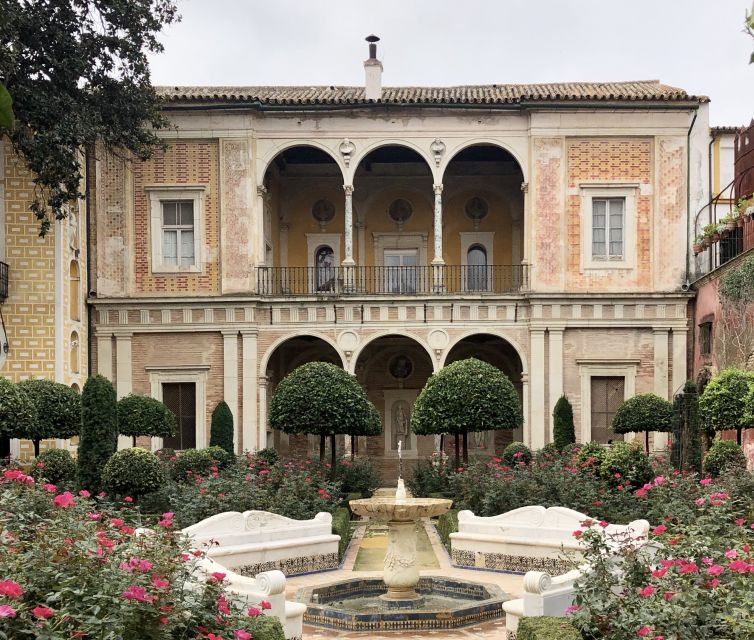
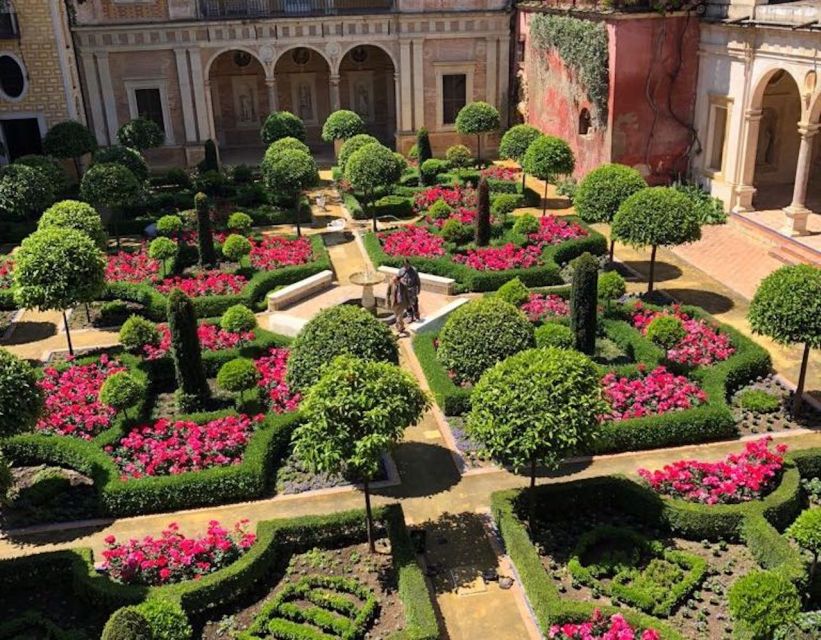
The gardens are not an afterthought. They complete the palace’s movement from formal entrance to courtyard to private outdoor space. Their Renaissance design gives you room to step back from the close detail of the rooms.
I like to leave time for the gardens rather than treating them as a quick exit route. They provide a pause after the audio guide and the dense decoration indoors. Depending on the season, you will find flowers and planted areas that add softness to the stone, tile, and sculpture.
Several gardens are connected with the palace visit, so you can move between indoor rooms and outdoor spaces. This variety is one reason the attraction can take longer than expected. A quick visitor may finish fairly soon, but someone who enjoys sitting, taking photographs, or studying the tilework can easily stay much longer.
One visitor spent several hours reading in a window sill and taking in the setting. You should not count on finding the same exact spot available, but the point is useful: Casa de Pilatos works well for unhurried visits. It is not only a checklist attraction.
How the audio guide works in practice
The audio guide is included with the ground-floor ticket. Information is available in Spanish, French, English, Portuguese, German, Japanese, and Italian. The route is marked clearly enough to follow, and QR codes may be provided so you can listen as you move through the rooms.
The guide’s strength is its amount of information. It explains the construction, the family, the palace’s artistic influences, and the meaning of specific details. If you want to understand why the building looks the way it does, the guide adds real value.
Its weakness is the same thing. Some explanations are long, and the detail can become hard to follow when you are also looking at a room, taking photographs, and trying to find the next stop. A few descriptions may feel overly specific or confusing.
My advice is simple: use the audio guide as a menu, not a duty. Listen to the sections that interest you and move on when your attention fades. The palace itself is clear enough to enjoy without hearing every track.
Timing, crowds, and the one-day ticket
The ticket is valid for one day, with availability and starting times shown when you book. The last entry from Tuesday through Sunday is at 5:30 PM, so do not arrive at the very end of the day if you want time for the rooms and gardens.
Monday has a special detail: entry is free between 3 PM and 5:30 PM. Check the current arrangements before paying for a ticket on a Monday, since this free period may affect the value of booking in advance.
Quiet periods can make a major difference here. Morning visits have been especially calm, and early afternoon visits have also worked well for people wanting photographs and room to look around. In August, visiting around 3 PM can mean very hot conditions outside, but the lower crowd level may make the palace easier to enjoy at your own pace.
The palace can become busier when tour groups arrive, particularly later in the afternoon. If you want the calmest experience, aim for the morning or allow enough time before the final entry period.
Is $14 good value for the ground floor?
The answer depends on how you visit cultural sites. At $14, Casa de Pilatos is reasonably priced for a historic palace with courtyards, gardens, sculpture, artwork, tilework, and an audio guide. I consider it good value if you enjoy looking closely and taking your time.
The price feels less attractive if you expect access to the whole building. The upper floor is not included, and several people leave wishing they had seen more after finding the ground floor so interesting. Ask at the palace whether an upstairs visit can be added, but treat that as a separate option rather than part of this ticket.
Compared with the Royal Alcázar, Casa de Pilatos is smaller and less grand. Its advantage is the quieter, more personal feel. It also makes a useful visit before the Alcázar because you can first see how Seville’s Mudejar and Renaissance influences work together on a smaller scale.
Free Monday entry from 3 PM to 5:30 PM can improve the value, but the available time is limited. If you want to study the details, a paid visit at a less rushed time may suit you better.
Who will enjoy Casa de Pilatos most?
I would recommend this experience to you if you like:
- Tilework, courtyards, fountains, and decorative ceilings
- Spanish history told through architecture
- Classical sculpture and Renaissance art
- Quiet places where you can set your own pace
- Photography in patterned interiors and gardens
- A smaller palace visit alongside the Royal Alcázar
I would be more cautious if you want a live guide, a large royal complex, or a short visit with only a few simple facts. There is no live guide included in this activity. The Spanish-speaking host or greeter handles the entry arrangement, while the interpretation comes through the audio guide.
Families and independent visitors can follow the route without joining a group. Art and architecture enthusiasts may want more than the ground floor, so ask about the upper level before you commit to the standard ticket.
Should you book Casa de Pilatos?
Yes, if you want to see a quieter side of Seville and you enjoy buildings where the details matter more than sheer size. The combination of Roman busts, tiled courtyards, the Chapel of Flagellation, Renaissance rooms, coffered ceilings, and gardens gives you plenty to examine for $14.
Book it with realistic expectations. This is a ground-floor entry ticket with an audio guide, not a full palace tour with a live expert. Use the audio selectively, arrive before the 5:30 PM last entry, and allow time to sit in the gardens instead of rushing to the next sight.
If your schedule is tight, visit in the morning or early afternoon. If you are choosing between this and the Alcázar, Casa de Pilatos will not replace the royal palace, but it can give you a calmer and more intimate look at Seville’s architecture. For many visitors, that is exactly why it earns a place on the itinerary.
FAQ
What does the Casa de Pilatos ticket include?
The ticket includes entry to the ground floor and an audio guide. The upper floor is not included.
Is the audio guide available in English?
Yes. The audio guide is available in Spanish, French, English, Portuguese, German, Japanese, and Italian.
Is there a live guide?
No live guide is included. The activity provides an audio guide, and the listed host or greeter language is Spanish.
What are the main things to see inside Casa de Pilatos?
You can see the Renaissance marble entrance, Andalusian courtyard, 24 Roman emperor busts, fountains, classical sculptures, the Chapel of Flagellation, tiled rooms, Renaissance artwork, and the Salón del Pretorio with its decorated coffered ceiling.
Are the gardens included?
Yes. The ground-floor visit includes access to the palace gardens.
What is the latest entry time?
From Tuesday through Sunday, the last entry is at 5:30 PM.
Is entry free on Mondays?
Entry is free on Mondays between 3 PM and 5:30 PM. Check the current availability and conditions before planning your visit.
Just added around Seville
- The Villages of Andalusia: Full-Day Trip from Seville★ 4.8 · 19 reviews
- From Seville: White Villages Tour★ 5.0 · 9 reviews
- White Villages & Ronda 2-Days Trip & Overnight Stay★ 4.6 · 5 reviews
- Your Photo Story in Seville★ 5.0 · 16 reviews
- Triana Market Tapas Tour★ 4.9 · 12 reviews
- Seville: Guided visit of the Casa de Pilatos with entrance tickets★ 4.3 · 18 reviews
- From Seville: Wine Tourism Half Day Tour★ 4.0 · 17 reviews
- Wine tourism, visit to a traditional winery and wine tasting★ 5.0 · 3 reviews
Seville Palace and Historic House Tours, compared.

Flamenco at El Palacio Andaluz with Optional Dinner
Read our review →
Granada Day Trip: Alhambra & Nazaries Palaces from Seville
Read our review →

Flamenco Show at El Palacio Andaluz Admission Ticket in Seville
Read our review →
Alhambra Private Tour & Nazaries Palaces from Seville with Pickup
Read our review →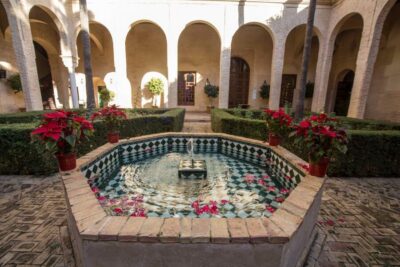
Palacio de Las Dueñas Entry Ticket and Guided Tour
Read our review →
Alhambra with Nazaries Palaces Private Tour from Seville
Read our review →Browse the lists this tour appears in