Reviewed · TOURS
Seville In Season- City Highlight Tour
Seville’s best feature is how quickly its stories connect: the river, Triana’s flamenco roots, Moorish towers, royal palaces, grand exhibition squares, and shaded parks all sit within a manageable cycling route. This three-hour bike tour gives you a useful first look at both sides of the Guadalquivir.
I like the broad city coverage and the local detail supplied by guides such as Antonio, Veronica, and Pablo. I also like the practical extras, including water, a helmet, basket, map, and liability insurance. The trade-off is pace: with 11 stops in about three hours, you get an overview rather than long visits inside each sight.
Key points to know before booking
- Triana and the river come first: Begin with views from Puente de Isabel II and a short look at Seville’s historic port.
- Eleven landmarks fit into one route: The ride links Triana, Torre del Oro, the Alcázar, Maria Luisa Park, Plaza de España, and more.
- This is an orientation tour: Most stops last 10 to 20 minutes, so expect explanations and photo time rather than interior sightseeing.
- Plaza de España gets the longest stop: You have about 20 minutes there, enough to admire its tiled provinces and sweeping architecture.
- Small groups keep the ride manageable: The maximum group size is 12 people.
- The price is reasonable for coverage: At $36.20 per person, the tour includes the bicycle and basic equipment, but not hotel pickup or tips.
Why this three-hour bike ride works in Seville
I like this route because it solves a common Seville problem: the city’s famous sights are spread across several districts, but a short visit may not leave you time to walk between all of them. By bicycle, you can cover the riverfront, old neighborhoods, civic buildings, and exhibition grounds without turning the day into a march.
The tour begins at Segway Sevilla Tours on Calle Álvarez Quintero in the Casco Antiguo, then returns to that same meeting point. The route is offered in English, and the group is limited to 12 people. Those details matter. A small group makes it easier to hear the guide and easier to keep moving through central Seville.
The tour supplies a bicycle, approved helmet, basket, bottled water, map, liability insurance, and information about sights and tapas. I see the basket as a particularly useful touch in a city where you may be carrying a phone, camera, or small purchase. There is no hotel transfer, so you need to make your own way to the starting point.
The route is organized as a city introduction, not as a string of full museum visits. The stops are short, and no admission tickets are included. That means you should think of this as a guided ride around Seville’s major places, with time to decide which ones deserve a longer visit later.
Other Seville days people weigh up beside this one:
- Seville: Royal Alcázar Entry Ticket
★ 4.6 · 28,378 reviews - Seville: Cathedral and La Giralda Entry Ticket
★ 4.5 · 24,592 reviews - Seville: Live Flamenco Dancing Show Ticket at the Theater
★ 4.7 · 16,396 reviews
Puente de Isabel II and Triana’s riverfront
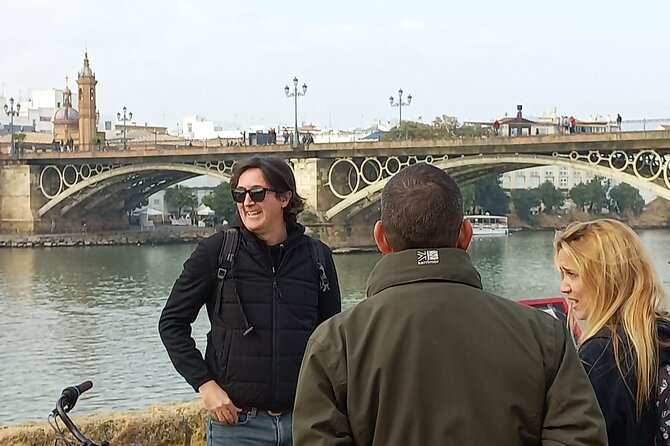
The first stop is Puente de Isabel II, better known as the Triana Bridge. From here, you get a strong first view toward the famous Triana neighborhood and the Guadalquivir River.
This is not just a pretty bridge stop. The river once served as Seville’s Port of the Indies, the point from which Christopher Columbus and other navigators departed or returned with goods from the Americas. That connection gives the waterfront a useful role in understanding how Seville gained wealth and influence.
You have about 20 minutes here, which should allow time for photographs and an opening explanation. The riverfront is also a good place to orient yourself. You can see how the water divides the old center from Triana and why the bridge has long been more than a crossing.
Next comes Triana itself, with about 15 minutes devoted to the district. Triana is known for flamenco, major bullfighters, and its old Moorish ceramic factories. I like this stop because it shifts the focus away from royal and monumental Seville. You get a glimpse of a neighborhood with a strong local identity.
The drawback is that 15 minutes is only enough for a brief introduction. You will not explore every lane or spend long inside a ceramics workshop. Still, the stop gives you a reason to return to Triana for a slower walk, tapas, or further exploration.
Santa Ana, Torre del Oro, and the military river
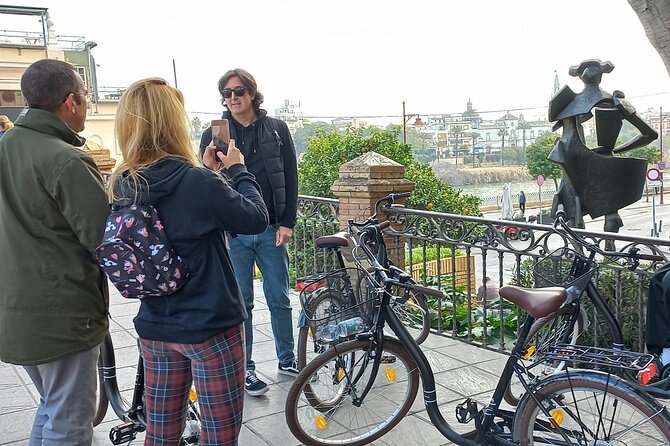
The Iglesia de Santa Ana comes next, with about 10 minutes. Popularly called the Cathedral of Triana, it was the first Catholic church built in Seville after Muslim rule ended in 1248. Its Mudejar design reflects the period when Christian and Islamic building traditions met.
A short stop here works well because the church adds religious and architectural context to Triana. You should not expect a full church visit within the schedule. The value is the explanation of why this building matters to the district and to Seville’s transition after 1248.
The route then crosses back toward the Torre del Oro, one of Seville’s most recognizable landmarks. This Arab watchtower sits beside the Guadalquivir and once formed part of the city’s defenses. A huge chain connected it with another tower on the Triana side, helping control river traffic.
You have about 15 minutes at the tower. The guide also discusses nearby sights such as the Real Maestranza bullring, the Maestranza Theater, and Magellan’s first voyage around the world. This is a compact stop, but it connects Seville’s military defenses, theater, bullfighting culture, and maritime ambitions.
I would not book this route expecting to climb the tower or tour the bullring. The itinerary gives you an exterior-focused look and a wider explanation of the area. For a first morning or afternoon in Seville, that is useful. You learn where these major buildings are, then choose which one deserves more of your time.
San Telmo and the royal Alcázar
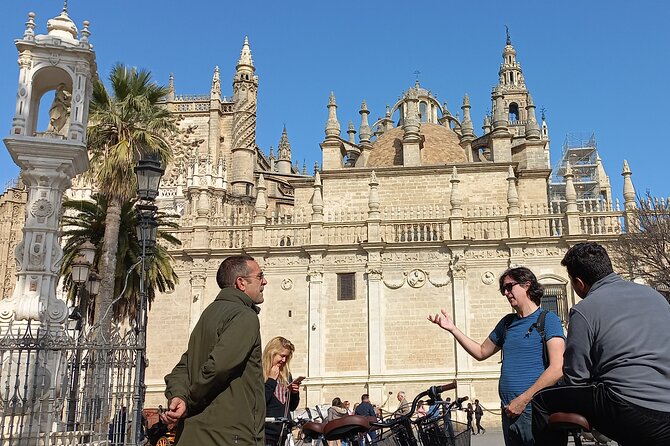
The Palau de San Telmo is another 15-minute stop. Today it houses the Presidency of the Junta de Andalucía, but the Baroque building began in 1682 as a marine academy. It trained ship pilots, navigators, and high-ranking officers, and it takes its name from San Telmo, the patron saint of seafarers.
I enjoy this kind of detail because the building is easy to treat as just another grand façade. Its original purpose ties it directly to Seville’s maritime past and to the river nearby. The short stop gives you a reason to notice the building rather than simply cycle past it.
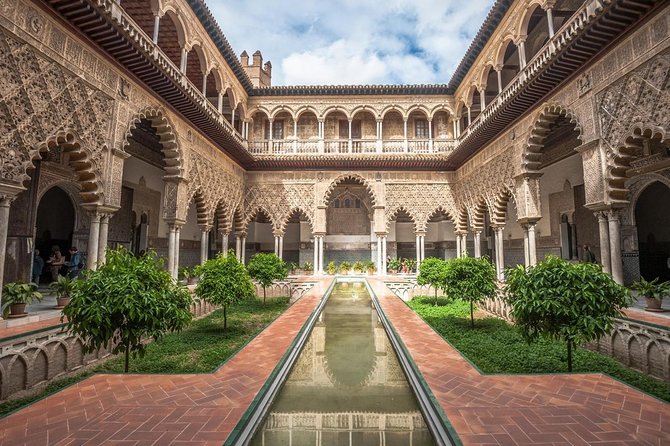
The route then reaches the Real Alcázar de Sevilla, the fortified palace complex. The word alcázar means fortified palace, and this site has served as a royal residence since the Middle Ages, beginning under Moorish rule. It is described as the oldest royal palace in Europe still in use.
The stop lasts about 15 minutes, so your experience here is an outside overview rather than a full palace visit. The Alcázar is famous for its architecture, gardens, and royal connections, and it has also appeared in filming such as Game of Thrones. If the palace is a main reason for your visit to Seville, plan a separate visit with enough time for the interior and grounds.
That limitation is important. A quick look at the Alcázar can help you understand its location and importance, but it cannot replace a proper visit. The benefit is that you can see how the palace fits into the city center instead of spending your whole orientation tour inside one attraction.
A different sort of afternoon in Seville:
- Seville: 1-Hour Guadalquivir River Sightseeing Eco Cruise
★ 4.2 · 10,281 reviews - Seville: Cathedral, Giralda, and Royal Alcázar Guided Tour
★ 4.7 · 9,165 reviews - Seville: Setas de Sevilla Entry Ticket
★ 4.6 · 8,901 reviews - Seville: Cathedral, Giralda & Alcazar Entry With Guided Tour
★ 4.6 · 8,560 reviews
Plaza del Cabildo and the old tobacco factory
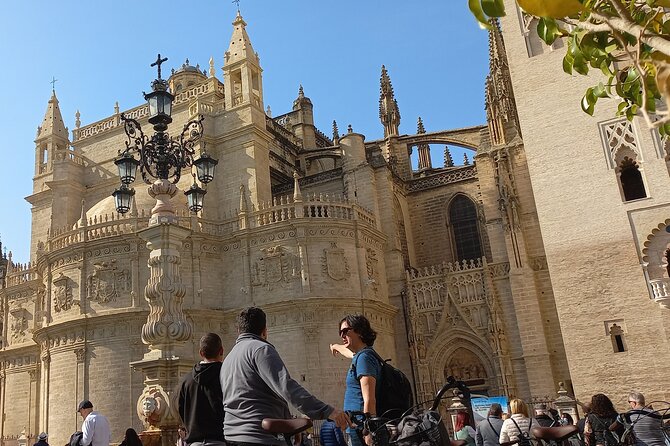
Plaza del Cabildo provides a quieter break from the larger monuments. This curved space, with painted arches and white marble columns, belonged to the old College of San Miguel, founded in the 13th century by Alfonso X the Wise. It later housed the master of the Cathedral Chapel and the choir boys.
Today, the plaza includes antique and philately shops, along with a candy store selling sweets from Seville’s cloistered convents. You have about 15 minutes here. That makes it one of the more intimate stops on the route, and I like the contrast with the open riverfront and grand exhibition squares.
The Real Fábrica de Tabacos follows, with another 15-minute stop. The building once produced 75 percent of all cigars sold on the continent. It is also linked to the story of Carmen, the fictional gypsy tobacco worker who falls in love with one of the soldiers guarding the factory.
The Carmen connection adds a memorable human story to a large institutional building. Again, this is an exterior and context stop, not a lengthy interior tour. The building’s scale and history make the short explanation worthwhile, especially if you know the opera or want to understand how tobacco shaped Seville’s public life.
Maria Luisa Park and Seville’s grand exhibition
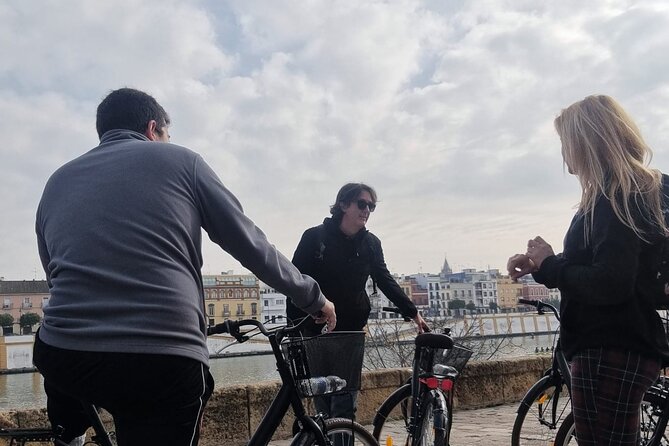
The ride continues into Parque de Maria Luisa, described as Seville’s most beautiful park. The grounds were once private gardens belonging to the Palacio de San Telmo and later became part of the Hispano-American Exposition of 1929.
This portion should feel different from the stone-heavy center. You get a pleasant ride through greenery and several explanatory stops, including the Glorieta de Bécquer and Plaza de América. The park gives the tour room to breathe, though the schedule still keeps you moving.
The use of bicycles makes particular sense here. You can cover more of the park than you would on foot, while still stopping for short explanations and photographs. The included basket and water are practical in this section, especially if the weather is warm.
The main showpiece is Plaza de España, with about 20 minutes allocated. Designed by Sevillian architect Aníbal González for the 1929 Ibero-American Exposition, it uses a regionalist style that blends three architectural traditions presented across the route.
This is the longest stop, and rightly so. The curved building, tiled details, bridges, and broad open space reward a few minutes of looking closely. You can also see a statue of Aníbal González there. The visit is still brief, but it gives you enough time to take in the setting and understand why the plaza is one of Seville’s defining sights.
The final stop is Plaza de América, with about 10 minutes. Its three buildings were designed by González between 1913 and 1916 for the future exposition, and each uses a different architectural style. This short visit completes the architectural story begun at Plaza de España.
The guide makes the difference
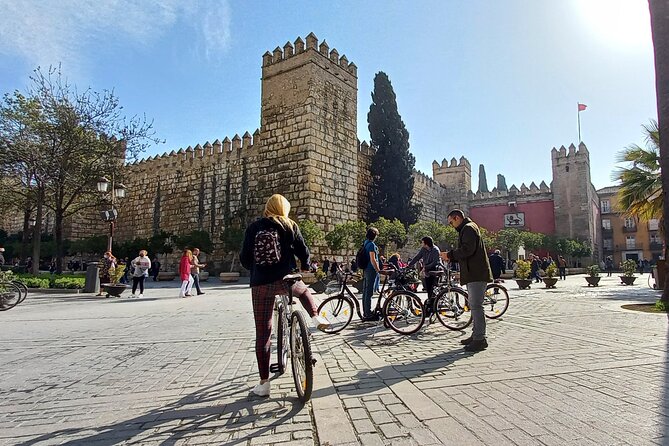
The route covers a lot, but the guide determines how useful the three hours feel. Antonio is noted for bringing Seville to life and offering practical advice for getting more from the rest of a visit. Veronica is described as offering local insight into Seville’s history and culture. Pablo has led a particularly personal outing, including one occasion when he was the only guide with a single booking.
Marco, the owner, is also involved in the local company and has finished a tour with a glass of local orange wine. That drink is not listed as a standard inclusion, so I would not book expecting it. It does suggest a small local operation with some room for personal touches.
The strongest pattern here is the guide’s role in linking places together. Triana is not just a neighborhood, the Torre del Oro is not just a tower, and Plaza de España is not just a photo stop. The best version of this tour explains how Seville’s river, trade, religion, music, architecture, and imperial ambitions connect.
Price, pace, and who should book
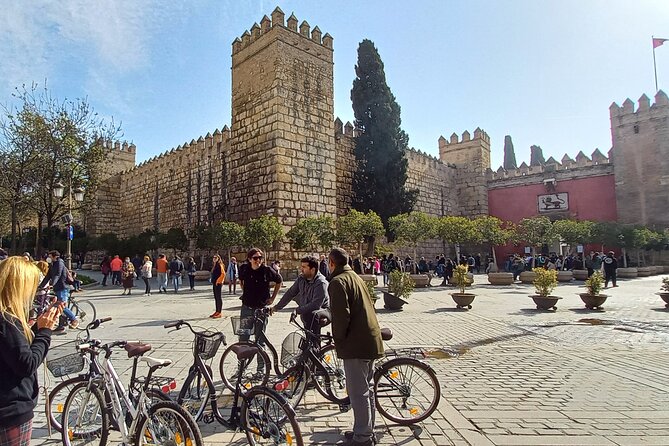
At $36.20 per person, I consider this a fair price for a three-hour guided ride that includes the bicycle, helmet, water, basket, map, and insurance. You are paying for transport between widely spaced highlights, a guide’s commentary, and a quick city map in your head.
The value is strongest on your first day in Seville. You can see both sides of the river, learn where the major sights sit, and collect ideas for later visits. It is also a good fit if you like active sightseeing and prefer covering ground by bicycle rather than walking from one monument to another.
The pace may not suit you if you want to linger at the Alcázar, enter Santa Ana, study the tobacco factory, or spend a long time in Maria Luisa Park. The tour gives every stop a short window, often 10 to 15 minutes. Think of it as a guided overview with photo opportunities, not a replacement for Seville’s major interiors.
The experience is offered in English and has a maximum of 12 participants. Most people can take part, and the meeting point is near public transportation. The tour requires good weather, and a minimum number of bookings is required. If poor weather or low participation cancels it, you can choose another date or receive a full refund.
Free cancellation is available up to 24 hours before the start time. After that point, the payment is not refunded and changes are not accepted. The cut-off uses Seville local time, so pay attention if you are arranging the tour from another time zone.
Should you book the Seville city highlights ride?
I would book this tour if you want a fast, active introduction to Seville and plan to spend more than one day deciding what to visit in depth. The route is broad, the equipment is included, and the small group limit should keep the ride personal enough for questions.
I would skip it if your main goal is detailed interior visits or a slow cultural walk. In that case, use your three hours for the Alcázar, the Cathedral area, or Triana on foot.
For most first-time visitors, the strongest plan is to take this ride early in your stay, note the places that catch your eye, and return later at a slower pace. It gives you Seville’s basic shape, from the river and Triana to the grand squares of the 1929 exposition, without asking you to spend the whole day on one attraction.
FAQ
How long does the Seville In Season City Highlight Tour last?
The tour lasts approximately three hours.
What is the price per person?
The listed price is $36.20 per person.
Where does the tour begin and end?
It begins at Segway Sevilla Tours, C. Álvarez Quintero, 44, in Seville’s Casco Antiguo. It ends back at the same meeting point.
Is a bicycle included?
Yes. The tour includes use of a bicycle, an approved helmet, a basket, bottled water, a map, and liability insurance.
What language is the tour offered in?
The tour is offered in English.
How many people can join the tour?
The maximum group size is 12 participants.
Can I cancel for a full refund?
Yes. You can cancel at least 24 hours before the experience start time for a full refund. Cancellations or changes made less than 24 hours before the start time are not refunded or accepted.
Just added around Seville
- The Villages of Andalusia: Full-Day Trip from Seville★ 4.8 · 19 reviews
- From Seville: White Villages Tour★ 5.0 · 9 reviews
- White Villages & Ronda 2-Days Trip & Overnight Stay★ 4.6 · 5 reviews
- Your Photo Story in Seville★ 5.0 · 16 reviews
- Triana Market Tapas Tour★ 4.9 · 12 reviews
- Seville: Guided visit of the Casa de Pilatos with entrance tickets★ 4.3 · 18 reviews
- From Seville: Wine Tourism Half Day Tour★ 4.0 · 17 reviews
- Wine tourism, visit to a traditional winery and wine tasting★ 5.0 · 3 reviews
Tours, compared.
Cathedral, Giralda, and Royal Alcázar Guided Tour
Read our review →
Cathedral, Giralda & Alcazar Entry With Guided Tour
Read our review →
Priority Access Cathedral, Giralda & Alcázar Tour
Read our review →
Alcázar and Cathedral Entry Ticket and Guided Tour
Read our review →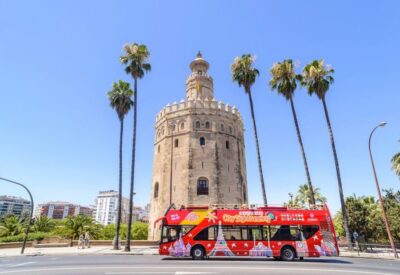
Alcazar and Cathedral of Seville Tour with Skip the Line Tickets
Read our review →
Alcázar of Seville Skip-the-Line Tickets and Guided Tour
Read our review →