
Reviewed · SEVILLE JEWISH QUARTER TOURS
Seville Jewish Quarter walking tour: Santa Cruz District
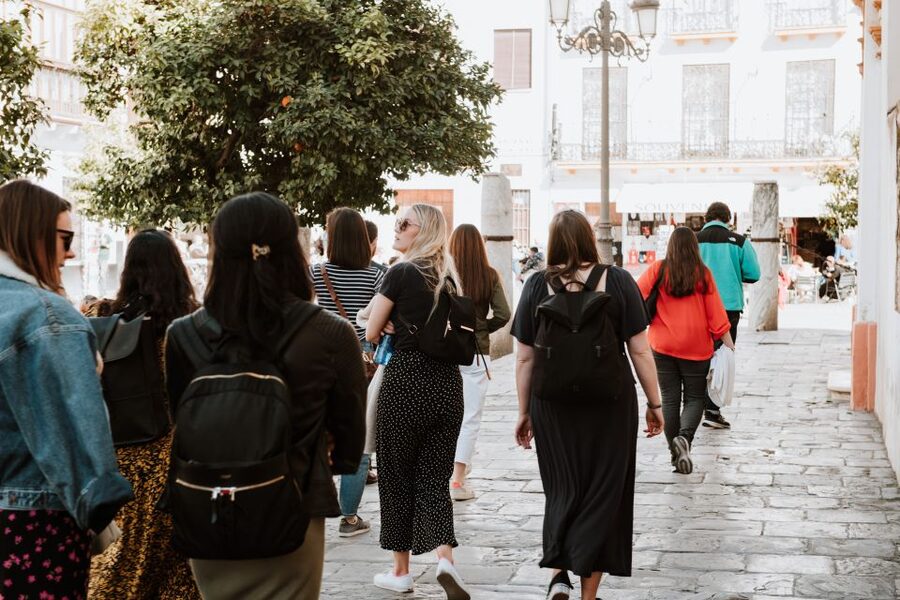
Santa Cruz is most rewarding when you stop treating it as a pretty shortcut to the cathedral and start reading its streets as clues. This 90-minute walking tour links the former Jewish quarter’s lanes, plazas, legends, and surviving details, from Susona’s tragic story to old water systems and walls.
I especially like the route’s storytelling focus and its small-scale setting. You get the romantic Plaza de Doña Elvira, the mysterious Callejón del Agua, and narrow passages you might simply hurry through alone. Guides such as Julio, Anna, Juan, Valentin, and Alfredo have been praised for explaining the past clearly and answering questions well.
The main limitation is time. Ten minutes at each listed stop moves things along, but it leaves little room for lingering, entering attractions, or exploring every corner. You should also arrive in comfortable shoes and bring sun protection, since Seville’s stone streets and strong sun can tire you quickly.
Key points to know before booking
- Susona’s story gives the quarter a human face: Her tale of love, betrayal, and identity helps explain why Calle Susona remains one of Santa Cruz’s most memorable lanes.
- The tour costs $15 per person: That is a good price for a live guide who supplies context you would not get from simply wandering.
- You visit more than postcard squares: The route includes Calle Susona, Rosina’s Balcony, Calle Ópera Carmen, Casa Murillo, and Patio de Banderas.
- Guide quality is a major strength: Julio, Anna, Valentin, Juan, Lara, and Alfredo have all been singled out for clear explanations, humor, and strong command of Seville’s past.
- It is easy to fit into a sightseeing day: The tour begins at Plaza del Triunfo and ends at Patio de Banderas, near the same central sightseeing area.
- The route is listed as wheelchair accessible: Still, Santa Cruz’s narrow lanes and old paving make comfortable clothing and sensible footwear useful for everyone.
Why Santa Cruz works best with a guide
Santa Cruz looks simple at first: white walls, orange trees, flower-filled patios, tiled details, and lanes that twist toward the cathedral. The trouble is that much of its meaning sits below the surface. A wall may mark an older boundary. A street name may preserve a story. A quiet square may have links to religious, artistic, or social life that you would miss in a quick walk.
That is where this tour earns its modest price. At $15, you are not paying for admission to a major monument. You are paying for interpretation, orientation, and a route through a district that can be confusing when you first arrive.
I like this approach because Santa Cruz rewards curiosity more than speed. The guide helps you notice the old water systems, the remains of walls, the use of orange trees, and the small details around balconies and courtyards. Several guides have also added material about opera, folklore, and modern Seville, so the tour is not limited to a list of dates.
The tone appears to depend on the guide, but the strongest pattern is clear. Julio is described as engaging and able to answer questions across the history of the district. Anna is praised for her English, humor, and lively presentation. Valentin brings energy and a teacher’s patience. Alfredo has a particular strength in Jewish history and Seville’s broader past, while Juan has adapted explanations to the interests of small groups.
You should not expect a formal lecture. The best use of the tour is to ask questions and let the guide connect the visible street to the larger story.
More Seville Jewish Quarter Tours:
- Seville: Small-Group Jewish Quarter Discovery Walking Tour
★ 4.9 · 499 reviews - Seville: 1-Hour Walking Tour Barrio de Santa Cruz
★ 4.5 · 131 reviews - Private Tour Jewish Quarter, center and Plaza de España
★ 5.0 · 127 reviews
Starting under the statue at Plaza del Triunfo
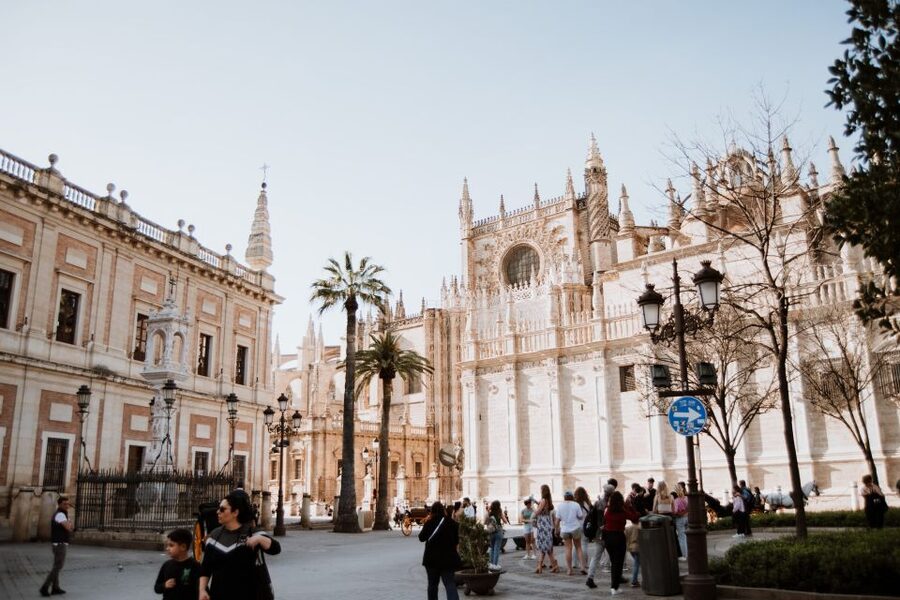
The meeting point is under the Virgen de la Inmaculada statue in Plaza del Triunfo. Look for a blue umbrella or a guide wearing a Sevilla Guías & Tours name badge.
This is a sensible starting point because the plaza sits beside some of Seville’s most important sights. You are already in the city’s main historic center, so the tour can move straight into the story of Santa Cruz without spending time on transfers.
The guide begins with an explanation of the area and its place in Seville’s past. The stop is listed as about ten minutes, which means you can expect an orientation rather than a long examination of every nearby building.
Arrive a little early. The meeting point is central, and a clear landmark is helpful when several groups are gathering around the cathedral area. The provider offers the tour in English or Spanish, so check your chosen language when booking.
Plaza de la Alianza and the first layers of history
From Plaza del Triunfo, the route moves to Plaza de la Alianza. This is where Santa Cruz begins to feel less like a broad sightseeing zone and more like a neighborhood shaped by small spaces.
Your guide uses the square to set up the district’s changing identity. The former Jewish quarter is not presented simply as a frozen medieval display. Instead, the tour connects older community life with the later Christian city and the stories that survived through streets and buildings.
The short stop works well early in the walk. You learn how to look for transitions in the neighborhood, from larger open spaces to passages that turn sharply and seem to lead nowhere. I would pay attention to orientation here because Santa Cruz becomes increasingly maze-like as the tour continues.
Plaza de Doña Elvira and the appeal of slow Seville
Plaza de Doña Elvira is one of the most picturesque stops. Orange trees, tiled details, and the romantic atmosphere make it an easy favorite for photographs, but the guide gives you more than a photo pause.
The square helps explain why Santa Cruz attracts so much attention. It is calm, enclosed, and visually coherent, with the kind of details that encourage you to slow down. A good guide also uses this setting to discuss local customs, legends, and the way Seville’s courtyards and plazas shape daily life.
I like this part of the route because it balances the heavier historical material. You are not moving from one date to another. You are seeing how architecture, shade, water, plants, and public space create the character of the quarter.
Keep your camera ready, but do not spend the whole stop looking at your screen. The charm is in the proportions and small details around you.
More Walking Tours in Seville:
- Seville: Small-Group City Highlights Walking Tour
★ 5.0 · 1,204 reviews - Cultural Walking Tour of Seville Monumental
★ 5.0 · 861 reviews - Seville: Tapas, Taverns, and History Walking Tour
★ 4.9 · 676 reviews - Seville: Tapas, Taverns and History Guided Walking Tour
★ 4.9 · 515 reviews
Calle Susona and the story behind the name
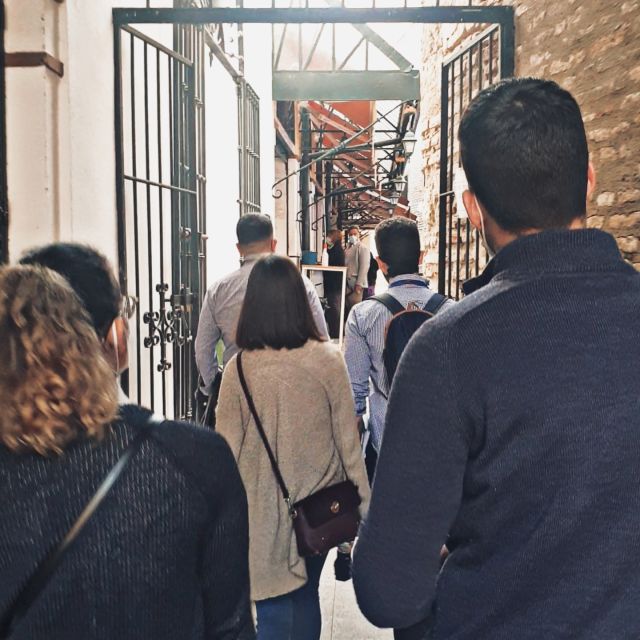
Calle Susona is one of the tour’s most distinctive stops. The guide tells the story of Susona, a young Jewish woman caught between love, betrayal, and identity.
This is the point where the past becomes personal. Rather than hearing only about communities and political events, you get a story attached to a particular person and street. It also shows how local memory works in Seville. Legend and documented history can sit side by side, and the guide’s job is to help you understand that difference without draining the story of its drama.
The tale is a major reason to choose this tour over a general orientation walk. If you only want architectural highlights, you could explore Santa Cruz independently. If you enjoy folklore and the way stories remain attached to places, Calle Susona gives the route a stronger emotional center.
Listen closely to how your guide handles the distinction between legend and history. Guides such as Anna and Julio have been praised for adding context rather than simply repeating a dramatic anecdote.
Hospital de los Venerables and Seville’s Golden Age
The route continues to Hospital de los Venerables, one of the area’s important historic buildings. The stop connects Santa Cruz with Seville’s period of cultural and economic power, often described as the city’s Golden Age.
The tour’s schedule allows roughly ten minutes here. That is enough for an exterior explanation and historical context, but do not assume you will have a full museum visit or a detailed interior tour. Admission and anything not specifically included are outside the $15 walking tour.
This is a useful distinction when planning your day. The walk gives you a framework for the building and the surrounding quarter. You can then decide if you want to return later for a longer visit to any attraction that interests you.
I value stops like this because they keep the tour from becoming only a collection of romantic legends. Santa Cruz also reflects institutions, religion, art, and civic life. Hospital de los Venerables broadens the picture.
Casa Murillo and the artistic side of Santa Cruz
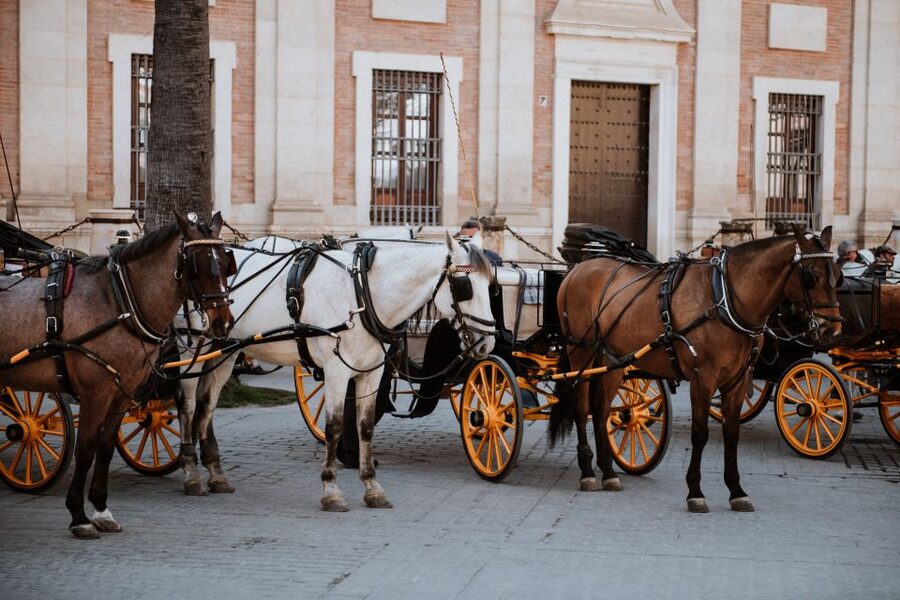
Casa Murillo brings an artistic note to the route. The stop helps connect the district to the painters, writers, and cultural figures associated with Seville.
The supplied details do not promise entry inside, so think of this as a guided point of interest rather than a house museum visit. Your guide explains why the place matters and how it fits into the neighborhood’s story.
This is also a good moment to ask questions about how Santa Cruz has been represented in art and opera. One guide was praised for showing how older stories continue to appear in opera, while another explained how the district’s past still shapes the city today.
That broader view is one of the tour’s best features. You are not only hearing about what happened centuries ago. You are learning how Seville keeps retelling itself.
Rosina’s Balcony and opera in the streets
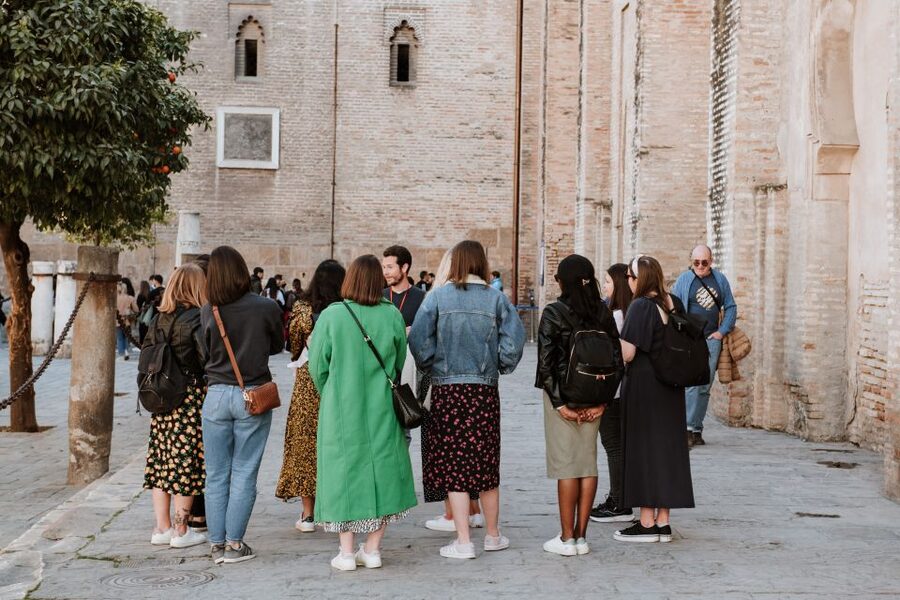
Rosina’s Balcony adds a playful theatrical turn. The name points toward the opera world and the character of Rosina, helping the guide link Santa Cruz’s streets with the stories performed on stage.
This stop will appeal most if you enjoy opera, theater, or the way fiction borrows from real places. It also gives the route variety. After the serious material around the Jewish quarter and religious institutions, a balcony and an opera story bring in romance and performance.
The tour does not require you to know the operas in advance. A good guide can explain the connection in plain language. If opera is not your interest, you can still enjoy the point as an example of how Seville’s streets inspire stories beyond local history.
Calle Ópera Carmen and the neighborhood as a stage
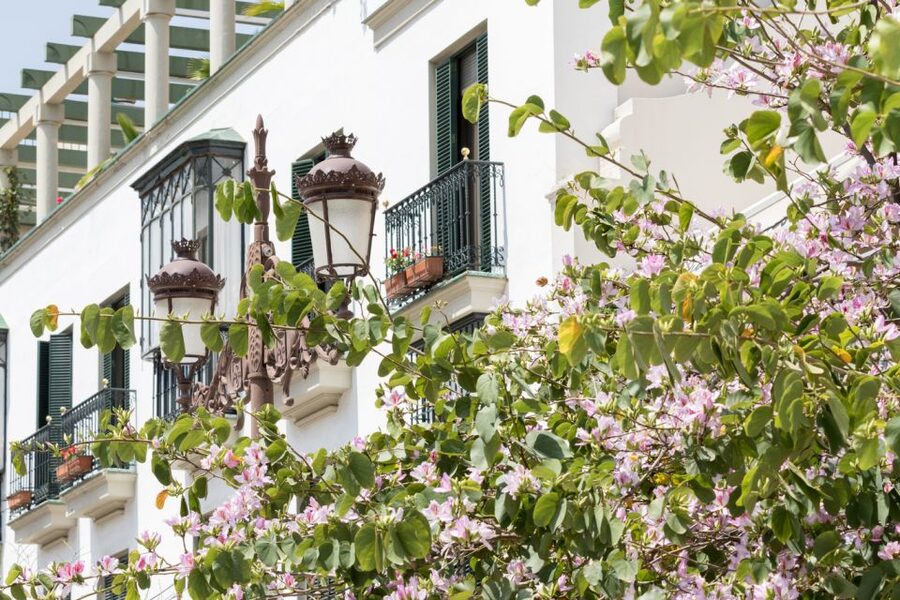
Calle Ópera Carmen continues the theatrical thread. The street helps the guide discuss Carmen and the way Seville has been imagined through opera, music, and folklore.
I like these opera stops because they show a side of the city that a standard historic walk may skip. Seville is not only a place of palaces and religious buildings. It is also a city that has supplied settings, characters, and atmosphere for works known around the world.
The drawback is that a 90-minute route can only introduce these connections. If you want detailed opera history, this is not a specialist music tour. If you want a memorable way to connect art with streets, the stops add welcome color and give you ideas for later exploration.
Patio de Banderas and the walk’s final view
The tour finishes at Patio de Banderas, after a final stop listed near a hop-on hop-off bus location. The patio is a practical ending point as well as a scenic one, since you remain close to the main attractions of central Seville.
By this point, the route has moved through quiet squares, narrow lanes, historic buildings, stories of Jewish Seville, and opera-linked places. The ending gives you a chance to reorient yourself before continuing with your day.
I would use the final minutes to ask for practical suggestions about the district. Several guides have been praised for answering questions beyond the prepared route, including how the old walls and water systems relate to what you can still see.
The walk does not include hotel pickup, food, or drinks. That is not a serious issue for this kind of experience, since Santa Cruz is central and the tour is short. Plan your own café stop before or after, and remember that the guide is not providing transport between sights.
What the $15 price really buys you
At $15 per person, this is good value if you want a clear introduction to Santa Cruz. The price is low enough to make sense early in a Seville visit, when you need help getting your bearings and deciding where to return.
The value comes from the guide’s local explanation, not from access to monuments. You get a route, stories, and context. You do not get meals, hotel pickup, or guaranteed entry to the buildings mentioned.
The guide is the variable that matters most. The available names include Julio, Anna, Valentin, Juan, Alfredo, Lara, and Jose, but you should not assume you can select one when booking. The strongest accounts describe guides who were funny, clear, flexible, and willing to answer detailed questions.
Some groups have been very small, including a tour with only two people and another with four. That can make the walk feel personal, but group size can vary. If you want the best chance of conversation, ask questions during the tour and choose a time that suits your schedule rather than expecting a private experience.
Practical advice for a comfortable walk
Wear comfortable shoes. Santa Cruz is made for walking, and the route uses narrow streets and old urban spaces rather than broad modern sidewalks.
Sunblock is a smart choice in Seville, particularly during the warmer part of the day. The tour lasts about 1.5 hours, but sun and stone can make a short walk feel longer than expected.
The activity is listed as wheelchair accessible. If you use a wheelchair or have mobility concerns, it is still sensible to confirm the current route and paving conditions when booking, since the district’s lanes are old and tight.
You can cancel up to 24 hours before the tour for a full refund, and the reserve-now, pay-later option keeps your plans flexible. Starting times vary, so check availability for the date you want.
Who should book this Santa Cruz walk
I would recommend it to first-time visitors who want context before exploring Seville alone. It is also a good fit if you enjoy legends, local folklore, Jewish heritage, opera, and small architectural details.
History-minded visitors should pay special attention to the guide choice and ask questions. Alfredo has been singled out for his focus on Jewish history, while Julio and Valentin have been praised for placing the district in a wider Seville story.
I would be less enthusiastic if you want long monument visits, plenty of free time, or a quiet self-guided stroll. The route is paced, and the ten-minute stops mean you keep moving. You may also want a separate visit for any building that catches your eye.
Should you book it?
Book this tour if you want Santa Cruz to make sense, not simply look pretty. For $15, you get a well-focused introduction to one of Seville’s most atmospheric quarters, with stories that range from Susona and Barrabás to Miguel Mañara and opera’s Rosina and Carmen.
Skip it if you prefer to wander without a schedule or already know the district well. For most first visits, though, the combination of narrow lanes, local legends, Jewish heritage, and strong guides makes this an easy, useful addition to a Seville itinerary.
FAQ
Where does the Santa Cruz walking tour begin?
The tour begins in Plaza del Triunfo, under the Virgen de la Inmaculada statue. Look for a blue umbrella or a guide wearing a Sevilla Guías & Tours name badge.
Where does the tour finish?
The walk finishes at Patio de Banderas.
How long does the tour last?
The tour lasts about 1.5 hours.
What languages are available?
The guided tour is available in English or Spanish.
How much does the tour cost?
The listed price is $15 per person.
Is hotel pickup included?
No. Hotel pickup is not included.
Does the tour include food or drinks?
No. Food and drinks are not included.
Is the tour wheelchair accessible?
Yes. The activity is listed as wheelchair accessible.
Can I cancel for a full refund?
Yes. You can cancel up to 24 hours in advance for a full refund.
Just added around Seville
- The Villages of Andalusia: Full-Day Trip from Seville★ 4.8 · 19 reviews
- From Seville: White Villages Tour★ 5.0 · 9 reviews
- White Villages & Ronda 2-Days Trip & Overnight Stay★ 4.6 · 5 reviews
- Your Photo Story in Seville★ 5.0 · 16 reviews
- Triana Market Tapas Tour★ 4.9 · 12 reviews
- Seville: Guided visit of the Casa de Pilatos with entrance tickets★ 4.3 · 18 reviews
- From Seville: Wine Tourism Half Day Tour★ 4.0 · 17 reviews
- Wine tourism, visit to a traditional winery and wine tasting★ 5.0 · 3 reviews
Seville Jewish Quarter Tours, compared.
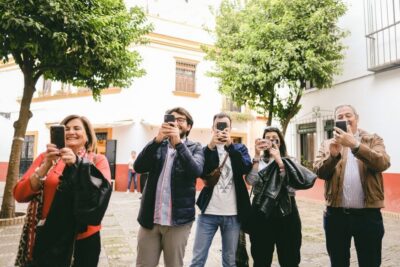
Small-Group Jewish Quarter Discovery Walking Tour
Read our review →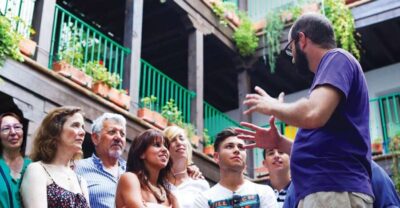
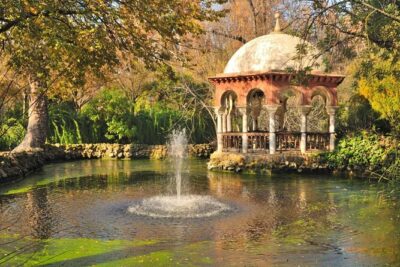
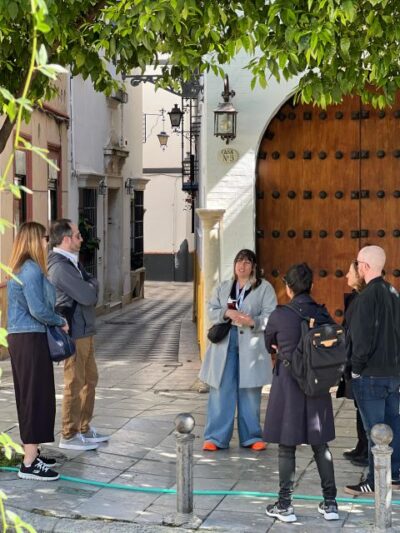
Small Group Jewish Quarter Tour with Tapas & Drinks
Read our review →
Seville Jewish Quarter Small Group Tour with Tapas and Drinks
Read our review →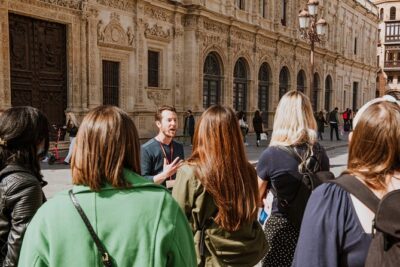
Seville Former Jewish Quarter Walking Tour: Santa Cruz
Read our review →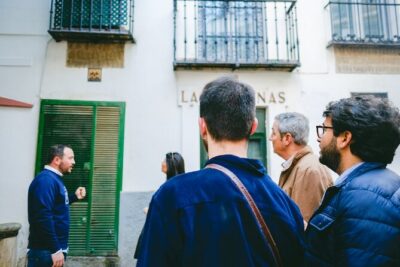
Seville Jewish Quarter Small-Group Walking Tour: History & Gems
Read our review →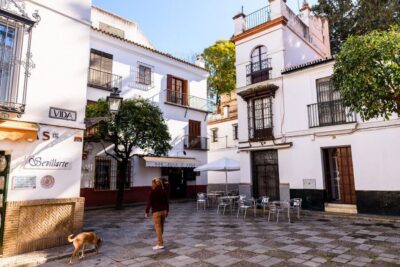
Browse the lists this tour appears in