
Reviewed · SEVILLE ALCáZAR TOURS
Seville: Small-Group Alcázar Guided Tour & Entry Ticket
Seville’s Alcázar is easier to appreciate when someone explains what you are looking at. This two-hour small-group tour moves from the palace’s Islamic foundations through its Christian royal additions, with guides such as Carlos, Carmen, Laura, Valentín, and Barbara bringing the rooms and rulers into focus.
I like the maximum group size of 10, which gives you a real chance to hear the guide and ask questions. I also like that the tour ends inside the complex, so you can linger in the gardens instead of being hurried out. The main consideration is that $58 is more than a basic entry ticket, and the two hours cover the key areas rather than every corner in detail.
Key points at a glance
- Small groups of up to 10: You get a more personal explanation than on a large palace tour, with enough room for questions and photos.
- A useful historical route: The tour connects the Justice Room, Palace of Plaster, House of Trade, Mudejar Palace, and Gothic Palace into one clear story.
- Entry ticket included: Your ticket is bought in advance, though security and ID checks can still cause a short wait.
- The gardens are not rushed: After the guided portion, you can remain inside and explore on your own.
- Strong guide reputation: Carlos, Carmen, Laura, Valentín, Barbara, Cristina, Miguel, Marta, and others are praised for clear explanations, humor, and enthusiasm.
- Practical restrictions apply: Bring the original ID used for booking, and leave large bags, food, drinks, pets, and sharp objects behind.
Why the Alcázar needs a guide
The Real Alcázar is not just one palace built in one period. It is a royal complex shaped by Muslim rulers, Castilian kings, later Spanish monarchs, and changing ideas about power and style.
That mixture is the appeal, but it can also make the site hard to read on your own. You move from horseshoe arches and patterned plaster to Christian chapels, Gothic halls, and the dazzling Mudejar rooms built for Peter I in the 14th century. Without context, those changes can feel like a series of beautiful rooms. With a good guide, they become evidence of political ambition, religious change, and royal competition.
I especially like the way this tour follows the building’s development rather than treating each room as an isolated sight. The guide explains why the palace looks the way it does, who used each space, and how Seville’s power grew alongside the Alcázar.
The quality of the tour depends partly on your guide’s style. The guides assigned to this experience include Carlos, Carmen, Laura, Valentín, Barbara, Cristina, Miguel, Marta, Guille, José, and others. Their approach varies, but the strongest pattern is clear explanation mixed with stories, humor, and time for questions. Carlos is often praised for making the history lively, while Carmen is noted for linking the palace to the wider story of Seville and Spain.
More Seville Alcázar Tours:
- Seville: Royal Alcázar Entry Ticket
★ 4.6 · 28,378 reviews - Seville: Cathedral, Giralda, and Royal Alcázar Guided Tour
★ 4.7 · 9,165 reviews - Seville: Cathedral, Giralda & Alcazar Entry With Guided Tour
★ 4.6 · 8,560 reviews
Meeting beside the cathedral and Alcázar
You meet at the large statue in Plaza del Triunfo, between Seville Cathedral and the Alcázar. This is a central spot, but the plaza can be busy, so give yourself time to identify the correct statue and find the guide.
Your guide wears a white lanyard and carries a white bag marked SEVILLE UNIQUE EXPERIENCES. Instructions are sent the day before by WhatsApp, text message, and email, so check all three places before leaving your hotel.
The opening talk takes place in the main monumental area outside the palace. You get an introduction to Seville and a look at some of the earliest remains of the complex before entering. This is a useful start because it gives you a sense of age and continuity before the decorated interiors begin.
The meeting time can shift by up to 15 minutes during the busiest periods, depending on ticket availability. That is worth remembering if you are arranging lunch, a cathedral visit, or a train connection immediately afterward.
Justice Room and Palace of Plaster
The first interior stops include the Justice Room and the Palace of Plaster. Here, your guide begins to show how architecture carried political and religious meaning.
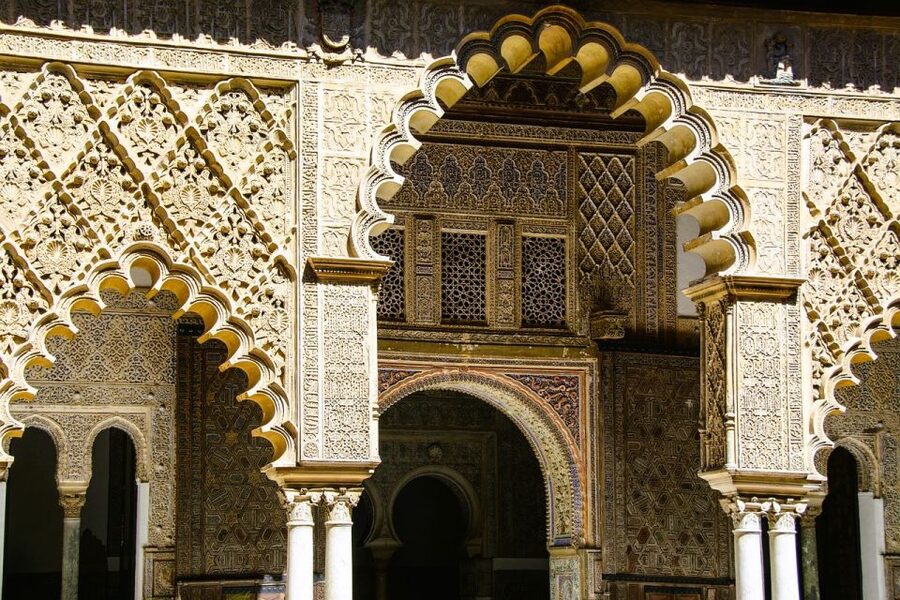
The Justice Room is tied to the exercise of royal authority, while the Palace of Plaster is known for its elaborate decorative work. Look closely at the patterns, arches, and surfaces rather than rushing from room to room. The details are not just decoration. They show the influence of Islamic artistic traditions within a royal palace later used by Christian rulers.
This is where a small group helps. A guide can point out a detail and make sure you can hear the explanation without competing with a large crowd. You also have a better chance to ask about a symbol, a ruler, or a feature that catches your eye.
The tour is conducted in English. The language is intended to be clear and accessible, but this remains a historical tour with a lot of names, dates, and changing dynasties. If you prefer to study every inscription or take long pauses for photography, two hours may feel brisk.
House of Trade and the Admiral’s Room
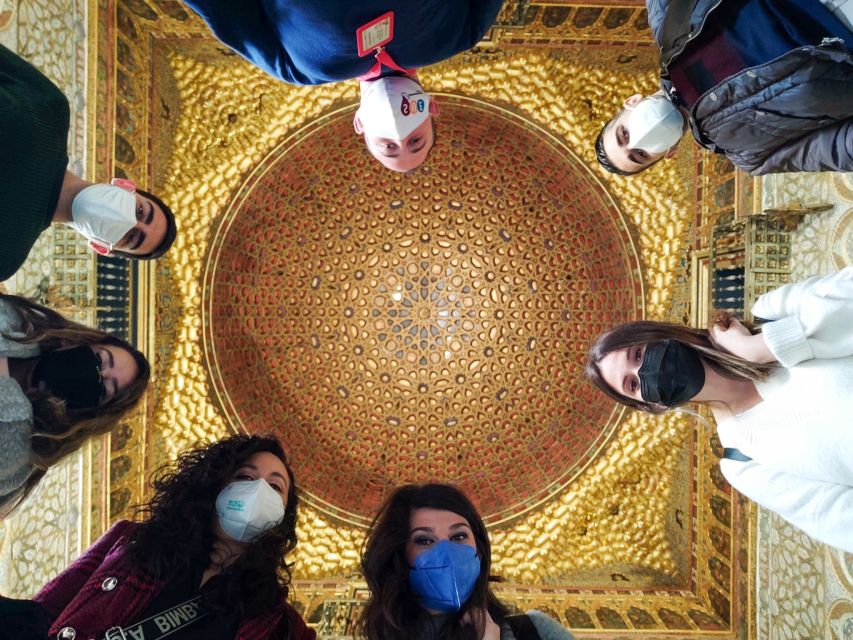
The next part shifts from palace design to Seville’s role in the age of Atlantic exploration and conquest. At the House of Trade and the Admiral’s Room, you learn why Seville became so important during Spain’s expansion into the Americas.
This section gives the Alcázar a wider frame. The palace was not only a residence filled with courtiers. It was also connected to administration, commerce, royal decisions, and Spain’s overseas ambitions.
I like this stop because it prevents the tour from becoming a pure architecture walk. You see how the building fits into the story of the city. Seville was a center of political and economic power, and the Alcázar was closely tied to that role.
The subject is also more complicated than a simple tale of discovery. The tour connects Seville and the palace to the conquest of the Americas, so you should expect a historical account of royal power and expansion, not just pretty rooms and palace gossip.
More Tickets in Seville:
- Seville: Cathedral and La Giralda Entry Ticket
★ 4.5 · 24,592 reviews - Seville: Live Flamenco Dancing Show Ticket at the Theater
★ 4.7 · 16,396 reviews - Seville: Setas de Sevilla Entry Ticket
★ 4.6 · 8,901 reviews - Seville: Puro Flamenco Show with Optional Museum Ticket
★ 4.8 · 6,088 reviews
Peter I’s Mudejar Palace
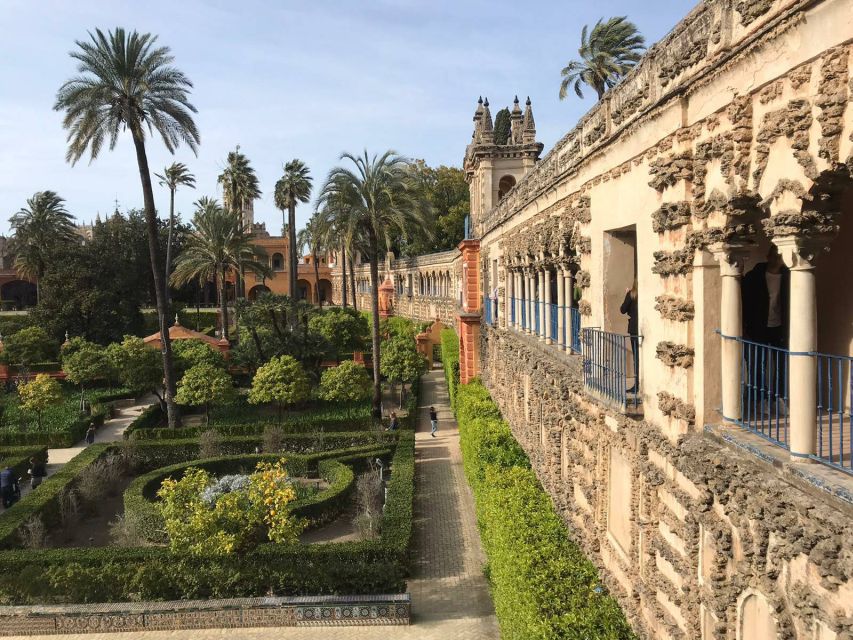
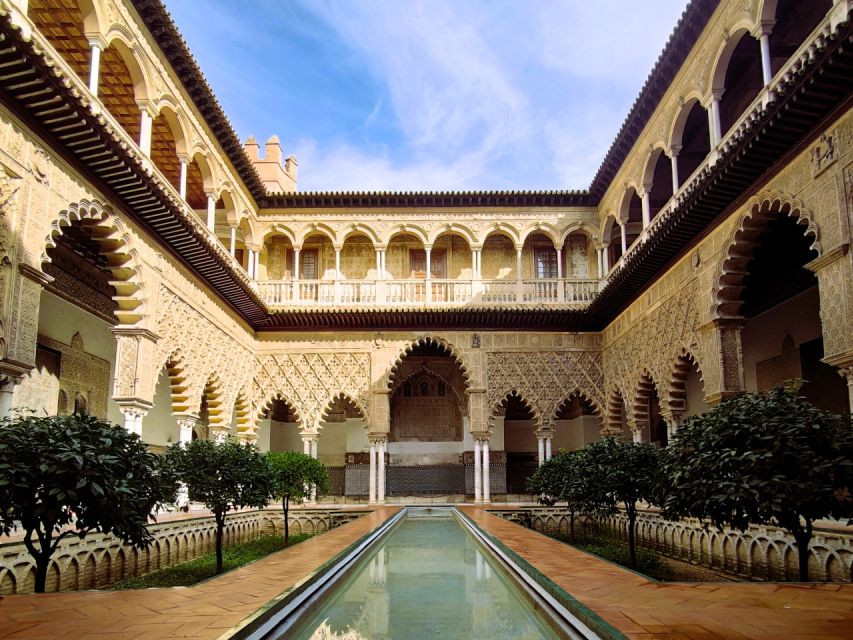
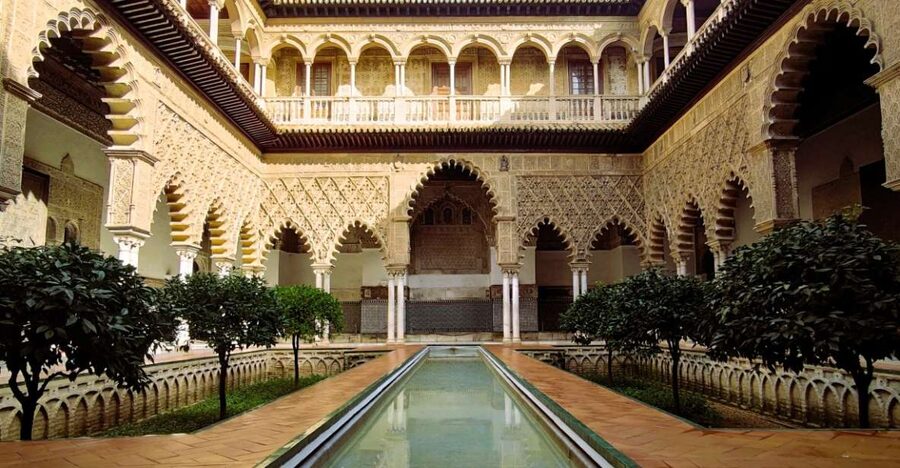
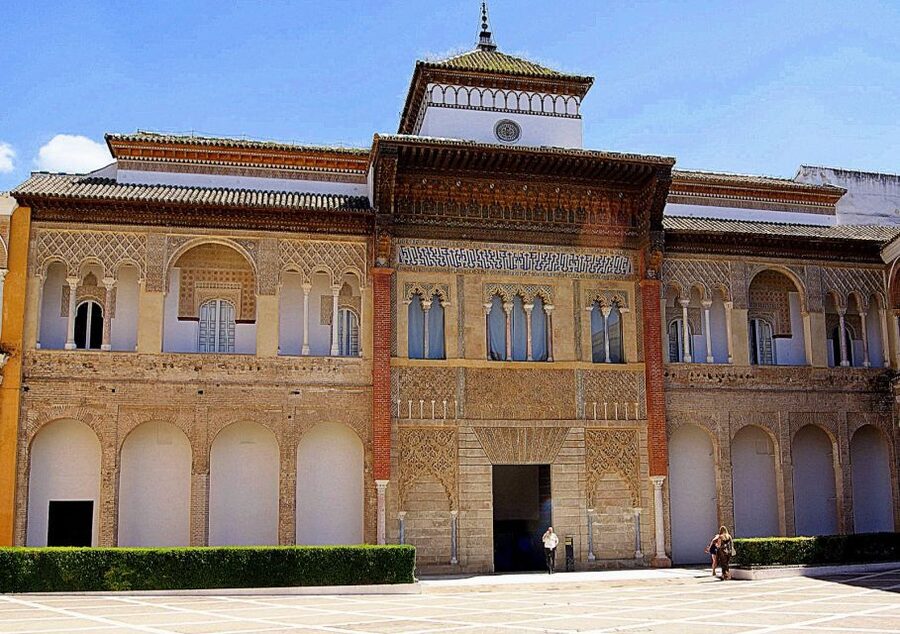
The Mudejar Palace is the visual heart of the visit for many people. Built by Peter I in the 1300s, it blends Moorish design with Christian royal purpose.
That combination says a great deal about medieval Spain. Christian rulers did not simply erase earlier artistic traditions. They also borrowed, adapted, and displayed them to make their own palaces more impressive. Each ruler wanted to leave a mark, and the result is a building where several cultures and periods remain visible together.
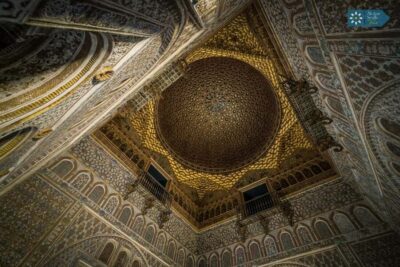
Your guide helps you read that mixture. Pay attention to the contrast between the crisp geometric decoration, the carved plaster, the courtyards, and the political message of a Christian king choosing an artistic language associated with Muslim Andalusia.
This is also a good place to allow time for photos. Marta is praised for waiting while people take pictures and for adjusting her explanations when someone shows particular interest. That kind of flexibility matters in a palace where you may want to stop often.
The drawback is simple: beautiful rooms can become crowded, especially in high season. Even a group of 10 cannot control the pace of other groups moving through the palace. The tour avoids the ticket-office line, but it cannot promise empty rooms.
The Gothic Palace and Christian royal power
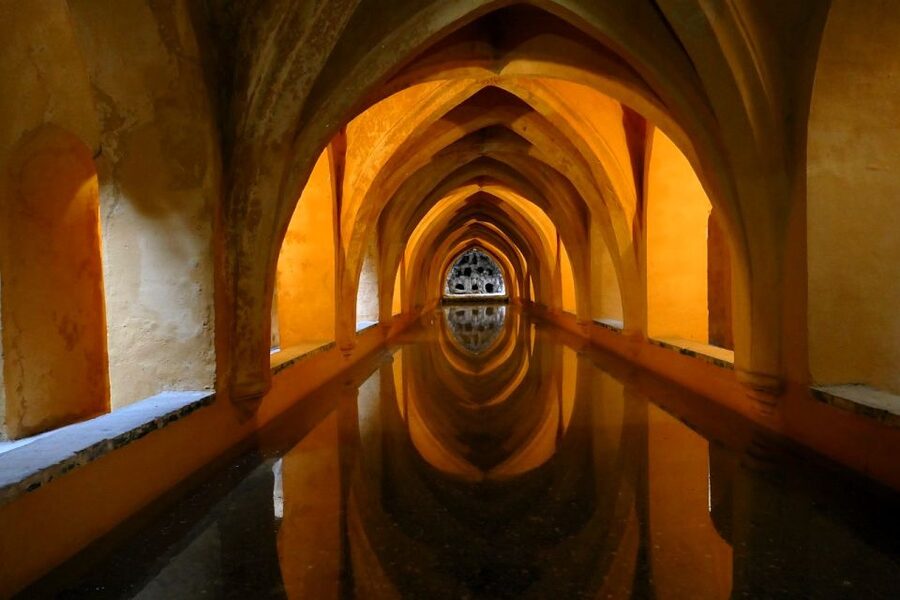
The Gothic Palace was the first Christian building added to the Alcázar after the Castilian conquest. It offers a clear contrast with the Mudejar Palace and helps you see how the complex changed under Christian rule.
Your guide explains the political meaning of that shift, not just the architectural one. The Gothic rooms represent a new phase of royal power, while the palace as a whole shows how later rulers continued to build on what came before.
I find this contrast more useful than trying to label the Alcázar as simply Moorish or Christian. It is both, and also more than either label. The building’s appeal comes from the layers: earlier foundations, royal rebuilding, borrowed styles, and later changes all occupy the same complex.
The route is designed to highlight the major rooms and their importance. It does not promise a detailed examination of every hall, corner, or garden path. If you have already visited the Alcázar and want a slow architectural study, a self-guided return visit after the tour will suit you well.
Maria Padilla Baths and the gardens
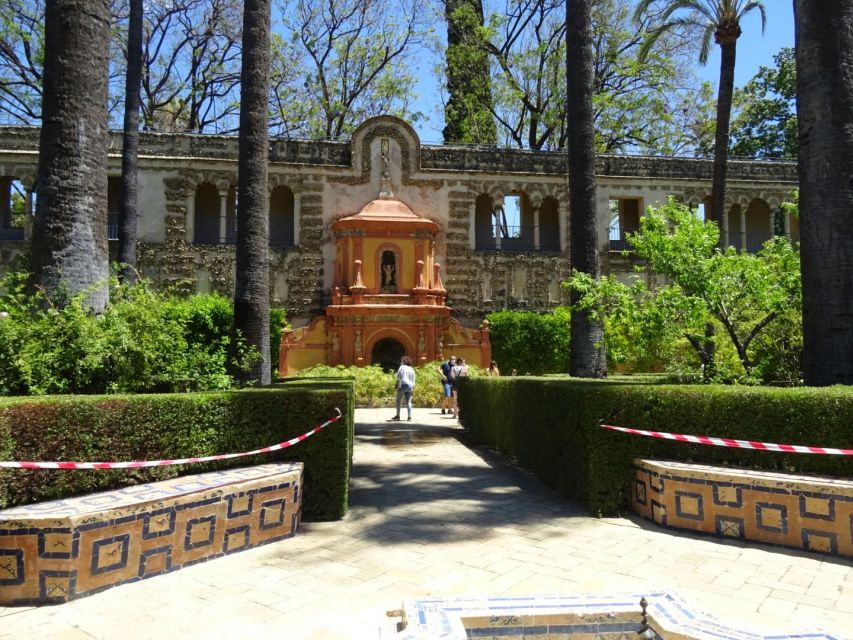
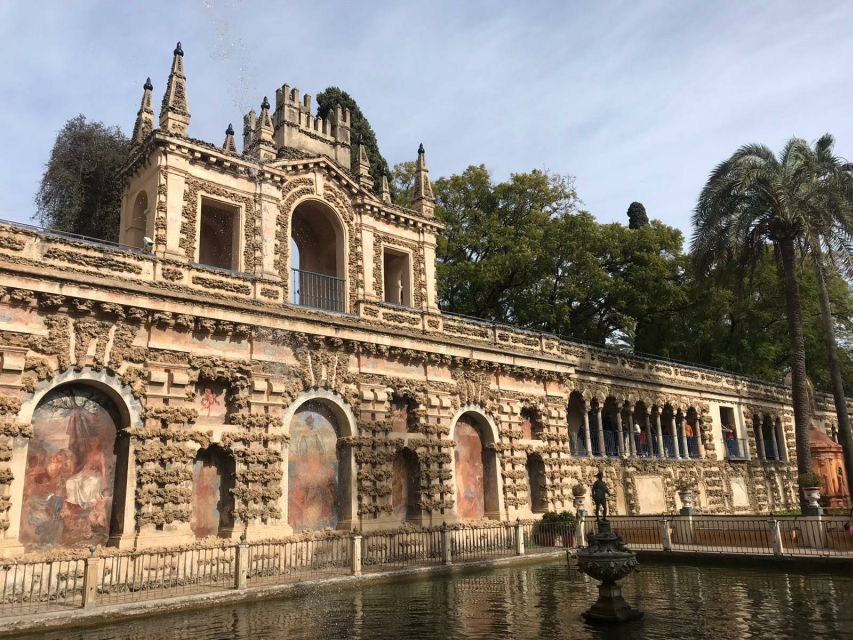
The guided portion concludes at the Maria Padilla Baths, leading into the gardens. This is a smart ending because the gardens need time and space rather than a constant stream of commentary.
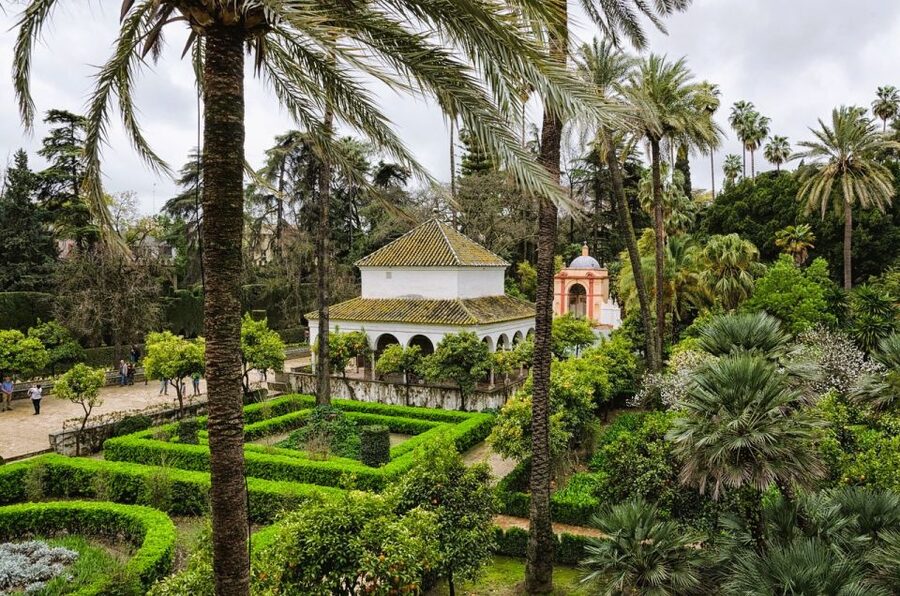
The baths are an atmospheric place to finish, with a different feel from the ornate palace rooms. Afterward, you are free to explore the grounds at your own pace. You can revisit a room, pause for photos, or walk through the gardens without trying to keep up with the group.
The extra garden time adds real value to the experience. A two-hour tour might sound short for such a large complex, but the time is divided between explanation and independent exploration. You receive a guided framework, then decide how long to spend with the parts that interest you most.
The gardens can also be affected by weather and official decisions. Heavy wind or rain alerts may lead the Alcázar management to close them for safety. Other areas may close for restoration, official use, or safety reasons. The tour operates in rain or shine, but access to every area is not guaranteed.
Does $58 offer good value?
At $58 per person, this is not the cheapest way to enter the Alcázar. You are paying for the monument ticket, an English-speaking licensed guide, advance ticket arrangements, and a group limited to 10 people.
For me, the strongest value is the small size. The Alcázar is large, its history is layered, and the site does not provide enough explanation to make every major feature easy to understand on your own. A guide can point out details you might otherwise walk past and connect the rooms to Seville’s wider history.
The price is easier to justify if you have limited time in Seville, are visiting the palace for the first time, or enjoy history but do not want to read a long guidebook before arriving. It is less compelling if you already know the Alcázar well, prefer total independence, or are happy to visit at a slower pace with your own research.
The skip-the-ticket-office feature saves useful time, but be precise about what it means. You skip the ticket sales line because the ticket is pre-purchased. You still pass through an airport-style security check, and staff may check your original ID before allowing entry. A short wait at the entrance is still possible.
Group size, pace, and accessibility
The group limit is 10 participants, though actual groups may be smaller. A group of seven, for example, can move through narrow spaces more easily than a large organized party and gives the guide room to involve everyone.
The pace is described as relaxed, but it is still a structured two-hour visit. You will stop at the major historical areas, listen to explanations, and have opportunities for photos. You will not have unlimited time in each room during the guided section.
Wheelchair access is available. Still, the Alcázar is an old royal complex with different rooms, courtyards, and garden areas, so you may want to confirm current access details if you have specific mobility needs.
Bring the original passport or ID card used when booking. If you booked with a student rate or provided student information, bring the original student card as well. The palace can deny entry if the document details do not match, and photographs or photocopies are not accepted.
Large bags and oversize luggage are not allowed. Food and drinks, pets, weapons, and sharp objects are also prohibited. Since you cannot leave and re-enter once inside, take care of these practical details before joining the group.
Who will get the most from this tour?
I would choose this tour if you want the Alcázar to make sense, not just look beautiful. It is especially suitable for a first visit, a short stay in Seville, or anyone who appreciates clear storytelling and the chance to ask questions.
It also works well for couples, families with older children, and solo visitors who prefer a small social setting rather than exploring entirely alone. The guide’s stories help break up the dates and dynastic changes, while the modest group size keeps the experience personal.
You may want a different approach if you prefer to spend four hours photographing tiles, revisiting favorite rooms, or wandering every garden path without a schedule. In that case, you can still use the tour as an introduction, then stay afterward for your own exploration.
The tour is also a good fit for people who value local perspective. Several guides bring in broader information about Seville, Spain, religion, architecture, and the city’s role in the Americas. The best guides do not simply recite dates. They explain why the palace looks this way and why its rulers cared about particular styles.
Should you book the Alcázar small-group tour?
Book it if you want expert context, advance entry, and a group no larger than 10. The strongest part is not merely avoiding the ticket office. It is having someone explain how Islamic, Mudejar, Gothic, and Christian royal traditions meet inside one working palace.
The tour is also a good choice if your Seville schedule is tight. You get the main palace rooms in two hours, then remain inside to explore the gardens at your own pace.
I would skip it only if the $58 price feels high for a guided visit or if you prefer complete independence. Otherwise, the mix of a manageable group, strong English-speaking guides, and free time after the tour makes this a practical way to see one of Seville’s essential sights.
FAQ
How long does the Alcázar tour last?
The guided experience lasts two hours. After the guided portion, you can stay inside the complex and explore the gardens independently.
What is included in the price?
The price includes the monument entry ticket, an English-speaking licensed local guide, and a headset when the group has more than seven participants.
How many people are in the group?
The group is limited to a maximum of 10 participants. The actual number may be smaller.
Where do I meet the guide?
Meet at the large statue in Plaza del Triunfo, between the Alcázar and Seville Cathedral. The guide wears a white lanyard and carries a white bag marked SEVILLE UNIQUE EXPERIENCES.
Do I still have to wait after skipping the ticket line?
You skip the ticket-office line because the ticket is purchased in advance. You must still pass security and ID checks, so a short wait at the entrance is possible.
What identification should I bring?
Bring the original passport or ID card whose details were provided when booking. If applicable, bring your original student card. Photocopies and photos of documents are not accepted.
Can I leave the Alcázar and come back later?
No. Once you leave the monument complex, re-entry is not allowed because the ticket is valid for a specific entry time.
Is the tour wheelchair accessible?
Yes, the activity is listed as wheelchair accessible. Some areas may still close because of restoration, official use, weather, or safety reasons.
Just added around Seville
- The Villages of Andalusia: Full-Day Trip from Seville★ 4.8 · 19 reviews
- From Seville: White Villages Tour★ 5.0 · 9 reviews
- White Villages & Ronda 2-Days Trip & Overnight Stay★ 4.6 · 5 reviews
- Your Photo Story in Seville★ 5.0 · 16 reviews
- Triana Market Tapas Tour★ 4.9 · 12 reviews
- Seville: Guided visit of the Casa de Pilatos with entrance tickets★ 4.3 · 18 reviews
- From Seville: Wine Tourism Half Day Tour★ 4.0 · 17 reviews
- Wine tourism, visit to a traditional winery and wine tasting★ 5.0 · 3 reviews
Seville Alcázar Tours, compared.

Cathedral, Giralda, and Royal Alcázar Guided Tour
Read our review →
Cathedral, Giralda & Alcazar Entry With Guided Tour
Read our review →
Priority Access Cathedral, Giralda & Alcázar Tour
Read our review →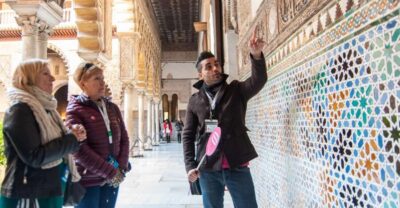
Alcázar and Cathedral Entry Ticket and Guided Tour
Read our review →
Alcazar and Cathedral of Seville Tour with Skip the Line Tickets
Read our review →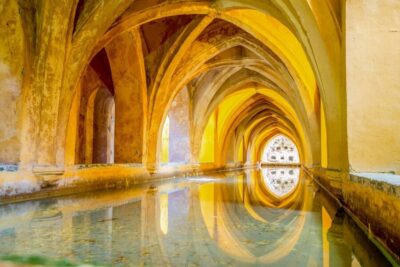
Alcázar of Seville Skip-the-Line Tickets and Guided Tour
Read our review →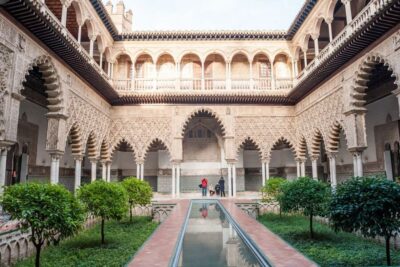
Browse the lists this tour appears in