
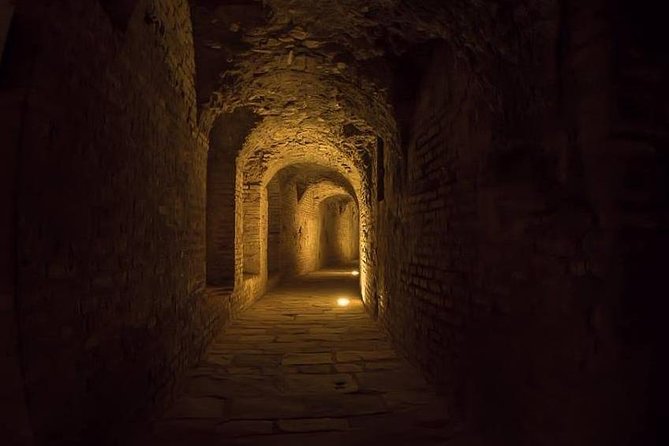
Reviewed · ITALICA ROMAN CITY TOURS
Italica 2-Hour Private Guided Tour
Italica gives you a rare look at a Roman city beyond Italy, with beautifully preserved mosaics and an amphitheater large enough to host public games. The site lies only about 20 minutes from Seville, yet it usually feels far less crowded than the city’s main sights.
I like the private format, since your guide can spend time on the parts that interest you most. I also like the human touch from guides such as Carmen, Javier, Alex, Miguel, and David, who have been praised for clear English, good timing, strong Roman history, and practical help getting back to Seville. The main catch is transport: hotel pickup and drop-off are not included, and the advertised meeting point is at Italica itself.
Key things to know before booking
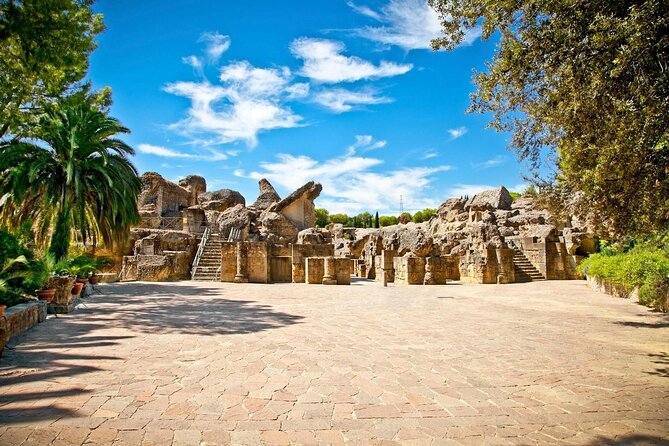
- The amphitheater is the tour’s main event: Walk through one of the largest surviving structures at Italica and hear how Roman games worked.
- The House of the Planetarium has fine mosaics: Its floor designs give you a close look at the wealth and taste of Italica’s residents.
- This is a private two-hour visit: Only your group takes part, so you can ask questions without keeping pace with a large crowd.
- Italica is tied to emperors Trajan and Hadrian: Your guide connects the ruins to two of Rome’s best-known rulers.
- Game of Thrones fans get an extra reason to visit: The amphitheater was used as a filming location, and guides may show footage from the series.
- Plan your own transport carefully: The listed start and end point is Italica, although paid pickup or help returning to Seville may be available by arrangement.
Why Italica makes a good break from Seville
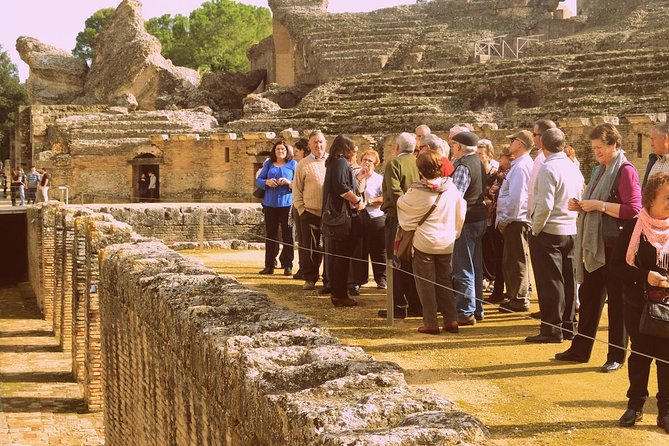
Seville is full of grand palaces, tiled courtyards, and church towers. Italica offers a different kind of sight: an open-air Roman city where you can walk along ancient streets and enter the remains of houses, baths, and public buildings.
The settlement was established in 206 A.D. after the battle of Ilipa, when the Roman general Publius Cornelius Scipio created a place for wounded soldiers. Over time, it grew into an important city in Roman Hispania. It is also associated with emperors Trajan and Hadrian, which gives the site more political importance than a simple collection of ruins.
I find this context useful because Italica is easier to understand when you see it as a functioning city rather than a pile of old stones. People came here to bathe, exercise, eat, meet, worship, watch spectacles, and live in comfortable homes. Your guide’s job is to connect those everyday activities to the remains under your feet.
The setting also works well for a short outing. The journey from central Seville is described as roughly 20 minutes, and the visit lasts about two hours. That makes Italica practical for a half-day plan, especially if you want to add an ancient site without giving up a full afternoon in Seville.
More Italica Roman City Tours:
- From Seville: Italica Roman City & Medieval Monastery Tour
★ 4.5 · 1,051 reviews - Historical Italica: Half-Day Guided Tour from Seville
★ 4.5 · 416 reviews - Seville: Game of Thrones and Roman Empire Italica Tour
★ 4.3 · 372 reviews
Entering the amphitheater where Roman games took place
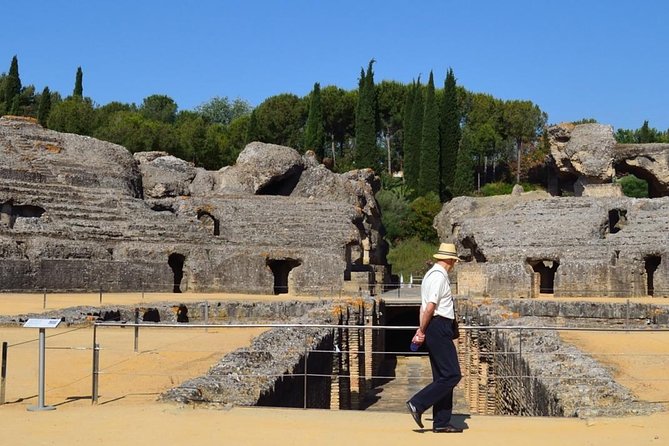
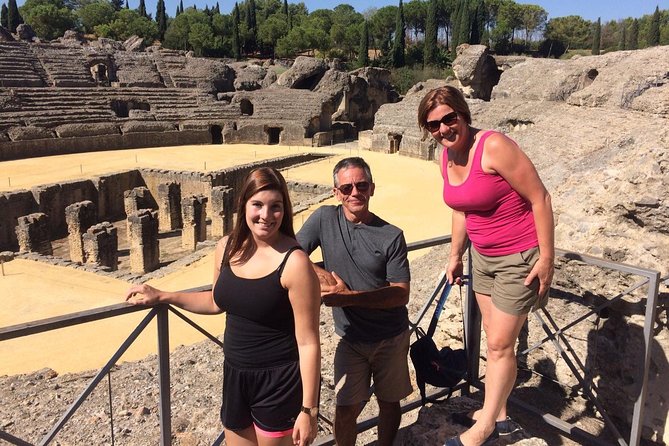
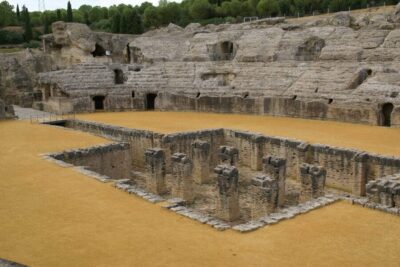
The amphitheater is the clearest reason to choose this tour. It is large, imposing, and far easier to picture than many smaller Roman remains. You can walk through the surviving structure while your guide explains how public games were arranged and how the building served Roman society.
The scale matters. Ancient amphitheaters were not only places for entertainment. They were public stages where local power, imperial loyalty, and social rank were displayed. Your guide can help you read the entrances, seating areas, and central arena as parts of one carefully organized building.
The site has also become familiar to modern television viewers. The amphitheater was used as a filming location for Game of Thrones, and some guides show a clip from the series during the visit. That is a fun extra, but it should not replace the Roman story. The filming connection helps you notice the shape and scale of the arena, while the history explains why the building existed in the first place.
If you are visiting mainly for the television connection, keep your expectations sensible. You are seeing an ancient monument first, not a themed attraction. The production reference is a useful visual link, particularly when your guide points out where scenes were filmed.
The amphitheater can also be the most memorable part for children and teenagers. It has an immediate sense of place, and the idea of crowds watching Roman games is easier to grasp here than in a museum display. Children must be accompanied by an adult, and the private format makes it easier to adjust the pace for your group.
Mosaics and Roman homes in the upper city
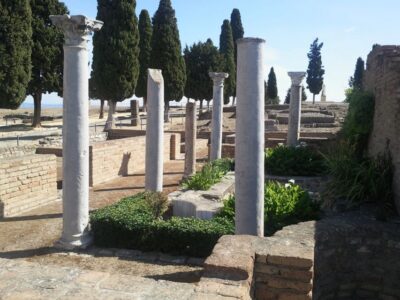
After the amphitheater, the House of the Planetarium provides a quieter look at private Roman life. Its mosaics are among Italica’s best-known details, and they reward a slower look than a quick photograph from the path.
The name refers to the designs shown in the mosaic work. Your guide can explain how decorative floors helped signal a household’s status and how the rooms fitted into the home. I would ask about the practical use of each room, since Roman houses can seem confusing when you see only foundations and partial walls.
The tour also includes two restored Roman houses. These make the site more personal. Instead of thinking only about emperors and public games, you get a sense of how residents arranged domestic space and decorated their homes.
The mosaics are a strong point, but this is not Pompeii. Parts of Italica are preserved as walls, foundations, streets, and floor patterns rather than complete buildings. One visitor who had already seen Pompeii and Ostia felt there was less to see here. That is a fair comparison. Italica is rewarding because of its amphitheater, mosaics, and open layout, but it does not offer the same volume of intact buildings as those larger Roman sites.
Baths, gym, bread oven, and the working city
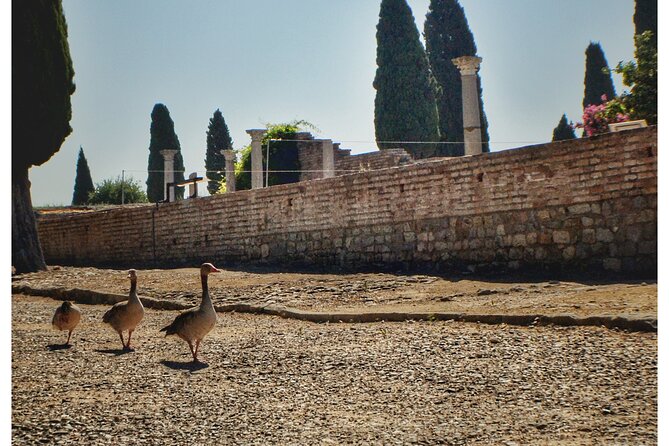
The grand bath complex shows how much public life revolved around bathing. Roman baths were places for washing, exercise, social contact, and relaxation. The largest thermal baths at Italica help you picture the engineering and organization needed to serve a city.
Your guide also explains the gym, where physical training formed part of Roman life. These details prevent the tour from becoming a simple march between famous ruins. You see how health, leisure, and social status overlapped in the Roman world.
A former bread oven adds another practical detail. It is less dramatic than the amphitheater, but it helps you think about food production and daily work. I like this part of the visit because it shifts attention away from rulers and spectacles. A city needed bread, heated water, exercise spaces, and homes before it needed monuments.
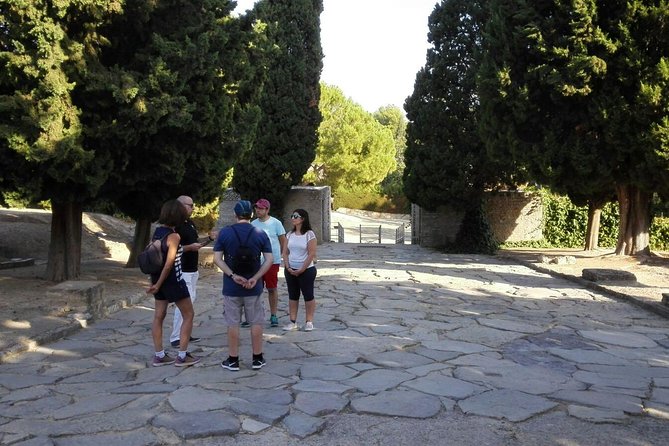
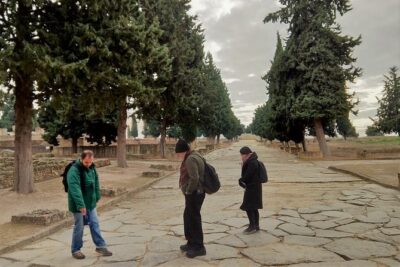
You will also see remnants of city streets. Their layout gives the ruins structure and helps explain how people moved between homes and public buildings. Ask your guide how the different areas connected. A private tour is especially useful here because you can stop when a street plan or building outline is hard to interpret.
More 2-Hour Experiences in Seville:
- Seville City Tour 2 Hour Monumental Segway Tour
★ 5.0 · 472 reviews - Seville City Tour: 2-Hour Monumental Segway Tour
★ 4.9 · 117 reviews - Sevilla 2 Hour Kayaking Tour on the Guadalquivir River
★ 4.5 · 70 reviews - Seville: 2-Hour Electric Kickscooter tour
★ 4.9 · 59 reviews
What your guide adds to the ruins
The value of this experience rests heavily on the guide. Italica has enough surviving material to impress you, but a guide gives the fragments meaning. Without context, a mosaic is a pretty floor and an amphitheater is a large stone bowl. With good explanation, both become parts of Roman life.
Carmen has been praised for her command of Italica and Roman history, along with her friendly manner and punctuality. Javier is described as personable, professional, and well prepared. Alex has been noted for arriving on time and explaining the site clearly, even in less pleasant weather.
Miguel is another guide associated with the experience, and David has been praised not only for his history and photography but also for helping with the return to the city. One guide has a university history degree, which may appeal to you if you want more than a basic introduction.
The exact guide is not guaranteed, so book this with the understanding that the experience depends on who leads your visit. Still, the strongest pattern is clear: the guides are valued for being friendly, punctual, clear in English, and willing to connect the ruins to wider Roman history.
Because the tour is private, you can ask about Trajan, Hadrian, Roman building methods, the filming location, or daily life. You can also say when you want to linger over the mosaics or move on from a topic. That flexibility is the main reason to choose this over simply visiting on your own.
The transport question deserves attention
The tour description gives Italica as both the start and end point. Hotel pickup and drop-off are not included, and transportation to and from the attraction is available only by request. This is the one part of the booking you should clarify before paying.
A bus route identified in the practical details is the M17OA from Seville’s bus station. It runs about every half hour, and Italica is the last stop as the bus turns around. The entrance is described as obvious at that stop. Since transport details can change, confirm the current route and departure point before you set out.
Some arrangements have included paid hotel pickup, and David or the company owner has helped people return to Seville. Treat that as an optional arrangement, not as a standard inclusion. Ask about the cost and exact meeting place in advance.
The start time is 10:00 a.m. That gives you a clear morning schedule, but you should allow time to reach Italica if you are arranging your own transport. The tour ends back at the meeting point, not automatically at your hotel or in central Seville.
Is the $106.82 price good value?
At about $106.82 per person, this is not the cheapest way to see Italica. You are paying for a private English-language guide and admission tickets, not just entry to the ruins.
The price makes more sense for a small group. If two or three people share the booking, you get direct attention and can spread the private-tour cost among your party. Group discounts may also be available, so check the final price for your group size.
I would choose this tour if you care about understanding what you see. The amphitheater and mosaics are worthwhile on their own, but the baths, gym, bread oven, streets, and houses need explanation to become more than disconnected remains.
I would skip the private format if you mainly want a quick look at the amphitheater and can easily arrange transport yourself. A self-guided visit may cost less, though you would give up the stories, questions, and local help that make the ruins easier to read.
The price also includes the useful benefit of a fixed two-hour structure. You do not have to plan the route through a large archaeological site or decide which remains deserve your time. For a first visit to Italica, that can be worth paying for.
Who will enjoy this two-hour visit?
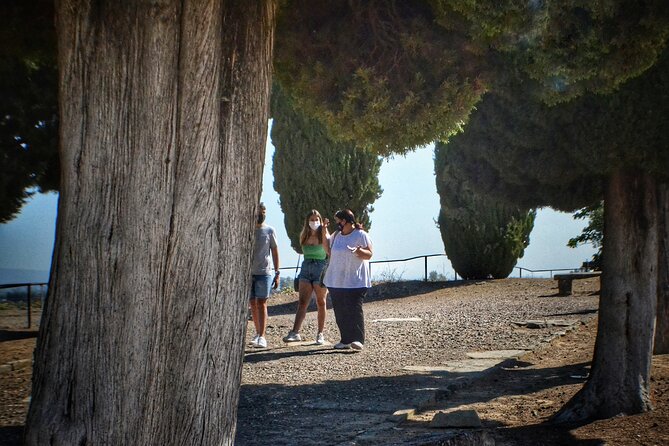
This tour suits you best if you like Roman history, archaeology, architecture, or film locations. It is also a good choice if you want a manageable outing from Seville rather than a full-day trip.
Families can benefit from the private setup, especially if younger visitors need a quicker pace or more direct explanations. The amphitheater and Game of Thrones connection provide easy hooks, while the houses and bread oven offer smaller details for anyone who likes daily-life history.
It also works well for visitors who want an English-language guide. The tour is offered in English, and the guide can explain the site without requiring you to read a long account before arriving.
You should think twice if you have already visited several major Roman cities and want extensive intact ruins. Italica has fine mosaics and a strong amphitheater, but the surviving site is more limited than Pompeii or Ostia.
Most people can take part, and service animals are allowed. The experience requires good weather, so an unsuitable forecast can lead to a new date or a full refund.
My verdict on the Italica private tour
Book this tour if you want the Roman site explained rather than simply photographed. The amphitheater, House of the Planetarium, thermal baths, and Roman streets create a well-balanced two-hour visit, and the private format lets you shape the discussion around your interests.
Before booking, settle the transport question. The advertised meeting point is at Italica, and hotel service is not standard. If you are happy to take the bus or arrange a paid transfer, the tour offers a practical and focused way to see one of Seville’s most rewarding nearby sights.
I would especially recommend it for first-time visitors to Italica, families, and anyone curious about both Roman history and the Game of Thrones filming location. If you want a vast archaeological city with buildings preserved room by room, choose your expectations carefully. If you want a well-told introduction to a striking Roman amphitheater and some excellent mosaics, this is a strong pick.
FAQ
Where does the Italica tour start?
The listed meeting point is Italica, at V41970, Seville, Spain. The activity ends back at the same meeting point.
What time does the tour begin?
The scheduled start time is 10:00 a.m.
How long does the tour last?
The visit lasts approximately one hour and 30 minutes to two hours. The itinerary lists two hours.
Is the tour private?
Yes. Only your group participates in the activity.
Is an English-speaking guide included?
Yes. The tour is offered in English and includes a professional guide.
Are entrance tickets included?
Yes. Admission tickets to Italica are included in the tour price.
Is transportation from Seville included?
No. Hotel pickup and drop-off are not included. Transportation to and from the attraction may be available by request.
Can children join the tour?
Yes. Children can participate, but they must be accompanied by an adult.
Are service animals allowed?
Yes. Service animals are allowed.
What happens if bad weather cancels the tour?
If poor weather causes the experience to be canceled, you will be offered another date or a full refund. You can also cancel for a full refund if you do so at least 24 hours before the start time.
Just added around Seville
- The Villages of Andalusia: Full-Day Trip from Seville★ 4.8 · 19 reviews
- From Seville: White Villages Tour★ 5.0 · 9 reviews
- White Villages & Ronda 2-Days Trip & Overnight Stay★ 4.6 · 5 reviews
- Your Photo Story in Seville★ 5.0 · 16 reviews
- Triana Market Tapas Tour★ 4.9 · 12 reviews
- Seville: Guided visit of the Casa de Pilatos with entrance tickets★ 4.3 · 18 reviews
- From Seville: Wine Tourism Half Day Tour★ 4.0 · 17 reviews
- Wine tourism, visit to a traditional winery and wine tasting★ 5.0 · 3 reviews
Italica Roman City Tours, compared.
Historical Italica: Half-Day Guided Tour from Seville
Read our review →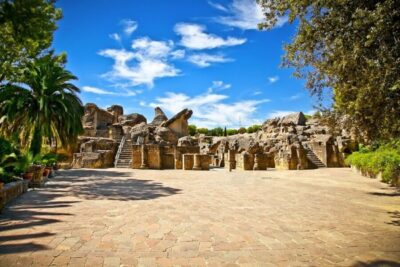
Visit to Italica Roman Ruins Tour tickets included
Read our review →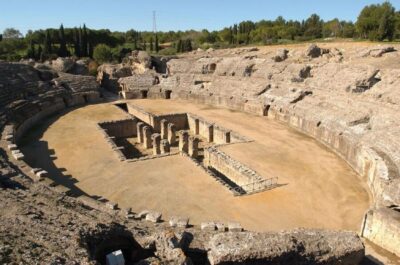
Private hald day tour to the historic roman city of Italica
Read our review →Browse the lists this tour appears in