
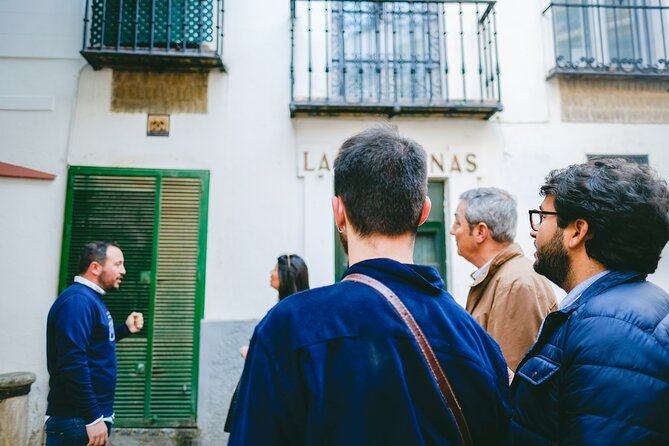
Reviewed · SEVILLE JEWISH QUARTER TOURS
Seville Jewish Quarter Small-Group Walking Tour: History & Gems
Seville’s Jewish Quarter survives less in buildings than in street plans, scattered traces, and the stories attached to them. This 90-minute walk through Santa Cruz helps you picture a community that was largely erased after persecution and the 1492 expulsion, while also showing you quieter corners near the Alcázar.
I like the small group of no more than 10 people, which makes it easier to hear and ask questions. I also like the guides’ range: Miguel, Marta, Barbara, Clara, Guillermo, José, and Valentín have each been praised for clear storytelling, humor, historical context, and a relaxed pace. The main drawback is simple: there are few surviving Jewish buildings, so you must use your imagination, and the story naturally includes a great deal of loss.
- Only 90 minutes: A compact introduction that fits neatly into a first day in Seville.
- Six focused stops: From the Alcázar surroundings to Santa María la Blanca, the route explains the quarter in a logical order.
- Small-group format: With a maximum of 10 people, you can hear the guide and ask questions without shouting.
- Mostly outdoor history: The tour centers on squares, lanes, gardens, and an archaeological site rather than major indoor attractions.
- A difficult but important story: Expect frank discussion of persecution, expulsion, and the disappearance of much of Seville’s Jewish community.
- Strong value at $32.65: The price is reasonable if you want context you would not easily gather by walking Santa Cruz alone.
Why Seville’s Jewish Quarter Takes Imagination
This is not a tour of grand medieval synagogues preserved in perfect condition. Seville’s Jewish past is harder to see. Much was altered, destroyed, or built over, so the guide’s job is to connect present-day streets with the people who once lived there.
That makes the experience especially useful if you enjoy history, old city planning, and stories about ordinary life. You will not simply tick off monuments. You will learn how the Jewish quarter fitted into medieval Seville, how it related to Christian and Muslim communities, and how events in the 13th and 14th centuries led toward the expulsions and upheavals of later centuries.
I appreciate that the tour does not pretend the evidence is stronger than it is. At several points, you are asked to picture what is no longer visible. That can feel less satisfying than entering a preserved synagogue, but it is also an honest way to approach Seville’s Jewish past.
The guides bring different personalities to the walk. Miguel is praised for his calm pace, humor, and ability to answer questions. Marta is described as engaging and passionate about the city. Clara, who is also a historian, has been singled out for clear English and strong storytelling. Valentín adds Ladino expressions and a lively sense of humor while explaining the 1492 diaspora.
Starting Beside the Alcázar at Plaza Patio de Banderas
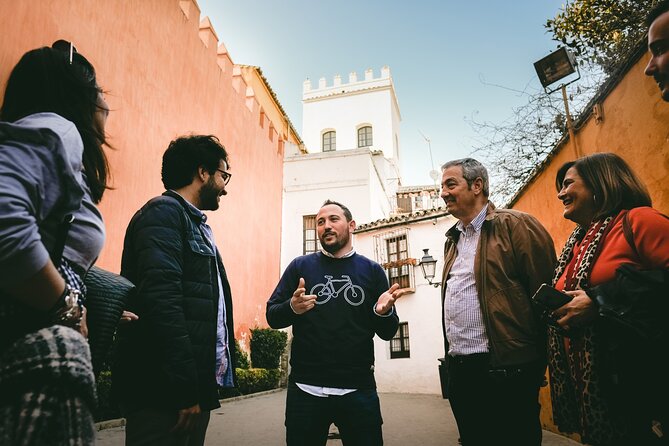
The tour begins at the Monumento a la Inmaculada Concepción, near Plaza Patio de Banderas and the Alcázar. This is a smart starting point because the Alcázar gives you the wider setting before the walk narrows into the Jewish quarter.
The Royal Palace has been used since Moorish times, and its long story helps explain Seville’s medieval power structure. You begin by considering the city as a place shaped by changing rulers, religions, and communities. That context matters. The Jewish quarter was not an isolated pocket with no connection to the rest of Seville. Its story is tied to the city’s rulers, neighborhoods, trade, religious institutions, and periods of conflict.
You spend about 15 minutes here, with no admission fee included or needed for this stop. The tour does not take you inside the Alcázar, so do not book this walk expecting palace access. Instead, the surroundings provide an orientation point and a useful introduction to the forces that shaped medieval Seville.
The meeting location is in the old city, near major sights and public transportation. Give yourself enough time to find the monument, since the lanes around the Alcázar can be confusing, especially if you are arriving for the first time.
More Seville Jewish Quarter Tours:
- Seville: Small-Group Jewish Quarter Discovery Walking Tour
★ 4.9 · 499 reviews - Seville: 1-Hour Walking Tour Barrio de Santa Cruz
★ 4.5 · 131 reviews - Private Tour Jewish Quarter, center and Plaza de España
★ 5.0 · 127 reviews
Plaza de Doña Elvira and the People Behind the Streets
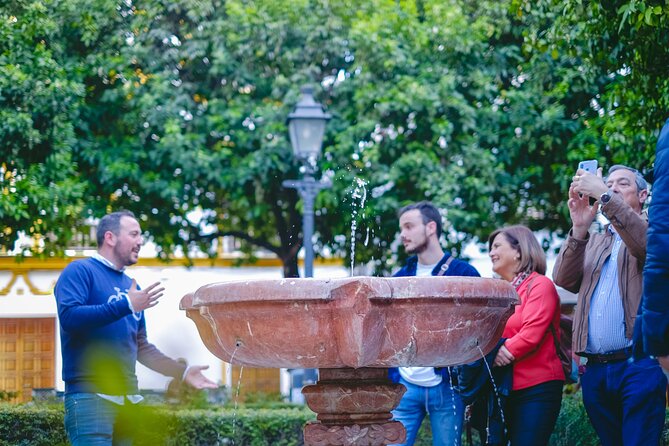
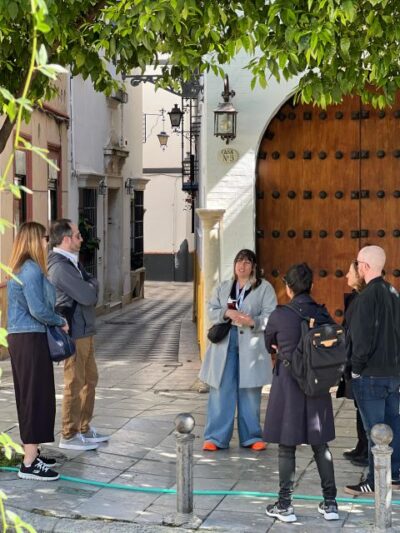
The next stop, Plaza de Doña Elvira, shifts attention from rulers and buildings to the communities that lived in this part of Seville. It is a small square, and the scale helps you notice how closely packed and human the old quarter feels.
Here, the guide explains the groups that inhabited the area and how their lives overlapped. This is one of the places where the tour’s value depends heavily on explanation. Without a guide, you may see a pleasant square and move on. With historical context, the same space becomes part of a much longer story.
The walk is divided into roughly 15-minute sections, so the pace stays steady. That works well for anyone who wants a focused introduction rather than a long academic lecture. It also means you should ask questions as they come up. The small group makes that possible, and several guides have been praised for welcoming questions throughout the walk.
Plaza de Santa Cruz and the Lost Synagogues
Plaza de Santa Cruz is the emotional and historical center of the route. The guide discusses the former synagogues of Seville and helps you understand what has disappeared.
This is where expectations matter most. You will not be touring a row of intact Jewish houses of worship. The physical record is limited, and the tour asks you to reconstruct the past through location, street layout, historical detail, and comparison with what exists today.
For me, this kind of stop is worthwhile precisely because it resists easy sightseeing. Seville’s Jewish story is not presented as a polished collection of monuments. It is a record of presence and absence. You learn that a community once lived and worshiped here, then consider how little of that world remains above ground.
The subject can be sad. One account of the tour’s appeal describes the experience as moving but focused heavily on tragedy. That is a fair caution. The route deals with persecution, expulsion, and the disappearance of a community, so it is not a light walk built only around pretty streets.
At the same time, the tour can offer more than a sequence of disasters. A good guide adds context about Jewish roles in Seville during the 13th and 14th centuries and explains how Jewish life fitted into the wider medieval city. If you want a fuller picture of daily customs and peaceful coexistence, ask about that directly. The guides are used to questions, and the small group makes a conversation possible.
Walking Through the Jardines de Murillo
The route then passes through the Jardines de Murillo. This section gives your feet a break from the tight lanes and provides a different view of the neighborhood’s development.
The gardens are not presented as a separate attraction with an admission ticket. They are part of the walk, a pleasant outdoor passage while the guide continues the story of Santa Cruz. This change of setting keeps the 90-minute tour from feeling like six similar stops in six similar squares.
I also like the way this section links the Jewish quarter to the modern experience of Seville. You are not looking at an enclosed museum exhibit. You are moving through a living part of the city where the past is mixed with today’s streets, gardens, homes, and daily activity.
The route is still a walking tour, so wear comfortable shoes. The information provided does not state the exact distance or whether seating is available at each stop. Most people can participate, but anyone who needs a very slow pace should consider asking about the day’s conditions before booking.
More Historical Tours in Seville:
- Sevilla Food Tour: Tapas, Wine, History & Traditions
★ 5.0 · 3,468 reviews - Ultimate Seville Tapas, Wine & History Small Group Tour
★ 5.0 · 1,766 reviews - Seville: Tapas, Taverns, and History Walking Tour
★ 4.9 · 676 reviews - Seville Evening Historical Tour with Haunted History
★ 5.0 · 626 reviews
Calle Cano y Cueto and the Rare Physical Evidence
At Calle Cano y Cueto, the tour reaches the most concrete surviving evidence of the medieval Jewish quarter. The guide points out an archaeological site inside an underground car park, described as the only physical remains of the medieval quarter visible on the route.
It is an unusual setting, and that is part of its value. You are not visiting a grand monument. You are seeing how traces of the past can survive in an ordinary modern structure. The contrast makes the central lesson clear: Seville’s Jewish history is present, but often in fragments.
This stop may be the most satisfying for visitors who want something tangible. After hearing about lost synagogues and vanished community life, you finally encounter a physical remnant. Still, keep your expectations measured. The attraction is the archaeological evidence and its meaning, not a large, fully restored site.
A guide such as Clara, who has a background in history, can help make small remains feel significant without exaggerating them. That straightforward approach is important here. The less that survives, the more the details matter.
Finishing at Santa María la Blanca
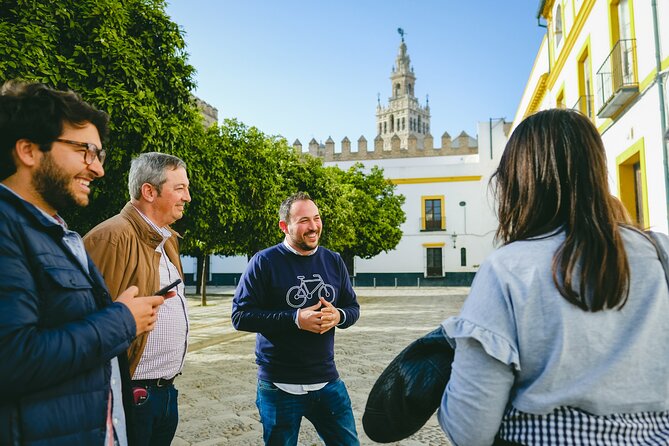
The tour ends outside the Church of Santa María la Blanca on Calle Santa María la Blanca. The church provides a fitting final point because it carries the layered religious history of Seville and brings the walk back to the transformation of the former Jewish quarter.
The activity ends outside the church, and the supplied details do not promise interior entry. If you want to visit inside, check the church’s own opening arrangements rather than assuming the walking tour includes admission.
Ending here also leaves you in a useful part of Santa Cruz. You can continue exploring the neighborhood, find a place to eat, or return to nearby sights. The route is therefore easy to combine with other plans, especially if you schedule it early in your Seville visit and use the walk to get your bearings.
What $32.65 Buys You
At $32.65 per person, this is not the cheapest way to stroll through Santa Cruz. You can walk the streets for free. The question is whether the guide adds enough meaning to justify the fee.
For this subject, I think the answer is generally yes. The visible evidence is limited, which makes independent sightseeing difficult. A guide can explain where former synagogues stood, connect the quarter to the Alcázar and medieval Seville, introduce the story of the 1492 diaspora, and point out details you would likely miss alone.
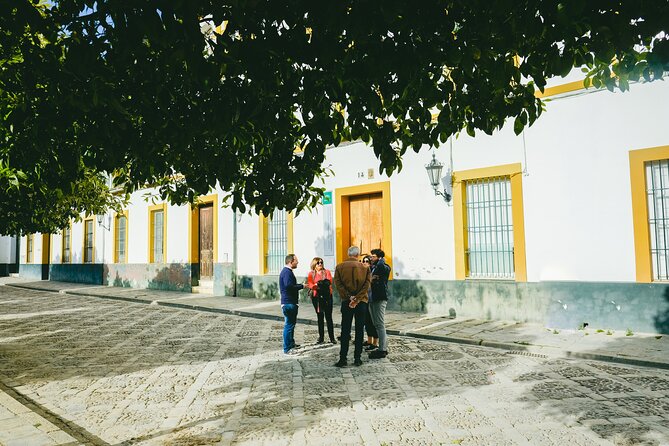
The small group also matters. With no more than 10 people, the experience should feel more personal than a large city walk. You can usually hear the guide clearly, ask questions, and stay connected as the group moves through narrow streets.
The value is strongest for:
- First-time visitors who want an orientation to Santa Cruz.
- People interested in Jewish history in Spain.
- History students and curious adults who enjoy context more than photo stops.
- Visitors who prefer a short activity that leaves time for other sights.
- Anyone who wants to see less obvious corners of the old city.
It is less suitable if you want a preserved synagogue, a long museum visit, or a tour centered on food, architecture, or nightlife. It is also not the right choice if you want only cheerful sightseeing. The subject includes forced conversion, persecution, expulsion, and cultural loss.
Timing, Group Size, and Practical Details

The walk lasts approximately one hour and 30 minutes. Each of the six listed stops is allocated about 15 minutes, creating a clear structure without making the tour feel overlong.
The start point is the Monumento a la Inmaculada Concepción at C. Joaquín Romero Murube, near the Alcázar. The finish is Iglesia de Santa María la Blanca at C. Santa María la Blanca, 5. Since the route stays in Seville’s old city, it is near public transportation, but you should still plan to arrive early and confirm the exact meeting point on your phone.
The tour is offered in English and uses a mobile ticket. Confirmation arrives at booking. Service animals are allowed, and most people can participate. The stated maximum is 10 people, including the guide arrangement, which is small enough for real conversation but not a private tour.
Free cancellation is available up to 24 hours before the start time for a full refund. Changes or cancellations made less than 24 hours before the start are not accepted for a refund, and the cut-off follows Seville’s local time.
The experience is often booked about 17 days ahead. That is useful planning information, especially if you are visiting during a busy period. If your schedule is fixed, booking earlier is sensible.
The Guides Make or Break the Story
The repeated strength of this walk is the guide’s ability to make limited physical evidence meaningful. Miguel is associated with a relaxed pace, strong historical detail, and an easy manner. Marta brings warmth and energy to the Santa Cruz streets. Barbara has been praised for making difficult material come alive, while José is noted for strong interpersonal skills.
Valentín’s approach includes Ladino expressions and a discussion of the 1492 diaspora. Guillermo is described as compassionate as well as well informed. Clara combines historical training with clear English and a strong ability to connect local events to wider European history.
You may not receive a specific guide, so do not book solely for one person. The range of positive guide comments does suggest that the company has several capable storytellers. Still, personalities differ. One guide may focus more on dates and political events, while another may spend more time on daily life, language, or personal stories.
I would ask questions about Jewish daily life, relations with Christian and Muslim neighbors, and what is known versus uncertain. One useful criticism of the tour is that the tragic parts can overshadow the community’s culture and ordinary life. A direct question can help broaden the discussion.
Should You Book This Seville Walk?
Book it if you want a thoughtful introduction to Jewish Seville and understand that much of the evidence has vanished. The small group, short route, central location, and strong guide-led storytelling make it a practical choice for a first or second day in the city.
I would especially recommend it to history-minded visitors who want more than attractive lanes and postcard squares. The walk gives you a better sense of what happened in Santa Cruz and why the absence of surviving Jewish buildings is itself part of the story.
Skip it if your priority is entering preserved religious monuments or seeing a large archaeological collection. You will need imagination, patience, and an interest in stories that are not always easy. For the right reader, that limitation is not a flaw. It is the honest heart of the experience.
FAQ
How long does the Seville Jewish Quarter tour last?
The tour lasts approximately one hour and 30 minutes.
How many people can join the tour?
The activity has a maximum of 10 travelers.
What language is the tour offered in?
The tour is offered in English.
Where does the tour start?
It starts at the Monumento a la Inmaculada Concepción on C. Joaquín Romero Murube, near Plaza Patio de Banderas and the Alcázar.
Where does the tour finish?
The tour finishes outside Iglesia de Santa María la Blanca at C. Santa María la Blanca, 5.
Does the tour enter the Alcázar?
No entrance to the Alcázar is included in the stated tour details. The walk begins in its surroundings and uses the palace’s history for context.
What places are visited during the walk?
The route includes Plaza Patio de Banderas, Plaza de Doña Elvira, Plaza de Santa Cruz, Jardines de Murillo, Calle Cano y Cueto, and Iglesia de Santa María la Blanca.
Does the tour include a synagogue visit?
The tour discusses former synagogues in Plaza de Santa Cruz, but the stated route does not include entry to a preserved synagogue.
Is the tour accessible by public transportation?
The meeting area is near public transportation.
Can I cancel for a full refund?
Yes, if you cancel at least 24 hours before the experience begins. Cancellations or changes made less than 24 hours before the start time are not eligible for a refund.
More Walking Tours in Seville
- Seville: Small-Group City Highlights Walking Tour
★ 5.0 · 1,204 reviews - Cultural Walking Tour of Seville Monumental
★ 5.0 · 861 reviews - Seville: Tapas, Taverns and History Guided Walking Tour
★ 4.9 · 515 reviews - Seville Guided Small-Group Walking Tour
★ 5.0 · 435 reviews
Just added around Seville
- The Villages of Andalusia: Full-Day Trip from Seville★ 4.8 · 19 reviews
- From Seville: White Villages Tour★ 5.0 · 9 reviews
- White Villages & Ronda 2-Days Trip & Overnight Stay★ 4.6 · 5 reviews
- Your Photo Story in Seville★ 5.0 · 16 reviews
- Triana Market Tapas Tour★ 4.9 · 12 reviews
- Seville: Guided visit of the Casa de Pilatos with entrance tickets★ 4.3 · 18 reviews
- From Seville: Wine Tourism Half Day Tour★ 4.0 · 17 reviews
- Wine tourism, visit to a traditional winery and wine tasting★ 5.0 · 3 reviews
Seville Jewish Quarter Tours, compared.
Small-Group Jewish Quarter Discovery Walking Tour
Read our review →

Small Group Jewish Quarter Tour with Tapas & Drinks
Read our review →
Seville Jewish Quarter Small Group Tour with Tapas and Drinks
Read our review →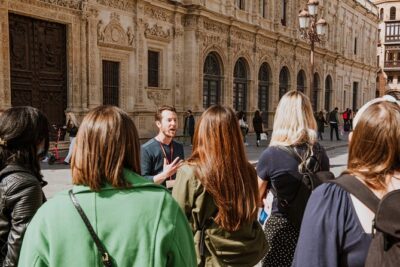
Seville Former Jewish Quarter Walking Tour: Santa Cruz
Read our review →
Seville Jewish Quarter walking tour: Santa Cruz District
Read our review →
Browse the lists this tour appears in