
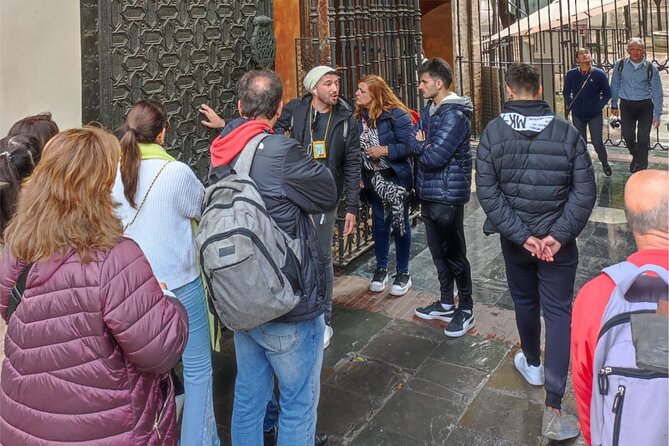
Reviewed · SEVILLE JEWISH QUARTER TOURS
Tour Seville Complete and Jewish Quarter Santa Cruz
Seville’s best introduction may be a walk that connects its grand monuments with its small lanes. This two-hour route moves from Plaza de San Francisco through the cathedral area, Santa Cruz, the Alcázar district, Arenal, and across the Guadalquivir viewpoint toward Triana. I like the way it mixes famous sights with stories about Jewish families, enslaved people, artists, kings, and local legends.
I also like the low price of $11.86, which makes a guided orientation easy to justify, and the chance to see places such as Santa Marta Square, Susona Street, Plaza del Cabildo, and the Water Alley area that you could easily miss alone. The trade-off is pace: with 22 stops in about two hours, most locations receive only a brief explanation, and the tour does not include full visits inside Seville Cathedral, the Giralda, or the Royal Alcázar.
Key points at a glance
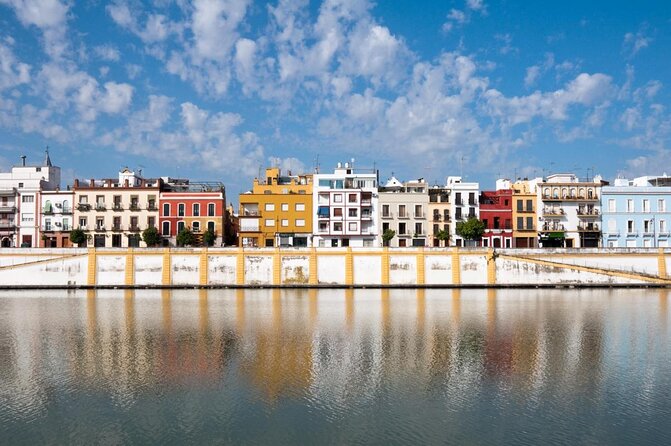
- A full city-center route: Begin at Plaza de San Francisco and finish beside the Torre del Oro, covering Santa Cruz, Arenal, and views toward Triana.
- Jewish Seville takes center stage: Santa Marta Square, Plaza de la Alianza, Plaza de Doña Elvira, Susona Street, and the lanes of the Judería form the heart of the walk.
- Strong storytelling: Guides including José, Alejandro, and Ricardo focus on legends, overlooked characters, local customs, and lesser-told parts of Seville’s past.
- Monuments from the outside: You see the Cathedral, Giralda, Alcázar, Archivo de Indias, Triana Bridge, and Torre del Oro, but this is not an admissions tour.
- A useful first-day choice: The route gives you a map of central Seville and can help you decide which monuments deserve a later, longer visit.
- Easy to book and cancel: You receive a mobile ticket, and cancellation is free up to 24 hours before the start time.
Starting beneath Seville’s old city hall
The walk begins at Plaza de San Francisco, at Pl. de S. Francisco, 17. This is a sensible meeting place because it sits between Seville’s old commercial quarter and the grand monument district. From here, you are close to Calle Sierpes, the Cathedral, and the lanes leading toward Santa Cruz.
The opening stop also introduces the city’s habit of mixing official power with street life. The City Hall faces the square, and the guide uses it to tell one of the local stories that gives the tour its tone. You are not simply being pointed toward a building. You are being shown how Seville’s public spaces fit together.
From there, the group heads toward Placentines. The walk is short, but the visual payoff is large. The Giralda and Cathedral begin to appear in the urban fabric, and the guide explains a story about the tower’s possible collapse while helping you find a strong viewpoint for photographs.
That early photo stop matters. Seville’s historic center can feel like a maze, and a guide who points out the best angles saves you from wandering past a good view without noticing it.
More Seville Jewish Quarter Tours:
- Seville: Small-Group Jewish Quarter Discovery Walking Tour
★ 4.9 · 499 reviews - Seville: 1-Hour Walking Tour Barrio de Santa Cruz
★ 4.5 · 131 reviews - Private Tour Jewish Quarter, center and Plaza de España
★ 5.0 · 127 reviews
The Cathedral, Giralda, and Archbishop’s Palace
At Plaza de la Virgen de los Reyes, you get a close look at Seville Cathedral beside the Giralda. The emphasis here is on how the buildings were made, who lived around them, and how their role changed over time.
You should set your expectations correctly. This part of the tour is an exterior explanation, not a Cathedral visit or a Giralda climb. Admission to major monuments is not included, so you will need a separate ticket if you want to go inside. That is not a flaw at this price, but it is important to know before booking.
The next view is the Palacio Arzobispal, whose ornate frontage gives the guide a chance to talk about the building’s decoration and the behavior of one of Seville’s archbishops. The details are presented with humor rather than as a dry architectural lecture.
I would pay attention here if you enjoy the human side of history. The tour repeatedly uses powerful buildings as a starting point for personal stories, social tensions, and curious episodes. You get a sense of how institutions affected ordinary life, not just how impressive their facades look.
Santa Marta and the first look at the Judería
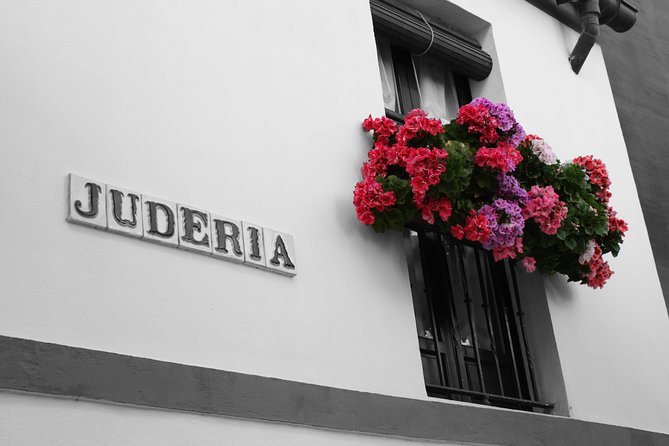
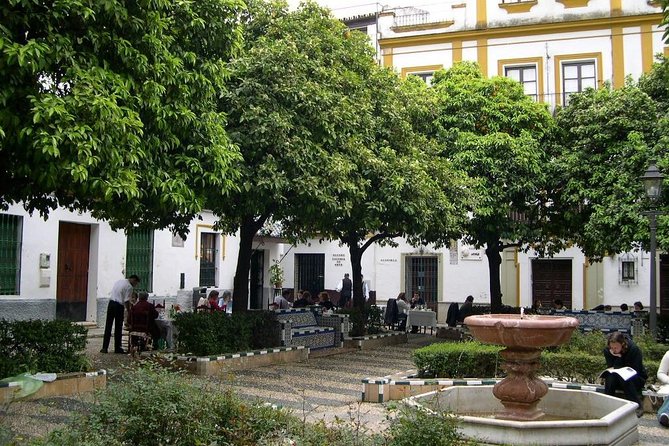
The route then turns into Santa Cruz, Seville’s former Jewish quarter. Plaza de Santa Marta is one of the quieter stops, and its small scale makes a sharp contrast with the Cathedral square.
The guide uses this square to explain the Jewish community that once lived in this part of the city. The treatment is one of the tour’s strongest features. José, in particular, is described as spending time on stories that are often left out of standard city tours, including Jewish women linked to noble families, enslaved people who became artists or rose in status, and other figures whose lives crossed social boundaries.
That approach gives the neighborhood more weight than its pretty lanes alone suggest. Santa Cruz is easy to photograph, but its story includes displacement, religious conflict, social rank, and changing ideas about identity.
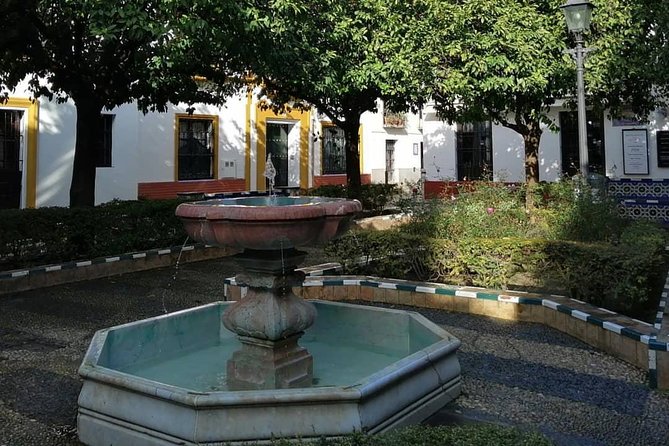
At the Fuente de la Plaza de la Alianza, the guide connects the old quarter with Seville’s long interaction among Jewish, Christian, and Muslim cultures. You will hear how different communities shaped the city, while also seeing how narrow streets, fountains, and enclosed squares helped form the character of the neighborhood.
The prettiest lanes and the story of Susona
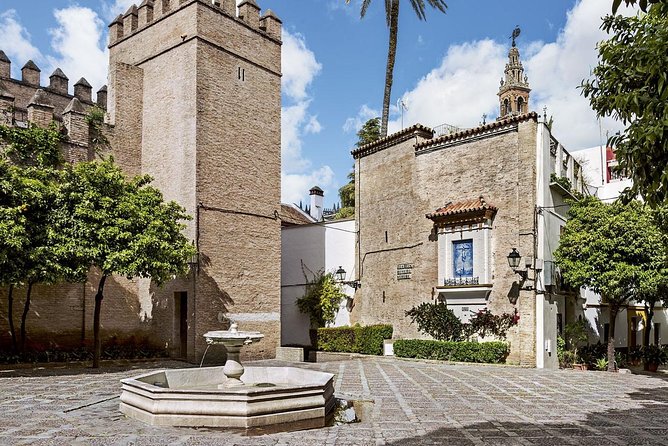
Plaza de Doña Elvira is one of the tour’s most photogenic stops. Its tiled details, small scale, and enclosed feel show why Santa Cruz is so popular, but the explanation goes beyond decoration. The guide points out the people and communities associated with the area, along with old superstitions that are tied to particular corners.
Next comes Calle Susona, linked to one of Santa Cruz’s best-known legends. The story concerns a Jewish woman and a noble Christian man, and it is told as a dramatic episode rather than a list of dates. The guide uses pauses, suspense, and local detail to make the lane feel like part of the story.
This is where the personality of the guide matters most. José has been singled out for keeping the walk lively for more than two hours, while Alejandro and Ricardo are also named as guides who explain Seville clearly and with strong command of its past. Guide assignments can vary, so you should not assume one specific person will lead your departure, but the available names give you a useful sense of the guiding style.
The next lane is Calle Vida, near Calle Muerte. The playful naming gives the group a small puzzle to solve and keeps the walk from becoming a solemn lecture. You will hear about the meaning attached to these streets and take a route chosen for surprise rather than for the most direct path.
A different sort of afternoon in Seville:
- Seville: Royal Alcázar Entry Ticket
★ 4.6 · 28,378 reviews - Seville: Cathedral and La Giralda Entry Ticket
★ 4.5 · 24,592 reviews - Seville: Live Flamenco Dancing Show Ticket at the Theater
★ 4.7 · 16,396 reviews - Seville: 1-Hour Guadalquivir River Sightseeing Eco Cruise
★ 4.2 · 10,281 reviews
From the Judería to the Royal Alcázar walls
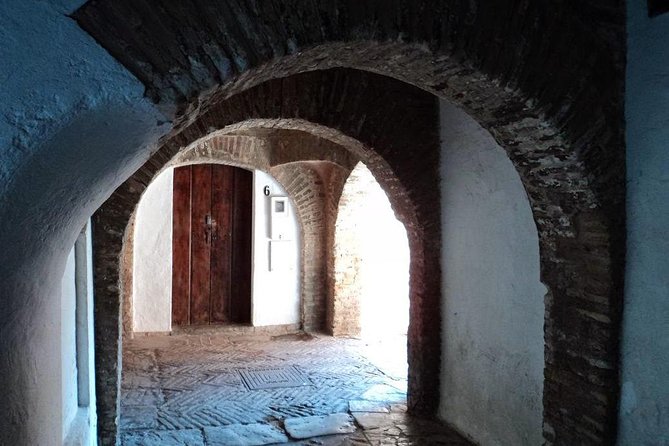
The broader Judería section brings together colors, smells, courtyards, narrow passages, and small squares. You are not entering a museum here. You are learning to read the neighborhood as a place shaped by several communities and many changes.
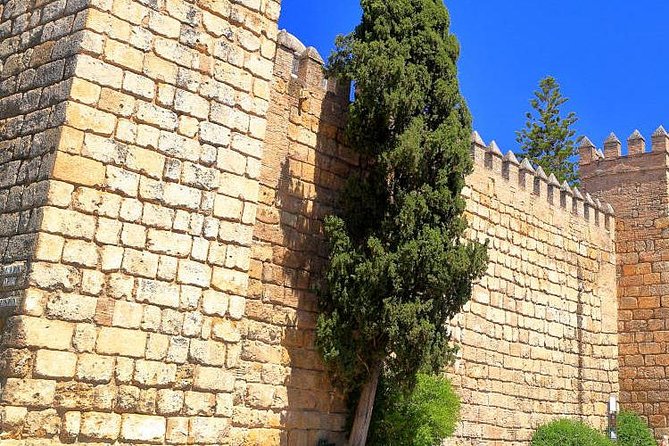
Plaza Patio de Banderas provides the transition to Seville’s royal district. From here, you see the setting of the Reales Alcázares and hear about the rulers who used the palace complex across different periods. The stop works well because the surrounding walls and open space give you a clear sense of scale.
The route continues to the Puerta del León, the famous entrance to the Alcázar. The guide explains the lion symbol, defensive purpose, royal heraldry, and the different monarchs associated with the palace. Admission is not included, so treat this as an orientation to the Alcázar rather than a substitute for going inside.
If the palace is on your list, this tour can help you plan a later visit. You will know where the entrance is, understand some of the figures connected to the complex, and have a better idea of why the site matters before you enter on your own.
Columbus, trade, and the city’s public symbols
The Archivo General de Indias is the next major landmark. The archive holds documents tied to Spain’s overseas empire, and the guide uses the site to explain why people jokingly connect it with pirates. The point is not that pirates are stored there, but that valuable records and stories of maritime trade give the building its unusual aura.
You also pass the Monumento a la Inmaculada Concepción, where the discussion turns toward Seville as a city of artists, religious devotion, crossroads, and Baroque culture. The guide adds an amusing claim about the first marketing campaign in history, one of the tour’s lighter ideas.
At the Giraldillo, you get another close view of Seville’s best-known symbols. The guide encourages you to look carefully because distance and perspective can make the tower and its crowning figure appear different from what you expect.
The stop at Torre Abdel Aziz is mainly a photo opportunity with a historical frame. From suitable viewpoints, you can see how towers, walls, palaces, and large houses fit together. It is a reminder that Seville’s old center is not a collection of isolated attractions. The structures form one connected defensive and civic system.
Arenal, Plaza del Cabildo, and the river
The route reaches the Arco del Postigo del Aceite, an old gateway linked with Seville’s Arenal quarter. This area carries a different mood from Santa Cruz. Here, the guide turns toward trade, movement, port life, and the difficult events that shaped the district.
Plaza del Cabildo is one of the most rewarding small stops. Its curved passageways and sheltered design are easy to overlook if you walk quickly, yet they offer a memorable change of scene. The guide explains where to look and how the space was used, helping you see more than a pretty facade.
Near the Mercado Artesanía El Postigo, the discussion returns to the many communities that settled in Seville. The market itself may be of interest if you like browsing local crafts, though the walk’s main purpose is the stories and setting rather than shopping time.
The final stretch follows the Guadalquivir. The viewpoint gives you a broad look across the river toward Triana, and it is one of the best moments for photographs. After so many narrow lanes and courtyards, the open river view gives your eyes a rest.
Crossing the Triana Bridge to the Torre del Oro
At Puente de Isabel II, usually called the Triana Bridge, the guide leaves time for photos and comparisons between the two sides of the river. You hear stories about the people who crossed here, including pilgrims and other local characters.
The bridge is also useful for understanding Seville’s geography. Santa Cruz, Arenal, the river, and Triana are not separate points on a map anymore. After walking between them, you can see how the city’s districts relate to one another.
The tour ends at the Torre del Oro on Paseo de Cristóbal Colón. The tower is the right closing point: defensive, maritime, and closely tied to the Guadalquivir. The guide uses it to bring together Seville’s river trade, military history, and changing fortunes.
Admission to the tower is not included. Still, the outside explanation gives you a reason to return if you want a more focused visit. You finish with a better understanding of why the river mattered so much to Seville’s growth.
What the $11.86 price really offers
At $11.86 per person, this is inexpensive for a two-hour guided walk through Seville’s central districts. The value comes from the amount of orientation you receive, not from entering attractions. You see the outside of many major monuments, learn where they are, and get a steady stream of stories without paying monument admission.
The route includes 22 listed stops, each planned for roughly five minutes. In practice, the full experience is approximately two hours, and the group may spend more time walking between points or listening at the most important locations. That makes the tour lively, but it also means you should not expect a long architectural lecture at every site.
The maximum group size is 30. That is not intimate, especially in narrow Santa Cruz, but it is still manageable if the guide keeps the group together. A smaller group may allow more questions and easier photographs, while a full group can make tight lanes feel crowded.
You receive a mobile ticket, and the meeting point is near public transportation. Service animals are allowed, and the activity states that most people can participate. Wear shoes suited to city walking and bring water, especially in warm weather, although those practical details are general walking advice rather than special requirements supplied by the operator.
Cancellation is free if you cancel at least 24 hours before the start time. Within 24 hours, the payment is not refunded. The tour also requires a minimum number of participants, so a cancellation by the operator would result in another date or experience, or a full refund.
Who will get the most from this walk
I would choose this tour early in a Seville stay. It gives you a strong mental map, introduces the Cathedral and Alcázar districts, and points out small places to revisit later. Several people who had already been to Seville still found new details, which is a good sign for return visitors who want a different angle.
It suits you best if you enjoy:
- Local legends and dramatic stories
- Jewish history and the history of minority communities
- Exterior views of major monuments
- A fast-moving city orientation
- Photo stops and small squares
- A guide who talks often and keeps the group focused
You may want a different experience if your main goal is to enter the Cathedral, climb the Giralda, tour the Alcázar rooms, or spend long periods examining architecture. Those require separate admission and more time.
Should you book the Seville Complete and Jewish Quarter walk?
Book it if you want a lively, inexpensive introduction to Seville that treats Santa Cruz as more than a pretty collection of lanes. The strongest part is the storytelling, especially the Jewish Quarter, Susona legend, overlooked historical figures, and the way José, Alejandro, or Ricardo can turn a short stop into a memorable episode.
Skip it if you dislike group walks, want extended time inside monuments, or prefer to explore at your own pace. For everyone else, the route offers a useful first look at Seville, a good set of photographs, and enough local detail to make your later wandering more rewarding.
FAQ
How long does the tour last?
The tour lasts approximately two hours.
Where does the tour begin?
It begins at Pl. de S. Francisco, 17, in Seville’s Casco Antiguo, beside Plaza de San Francisco.
Where does the tour end?
It ends at the Torre del Oro on Paseo de Cristóbal Colón.
What areas of Seville does the tour cover?
It covers the historic center, Santa Cruz and the Judería, the Arenal quarter, the Guadalquivir riverfront, and views toward Triana.
Are monument admission tickets included?
The experience is primarily a walking tour with exterior explanations. Admission is listed as not included for places including the Palacio Arzobispal, Puerta del León, Archivo General de Indias, Torre Abdel Aziz, and Torre del Oro.
Is the tour suitable for most people?
The activity states that most people can participate. Service animals are allowed, and the meeting point is near public transportation.
How large can the group be?
The maximum group size is 30 participants.
What is the cancellation policy?
You can cancel for a full refund up to 24 hours before the experience begins. Cancellations or changes made within 24 hours are not refunded or accepted.
Just added around Seville
- The Villages of Andalusia: Full-Day Trip from Seville★ 4.8 · 19 reviews
- From Seville: White Villages Tour★ 5.0 · 9 reviews
- White Villages & Ronda 2-Days Trip & Overnight Stay★ 4.6 · 5 reviews
- Your Photo Story in Seville★ 5.0 · 16 reviews
- Triana Market Tapas Tour★ 4.9 · 12 reviews
- Seville: Guided visit of the Casa de Pilatos with entrance tickets★ 4.3 · 18 reviews
- From Seville: Wine Tourism Half Day Tour★ 4.0 · 17 reviews
- Wine tourism, visit to a traditional winery and wine tasting★ 5.0 · 3 reviews
Seville Jewish Quarter Tours, compared.
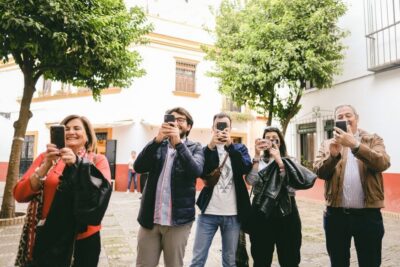
Small-Group Jewish Quarter Discovery Walking Tour
Read our review →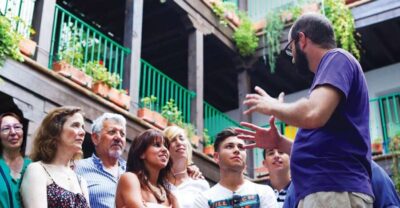
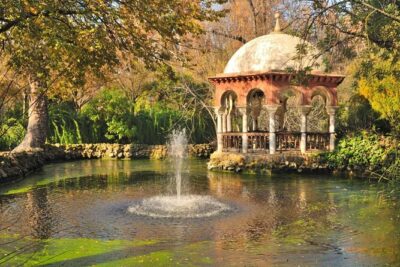
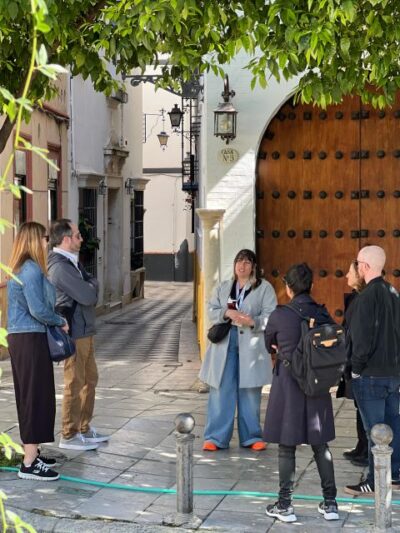
Small Group Jewish Quarter Tour with Tapas & Drinks
Read our review →
Seville Jewish Quarter Small Group Tour with Tapas and Drinks
Read our review →
Seville Former Jewish Quarter Walking Tour: Santa Cruz
Read our review →
Seville Jewish Quarter walking tour: Santa Cruz District
Read our review →
Seville Jewish Quarter Small-Group Walking Tour: History & Gems
Read our review →Browse the lists this tour appears in