
Reviewed · SEVILLE PALACE AND HISTORIC HOUSE TOURS
Private visit to Casa de Pilatos and Casa Salinas
Casa de Pilatos gives you Seville’s grandest architectural mix in one setting: Gothic, Mudejar, and Renaissance details meet in tiled rooms, carved ceilings, gardens, and a sweeping staircase. I like the private format, which lets your guide adjust the pace and explain small details that are easy to miss. I also like the walk through the old San Bartolomé neighborhood, where the city’s Jewish and Christian past comes into view between the two palaces.
Casa Salinas adds a different note. It is still a private home, so you see a more intimate palace setting, including Genoese marble columns, plasterwork, Cartuja windows, and a second-century Roman mosaic devoted to Bacchus. Guides such as Clara Alarcón and Carmen have received praise for clear explanations and attentive guiding, though the entrance fees are not included, and the short visit may feel rushed if you want time to study every room.
Key points to know before booking
- Two very different palaces: Casa de Pilatos is grand and layered, while Casa Salinas feels smaller, more personal, and still lived in.
- A useful walking connection: The route passes the House of Mañara, the Church of San Bartholomew, and Santa María la Blanca.
- Private guiding: Only your group participates, allowing room for questions and a more flexible pace.
- Art and architecture: Look for tiled walls, coffered ceilings, plasterwork, marble columns, and a Roman mosaic of Bacchus.
- Tickets cost extra: Your guide helps you purchase admission, but the monument fees are not part of the tour price.
- A compact two-hour outing: The planned visits take about one hour at Casa de Pilatos, ten minutes at Santa María la Blanca, and forty minutes at Casa Salinas.
Casa de Pilatos opens with Seville’s grand architectural blend
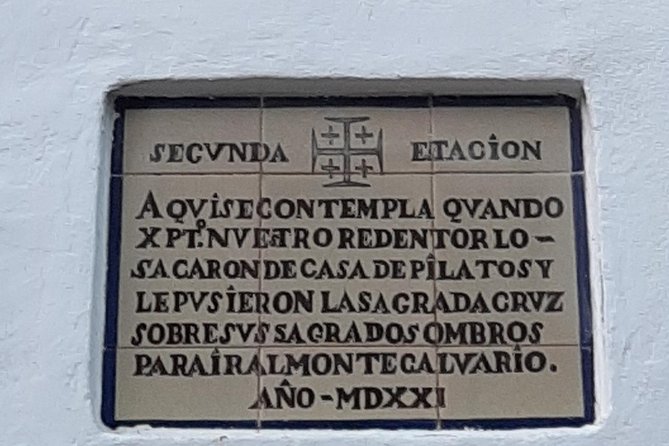
Start at Casa de Pilatos, at Plaza de Pilatos in Seville’s old town. This is the largest and most elaborate stop, and the guide begins by explaining the people who founded the palace and the figures who later lived there.
What makes the house special is not one single style. You move through a blend of Gothic, Mudejar, and Renaissance design, a combination that reflects Seville’s long contact with different cultures and building traditions. The result is more interesting than a palace built in one neat period. Pointed forms, Islamic-influenced decoration, European Renaissance ideas, and local craftwork share the same complex.
The monumental entrance prepares you for the scale of the place, but the details inside deserve your attention. You may find yourself looking up at coffered ceilings, then down at the tiled surfaces covering the walls, then across a courtyard where sculpture adds another layer to the setting.
The tiles are one of the strongest visual features. They bring pattern and color to the rooms while also showing how much care went into the design of the house. Your guide can help you understand how the decoration fits the building, rather than leaving you to see it as a series of pretty surfaces.
The grand staircase leads toward the main floor. It is one of the palace’s memorable architectural moments, both for its size and for the way it connects the lower spaces with the more formal rooms above. I would pay attention here to the ceiling and the relationship between the staircase and the surrounding decoration.
The palace also includes sculpture collections and a series of rooms that help explain how an important household functioned. This is not only a look at walls and furniture. You get a sense of how the people who lived here used a large urban residence, moved between public and private areas, and relied on courtyards and gardens for relief from Seville’s heat.
The gardens offer a welcome change of pace. After the richly decorated interiors, the greenery and open air provide a cooler pause. The visit is planned for about one hour, which gives you enough time for the main rooms and gardens, though you will want to keep moving if you like to read every detail.
Your guide assists with buying admission, but the entry ticket is extra. That matters when comparing the cost of this experience with a basic palace visit. You are paying for the private explanation and the connected walk, not for a bundled entrance package.
More Seville Palace and Historic House Tours:
- Seville: Casa de Pilatos Ground Floor Entry Ticket
★ 4.5 · 5,691 reviews - Seville: Flamenco at El Palacio Andaluz with Optional Dinner
★ 4.5 · 1,119 reviews - Granada Day Trip: Alhambra & Nazaries Palaces from Seville
★ 4.5 · 292 reviews
San Bartolomé adds a human-scale walk through the old quarter
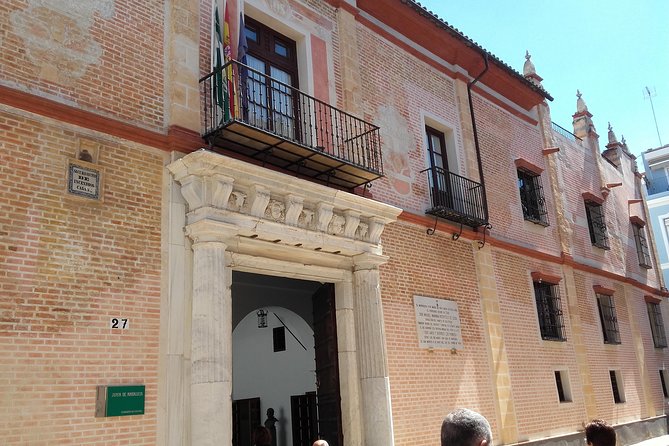
After Casa de Pilatos, you walk toward Casa Salinas through the narrow streets of the San Bartolomé neighborhood. This part is more than a transfer between two addresses. The route gives the tour a sense of place, allowing you to see how Seville’s old quarter is shaped by small lanes, historic homes, and religious buildings set close together.
The walk passes the House of Mañara and the Church of San Bartholomew. The church was built on the site of one of Seville’s three synagogues, giving the guide a clear opening to discuss the city’s religious history and the changing communities that have shaped it.
This is one of the tour’s best features for anyone who wants more than an isolated palace visit. You are not simply moved from one entrance to another. The guide connects architecture with the streets around it, and you get a short look at how different layers of Seville’s past occupy the same neighborhood.
The streets are narrow, so stay aware of the walking conditions and listen for meeting instructions. The tour begins at Casa de Pilatos and ends at Casa Salinas, so you should not expect to return to the starting point as part of the experience.
Santa María la Blanca shows Seville’s changing religious identity
The next stop is Iglesia de Santa María la Blanca. The scheduled visit is brief, about ten minutes, and admission is free.
The church originally served as a mosque. Ferdinand III later gave it to the Jewish community for use as a synagogue, and it was eventually transformed into a church. That sequence makes the building an important place to hear about Seville’s religious changes, especially when paired with the earlier stop at San Bartholomew.
You may only spend a short time here, but the context is valuable. The tour is not presenting the old quarter as a collection of unrelated sights. It shows how buildings changed use as political power and religious life shifted across the city.
The main limitation is time. Ten minutes is enough for an introduction and a look at the building, but not for an extended examination. If this church is a major priority for you, you may want to return on your own, if opening conditions allow. The tour itself treats Santa María la Blanca as a compact historical stop within the larger route.
Casa Salinas offers a quieter look at palace life
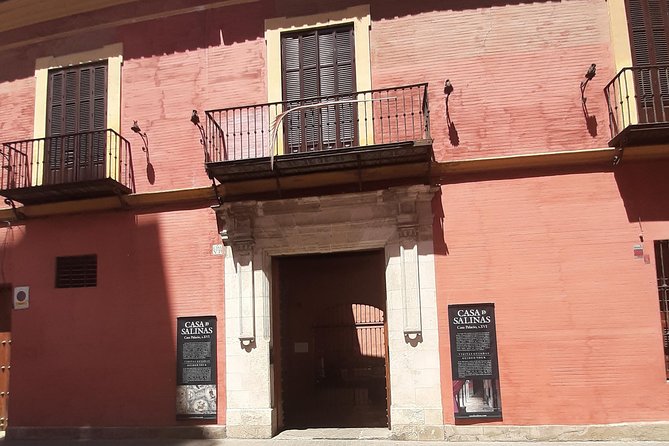
Casa Salinas is a 16th-century palace house that remains a private residence. Its owners have restored it with care, and that private status changes the feel of the visit. Casa de Pilatos gives you a larger, more formal complex. Casa Salinas feels closer to an inhabited family home, even though it contains the decorative features you expect from a historic Seville residence.
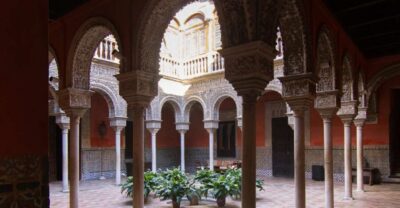
The patio is the centerpiece. Arched galleries run around it, with plasterwork set over Genoese marble columns. The combination of pale stone, repeated arches, and detailed surface decoration creates a calm rhythm around the courtyard.
Look for the tiled sections and Cartuja windows. These features help show how local materials and decorative traditions were brought together in an urban palace. The guide’s explanation is useful here because the setting can be easy to glance at and leave, while the craftsmanship rewards a slower look.
You also visit rooms on the ground floor that are still used by the owners. This is an unusual detail and one of the reasons Casa Salinas feels different from a formal museum. You are seeing historic rooms that remain tied to daily private life, not only preserved spaces behind a barrier.
The route continues to the courtyard, where an impressive second-century Roman mosaic is dedicated to Bacchus. It adds an older layer to the visit, reaching back far beyond the 16th-century house itself. The mosaic also gives the guide a chance to explain how Roman remains can appear within later buildings in Seville.
The Casa Salinas portion is planned for about forty minutes. That is a reasonable amount of time for the main patio, ground-floor rooms, and mosaic, but it is not an open-ended visit. If you are drawn to architectural detail, use your time well and ask your guide about the features that interest you most.
Admission is not included here either. Your guide helps with purchasing tickets, which is practical, but you should budget for both palace entries separately from the advertised tour cost. The supplied price is shown as $0.00, so confirm the current booking price and the separate monument fees before you reserve. The important value question is not simply the headline price. It is whether personal guiding and the neighborhood walk are worth adding to the cost of admission.
More Private in Seville:
- Seville: Private City Tour by Eco Tuk Tuk
★ 4.8 · 963 reviews - Tour Welcome Seville with Local Guide in Eco Tuk Tuk Private
★ 5.0 · 786 reviews - Private Seville Tapas & History Tour
★ 5.0 · 380 reviews - Seville Private Walking Tour with Alcazar & Cathedral Tickets
★ 5.0 · 332 reviews
Why the private format matters on this route
Only your group takes part, which is a real advantage in two historic houses with many details packed into a short visit. You can ask about the tiles at Casa de Pilatos, the history of the synagogue sites, or the Bacchus mosaic without waiting for a large group to catch up.
The private format also helps if your interests are specific. You might care most about architecture, religious history, domestic life, or the role of the people who built and inhabited the houses. A guide such as Clara Alarcón has been praised for speaking English well and for knowing Seville thoroughly. Carmen has also been singled out for being attentive, informed, and respectful during a visit.
The experience can be taken in more than one language, but you should confirm the language available when booking. The provider is Clara Alarcón, and past feedback also refers to guiding in German and English. Do not assume that every requested language will be available for every date.
Groups of seven or more need radio guides, with an extra charge collected at the beginning of the tour. For a small private group, this is unlikely to be a major concern, but it is worth knowing before you arrive.
Timing, tickets, and the real value
The full experience lasts about two hours. The planned timing is roughly:
- One hour at Casa de Pilatos
- A short walk through San Bartolomé
- Ten minutes at Santa María la Blanca
- Forty minutes at Casa Salinas
That schedule works well if you want a focused introduction to two historic homes. It may feel tight if you prefer to linger, take many photographs, or read every explanation at each site.
The starting point is Casa de Pilatos, Plaza de Pilatos, 1. The tour ends at Casa Salinas, Calle Mateos Gago, 39. Both points are in Seville’s old town, and the meeting information notes access to public transportation nearby. Plan your next activity from the final address, not the starting point.
The guide’s assistance with ticket purchases removes one small task, but it does not remove the cost. Monument admission, souvenirs, and other purchases are excluded. Radio guides are also extra for groups of seven or more.
The best value comes from the connections. If you only want to enter Casa de Pilatos and look around independently, a private tour may be more than you need. If you want the palaces explained, the religious history placed in context, and the old streets tied into the route, the added guiding has a clearer purpose.
The experience requires good weather. If poor weather causes cancellation, you are offered another date or a full refund. You can cancel for a full refund up to 24 hours before the start time. Cancellations or changes made within 24 hours are not refunded or accepted.
Who will enjoy this Seville palace walk
I would recommend this experience to you if you like historic interiors but also want to understand the streets between them. The mix of palace architecture, Jewish and Christian history, and Roman remains gives the two-hour route more range than a single-site tour.
It also suits you if you prefer a private guide who can explain rather than simply point. The names Clara and Carmen appear in connection with warm, personal guiding, and the private structure gives your own group room to set the pace within the scheduled time.
This may not be the right choice if you want a slow, unstructured afternoon. Casa de Pilatos and Casa Salinas each contain enough detail to fill much longer visits, while the route also includes two short church stops. You will need to accept a planned pace.
It is also less suitable if you want all costs included upfront. The palace admission fees are separate, and the listed price should be checked carefully before booking because the supplied figure shows $0.00 rather than a normal tour charge.
Should you book Casa de Pilatos and Casa Salinas?
Book it if you want a compact, private introduction to Seville’s historic houses, with a guide who can connect architecture to the city’s religious and social past. Casa de Pilatos supplies the scale and layered design. Casa Salinas adds intimacy, private domestic rooms, and a striking Roman mosaic.
Skip it if you prefer to explore independently, need a slow pace, or do not want to pay separate entrance fees. For everyone else, this is a well-shaped two-hour route, especially if you value the walk through San Bartolomé as much as the palace interiors.
FAQ
Where does the tour begin?
The tour begins at Casa de Pilatos, Plaza de Pilatos, 1, in Seville’s old town.
Where does the tour end?
The tour ends at Casa Salinas, Calle Mateos Gago, 39, in Seville’s old town.
How long does the experience last?
The experience lasts approximately two hours.
Are entrance tickets included?
No. Admission tickets to Casa de Pilatos and Casa Salinas are not included. The guide assists with purchasing them.
Is admission to Santa María la Blanca included?
Admission to Iglesia de Santa María la Blanca is listed as free.
Is this a private tour?
Yes. Only your group participates in the activity.
What is the cancellation policy?
You can cancel up to 24 hours before the start time for a full refund. Cancellations or changes made less than 24 hours before the experience are not refunded or accepted. If poor weather causes the experience to be canceled, you are offered another date or a full refund.
Just added around Seville
- The Villages of Andalusia: Full-Day Trip from Seville★ 4.8 · 19 reviews
- From Seville: White Villages Tour★ 5.0 · 9 reviews
- White Villages & Ronda 2-Days Trip & Overnight Stay★ 4.6 · 5 reviews
- Your Photo Story in Seville★ 5.0 · 16 reviews
- Triana Market Tapas Tour★ 4.9 · 12 reviews
- Seville: Guided visit of the Casa de Pilatos with entrance tickets★ 4.3 · 18 reviews
- From Seville: Wine Tourism Half Day Tour★ 4.0 · 17 reviews
- Wine tourism, visit to a traditional winery and wine tasting★ 5.0 · 3 reviews
Seville Palace and Historic House Tours, compared.

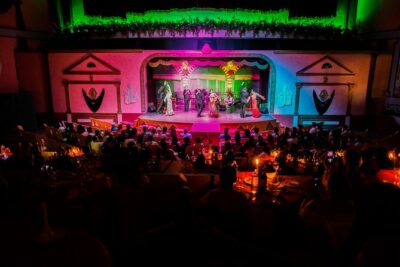
Flamenco at El Palacio Andaluz with Optional Dinner
Read our review →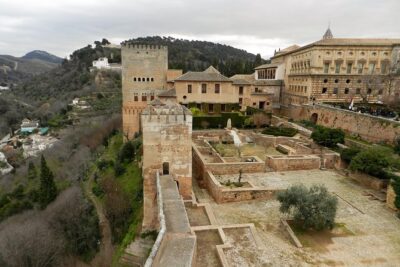
Granada Day Trip: Alhambra & Nazaries Palaces from Seville
Read our review →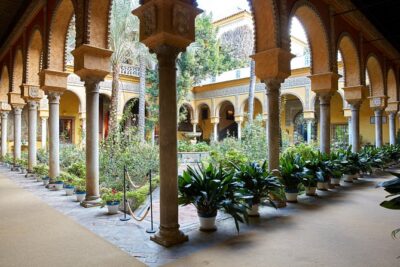
Flamenco Show at El Palacio Andaluz Admission Ticket in Seville
Read our review →
Alhambra Private Tour & Nazaries Palaces from Seville with Pickup
Read our review →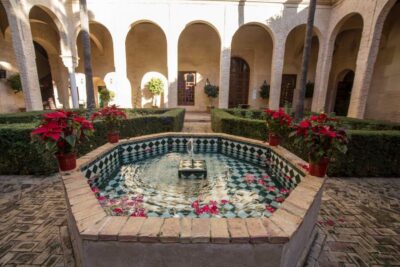
Palacio de Las Dueñas Entry Ticket and Guided Tour
Read our review →Browse the lists this tour appears in