
Reviewed · SEVILLE JEWISH QUARTER TOURS
Seville Former Jewish Quarter Walking Tour: Santa Cruz
Seville’s former Jewish Quarter is easy to miss. Its story survives less in grand monuments than in narrow lanes, old squares, legends, and the shape of the neighborhood itself. This two-hour walk through Santa Cruz helps you picture the community that once lived here, then follows Seville’s long, often painful changes.
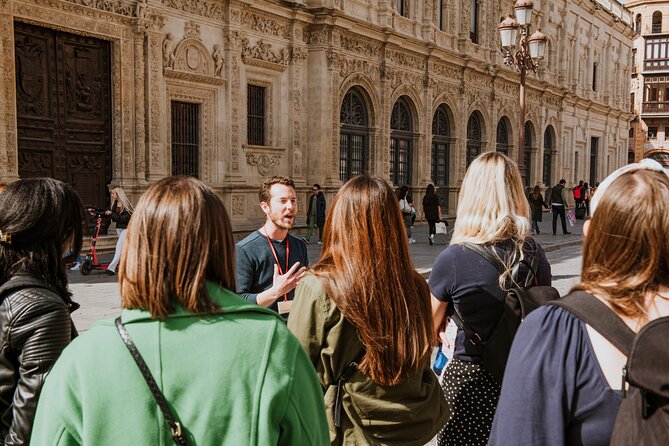
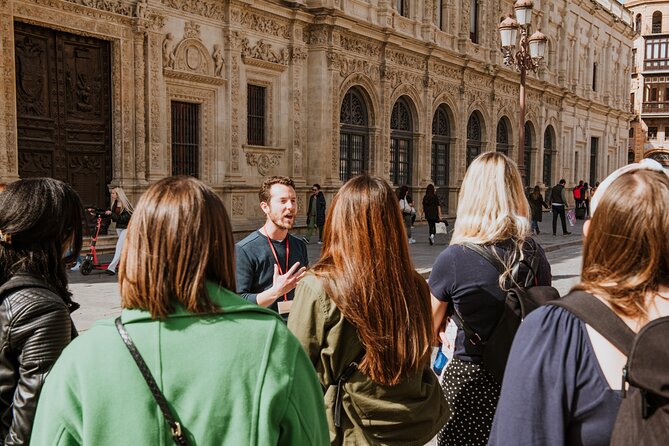
I like two things in particular: the small maximum of 15 people, which gives you a better chance to ask questions, and the guides’ use of stories to make the past easier to grasp. Julio is especially praised for mixing history, local legends, humor, and opera references. The main drawback is that very little physical evidence of Jewish life remains, so the tour depends heavily on the guide’s storytelling and historical explanation.
Key points to know before you book
- Follow the former Jewish Quarter through Santa Cruz: The route links Plaza del Triunfo, Calle Susona, Callejón del Agua, and other lanes tied to Seville’s past.
- Expect stories, not a museum visit: The experience is an outdoor walking tour, with no listed admission fees and no major collection of Jewish artifacts along the way.
- Guides shape the experience: Julio, Lara, Maria, Anna, and Ana are praised for clear explanations, patience, humor, and friendly conversation.
- The Jewish past is treated alongside Seville’s wider story: You’ll hear about persecution and displacement, but also about Murillo, opera, royal power, and local legends.
- The price is modest: At $18.02 per person, the tour offers a useful introduction for the cost of a casual meal or drink, especially if you ask questions and use the guide’s local suggestions afterward.
Why Santa Cruz needs a guide
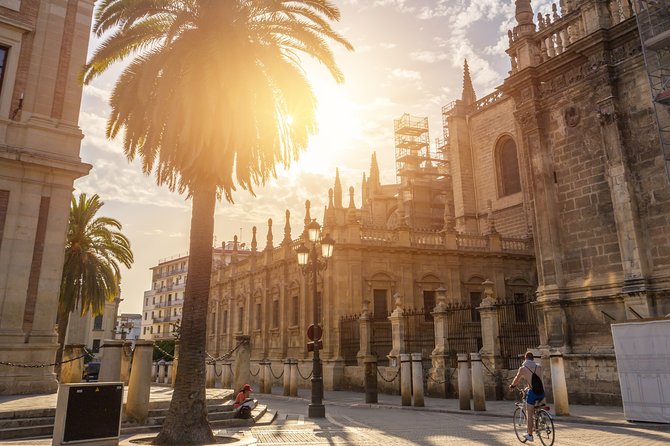
Santa Cruz is one of Seville’s most attractive neighborhoods, but pretty streets alone do not explain its past. Whitewashed walls, small plazas, tiled buildings, and shaded passages can blur together when you walk alone. A guide gives those places a name and a story.
The former Jewish Quarter does not present itself with a clear entrance or a single surviving landmark. You are not walking through a preserved medieval Jewish settlement with original buildings at every turn. Instead, you move through a district shaped by Jewish residents, Christian rulers, religious conflict, expulsions, later rebuilding, and layers of local legend.
That makes the quality of the explanation important. A good guide needs to separate documented events from stories handed down over time. Julio is praised for doing exactly that, presenting the legend first and then explaining the historical version. That approach suits Seville, a city where romance and history often share the same street corner.
The strongest guides also explain the Jewish community as part of Seville’s society, not simply as a tragic group that disappeared. Several guides are praised for describing daily life, influence, changing political conditions, and the consequences of persecution. That wider view is worth seeking, since the neighborhood’s importance is not only in what happened to its Jewish residents, but also in what their presence contributed to the city.
More Seville Jewish Quarter Tours:
- Seville: Small-Group Jewish Quarter Discovery Walking Tour
★ 4.9 · 499 reviews - Seville: 1-Hour Walking Tour Barrio de Santa Cruz
★ 4.5 · 131 reviews - Private Tour Jewish Quarter, center and Plaza de España
★ 5.0 · 127 reviews
Beginning at Plaza del Triunfo
The tour starts at Plaza del Triunfo, a central square near some of Seville’s most important sights. It is a practical meeting point, easy to recognize and close to the historic core.
Your guide uses the square to set the scene. The location has witnessed royal events, conquests, and major shifts in power, making it a fitting place to begin a walk about communities shaped by rulers and religious policy. The Jewish Quarter did not exist apart from the monarchy, church, and wider city. Its fortunes were closely tied to decisions made by those in power.
This opening stop is also useful for orientation. You begin in a broad public space, then move into the tighter lanes of Santa Cruz. If you arrive early, you can get your bearings before the group sets off. The start is at the statue in Plaza del Triunfo, according to the meeting instructions.
Plaza de la Alianza and the quieter lanes
From Plaza del Triunfo, the walk continues toward Fuente de la Plaza de la Alianza. The square is tucked into Santa Cruz and feels more enclosed than the opening plaza.
This stop connects the neighborhood to medieval court life and noble intrigue. The point is not only the fountain itself, but the way the setting helps you imagine how power, residence, and movement worked in old Seville. A narrow lane may look decorative now, yet once served as a route through a tightly organized district.
Here, your guide can also show why independent sightseeing has limits. Without context, a fountain or small square may seem like a pleasant pause. With context, it becomes part of the former quarter’s social and political setting.
The walk is not designed as a sprint between monuments. Each stop is listed at about 12 minutes, though the actual pace can vary with questions, group size, and the guide. One published description gives the experience as approximately two hours, while one past account describes a walk lasting a little over an hour. I would allow the full two hours and avoid booking a tight appointment afterward.
Plaza de Doña Elvira and the power of atmosphere

Plaza de Doña Elvira is one of the most picturesque points on the route. It has the romantic look many people associate with old Seville: a small space, traditional details, and a sense that stories cling to the walls.
The guide links the plaza to romantic legends and memories of the former Jewish Quarter. This is where the tour’s storytelling style becomes especially clear. You are not only given dates and names. You are shown how a place became part of local memory.
There is a tradeoff. Atmospheric stories are memorable, but they can crowd out social history if the explanation is not balanced. If you want to understand Jewish family life, work, community structure, and influence, ask direct questions. Some guides handle those questions very well, and several are praised for taking time to answer them.
More Walking Tours in Seville:
- Seville: Small-Group City Highlights Walking Tour
★ 5.0 · 1,204 reviews - Cultural Walking Tour of Seville Monumental
★ 5.0 · 861 reviews - Seville: Tapas, Taverns, and History Walking Tour
★ 4.9 · 676 reviews - Seville: Tapas, Taverns and History Guided Walking Tour
★ 4.9 · 515 reviews
Calle Susona and the line between legend and history
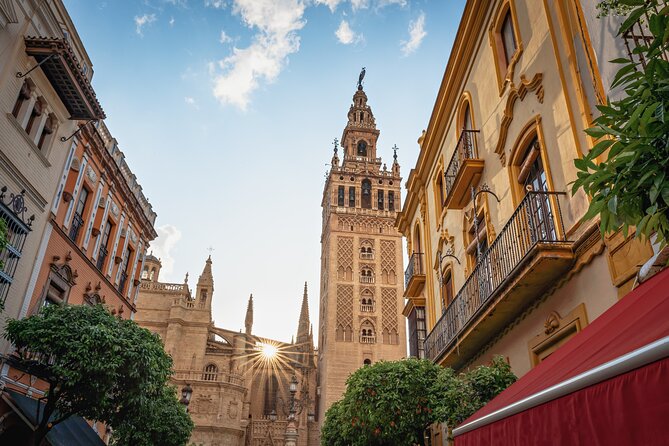
Calle Susona recalls the story of Susona, a young Jewish woman caught between love and betrayal. Her tale is one of the most dramatic episodes connected with the route, and it gives the street a strong emotional pull.
This is also a good place to listen carefully to how the guide presents the story. The account belongs to Seville’s local tradition, but it should not be treated as a complete picture of Jewish life. A compelling personal tale can help you remember the neighborhood, yet it is only one piece of a much larger story involving families, religious pressure, political decisions, and violence.
The best version of this stop puts Susona’s story into that wider frame. Julio is praised for his ability to keep stories lively while clarifying what belongs to legend and what belongs to history. If your guide does the same, this becomes one of the walk’s most memorable moments.
Hospital de los Venerables and Casa de Murillo
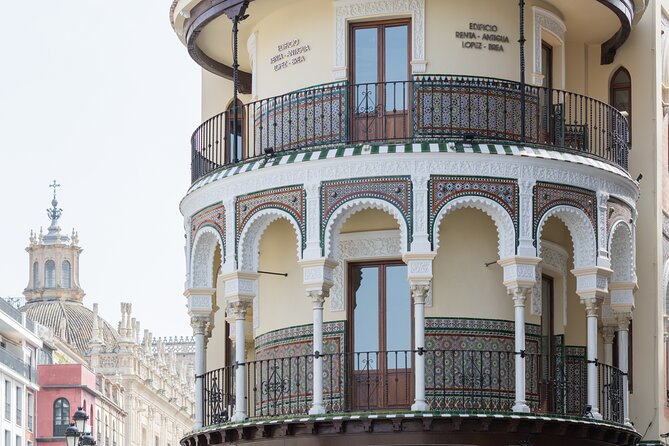
The Hospital de los Venerables adds a different layer. This Baroque building once housed retired priests and now contains sacred art connected with Seville’s Golden Age. The listed stop does not include a separate admission ticket, so expect to view and discuss the building from the route rather than receive a museum visit.
Its place on a Jewish Quarter walk may seem surprising at first. That is useful. Seville’s history is not divided into neat boxes. Christian institutions, Jewish residents, royal authority, art, and later religious culture all occupy the same streets. The building helps show how the neighborhood changed after the period associated with the Jewish community.
Casa de Murillo brings art into the walk. Bartolomé Esteban Murillo lived here, and the guide uses his connection to discuss 17th-century Seville. This stop broadens the experience beyond one subject. You still follow Jewish history, but you also see how the district became connected with artists and the city’s wider cultural life.
I like this broader approach when it is handled with care. It prevents the walk from treating the Jewish Quarter as a sealed-off past. The caution is that every extra subject uses time. With only about two hours and ten listed stops, a guide cannot give equal depth to Jewish history, art, religious buildings, royal history, and opera.
Calle Sierpes and Seville’s urban legends
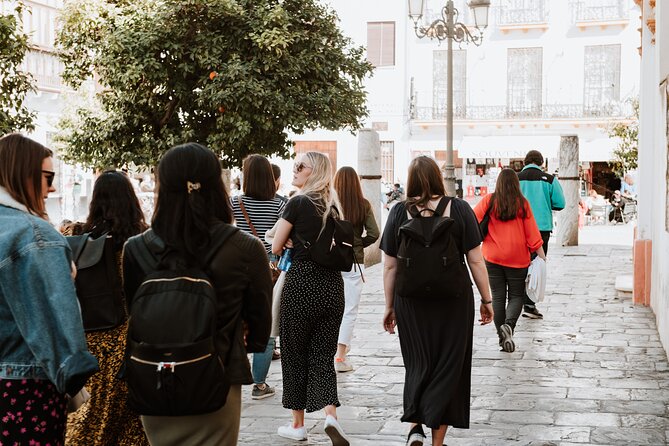
Calle Sierpes is one of Seville’s best-known streets, linked here with old stories of mysterious disappearances. It shows how the tour moves between documented history and the city’s storytelling tradition.
This can be fun, especially if you enjoy local legends. It also provides a change of tone after the more difficult material about persecution and the loss of Jewish life. Still, I would treat the stories as cultural folklore rather than proof of historical events.
The street helps connect the former quarter with the rest of Seville. The Jewish community was not an isolated footnote. Its story unfolded within the same city of commerce, politics, religion, art, rumor, and public life that you see today.
Rosina’s Balcony and the opera connection
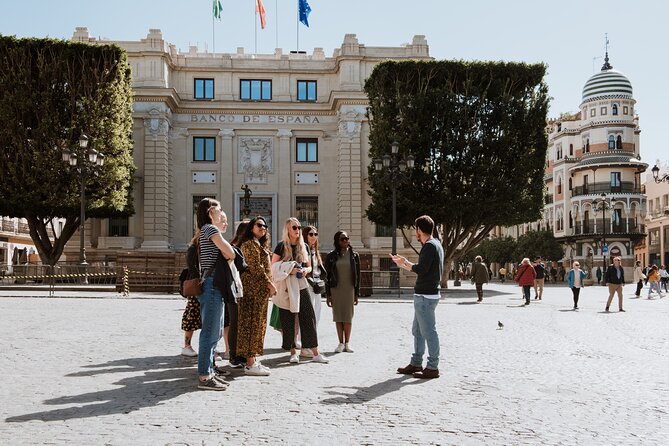
Rosina’s Balcony brings literature and opera into the route. The character Rosina from The Barber of Seville is associated with a balcony in the neighborhood, and the guide uses that connection to show how Seville has been imagined in popular culture.
Several guides receive praise for including opera references, and this is one of the reasons the walk appeals beyond visitors focused only on religious history. The opera material gives younger members of a family an easier way into the subject, while adults can connect it with the city’s literary and musical reputation.
Do not expect a performance or a formal theater visit. This is a brief stop during a walking route. Its value is in showing how Santa Cruz became a setting for clever, romantic, and slightly theatrical stories.
Callejón del Agua beside the Alcázar
Callejón del Agua is one of the route’s most evocative passages. It is narrow and cool, and its name recalls water that once flowed from the Royal Alcázar.
The passage links the neighborhood to the Alcázar without requiring a palace admission. You get a sense of how water, walls, royal power, and residential streets met in the old city. The lane is also associated with poems, love stories, and whispered secrets, so your guide may use it to bring together the route’s main themes: practical city life, royal influence, and legend.
This is a place where the walk’s physical setting does much of the work. You can feel the change from open squares to close passageways. That shift makes it easier to picture an old quarter as a lived-in district rather than a collection of tourist sights.
The lane may be tight, so stay close to the guide and listen for instructions. The walk is through streets and plazas rather than a controlled indoor venue.
Patio de Banderas and finishing near Plaza de Santa Cruz
The last listed stop is Plaza Patio de Banderas, a broad courtyard behind the Alcázar walls. Its setting points to royal ceremonies, imperial power, and the long evolution of Seville.
Ending here gives the Jewish Quarter story a wider frame. You finish near the structures of monarchy and state, after walking through streets shaped by communities with very different positions in Seville’s society. That contrast is one of the route’s strongest ideas.
The formal endpoint is Plaza de Santa Cruz. This is not the same as the starting point, so plan your meeting and onward route accordingly. You do not return to Plaza del Triunfo. The tour does not include hotel pickup, dinner, or listed entrance tickets.
What the $18.02 price really buys
At $18.02 per person, this is an inexpensive way to add structure to your first look at Santa Cruz. You are paying mainly for the guide’s interpretation, not for admission to a palace, museum, or synagogue. Since all listed stops have free admission, the value depends on how much context and conversation you want.
I would consider it good value if you are new to Seville, interested in Jewish history, or likely to walk past the same lanes without knowing what to look for. The guide can also point you toward other places to explore, which makes the tour more useful than a simple two-hour loop.
It is less convincing if you want a large collection of surviving Jewish objects or a detailed academic lecture. One criticism of the experience is that it can leave the Jewish community’s contribution to Seville underexplained. Another concern is that the short format may not give enough time for family histories and daily life.
The strongest way to get value is to arrive with a few questions. Ask about the community’s role in Seville, the changes that followed persecution, and which parts of the route are supported by written history rather than local tradition.
Guides, languages, and group size
The experience is offered in English or Spanish. The supplied details also list English as the offered language, so check the language option carefully when booking if Spanish is important to you.
The maximum group size is 15 people. That is small enough for a guide to notice questions and manage the group through narrow streets, though one account describes a larger-feeling group. Conditions can change with the number booked, so do not assume a private or nearly private walk.
Guide style varies, but the strongest names associated with this experience are Julio, Lara, Maria, Anna, and Ana. Julio is praised for storytelling, clear answers, humor, and his habit of contrasting legend with historical fact. Lara is noted for patience and careful explanations. Maria and Anna receive praise for friendly presentation and adapting to questions.
That personal element matters here. Since the physical remains are limited, the guide carries much of the experience. A warm, prepared guide can make a simple street corner meaningful. A less focused explanation may leave you with attractive views but little sense of Jewish life.
Who should take this walk
I would recommend it to:
- First-time visitors who want a historical framework for Santa Cruz
- Anyone interested in Jewish Seville and the effects of religious persecution
- Families who prefer stories and short stops to a long indoor lecture
- Visitors who enjoy opera, art, romance, and local legends alongside history
- People who want practical suggestions for what to see after the tour
It is also suitable for most participants, and service animals are allowed. The route is near public transportation, which makes the start convenient.
I would hesitate if your main goal is a specialist study of medieval Jewish communities. The route is introductory and covers many subjects. It may also disappoint you if you expect original Jewish buildings or a clear, preserved quarter. Much of the former community’s physical presence is gone, and the walk asks you to reconstruct the past through streets, place names, stories, and explanation.
Practical planning for the day
Meet at Plaza del Triunfo and finish at Plaza de Santa Cruz. Give yourself enough time to find the starting point, especially if you are coming from another part of the old town. Wear comfortable shoes, since the experience is entirely a walking route through historic streets.
The advertised duration is approximately two hours. I would not schedule dinner immediately afterward unless you allow some flexibility. The experience does not include dinner or hotel pickup.
Confirmation is sent when you book. Free cancellation is available up to 24 hours before the starting time for a full refund. Changes or cancellations made inside that 24-hour window are not accepted for a refund, and the local time applies. The tour also requires a minimum number of participants. If that minimum is not reached, you are offered another date or experience, or a full refund.
Should you book the Santa Cruz Jewish Quarter walk?
Book it if you want a reasonably priced introduction to a part of Seville that is easy to overlook. The route’s best features are its human stories, the contrast between legend and documented history, and guides such as Julio, Lara, Maria, Anna, and Ana who make time for questions.
Go in with the right expectation. This is not a visit to a preserved Jewish museum district. It is a guided reading of streets that have been changed, renamed, rebuilt, and wrapped in later stories. If you want more detail about Jewish families, daily life, and the community’s contribution to Seville, ask for it directly.
For $18.02, the risk is small. I would take the walk early in your stay, then use the guide’s suggestions to explore Santa Cruz on your own afterward.
FAQ
Where does the Seville former Jewish Quarter tour start?
The tour starts at Plaza del Triunfo, in Casco Antiguo, Seville.
Where does the walking tour end?
The tour ends at Plaza de Santa Cruz, also in Seville’s historic center.
How long does the tour last?
The advertised duration is approximately two hours.
What language is the tour offered in?
The tour is offered in English or Spanish. The experience details also specifically list English, so check the available language when booking.
How much does the tour cost?
The listed price is $18.02 per person.
What is included in the price?
A guided walking tour in English or Spanish is included.
Are entrance tickets included?
The listed stops have free admission, and no separate paid entrance is included in the tour.
Is hotel pickup provided?
No. Hotel pickup is not included. You must make your own way to Plaza del Triunfo.
What is the cancellation policy?
You can cancel up to 24 hours before the start time for a full refund. Cancellations or changes made less than 24 hours before the start time are not accepted for a refund.
Just added around Seville
- The Villages of Andalusia: Full-Day Trip from Seville★ 4.8 · 19 reviews
- From Seville: White Villages Tour★ 5.0 · 9 reviews
- White Villages & Ronda 2-Days Trip & Overnight Stay★ 4.6 · 5 reviews
- Your Photo Story in Seville★ 5.0 · 16 reviews
- Triana Market Tapas Tour★ 4.9 · 12 reviews
- Seville: Guided visit of the Casa de Pilatos with entrance tickets★ 4.3 · 18 reviews
- From Seville: Wine Tourism Half Day Tour★ 4.0 · 17 reviews
- Wine tourism, visit to a traditional winery and wine tasting★ 5.0 · 3 reviews
Seville Jewish Quarter Tours, compared.
Small-Group Jewish Quarter Discovery Walking Tour
Read our review →
Small Group Jewish Quarter Tour with Tapas & Drinks
Read our review →
Seville Jewish Quarter Small Group Tour with Tapas and Drinks
Read our review →
Seville Jewish Quarter walking tour: Santa Cruz District
Read our review →
Seville Jewish Quarter Small-Group Walking Tour: History & Gems
Read our review →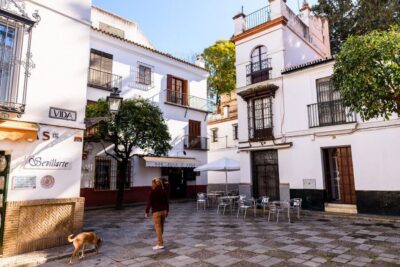
Browse the lists this tour appears in