
Reviewed · ITALICA ROMAN CITY TOURS
Seville in roman times: Italica
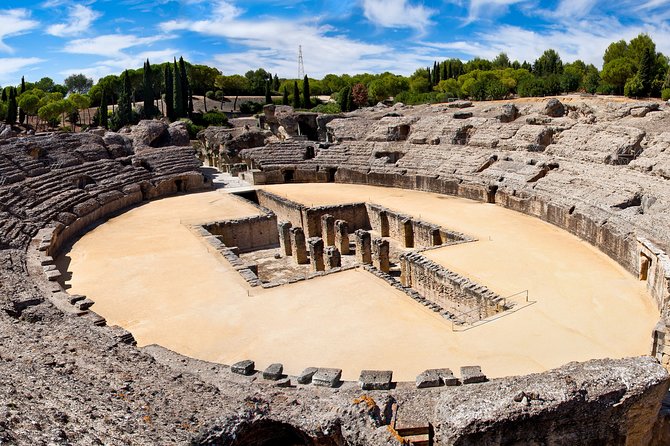
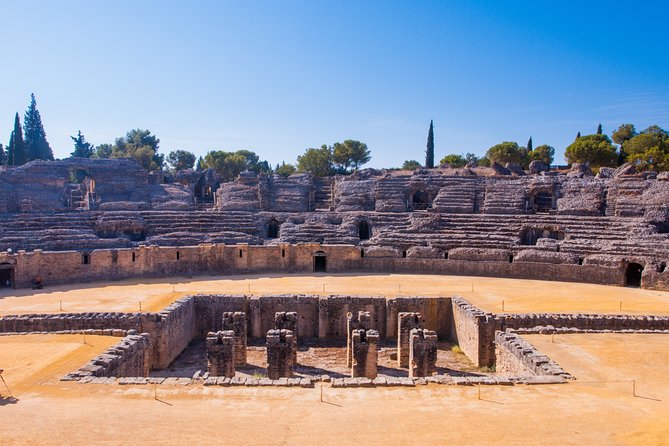
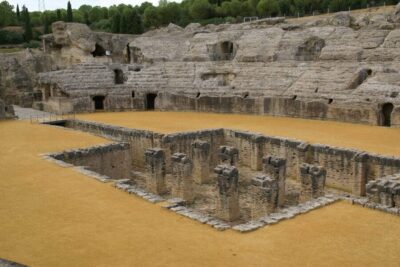
The big draw here is Italica’s amphitheater, where you can walk through the entrances and inner passageways of one of the Roman Empire’s largest arenas. The surviving mosaics and broad ruins give you a clear sense of a Roman city, not just a few scattered stones.
I like the private format, since your group gets the guide’s full attention, and I like the included hotel pickup in Seville. Guides including Jesús, Patricia, and Javier are praised for making the ruins understandable and entertaining. The main consideration is the $167.68 per-person price, which feels strongest for couples or small groups that value private transport and guiding.
- Walk through Italica’s amphitheater: See the arena entrances, corridors, and labyrinth-like inner spaces.
- Study remarkably preserved mosaics: Decorative floors help bring Roman homes and daily life into focus.
- Ride from Seville in a private vehicle: Hotel or accommodation pickup is included.
- Use a private guide: Only your group takes part, with daily departures at about 10:00 am.
- Connect Italica with ancient Híspalis: The tour places the suburban Roman city beside Roman Seville in its wider story.
- Plan for a short half-day: The experience lasts about three hours and does not include lunch.
Why Italica feels different from an ordinary Roman ruin
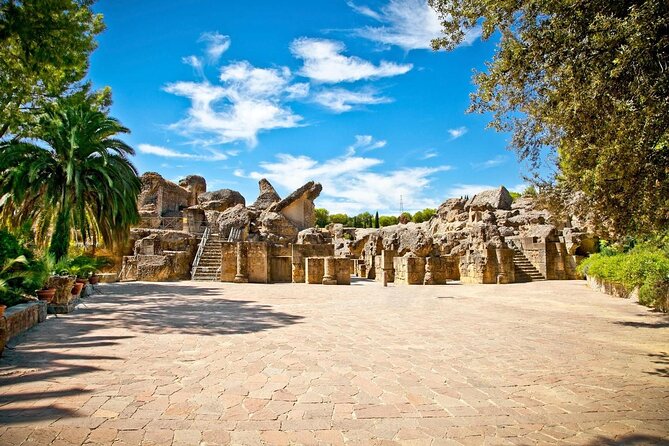
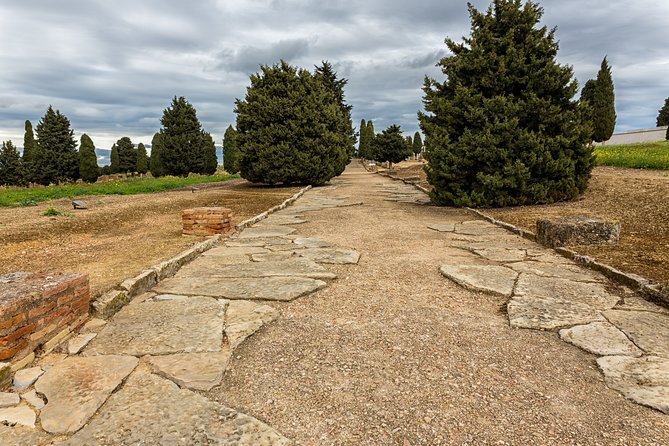
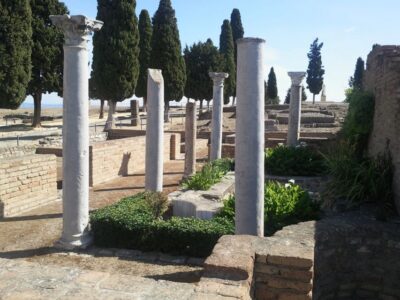
Italica gives you more than a quick look at an ancient arena. The site reveals the shape of a Roman city, with mosaics, remains of homes, open areas, and the amphitheater’s massive entrances and interior routes.
That matters because Roman history can feel abstract when it is reduced to dates and emperors. Here, you can look down at patterned floors and then walk into the working spaces beneath an arena. The scale helps. So does a guide who can explain what you are seeing instead of leaving you to decode every wall and tile alone.
The tour also presents Italica alongside Híspalis, the Roman city connected with present-day Seville. The two cities were close to one another but served different purposes. Italica sits outside the modern city, while Híspalis occupied the urban center that became Seville. The visit is therefore not only about ruins. It is about how Roman life occupied both a city and its nearby settlement.
The 10:00 am pickup from Seville
The experience begins at about 10:00 am, with pickup from your hotel or accommodation in Seville. A private, air-conditioned vehicle is included, which removes the need to arrange a separate trip to the site.
I see this as one of the clearest benefits of the package. Italica is outside central Seville, so door-to-door transport saves you the trouble of working out the local connection, finding the entrance, and coordinating return transport. It also makes the tour easier to fit into a short stay.
There is one small practical wrinkle. Pickup is offered, but not every accommodation may appear in the booking system’s hotel list. If yours is missing, contact the provider rather than guessing at a nearby location. The booking information says Argania Travel handles the experience, and confirmation is provided at the time of booking.
Since this is a private activity, you are not joining a large mixed group. That gives you more room to ask questions and makes the pace easier to manage. It also means the price needs to be judged against private transport and personal guiding, not against the cost of a basic entry ticket.
More Italica Roman City Tours:
- From Seville: Italica Roman City & Medieval Monastery Tour
★ 4.5 · 1,051 reviews - Historical Italica: Half-Day Guided Tour from Seville
★ 4.5 · 416 reviews - Seville: Game of Thrones and Roman Empire Italica Tour
★ 4.3 · 372 reviews
Entering the Archaeological Ensemble of Italica
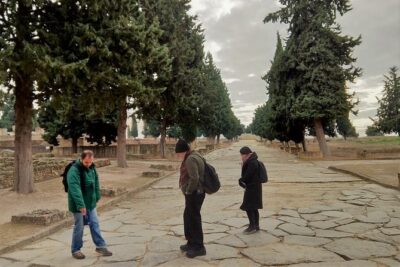
The main visit lasts about 1 hour and 30 minutes and ends at the Roman amphitheater. Your guide leads you through the archaeological ensemble, explaining the ruins as a connected city rather than a collection of isolated remains.
You can expect the amphitheater to be the emotional high point. Its entrances and internal passageways show how the building worked behind the public spectacle. Walking through those spaces gives you a better sense of the labor, movement, and organization needed to operate a huge Roman venue.
The size is important. It is easy to look at a photograph of an ancient arena and miss its scale. At Italica, you can move through the access routes and see how the building opens toward the central arena. The tour description calls attention to the labyrinths and entrances, so this is not simply an exterior photo stop.
I would save a little energy for the amphitheater rather than treating it as something you rush through at the end. The visit finishes there, and it is the place most likely to stay with you after the tour.
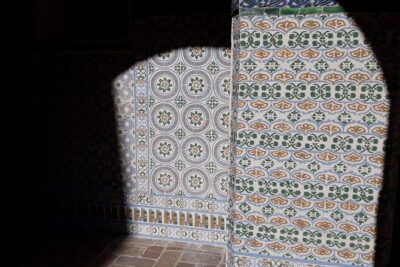
Mosaics that make Roman life easier to picture
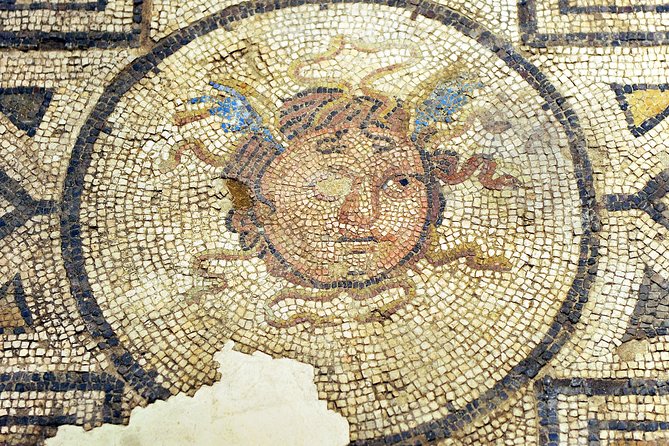
The ruins are especially rewarding for anyone interested in Roman domestic life. Surviving mosaics provide some of the strongest visual evidence of how homes were decorated and how much care went into their floors.
You might find yourself learning more from a patterned floor than from a long historical explanation. A good guide can point out how the mosaics fit into the layout of a home and help you picture the people who used the rooms. Javier is specifically praised for bringing the ruins to life in this way, making the remains easier to understand than they would be from signs alone.
Do not expect every part of the site to be intact. Some walls are low, some structures are fragmentary, and the protection of the ruins is a concern. That is part of the honest picture here. The surviving pieces are impressive, but the site also shows how much ancient material is vulnerable when funding and conservation resources are limited.
This is where the guide earns the fee. Without context, you may see attractive tilework and piles of stone. With explanation, you can connect those pieces to homes, public buildings, movement through the city, and the practical workings of Roman society.
What the guides add to the visit
The guide is the heart of this experience. You are not simply driven to Italica and left to read the signs. An official guide accompanies your group and explains the site during the visit.
The named guides associated with the experience include Jesús, Patricia, and Javier. Jesús is described as informative, enthusiastic, and entertaining. Patricia is praised for her pleasant manner, while Javier is noted for explaining the ruins in a way that made the visit feel alive.
That combination matters. Roman archaeology can become dry if every explanation turns into a list of names and dates. The best approach here seems to be interactive. You can ask questions, respond to the guide, and get more than a rehearsed speech.
Because the tour is private, you should have a better chance of shaping the discussion around your interests. If you care about architecture, ask about the amphitheater. If mosaics catch your eye, spend more time on the floors and homes. A larger group often forces a guide to keep moving, while this format gives you more flexibility.
Still, the quality of the experience depends heavily on the assigned guide. The available feedback is consistently strong, but no tour can promise that every guide uses exactly the same style. The common strength is clear: the guides make the ruins easier to read and keep the tone good-humored.
A different sort of afternoon in Seville:
- Seville: Royal Alcázar Entry Ticket
★ 4.6 · 28,378 reviews - Seville: Cathedral and La Giralda Entry Ticket
★ 4.5 · 24,592 reviews - Seville: Live Flamenco Dancing Show Ticket at the Theater
★ 4.7 · 16,396 reviews - Seville: 1-Hour Guadalquivir River Sightseeing Eco Cruise
★ 4.2 · 10,281 reviews
How the Roman cities fit together
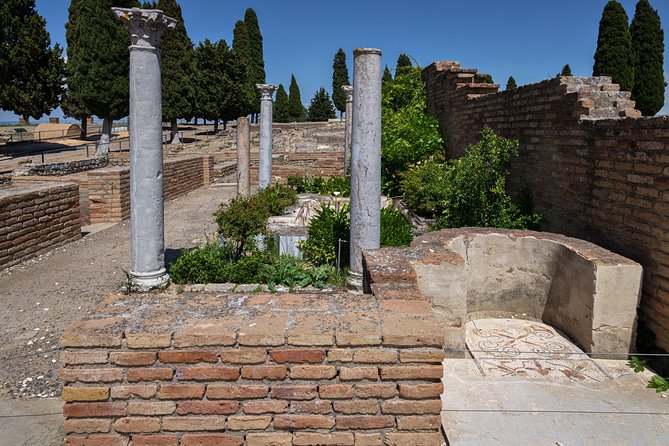
The tour’s wider idea is the relationship between Italica and Híspalis. Both were Roman cities in the province of Seville, close to one another but not identical.
Híspalis occupied the site of modern Seville and formed the urban center. Italica, outside the present-day city, offers the archaeological setting where you can see Roman remains in open ground. Putting the two together helps you understand that Roman influence was not confined to one forum or monument. It shaped the wider area around Seville.
The experience gives most of its physical attention to Italica. The listed visit focuses on the Archaeological Ensemble of Italica and its amphitheater, with about 90 minutes at the site. So you should book this primarily as an Italica visit with Roman Seville as its historical frame, rather than expecting a second full archaeological stop in central Seville.
That distinction is useful when planning your day. If you want a long walking tour of modern Seville’s Roman remains, this is not designed for that. If you want to see the major Roman site outside the city and understand its connection to ancient Híspalis, the format makes sense.
Is $167.68 per person fair?
At $167.68 per person, this is not a budget excursion. The value comes from the bundle: private transportation, hotel pickup, an air-conditioned vehicle, an official guide, and a private visit for your group.
For one person or a couple, the price may feel high compared with visiting a historical site independently. You are paying for convenience and interpretation as much as admission. If you are comfortable arranging transport and reading the site on your own, you may prefer a cheaper self-guided option.
For a small group, the calculation improves. The private vehicle and guide costs are spread across your party, while everyone receives the same attention. The group discount feature may also help, though the exact saving is not specified, so check the price shown for your party before booking.
I would choose this tour if your time in Seville is limited, you want a guide, or you dislike spending part of a morning sorting out transport. I would hesitate if you mainly want entry to Italica and are happy to travel independently.
Lunch is not included. Since the outing lasts about three hours, that is not a major problem, but you should plan your meal before or after the visit. The half-day length leaves room for lunch and another Seville activity later in the day.
Who will get the most from this visit
This tour suits you best if you want ancient history explained in plain language and prefer a private setting. It is a good match for couples, families, and small groups who want a manageable outing away from Seville’s center.
It also works well for anyone who finds archaeological sites hard to read alone. The mosaics, low ruins, and large amphitheater become more meaningful when someone points out how they relate to one another.
You should also consider it if you value a reliable pickup. The private vehicle keeps the morning simple, especially when your accommodation is not near the most convenient transport route.
The outing may be less satisfying if you want a full-day archaeological study, extensive time at every part of the site, or a tour centered on modern Seville. Three hours is enough for a focused visit, but not enough for a slow, exhaustive examination of every ruin.
Most people can participate, according to the tour information. Still, you should think about the amount of walking and the outdoor nature of an archaeological site when deciding if it fits your group.
A practical way to plan the morning
Keep the morning focused. Have breakfast before the 10:00 am start, confirm your pickup details, and bring water and comfortable shoes. These suggestions are simple, but they matter more at an exposed archaeological site than they do in a museum.
Listen closely during the first part of the visit, since the guide’s explanation of the city will make the mosaics and amphitheater easier to understand. When you reach the arena, take time to look beyond the central space. The entrances and interior routes are a major part of what makes Italica memorable.
Do not plan a tight appointment immediately afterward. Pickup, site timing, and the return drive can vary, and the tour is meant to finish in about three hours rather than at an exact minute. The half-day format is best used as a flexible morning block.
Free cancellation is available up to 24 hours before the start time for a full refund. Changes or cancellations made less than 24 hours before the start are not accepted for a refund, and the cut-off follows local Seville time.
Should you book the Italica tour?
Book it if you want private transport and a guide to turn a Roman ruin into a readable story. The amphitheater is the star, but the mosaics and city remains give the visit more substance than a quick monument stop.
The strongest reasons to choose it are the hotel pickup, small private format, air-conditioned vehicle, and guides who use humor and clear explanations. Jesús, Patricia, and Javier are each associated with a warm, informative style that suits a site where good interpretation makes a major difference.
Skip it if the $167.68 price is difficult to justify or if you prefer independent sightseeing. You will need to arrange your own transport and make sense of the ruins yourself, but that may be worthwhile for confident planners.
For a short Seville stay, I think the tour earns consideration because it handles the practical work and gives Italica the attention it deserves. Just book it for what it is: a focused, private half-day visit to one major Roman archaeological site, framed by the story of ancient Híspalis.
FAQ
How long does the Italica tour last?
The experience lasts approximately three hours, with about 1 hour and 30 minutes spent visiting the Archaeological Ensemble of Italica.
What time does the tour start?
The listed start time is 10:00 am.
Is hotel pickup included?
Yes. Pickup from your hotel or accommodation in Seville is included. If your accommodation does not appear in the booking system, you should contact the provider to confirm the meeting arrangement.
Is this a private tour?
Yes. Only your group participates in the activity, and a guide accompanies your group.
Is transportation provided?
Yes. The tour includes private transportation in an air-conditioned vehicle.
Can I cancel for a full refund?
Yes, if you cancel at least 24 hours before the experience start time. Cancellations or changes made less than 24 hours before the start are not accepted for a refund.
Just added around Seville
- The Villages of Andalusia: Full-Day Trip from Seville★ 4.8 · 19 reviews
- From Seville: White Villages Tour★ 5.0 · 9 reviews
- White Villages & Ronda 2-Days Trip & Overnight Stay★ 4.6 · 5 reviews
- Your Photo Story in Seville★ 5.0 · 16 reviews
- Triana Market Tapas Tour★ 4.9 · 12 reviews
- Seville: Guided visit of the Casa de Pilatos with entrance tickets★ 4.3 · 18 reviews
- From Seville: Wine Tourism Half Day Tour★ 4.0 · 17 reviews
- Wine tourism, visit to a traditional winery and wine tasting★ 5.0 · 3 reviews
Italica Roman City Tours, compared.
Historical Italica: Half-Day Guided Tour from Seville
Read our review →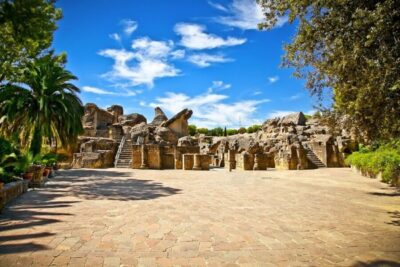
Visit to Italica Roman Ruins Tour tickets included
Read our review →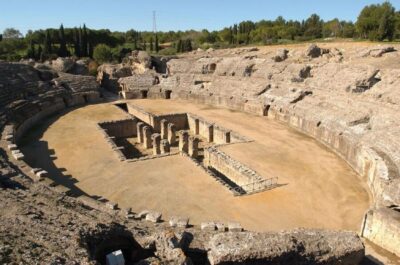
Private hald day tour to the historic roman city of Italica
Read our review →Browse the lists this tour appears in