
Reviewed · ITALICA ROMAN CITY TOURS
From Seville: Italica Roman City & Medieval Monastery Tour
Italica gives you a rare look at a Roman city without leaving Seville far behind. Its huge amphitheater, underground gladiator passages, lion enclosures, and striking mosaics make this a strong half-day outing, especially if you know it as the Dragonpit from Game of Thrones. I like the contrast between the open Roman ruins and the quieter medieval monastery that follows.
I also like the way the guide adds meaning to what can otherwise be a spread of stones and walls. Guides including Carlos, Miguel, Alberto, Jesus, and José Luis have been singled out for clear storytelling, humor, and the ability to bring ancient life into focus. The main drawback is time: some people want longer to wander Italica alone, take photographs, or return to the amphitheater.
Key points to know before booking
- Italica’s amphitheater held about 25,000 people, with tunnels and animal pens still visible below the seating area.
- The Roman mosaics are a major highlight, with intricate patterns preserved across the ancient city.
- The monastery adds a completely different period, combining Mudejar, Gothic, and Baroque design.
- A guide makes the ruins easier to understand, particularly if you want archaeological and historical context.
- The tour lasts about four hours, but delays or a relaxed pace can push the return later.
- Shared and private options are available, with hotel pickup offered for private tours within the pickup area.
Why Italica makes a smart Seville side trip
Seville is full of grand palaces, churches, and plazas, but Italica offers a change of scale and setting. You leave the city center and reach one of Spain’s most important Roman sites in roughly 20 minutes by coach. That short ride matters: you get an ancient city visit without giving up a full day to transport.
Italica was founded in 206 BC by the Roman general Publius Cornelius Scipio. It later became associated with two emperors, Trajan and Hadrian, who were born there. The site you see today is not a fully excavated city, but the visible remains give you a strong sense of its size, planning, and wealth.
I find guided visits especially useful here because the ruins do not explain themselves. A mosaic may look decorative at first glance, while a street grid, bath complex, or large residence can seem like a low wall. A good guide connects these fragments to Roman urban life, showing you how the city functioned rather than simply pointing out old stones.
The tour also works well for first-time visitors to Andalusia. You get Roman Spain, medieval religious architecture, local history, and a touch of television culture in one compact outing. It is not just a Game of Thrones stop, though fans will have an extra reason to visit.
More Italica Roman City Tours:
- Historical Italica: Half-Day Guided Tour from Seville
★ 4.5 · 416 reviews - Seville: Game of Thrones and Roman Empire Italica Tour
★ 4.3 · 372 reviews - Visit to Italica Roman Ruins Tour tickets included
★ 4.5 · 285 reviews
The short coach ride from Seville
Transport is included, and the journey to Italica takes about 20 minutes. For a shared tour, you choose from three meeting points in Seville. The exact meeting point depends on the option you book, so check it carefully rather than relying only on a navigation app.
For the private version, pickup from your Seville hotel or apartment may be possible. You provide the accommodation details after booking, and the operator confirms the collection time if the address is within the service area. If not, you are given the closest accessible pickup point.
The coach has generally been a comfortable part of the outing. One particularly useful detail is that some buses have USB charging ports, handy after a morning of maps, photos, and phone-based navigation. The shared vehicle can carry several groups, with people dividing into language groups after arrival.
Traffic leaving Seville can slow the start. One experience began behind schedule but continued long enough to make up the lost time. Still, I would avoid booking a tight lunch reservation, museum entry, or train immediately after the advertised four-hour finish. Leave a few extra hours.
Entering Italica and its enormous amphitheater
The main guided visit at Italica lasts about 105 minutes. You begin with the amphitheater, the site’s most instantly impressive feature. It once held around 25,000 spectators, a remarkable figure when you stand inside the broad oval and look across its tiers.
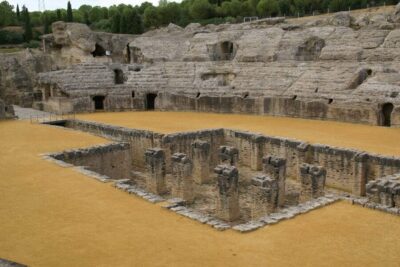
The scale is the first thing to register. The amphitheater was built for public spectacle, not quiet reflection, and its size helps you understand the role of entertainment in Roman society. The guide points out how the arena was arranged and takes you below ground to the passages used by gladiators and staff.
You can also see the enclosure where lions were kept before combat. These details bring a harsher side of Roman entertainment into view. The underground spaces are not merely atmospheric; they explain how people, animals, and equipment reached the arena floor without appearing from the seating area.
For Game of Thrones fans, the amphitheater served as the Dragonpit in season seven. That connection is fun, but it should not overshadow the actual site. The Roman construction, the preserved layout, and the chance to stand inside a building designed for thousands of spectators are the real reasons to come.
The schedule includes time for photographs and independent looking, but it may feel brief if you want to explore every level. One useful tip is to take your main amphitheater photographs while you are there, rather than assuming you will have a long free period later. Some people have wanted another 15 minutes to walk back, use the facilities, and take pictures from different viewpoints.
Roman streets, houses, and mosaic floors
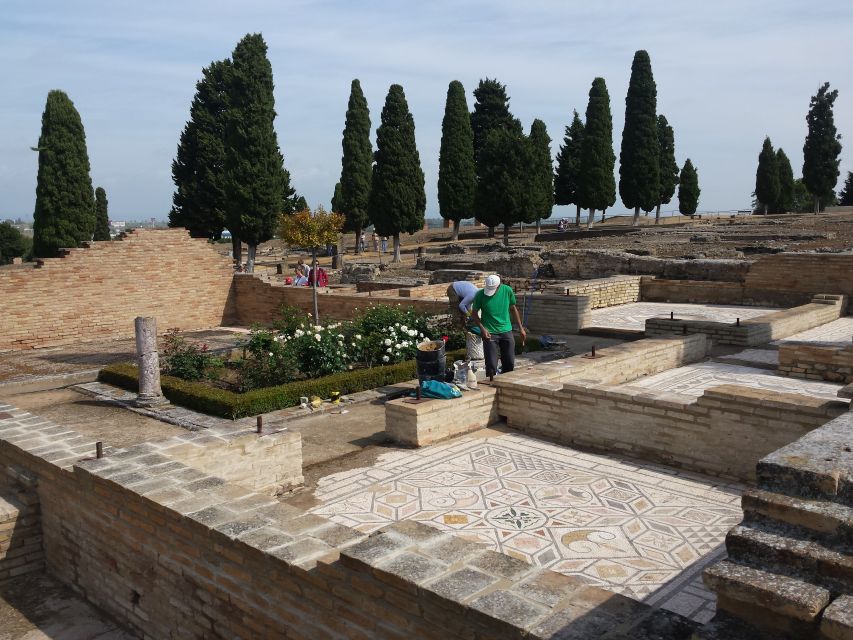
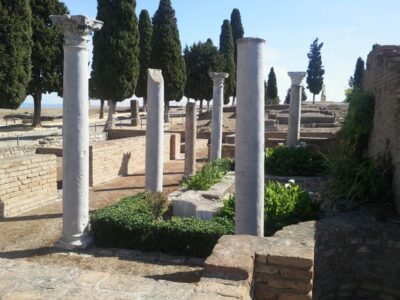
After the amphitheater, the route continues through the city itself. Italica’s streets and house remains show that this was more than an arena. You see the bones of a Roman settlement, with broad roads, building foundations, and decorative floor mosaics that have survived far better than many visitors expect.
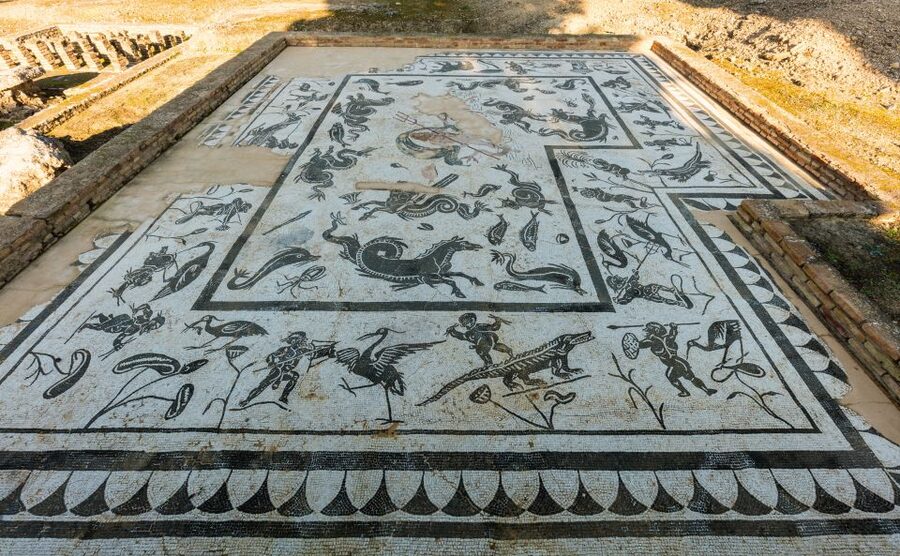
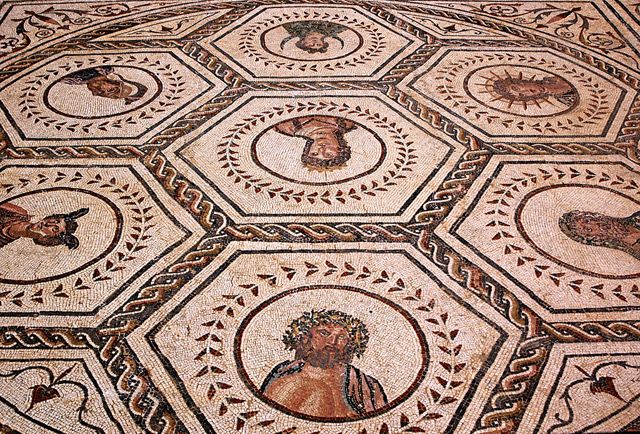
The mosaics are among the site’s strongest visual rewards. Their patterns and workmanship reveal the money and taste of the homes that commissioned them. Some are remarkably complete, and the guide helps you notice details that are easy to miss when you are concentrating on where to step.
The old city is still being excavated and restored. That gives Italica a sense of discovery, but it also means you should not expect a fully reconstructed Roman town. Some areas are open, some remain archaeological traces, and some sections may be unavailable.
Facilities at the ruins are limited. There is a small exhibition and toilets, though the condition of the toilets has not always been ideal. Since food and drinks are not included, bring water and consider eating beforehand. The tour does not provide a dedicated snack stop, and hunger can become noticeable near the end of the morning.
The ground is uneven in places, and you are outside for much of the Roman portion. Wear practical shoes and plan for sun or rain according to the forecast. If you use a walking aid, tell the guide at the start. One guide, Carlos Leon, was specifically praised for making sure a visitor using a walking aid could keep up.
A different sort of afternoon in Seville:
- Seville: Royal Alcázar Entry Ticket
★ 4.6 · 28,378 reviews - Seville: Cathedral and La Giralda Entry Ticket
★ 4.5 · 24,592 reviews - Seville: Live Flamenco Dancing Show Ticket at the Theater
★ 4.7 · 16,396 reviews - Seville: 1-Hour Guadalquivir River Sightseeing Eco Cruise
★ 4.2 · 10,281 reviews
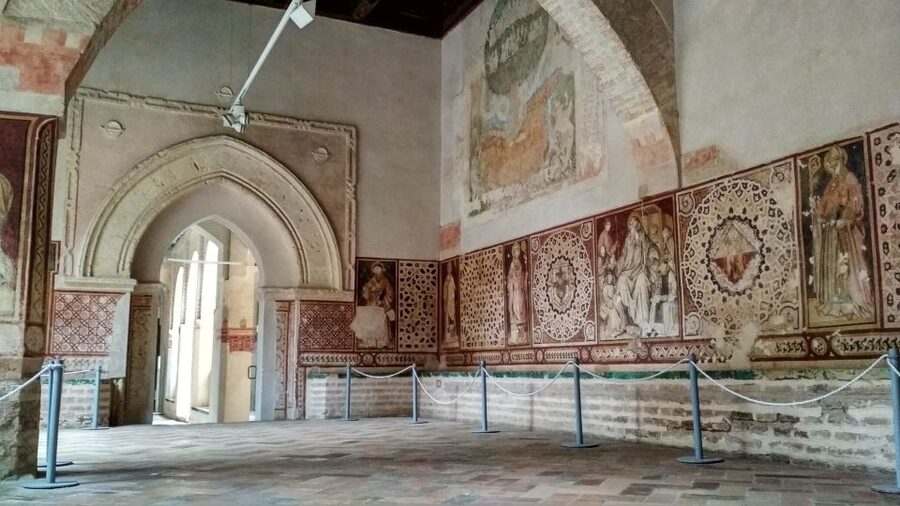
San Isidoro del Campo: the unexpected second act
After Italica, the coach ride to the monastery takes about 10 minutes. The guided visit inside San Isidoro del Campo lasts roughly 40 minutes, and this stop changes the mood completely.
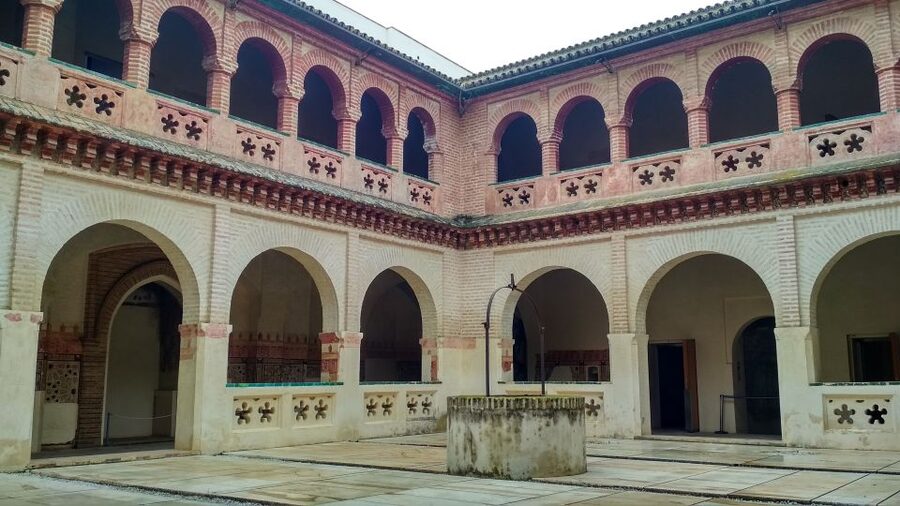
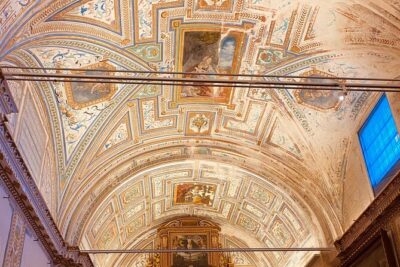
The monastery began as a medieval religious foundation and later acquired a fortress-like character. Its architecture combines Mudejar, Gothic, and Baroque elements, so you are not looking at one clean design period. Instead, the building shows how religious sites changed over time.
The monastery is deconsecrated, and only part of it is open. Funding limits affect what you can see, so it is best to approach the visit as a focused look at a historic complex rather than a full tour of every room.
For some people, Italica will be the clear favorite. For others, the monastery may be the more atmospheric stop, particularly if you enjoy architectural details, religious art, or photography. I like the pairing because it prevents the day from becoming two hours of similar archaeological remains. Roman public life comes first, followed by medieval spiritual and defensive architecture.
Guides often provide useful links between the two sites, placing Andalusia’s Roman, medieval, and later cultural periods in the same frame. That broader context is one reason the monastery feels like more than an added stop on the way home.
What the guides add to the experience
The guide is the central variable on this tour. The strongest guiding is not just a list of dates. It explains why the amphitheater was built, how Roman cities were organized, what the mosaics suggest about their owners, and how the monastery fits into the region’s past.
Carlos Leon has an archaeology background and has been praised for answering detailed questions. Miguel is known for an entertaining style and strong explanations, while Alberto has impressed visitors with his art history knowledge and thoughtful answers. Jesus, José Luis, Carlos, Rebecca, Nieve, and Joanna have also been praised for clear delivery, humor, pacing, and personal attention.
Language availability includes English, French, Italian, and Spanish. A minimum of four participants speaking the same language is required to guarantee that language. If the minimum is not met, you may be offered another language, another date, or a full refund.
The shared tour can be a good value if you enjoy meeting other people and do not need a custom pace. The private tour is better if you want hotel pickup, more control over questions, or a quieter experience. Private does not automatically mean you will spend longer at every site, so ask about the expected schedule if flexibility is your main reason for paying more.
Is the $46 price good value?
At $46 per person, the tour includes transport from Seville, entry tickets, and a local guide. That is a fair price for a four-hour outing, especially when you consider that organizing transport and admission yourself takes time and may not provide the same historical explanation.
The value is strongest for you if Italica is unfamiliar. A self-guided visit can show you the amphitheater and mosaics, but a guide helps explain the city’s purpose, its emperors, and the practical details of Roman public life. The monastery also becomes more meaningful when someone points out its mixed architectural influences.
The price is less compelling if you want a slow archaeological study. The schedule is organized and efficient, not leisurely. You will see both sites, but you may not have long stretches to sit, sketch, photograph, or read every display at your own pace.
Food and drinks are not included. That is a small extra cost, but more important is the timing. Eat before departure or carry something permitted for the coach and site rules. You do not want the final monastery visit clouded by hunger.
Who will enjoy this tour most?
This outing suits history fans, architecture lovers, first-time visitors to Seville, and anyone who wants to see an important site outside the city without arranging a bus or taxi. Families with older children and teenagers can also get a lot from it, especially if the amphitheater and Game of Thrones connection provide an easy entry into Roman history.
It is a particularly good choice if you prefer learning through stories. The ruins are extensive enough to reward explanation, and the best guides keep the information lively rather than turning the visit into a lecture.
You should think twice if you need a very relaxed pace, long independent exploration, or guaranteed timing down to the minute. The site requires walking, facilities are basic, and the tour can run longer than four hours. The private option may help with pickup and personal attention, but the walking and site conditions remain.
Booking details worth checking
Shared tours use one of three Seville meeting points. Private tours may include hotel pickup, depending on the accommodation address and access for the vehicle. Confirm the exact point and time before setting out, since navigation apps have directed people slightly away from the correct meeting place.
The activity offers free cancellation up to 24 hours before departure and a reserve-now, pay-later option. Tours are available in English, French, Italian, and Spanish, subject to the language minimum.
The return transfer takes about 20 minutes and can use several drop-off points, including Calle Rastro 12a, Hotel Don Paco, and Calle Trajano 6. These options are useful if you want to continue sightseeing in a different part of central Seville.
Should you book it?
I would book this tour if you want an efficient, well-explained visit to Italica and like the idea of adding a medieval monastery. The amphitheater and mosaics are the main draw, while San Isidoro del Campo gives the morning variety and a stronger sense of Andalusia across different centuries.
Choose the shared tour for the best value. Choose private pickup if convenience and personal attention matter more than price. Just eat beforehand, wear sturdy shoes, leave space after the tour, and expect the four-hour schedule to stretch if traffic or a careful guide slows things down.
FAQ
How long does the tour last?
The advertised duration is four hours. The plan includes about 20 minutes by coach to Italica, a 105-minute guided visit, a 10-minute transfer to the monastery, a 40-minute guided visit, and about 20 minutes back to Seville. Allow extra time in case of traffic or a longer visit.
What is included in the price?
The price includes entry tickets, transport from Seville, and a local guide. Food and drinks are not included.
Can I choose between a private and shared tour?
Yes. You can choose a shared group tour or a private tour. Hotel pickup is available for the private option when the accommodation is within the pickup area.
Which languages are available?
Guiding is available in English, French, Italian, and Spanish. At least four participants speaking the same language are needed to guarantee that language.
Is Italica connected to Game of Thrones?
Yes. Italica’s amphitheater was used as the Dragonpit in season seven of Game of Thrones. The site is also important as a Roman city and as the birthplace of emperors Trajan and Hadrian.
Can I cancel the booking?
You can cancel up to 24 hours in advance for a full refund. A reserve-now, pay-later option is also available.
Just added around Seville
- The Villages of Andalusia: Full-Day Trip from Seville★ 4.8 · 19 reviews
- From Seville: White Villages Tour★ 5.0 · 9 reviews
- White Villages & Ronda 2-Days Trip & Overnight Stay★ 4.6 · 5 reviews
- Seville: Guided visit of the Casa de Pilatos with entrance tickets★ 4.3 · 18 reviews
- Your Photo Story in Seville★ 5.0 · 16 reviews
- Triana Market Tapas Tour★ 4.9 · 12 reviews
- From Seville: Wine Tourism Half Day Tour★ 4.0 · 17 reviews
- Wine tourism, visit to a traditional winery and wine tasting★ 5.0 · 3 reviews
Italica Roman City Tours, compared.
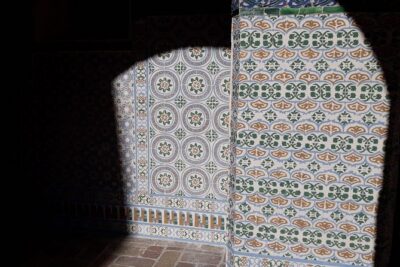
Historical Italica: Half-Day Guided Tour from Seville
Read our review →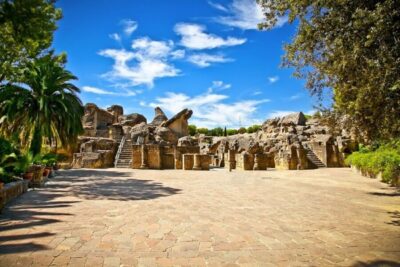
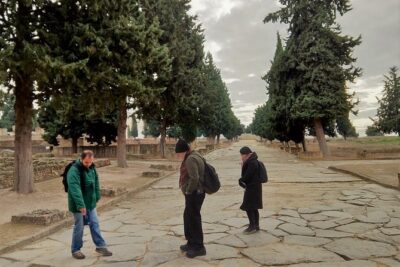
Visit to Italica Roman Ruins Tour tickets included
Read our review →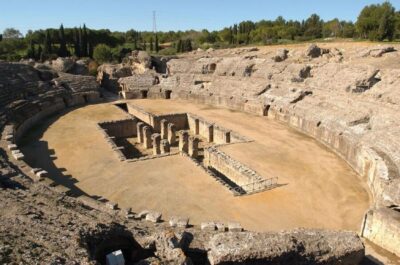
Private hald day tour to the historic roman city of Italica
Read our review →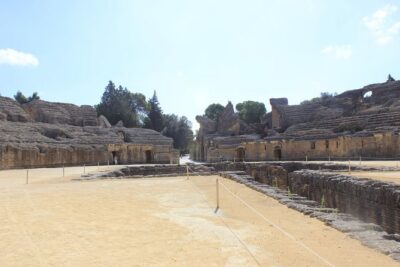
Browse the lists this tour appears in