
Reviewed · SEVILLE FLAMENCO DANCE CLASSES
Castanets for Beginners: Introduction Class (with Dance Demo)
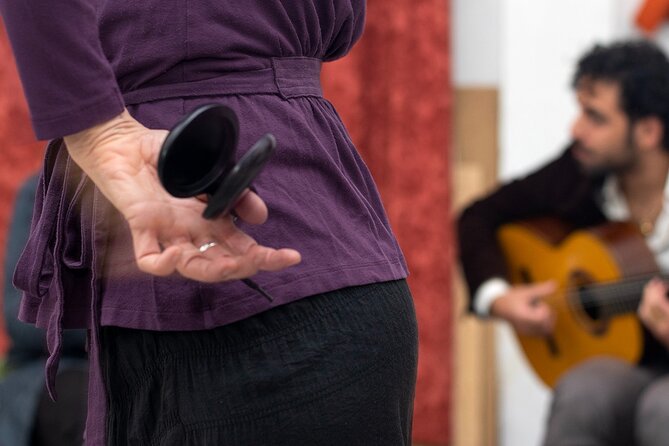
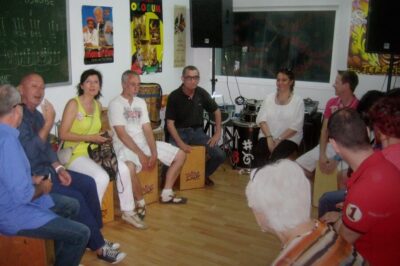
Seville’s castanets are more than a souvenir clacking in a shop window. In this one-hour class, Eva explains how the instrument works, then gets you making simple rhythms with music before finishing with a short flamenco dance demonstration. It is a compact way to connect an old Spanish art to your own hands.
I like the tiny group size, capped at six, and the easy walk from Plaza San Marcos to a studio tucked into an old artisan quarter. I also like that the lesson is practical, not just a talk: you use good-quality castanets and perform basic percussion with accompaniment.
The main consideration is time. One hour gives you a friendly introduction, not mastery. You also need to buy the castanets separately if you decide you want to keep the pair used in class.
Key points at a glance
- A six-person maximum: The small group gives the class an intimate, hands-on feel.
- Eva leads the lesson: She teaches with patience and keeps the exercises accessible to beginners.
- A short walk to a traditional studio: The meeting point is Plaza San Marcos, with the studio only a few minutes away in an old artisan quarter.
- You play with music: The lesson moves beyond explanation, giving you a chance to make basic castanet percussion.
- A dance demonstration closes the class: You see how the instrument fits into flamenco movement.
- The price is $24.08 per person: For an hour of instruction and a demonstration, it is a reasonable add-on for a Seville visit, especially if you enjoy active cultural experiences.
From Plaza San Marcos to a working flamenco studio
The class begins at Plaza San Marcos in Seville’s Casco Antiguo, or old town. This is a useful meeting point because you do not need to hunt for a private studio door in a maze of narrow streets.
From there, you are accompanied on foot to the studio. The walk takes only a few minutes, but the setting changes quickly. The destination is in an old artisan quarter, away from Seville’s main sightseeing routes. That small transition matters: you are not simply entering a generic classroom near a major attraction. You are heading into a more local-feeling part of the old city.
The walk is short enough that it should not affect your schedule, but you should still arrive at the stated meeting point on time. The activity ends back at Plaza San Marcos, so you have a clear place to continue your day afterward.
The studio itself is described as an authentic flamenco space. Do not expect a large stage production or a full evening show. This is a teaching room where the focus stays on the instrument, the lesson, and the connection between castanets and dance.
More Seville Flamenco Dance Classes:
- Seville: Flamenco Dance Class with Optional Costume
★ 4.9 · 1,032 reviews - Flamenco Dance Class in Seville with optional Flamenco Costume
★ 5.0 · 191 reviews - Flamenco Dance Lesson: 60-Minute Class in Seville
★ 4.9 · 81 reviews
Castanets explained without the museum lecture
The first part of the class introduces the instrument itself. Eva covers its specific characteristics, its history, and the ways castanets are used.
That background gives the practical work some meaning. You learn why the instrument produces different sounds and how its role changes when it is paired with dance and music. For a beginner, this is useful because castanets can look simple while being surprisingly demanding to control.
You will not need prior musical or dance experience. The class is designed for beginners, and the basic exercises are meant to be approachable. That makes it a good choice if you have watched flamenco but never tried to take part in it.
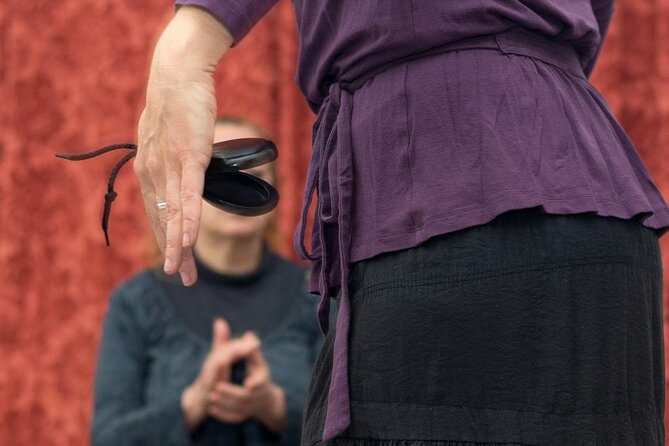
The instruction also helps prevent a common mistake: treating castanets as two wooden shells to click together at random. The point is not simply to make noise. The lesson introduces the hand positions and repeated patterns that give the instrument its distinctive rhythm.
Eva’s teaching style is one of the strongest reasons to consider this class. Her approach is patient and engaging, and the exercises are presented as achievable rather than intimidating. You get room to try, miss a beat, and try again.
Learning the basic technique
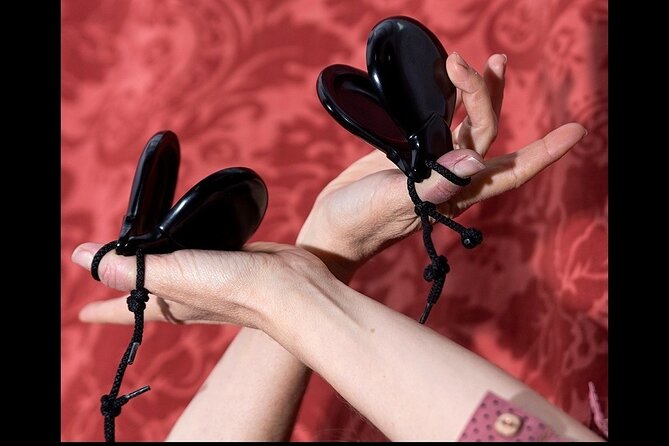
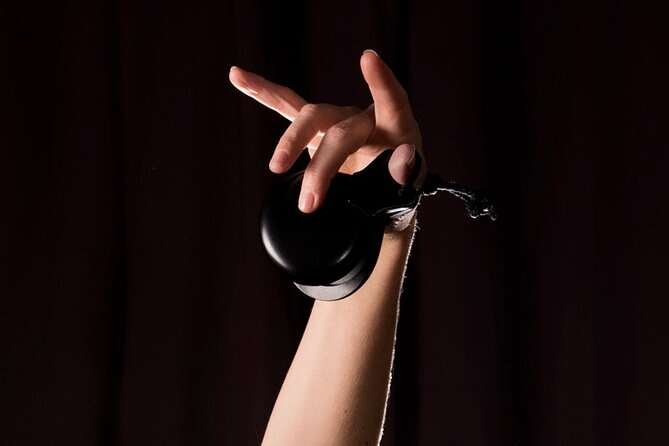
After the introduction, you begin practicing. The teacher provides good-quality castanets for use during the workshop, so you do not need to bring your own instrument.
This is an important detail for first-timers. Cheap souvenir castanets can be awkward, poorly matched, or difficult to handle. Using a better pair lets you focus on technique rather than fighting the equipment.
The class is not designed to turn you into a professional performer in an hour. Instead, you work on simple actions and rhythms that let you understand the feel of the instrument. The pace should suit someone who wants a cultural activity without a long commitment.
The small group limit helps here. With no more than six participants, the teacher can keep an eye on the basic movements and guide the group through the exercises. You are less likely to feel lost than you might in a large workshop.
You should expect some coordination work. Castanets involve timing, finger movement, and listening. Even basic patterns can require concentration, which is part of the fun. The class gives you a modest challenge without turning the hour into a serious music lesson.
If you fall in love with the instrument, remember that the castanets used in class are not included for purchase. The activity provides them for the workshop, but buying a pair afterward is a separate cost.
Playing along with music
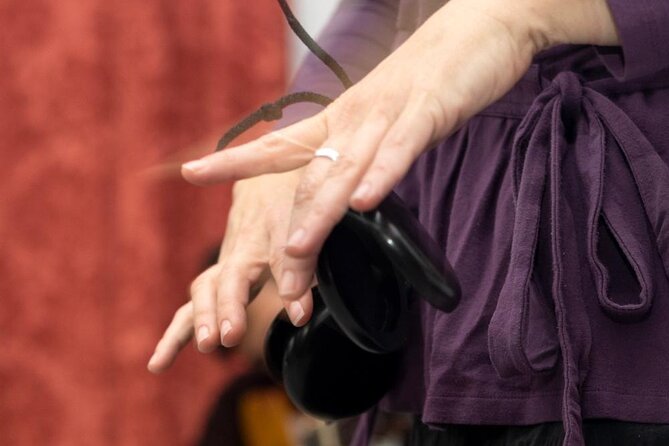
The lesson becomes more engaging when you perform basic castanet percussion with accompanying music. This is the point where the instrument starts to make sense in context.
Playing along gives you a feel for rhythm that a spoken explanation cannot provide. You are not merely hearing about flamenco tradition. You are trying to keep time and respond to music, even at a very simple level.
That practical section also helps you understand why castanets are tied so closely to performance. The sound works as part of a larger rhythm, not as an isolated trick. You hear and feel the difference between tapping without a pattern and playing within musical timing.
Keep your expectations realistic. The class will not produce a polished stage performance from a first-time group. It does give you a brief, good-natured chance to participate, which is more memorable than watching another demonstration from a seat.
For many people, this will be the most enjoyable part of the hour. You get to laugh at the awkward first attempts, settle into the beat, and leave with a better sense of what castanet work demands.
More Workshops in Seville:
- Seville: Spanish Cooking Class with Dinner
★ 4.9 · 900 reviews - Spanish Cooking Class & Triana Market Tour in Sevilla
★ 5.0 · 760 reviews - Seville: 3.5-Hour Spanish Cooking Class & Triana Market Tour
★ 4.9 · 751 reviews - Seville: Paddle Surf Route and Class
★ 5.0 · 346 reviews
The final dance demonstration
The session ends with a short demonstration showing castanets used with dance. This gives you the missing piece: how the instrument fits into a flamenco performance.
Seeing the castanets paired with movement makes the earlier instruction easier to appreciate. The hand technique is not separate from the dancer’s posture, rhythm, and footwork. The demonstration shows how much more control is involved when the instrument becomes part of a complete performance.
It is important to understand the scale of this finale. You are receiving a short dance demonstration, not attending a full-length flamenco show. If your main goal is a major evening performance with singers, musicians, and extended choreography, you will need to arrange that separately.
Still, the short format works well within a one-hour class. It ends the lesson with something visual and theatrical, while keeping the focus on what you have just learned.
One useful tip is to treat the demonstration as a reason to seek out a local flamenco show later in your Seville visit. Seeing the castanets up close first may help you notice details that would otherwise pass quickly from a theater seat.
What the $24.08 price gives you
At $24.08 per person, this is priced as a short cultural workshop rather than a major attraction. You are paying for about an hour of instruction, access to good-quality castanets during the class, accompaniment for basic percussion, and a short dance demonstration.
I think the value is strongest if you want an active experience. A conventional sightseeing stop can give you information about Seville, but this class asks you to participate. You leave with a physical memory of the city, not just another set of photographs.
The cost is also easier to justify because the group is limited to six. Small classes usually offer more direct contact with the teacher than large demonstrations, and Eva’s patient approach makes that especially useful for beginners.
The value is weaker if you already play castanets or want an advanced dance lesson. The class covers basic techniques and general background, so experienced performers may find the content too simple.
You should also add the possible cost of buying castanets if you want your own pair. The instrument is available for use during the workshop, but it is not part of the activity price.
Who will enjoy this Seville class
This experience suits you if you want to understand flamenco through participation rather than observation. It is a good fit for first-time visitors, couples, families with an interest in music, and anyone looking for a short activity between larger sightseeing plans.
It also works well for people who feel hesitant about dance classes. You are not signing up for a full dance lesson. The focus is on castanets, with the dance element provided as a demonstration at the end.
The class should appeal to anyone interested in traditional Spanish instruments. You get a little history, a little technique, music, and a live example, all within a compact schedule.
It may not suit you if you want a full flamenco show, a long workshop, or formal musical training. The class is introductory by design. Its strength is accessibility, not depth.
The small group makes it a sensible option for anyone who prefers a quieter lesson. With a maximum of six participants, it should feel more personal than a large group activity, though the exact energy will depend on who is booked for your time.
Practical details that shape the experience
The activity is offered in English, which makes the instruction accessible to English-speaking participants. Confirmation is provided when you book, and mobile tickets are available.
The meeting point is Plaza San Marcos, Casco Antiguo, 41003 Sevilla, Spain. The group returns to this same point at the end, giving you a simple start and finish.
The class is near public transportation, and most people can participate. Service animals are allowed. No special skill level is required because the workshop is built for beginners.
Group discounts are available, which may help if you are arranging the activity with several people. Since the maximum group size is six, you should not assume that a discount means a large organized class.
The activity is booked, on average, 14 days ahead. That is a useful planning clue if your Seville dates are fixed, especially because the group is small. Booking earlier may be sensible during busy travel periods.
Free cancellation is available up to 24 hours before the start time for a full refund. Changes made less than 24 hours before the start are not accepted, and cancellations inside that window are not refunded. The policy also says the activity requires good weather. If poor weather causes a cancellation, you are offered another date or a full refund.
Why the small size matters
A maximum of six people changes the feel of a beginner class. You have a better chance of hearing the teacher clearly, following the rhythm, and getting help when your fingers do not cooperate.
It also keeps the workshop from feeling like a staged tourist exercise. The setting is still organized, but the group is small enough for real interaction. Eva’s teaching style is described as patient and engaging, which matters when the first attempts sound less like flamenco and more like a box of loose wooden pieces.
The small group also makes this a reasonable choice for a private-feeling outing without the cost of a private lesson. You still share the class, but the number of participants remains limited.
That said, a small class is not automatically better for everyone. If you enjoy a lively crowd and prefer to blend into a larger group, this quieter format may feel more focused than you want.
Is Castanets for Beginners worth booking?
I would book this class if you want a short, hands-on introduction to Seville’s flamenco culture. The combination of Eva’s patient teaching, a maximum of six participants, good-quality practice castanets, music, and a closing dance demonstration gives the $24.08 price solid value.
Book it especially if you are curious about local performance traditions but do not want to commit to a full dance course. You will learn the basics, make some music, and see how castanets work with dance.
Skip it if your priority is a full evening flamenco production or advanced instruction. This is an introduction, and its one-hour format keeps it light. For a first step into the subject, though, it offers a friendly and practical way to hear, handle, and understand one of Spain’s most recognizable instruments.
FAQ
Where does the castanet class begin?
The activity begins at Plaza San Marcos in Seville’s Casco Antiguo, at 41003 Sevilla, Spain.
Where does the activity end?
The class ends back at the meeting point, Plaza San Marcos.
How long does the experience last?
The activity lasts approximately one hour.
Is the class offered in English?
Yes. The activity is offered in English.
How many people can join the class?
The class has a maximum of six participants.
Do I need to bring castanets?
No. The teacher provides good-quality castanets for use during the workshop.
Can I keep or buy the castanets used in class?
The purchase of the castanets is not included in the activity price. If you want to buy the instrument, that is a separate purchase.
What happens if the activity is canceled because of poor weather?
If poor weather causes a cancellation, you will be offered a different date or a full refund.
Just added around Seville
- The Villages of Andalusia: Full-Day Trip from Seville★ 4.8 · 19 reviews
- From Seville: White Villages Tour★ 5.0 · 9 reviews
- White Villages & Ronda 2-Days Trip & Overnight Stay★ 4.6 · 5 reviews
- Your Photo Story in Seville★ 5.0 · 16 reviews
- Triana Market Tapas Tour★ 4.9 · 12 reviews
- Seville: Guided visit of the Casa de Pilatos with entrance tickets★ 4.3 · 18 reviews
- Wine tourism, visit to a traditional winery and wine tasting★ 5.0 · 3 reviews
- Yoga at María Luisa Park in Seville★ 5.0 · 17 reviews
Seville Flamenco Dance Classes, compared.
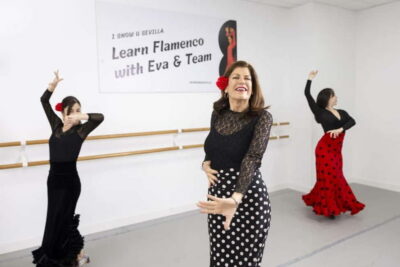
Flamenco Dance Class in Seville with optional Flamenco Costume
Read our review →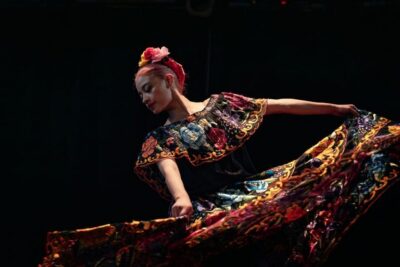
Flamenco Dance Lesson: 60-Minute Class in Seville
Read our review →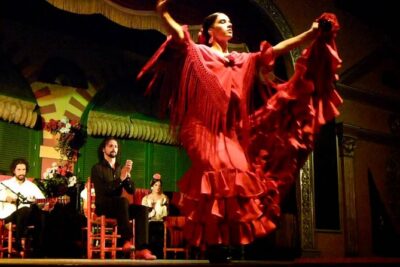
Flamenco Dance Lesson with Optional Show in Seville
Read our review →
Learn to Dance Flamenco from Zero: Fun Beginners’ Dance Class
Read our review →
Browse the lists this tour appears in