
Reviewed · SEVILLE JEWISH QUARTER TOURS
Seville : Jewish Quarter & Santa Cruz Walking Tour
Seville’s Jewish Quarter is best understood on foot, where a narrow lane can reveal a former synagogue, a royal tobacco factory, or a story tied to Spain’s Golden Age. This two-hour route links Santa Cruz with major sights and lesser-known corners, giving you a useful first look at how Jewish, Christian, and other communities shaped the city.
I like the former synagogue at Santa María la Blanca, especially because the church’s present form shows how Seville’s buildings changed hands and purpose. I also like the practical side: guides such as Virginia, Sarah, Francesco, Rossella, and Pedro have been praised for clear explanations, local advice, and adjusting the walk to what each group wants to see.
The main thing to check before booking is the group setup. The tour is described both as a small group walk and as a private, exclusive experience, while the price is listed at $22 per person. Confirm the exact option, transport details, and what is included when you reserve.
Key points to know before you go
- Santa Cruz is the heart of the walk: You’ll visit its squares, lanes, former synagogue, and old Jewish Quarter sites.
- The route mixes famous and less obvious sights: Expect Plaza del Triunfo and the University of Seville alongside Calle Susona and Plaza Alfaro.
- Guides shape the experience: English, Spanish, French, and Italian are available, with customization offered.
- The walk goes beyond Jewish history: You’ll also hear about Don Juan, the Golden Age, the Ibero-American Exhibition, and Seville’s public spaces.
- Two hours moves quickly: You cover many stops, so this is more about orientation and stories than long visits inside buildings.
- The price can be good value: At $22 per person, it is reasonable for a focused local walk, but confirm whether your booking is shared or private.
Starting near Hotel Fernando III in Santa Cruz
The meeting point is in front of Hotel Fernando III on Calle San José, 37. This puts you right at the edge of Santa Cruz, a sensible place to begin because the quarter rewards slow walking and close attention.
I would arrive a few minutes early. The route includes narrow streets and several short stops, and a late start could be awkward if your guide has already moved into the lanes. The walk is listed as wheelchair accessible, though the old quarter’s tight streets may still make the pace and exact path worth confirming in advance.
This tour is conducted in English, Spanish, French, or Italian. That language range is useful for families and mixed-language groups, and the guide can offer advice about other things to do in Seville after the walk.
The experience is listed as two hours, with starting times depending on availability. That makes it easy to fit into a morning or afternoon, but it also means the route has to keep moving. You should expect short explanations at many places rather than a long interior visit at every stop.
More Seville Jewish Quarter Tours:
- Seville: Small-Group Jewish Quarter Discovery Walking Tour
★ 4.9 · 499 reviews - Seville: 1-Hour Walking Tour Barrio de Santa Cruz
★ 4.5 · 131 reviews - Private Tour Jewish Quarter, center and Plaza de España
★ 5.0 · 127 reviews
Santa Cruz and the memory of coexistence
The walk begins in Santa Cruz, Seville’s most atmospheric historic quarter. At Plaza de Santa Cruz, your guide explains how different communities lived alongside one another and how the square fits into the story of the city.
The value here is context. Santa Cruz can look like a postcard of white walls, flower-filled balconies, and narrow lanes, but the guide helps you see it as a place shaped by changing communities, religious buildings, and political power. Without that background, you may simply wander through attractive streets without understanding why the area matters.
The route then continues toward Plaza de los Refinadores. Here you hear about the walls and gates that once marked the Sephardic quarter. The physical remains are not presented as a complete museum site, so the guide’s explanation matters. You are learning to read traces of a district that changed over time rather than walking through a preserved Jewish town.
The square also connects to the Spanish Golden Age through the statue of Don Juan. This is a neat shift in subject. The walk does not treat Jewish heritage as an isolated theme, but places it beside Seville’s literature, legends, and public monuments.
Santa María la Blanca, a synagogue turned church
One of the most important stops is the Iglesia de Santa María la Blanca. The building was formerly a synagogue and later became a church, making it a direct example of Seville’s changing religious identity.
Your guide points out the building’s past and explains its place in the Jewish Quarter. Inside, you can admire works by Murillo. The combination is especially useful for understanding how one building can carry several layers of Seville’s past, even when its current identity is different from its original one.
The exact amount of time spent inside is not specified, so I would not treat this as a full art visit. It is one stop within a compact walking route. Still, it gives the tour a strong anchor: you are not hearing only about streets and vanished walls, but also seeing a surviving structure with more than one chapter.
If you want extensive time with Murillo’s art or a close study of the church’s architecture, you may need a separate visit. On this walk, the guide’s interpretation is the main benefit.
Plaza Alfaro and Calle Susona
From Santa María la Blanca, the route moves through Plaza Alfaro and Calle Susona. These stops show why a walking tour can add something that a list of major sights cannot.
Plaza Alfaro is a courtyard-like public space where your guide explains more about the quarter’s past. The surroundings are part of the lesson: enclosed squares, small passages, and changes in scale help you picture how people moved through the old district.
Calle Susona brings another story connected with Seville’s Jewish community. You hear about the history attached to the street and the people who lived in this part of the city. This is where the tour’s storytelling matters most, since the lane itself may not look like a major attraction on a map.
I like this section because it slows the pace of sightseeing. You are not simply checking off a cathedral, tower, or palace. You are following the shape of an old neighborhood, where the route itself helps explain daily life and community boundaries.
At the same time, you should keep expectations realistic. Some of these locations are public streets and small plazas, not formal attractions with exhibits. Their interest comes from the guide’s account and from seeing the setting in person.
More Walking Tours in Seville:
- Seville: Small-Group City Highlights Walking Tour
★ 5.0 · 1,204 reviews - Cultural Walking Tour of Seville Monumental
★ 5.0 · 861 reviews - Seville: Tapas, Taverns, and History Walking Tour
★ 4.9 · 676 reviews - Seville: Tapas, Taverns and History Guided Walking Tour
★ 4.9 · 515 reviews
Plaza de Doña Elvira and the view at Plaza del Triunfo
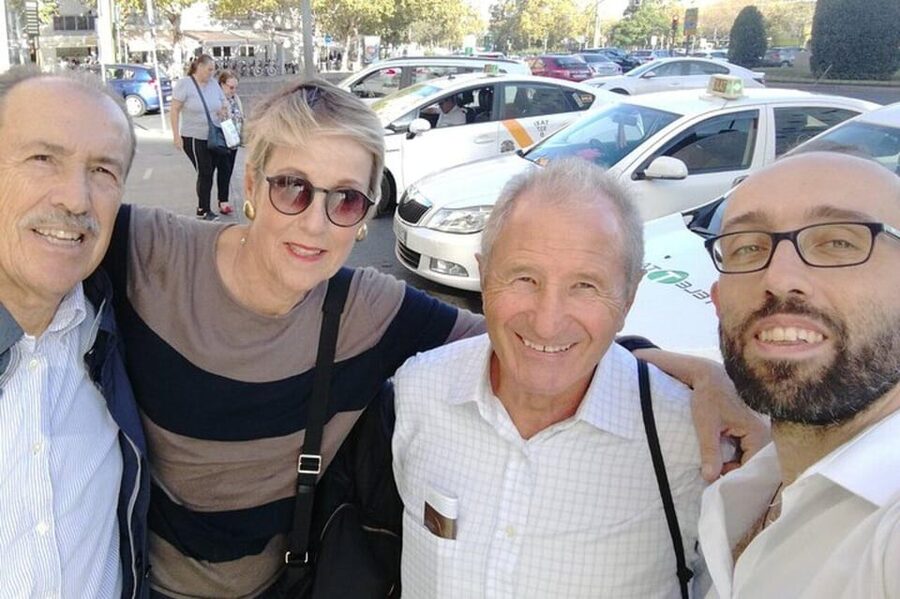
Plaza de Doña Elvira adds another classic Santa Cruz scene to the route. Its small scale and traditional appearance make it a good place to pause before the tour heads toward the grander civic spaces around the cathedral area.
The walk then reaches Plaza del Triunfo, where you get broad views and a stronger sense of Seville’s major monuments. This is one of the points where the tour shifts from the intimate Jewish Quarter to the city’s grand public face.
I find that contrast useful. You begin among lanes and former community boundaries, then reach an open square tied to Seville’s larger religious and political landmarks. The guide can help connect those two views of the city instead of leaving you with disconnected snapshots.
The route does not list a dedicated cathedral or Alcázar entry. You should therefore see Plaza del Triunfo as an outside orientation stop, not as a ticketed visit to the monuments around it. That keeps the tour moving and avoids the cost and time of admissions, but it also limits how much detail you can get inside the main buildings.
Puerta de Jerez and Seville’s changing public face
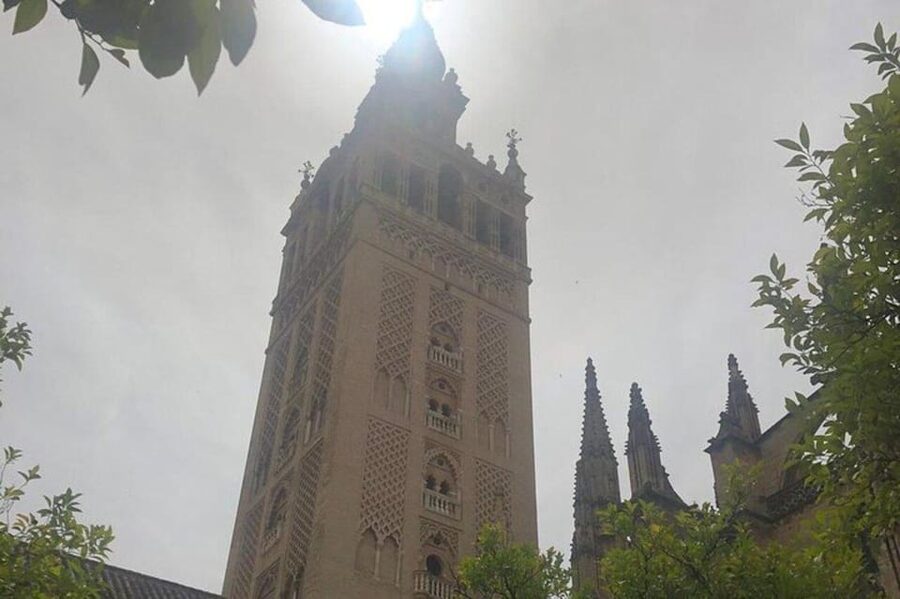
At Puerta de Jerez, the focus turns toward Seville’s growth and later public projects. Your guide explains the city’s transformation during the Ibero-American Exposition.
This part adds useful balance. The tour begins with medieval and early modern communities, then moves into the way Seville presented itself to the wider world in the twentieth century. Puerta de Jerez works as a link between the historic center and the grand avenues leading toward María Luisa Park.
You also hear about the Torre del Oro. The tower is a key Seville landmark, and its story helps place the city beside the Guadalquivir River and its long role in trade, defense, and movement. The route information does not say that the tour enters the tower, so expect to discuss and view it as part of the city walk.
This is a good moment to ask your guide practical questions about the riverfront, nearby sights, and places to visit later. One of the tour’s stated benefits is local advice, and the walk gives you several chances to turn that advice into a useful Seville plan.
The old Tobacco Factory and the University of Seville
The University of Seville occupies the former Royal Tobacco Factory. That gives the stop an unusual mix of architecture, labor history, education, and literature.
Your guide explains the building’s literary connections and its place in the city. I like this stop because it moves beyond the usual royal and religious sights. A former industrial building now used by a university shows how Seville keeps reusing important spaces.
The building’s scale also changes your view of the city. Santa Cruz feels intimate and enclosed, while the Tobacco Factory represents a much larger institution tied to work and state power. You get a wider picture of Seville’s past without leaving the walking route.
Again, the available information does not promise an interior tour of the university. Plan to hear about the building and see it as part of the route rather than expecting a full campus visit. If you want to explore inside, ask the guide what access is possible during your chosen time.
María Luisa Park and the Ibero-American Exhibition
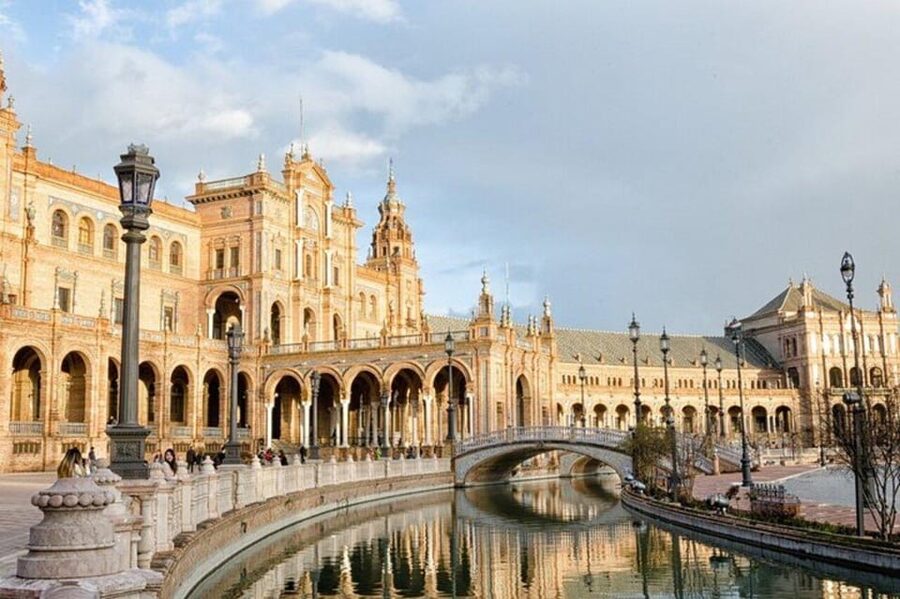
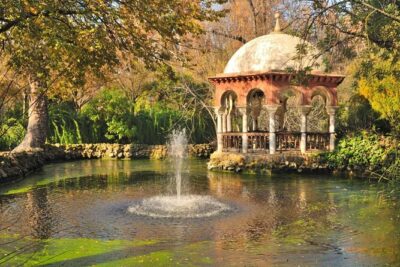
The final major stop is Parque de María Luisa. The park was designed by the French architect Forestier, and the guide explains its history and its connection with the Ibero-American Exhibition.
This gives the tour a calm finish after the narrow streets of Santa Cruz. The park also helps explain how Seville used gardens, public spaces, and exhibition buildings to present itself during a period of international attention.
I like ending here because the route gains a clear sense of movement. You start in a compact historic quarter, pass through plazas and civic landmarks, and finish in a large park tied to modern city planning and international events.
The stop is still part of a two-hour walk, so do not expect a long park stroll. You will get an introduction to the design and history, then can return later if you want more time among the paths and exhibition architecture. The tour is useful as a first orientation, especially if María Luisa Park is on your independent sightseeing list.
What the guides add to the walk
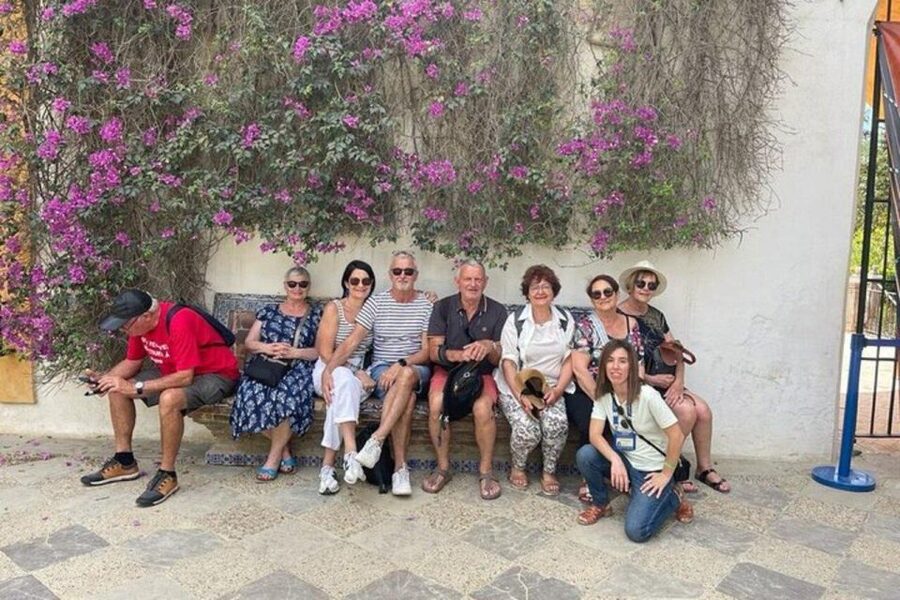
The strongest pattern in the feedback is guide quality. Virginia was praised for taking a route away from the usual path and explaining the city throughout. Sarah was described as prepared, kind, and so helpful that she met the group near its accommodation.
Francesco received especially strong praise for working with a group that had already seen Seville’s main attractions. He added stories and lesser-known details, listened to requests, and helped the group see another side of the city. That is important if you are not taking this on your first hour in Seville.
Rossella was described as prepared and empathetic, while Pedro was praised for humor, information, and generous use of time. Andrea’s experience also highlights the practical value of covering many places in two hours and receiving useful local advice.
These names do not guarantee which guide you will receive. They do show the kind of guide that suits this tour best: someone who can explain history, answer questions, adjust the focus, and keep the walk friendly rather than formal.
Price, timing, and who gets the best value
At $22 per person, the tour offers solid value if you want a compact introduction to Seville’s Jewish Quarter and Santa Cruz. You are paying for a guide who connects many separate places, not for admission to a major monument or a long museum visit.
The value rises if you are new to Seville and want to understand the city before exploring alone. It also works well if you have already seen the biggest sights and want stories about streets, courtyards, former community spaces, and city development.
The two-hour length suits a first afternoon, a short stay, or anyone who prefers a focused walk. It may feel rushed if you want to linger at every square or spend a long time inside Santa María la Blanca.
The booking details need a little care. The experience is described as a private and exclusive tour with customization, but it is also presented as a group walking tour with a small-group format. The inclusions and exclusions repeat the same wording, which does not clarify the arrangement. Ask the provider to confirm the group size, whether public transport is part of your chosen option, and whether the $22 price applies to a shared or private booking.
You can cancel up to 24 hours ahead for a full refund, and reserve now while paying later. Those terms help if your Seville schedule is still changing. Private groups are available, and the tour is listed as wheelchair accessible.
Should you book the Jewish Quarter and Santa Cruz walk?
I would book this tour if you want historical context in a short format, especially before visiting Seville’s main monuments on your own. It is also a good choice for repeat visitors who have already seen the headline sights and want a street-level look at Santa Cruz.
I would skip it if your main goal is extended time inside museums, churches, or the Alcázar. This is an outdoor walking introduction, with several brief stops and a broad route from the Jewish Quarter to María Luisa Park.
Before paying, confirm the private versus shared format and the exact transport arrangements. If those details fit your booking, $22 is a fair price for a guide-led route that combines Jewish heritage, literature, public spaces, and the changing shape of Seville.
FAQ
How long does the tour last?
The walking tour lasts two hours. Starting times depend on availability.
Where do I meet the guide?
The meeting point is in front of Hotel Fernando III at C. San José, 37, in Seville.
Which languages are available?
The live guide is available in English, Spanish, French, and Italian.
Is the tour private or shared?
The activity information says that a private and exclusive group is available, while other details describe a group or small-group walking tour. Confirm the exact format when booking.
Is the tour wheelchair accessible?
Yes. The activity is listed as wheelchair accessible.
Can I cancel and receive a refund?
Yes. You can cancel up to 24 hours in advance for a full refund. You can also reserve now and pay later.
Just added around Seville
- The Villages of Andalusia: Full-Day Trip from Seville★ 4.8 · 19 reviews
- From Seville: White Villages Tour★ 5.0 · 9 reviews
- White Villages & Ronda 2-Days Trip & Overnight Stay★ 4.6 · 5 reviews
- Your Photo Story in Seville★ 5.0 · 16 reviews
- Triana Market Tapas Tour★ 4.9 · 12 reviews
- Seville: Guided visit of the Casa de Pilatos with entrance tickets★ 4.3 · 18 reviews
- From Seville: Wine Tourism Half Day Tour★ 4.0 · 17 reviews
- Wine tourism, visit to a traditional winery and wine tasting★ 5.0 · 3 reviews
Seville Jewish Quarter Tours, compared.
Small-Group Jewish Quarter Discovery Walking Tour
Read our review →
Small Group Jewish Quarter Tour with Tapas & Drinks
Read our review →
Seville Jewish Quarter Small Group Tour with Tapas and Drinks
Read our review →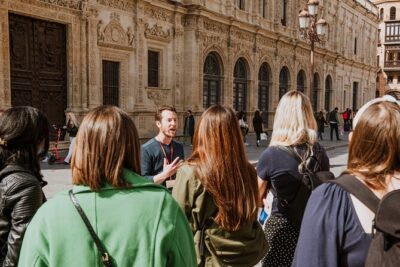
Seville Former Jewish Quarter Walking Tour: Santa Cruz
Read our review →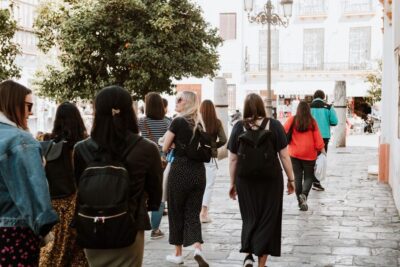
Seville Jewish Quarter walking tour: Santa Cruz District
Read our review →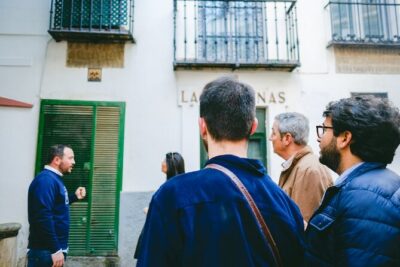
Seville Jewish Quarter Small-Group Walking Tour: History & Gems
Read our review →Browse the lists this tour appears in