
Reviewed · SEVILLE PALACE AND HISTORIC HOUSE TOURS
Seville: Salvador Church, Casa Pilatos, and Metropol Tour
Seville’s artistic story comes together neatly on this walking tour, from the former mosque beneath Church El Salvador to the Mudejar courtyards of Casa Pilatos and the modern curves of Las Setas. You see three very different faces of the city without spending half a day on buses.
I like the focus on Holy Week sculpture and the chance to walk through the old Arabic quarter, where shops sell outfits for the April Fair and the Rocio Pilgrimage. I also like that the price includes entry to both Salvador Church and the ground floor of Casa Pilatos. The main catch is clear: Metropol is viewed from outside, and the upper floors of Casa Pilatos cost extra.
Key points to know
- Three eras in one walk: Follow Seville’s artistic development from Mudejar design through Renaissance, Baroque, Regionalist, and contemporary work.
- Salvador Church has a strong local connection: Its Holy Week sculptures link the building to one of Seville’s most important traditions.
- Casa Pilatos is the tour’s architectural centerpiece: Its tilework, courtyard, and blend of Mudejar and Italian Renaissance styles reward close attention.
- The old Arabic quarter is part of the experience: You walk through an active area with businesses selling clothing for major Andalusian celebrations.
- Las Setas is an exterior finale: The tour ends at the entrance to Metropol, but the structure’s paid areas are not included.
- Small groups can make a difference: Guides such as Miriam, Sergio, and Jesus have been praised for clear explanations and personal attention.
This 2.5-hour walk is built around a simple idea: Seville is not one style. Its churches, palaces, streets, and public spaces show layers of Islamic, Christian, Italian, Baroque, Regionalist, and contemporary influence.
That makes this a good choice if you want more than a quick look at pretty buildings. The guide connects what you see, rather than treating each stop as an isolated monument. You learn why a former mosque became a Christian church, how palace design absorbed Italian ideas, and how modern Seville created its giant wooden mushrooms.
The pace is also useful. You move through the city on foot, with two interior visits and one exterior finale. There is no transportation between stops, so you get a better sense of the old center as a lived-in part of Seville rather than a string of ticket checkpoints.
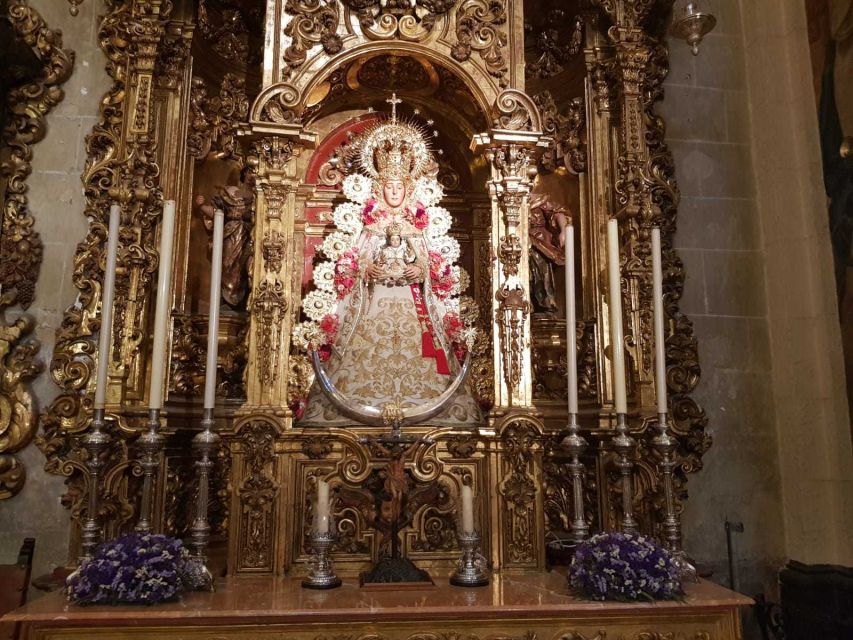
The tour begins with entry to Church El Salvador, one of the most meaningful stops for understanding Seville’s religious art. The building was formerly a mosque, and that earlier use gives the visit extra weight. You are not simply entering another ornate church. You are looking at a place shaped by a change in religion, architecture, and civic identity.
Inside, the guide focuses on sculptures associated with Seville’s Holy Week processions. These are not minor decorative pieces. Holy Week is a major part of the city’s public life, and the sculptures help you understand how religious art leaves the church and enters the streets.
I would give this stop your full attention, especially if you are interested in sculpture, local traditions, or the way festivals shape a city. A guide can point out details that are easy to miss when you visit independently, including how the works function within processions and devotion.
The church is also the clearest place to begin the tour’s Mudejar-to-modern storyline. You will not see every period in one room, but the building opens the door to Seville’s layered past. If your main interest is paintings or museum collections, the emphasis here is different. This is a church visit centered on architecture, sculpture, and tradition.
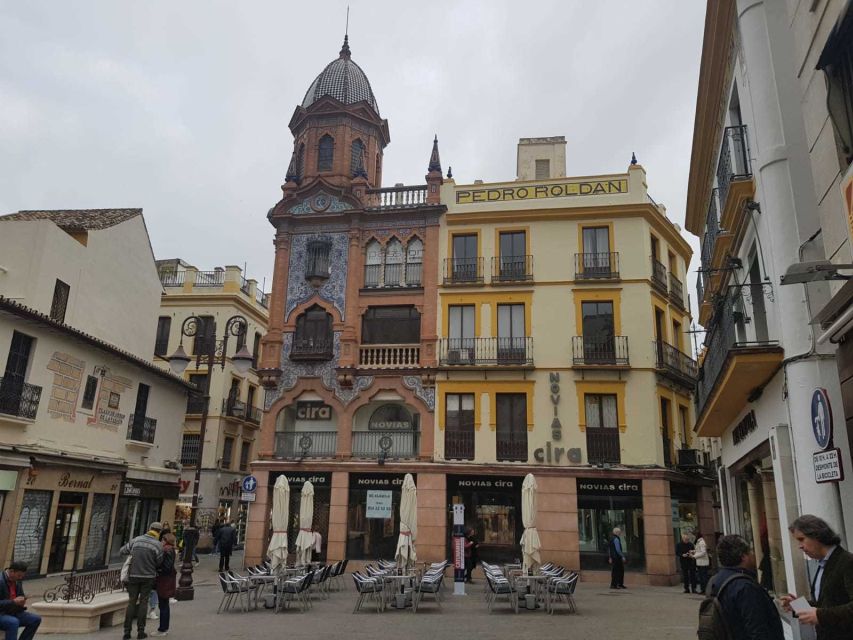
After the church, you walk through an area described as the heart of Arabic Seville. The value here is not only in what you see on a landmark facade. It is in the setting around you, where older urban patterns meet everyday shops and local commerce.
The tour includes a look at businesses selling clothing for the April Fair, the Rocio Pilgrimage, and social occasions. That detail gives the walk a useful local angle. You see how Seville’s traditions remain part of ordinary shopping and city life, not just staged displays for visitors.
This portion also gives your guide room to explain how the city changed over time. Seville’s artistic development did not happen in a clean sequence. Mudejar work reflects Islamic design traditions under Christian rule, while later buildings brought in Renaissance ideas from Italy. Baroque decoration then added another layer, followed much later by Regionalist and contemporary designs.
The walking is part of the lesson. You move through the historic center instead of viewing Seville from a vehicle, and the short distance between major stops helps the story feel connected. Wear comfortable shoes, as requested for the tour. The experience is not designed for people with mobility impairments, and the entire outing lasts about two and a half hours on foot.
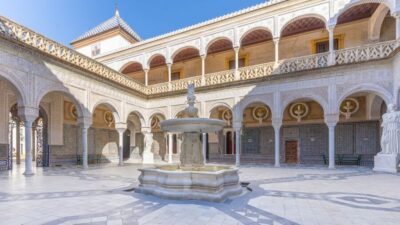
Casa Pilatos is the major architectural stop, and entry to the ground floor is included. This palace is especially valuable because it brings Mudejar and Italian Renaissance influences together in one place.
The tilework is a major reason to visit. Seville is famous for its ceramic traditions, and Casa Pilatos contains what the tour presents as the city’s best collection of tiles. Look beyond the general impression of color. The patterns, surfaces, and arrangement help show how decoration can carry architectural style.
The palace also gives you a useful contrast with Salvador Church. At the church, religious sculpture and a former mosque provide the focus. At Casa Pilatos, you look at palace design, courtyard space, decorative tile, and the meeting of Islamic and Italian ideas.
The included visit covers the ground floor only. That matters when you compare prices or plan the rest of your day. If you want to see the other floors, you will need a separate ticket or arrangement. The ground floor still gives you the main architectural setting, but it is not a full visit to every part of the palace.
This is a stop where a good guide can make a real difference. The details can blur together if you only walk through admiring the tiles. Guides who explain the transition from Mudejar decoration to Renaissance influence help you read the palace rather than simply photograph it.
Several guides named in the supplied information have been especially well received. Miriam was described as clear and capable, while Sergio led a very small tour with enough flexibility to show corners of Seville outside the standard path. Jesus was also praised for strong explanations and an informative approach. Your assigned guide may be different, but the format gives the guide a central role in the experience.
One useful feature of this tour is that it does not stop with medieval or early modern Seville. The guide places the monuments in a longer artistic sequence that includes Renaissance, Baroque, Regionalist, and contemporary styles.
You will not receive a full art-history course in 2.5 hours, but you do get a framework for looking at the city. Mudejar design points to the endurance of Islamic forms. Renaissance influence brings a different approach to proportion and classical ideas. Baroque style adds greater theatrical decoration. Regionalist architecture later draws on local traditions in a more modern setting.
That final category matters because Seville can sometimes be reduced to old palaces, churches, and orange-tree streets. The tour shows that the city also has a modern architectural identity. This keeps the walk from feeling like a parade of monuments with no connection to present-day Seville.
The tour ends at the entrance of the Metropol Building, better known as Las Setas, or the mushrooms. The structure is one of Seville’s most recognizable examples of contemporary architecture, and it makes a sharp contrast with Casa Pilatos.
You see Metropol from outside, and the tour does not include entry. That means you can decide afterward if you want to pay for access to the building’s other areas. Be clear about this when booking: the tour provides the architectural stop and orientation, not a full visit inside Las Setas.
As a finale, it works well. You have just spent the walk looking at older styles, so the modern structure gives you a visual jolt. It also helps you understand Seville as a city that continues to change, rather than a preserved museum set apart from ordinary life.
If Las Setas is your main reason for booking, this tour may not be the best match. You would need to arrange the paid entry separately. If you want a compact history of Seville’s art and architecture, the exterior stop rounds out the tour nicely.
At $46 per person, the price is reasonable if you want a guide-led visit to two important interiors. The fee includes an official guide, entry to Salvador Church, and entry to the ground floor of Casa Pilatos. Those admissions add practical value, especially if you prefer to have the buildings explained as you see them.
The price also buys structure. You do not need to work out how to connect the church, old Arabic quarter, palace, and Metropol area on your own. For a first stay in Seville, that can save time and help you get your bearings in the historic center.
The value is weaker if your priorities are limited to Las Setas or a complete Casa Pilatos visit. Metropol entry is not included, and neither are the upper floors of Casa Pilatos. Food, transportation, and any extra admissions are also your responsibility.
You can choose between a shared and private tour. A private option should appeal if you want to ask many questions or move at your own pace. Small groups can also make the experience more personal. One past tour had only two people, allowing the guide to respond closely to individual interests and point out less obvious corners of Seville.
The tour is offered in English, Spanish, French, and Italian. An audioguide system may be used depending on the number of participants. That can help when the group is larger, but the live guide remains the main source of explanation.
The meeting point is identified by a guide wearing a pink T-shirt. This is a useful detail in a busy city center, so arrive with enough time to spot the correct person. The exact starting time depends on availability.
Free cancellation is available up to 24 hours before the tour, and you can reserve while paying later. Those terms are useful if your Seville schedule is still changing, but the main planning issue is physical: you will be walking for roughly two and a half hours.
Comfortable shoes are a must. The tour is not suitable for people with mobility impairments, and no transportation is provided. Food is not included, so plan a snack or meal before or after the walk rather than expecting a break during the scheduled route.
I would recommend this experience to you if you want a guided introduction to Seville’s architecture and local traditions, especially on a first visit. It covers enough ground to give you context without taking an entire day.
Art and architecture fans will get the most from the sequence of styles. The tour also suits anyone curious about Holy Week, the April Fair, or the Rocio Pilgrimage, since those traditions appear in the church and the surrounding shopping area.
It is less suitable if you dislike walking, need step-free access, or want long independent time at each monument. The tour has a set route and limited duration. Casa Pilatos is visited only on the ground floor, and Las Setas is viewed from outside.
The guide is an important part of the choice. Past tours have included Miriam, Sergio, and Jesus, all praised for clear and informed explanations. You cannot select a guide from the information provided, but the strongest feedback centers on the quality of the guiding, not only the buildings.
Book it if you want a compact, guide-led introduction to Seville’s artistic development, with two included interior visits and a modern architectural finale. The combination of Salvador Church, the old Arabic quarter, Casa Pilatos, and Las Setas gives you more range than a tour focused on one monument.
Think twice if you mainly want to go inside Metropol or explore every floor of Casa Pilatos. Those extras are not included, and the tour’s value rests on its guide, its context, and the two included admissions.
For most first-time visitors who can comfortably walk for 2.5 hours, $46 is a fair price for the route and explanation. Wear good shoes, arrive looking for the pink-shirted guide, and treat Las Setas as the starting point for a separate visit rather than an included attraction.
FAQ
More Las Setas and La Macarena Tours:
- Seville: Setas de Sevilla Entry Ticket
★ 4.6 · 8,901 reviews - Seville: Flamenco Show Ticket at Tablao Flamenco Las Setas
★ 4.8 · 2,214 reviews - Espectáculo Flamenco Tablao “Las Setas”
★ 5.0 · 59 reviews
How long does the tour last?
The walking tour lasts approximately 2.5 hours.
What attractions are included?
The tour includes Church El Salvador, the ground floor of Casa Pilatos, the old Arabic area, and an exterior look at Metropol, also known as Las Setas.
Is entry to Salvador Church included?
Yes. Entry to Salvador Church is included in the tour price.
More Seville Palace and Historic House Tours:
- Seville: Casa de Pilatos Ground Floor Entry Ticket
★ 4.5 · 5,691 reviews - Seville: Flamenco at El Palacio Andaluz with Optional Dinner
★ 4.5 · 1,119 reviews - Granada Day Trip: Alhambra & Nazaries Palaces from Seville
★ 4.5 · 292 reviews - “Las Dueñas” Palace ticket + Audioguide
★ 4.5 · 242 reviews
Is entry to Casa Pilatos included?
Yes. Entry to the ground floor of Casa Pilatos is included. Entry to the other floors is not included.
Can I enter Metropol during the tour?
Metropol entry is not included. The tour ends at the entrance, where you see Las Setas from outside.
What languages are available?
The live tour guide is available in Italian, French, English, and Spanish.
Is the tour shared or private?
You can choose between a shared tour and a private tour.
Where do I meet the guide?
Look for a guide wearing a pink T-shirt at the meeting point.
Is the tour suitable for people with mobility impairments?
No. The activity is not suitable for people with mobility impairments, and you should bring comfortable shoes for the walking route.
Just added around Seville
- The Villages of Andalusia: Full-Day Trip from Seville★ 4.8 · 19 reviews
- From Seville: White Villages Tour★ 5.0 · 9 reviews
- White Villages & Ronda 2-Days Trip & Overnight Stay★ 4.6 · 5 reviews
- Seville: Guided visit of the Casa de Pilatos with entrance tickets★ 4.3 · 18 reviews
- Your Photo Story in Seville★ 5.0 · 16 reviews
- Triana Market Tapas Tour★ 4.9 · 12 reviews
- From Seville: Wine Tourism Half Day Tour★ 4.0 · 17 reviews
- Wine tourism, visit to a traditional winery and wine tasting★ 5.0 · 3 reviews
Seville Palace and Historic House Tours, compared.
Flamenco at El Palacio Andaluz with Optional Dinner
Read our review →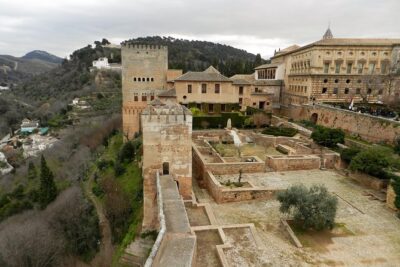
Granada Day Trip: Alhambra & Nazaries Palaces from Seville
Read our review →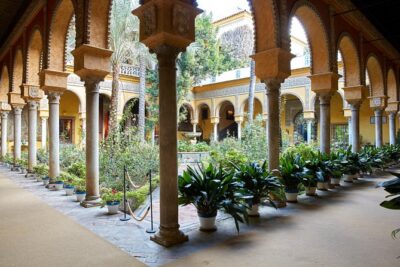
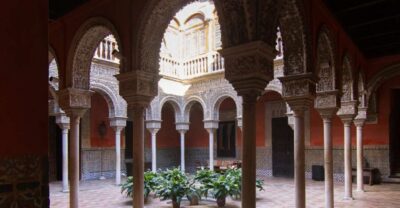
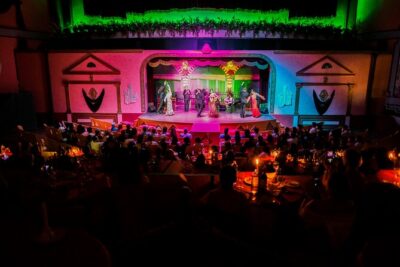
Flamenco Show at El Palacio Andaluz Admission Ticket in Seville
Read our review →
Alhambra Private Tour & Nazaries Palaces from Seville with Pickup
Read our review →
Palacio de Las Dueñas Entry Ticket and Guided Tour
Read our review →Browse the lists this tour appears in