
Reviewed · WORKSHOPS
Seville: Enjoy a class of approach to flamenco
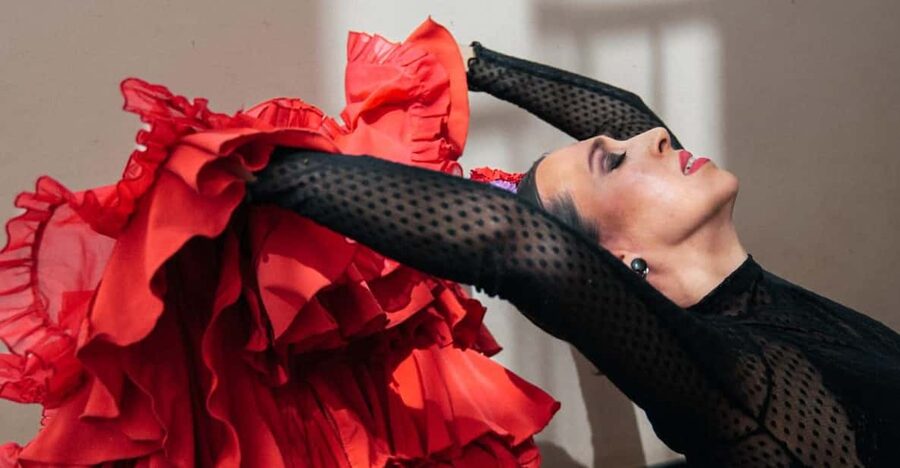
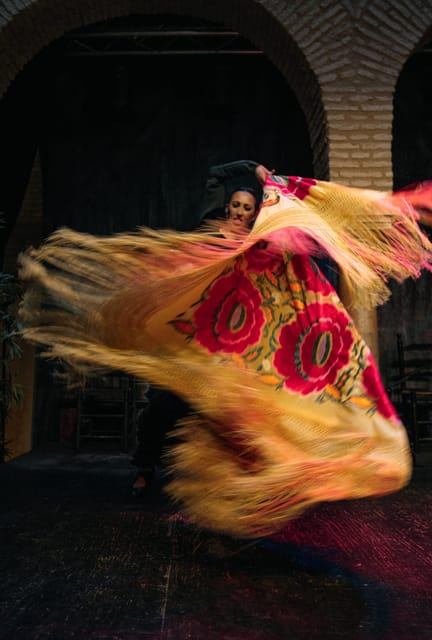
The heart of this Seville experience is simple: you learn flamenco with your own body, not from the sidelines of a performance. In one hour, a dancer guides you through palmas, arm and hand movements, footwork, a call, and a short tango sequence. You also get a little context about how the steps connect with the singing.
I like the focus on participation rather than showmanship, and I like the instructor’s friendly approach. Luna E. Vílchez is repeatedly praised for patience, humor, and careful attention to each person. The class is also a good value at $41, especially if you want a personal taste of flamenco without paying for a full evening performance.
The main consideration is time. One hour is enough for a lively introduction, but not enough to make you comfortable with every step. Flamenco footwork can feel awkward at first, so bring a sense of humor and comfortable shoes.
Key points at a glance
- You learn palmas first: Practice the hand clapping that gives flamenco its pulse.
- The class builds in clear stages: Move from hands and arms to foot marking, a call, and a final sequence.
- Tangos are part of the lesson: You learn a short letter, or combination, for this flamenco style.
- Luna brings patience and humor: Her teaching helps beginners relax when the footwork feels tricky.
- You get cultural context: The class explains how the movements relate to the singing.
- The meeting point is easy to identify: Look near the bicycle rack behind the terrace bar, in the shade.
What this one-hour Seville flamenco class really offers
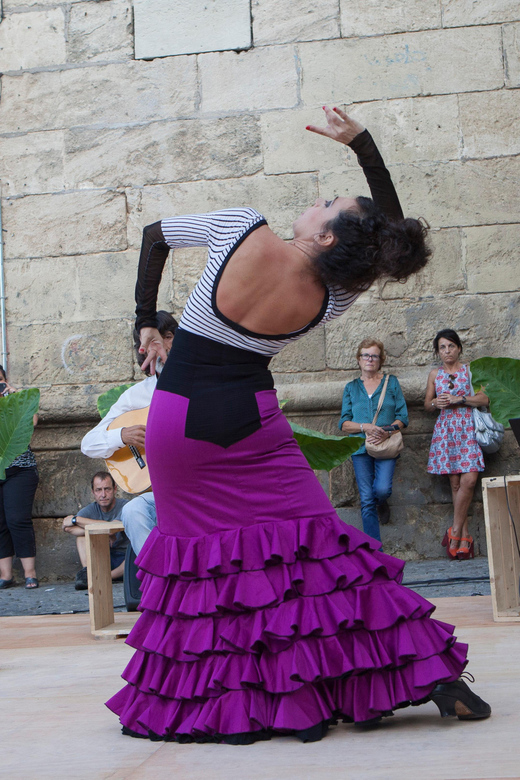
This is not a polished stage show with a short audience participation segment. It is a hands-on introduction to the building blocks of flamenco. You spend the hour trying the movements yourself, with a dancer correcting and encouraging you as you go.
That distinction matters. A performance can show you the drama of flamenco, but a class lets you understand how the rhythm works from the inside. You will clap, move your arms, mark the beat with your feet, and try a short combination. You may not look like a professional by the end, but you will have a better sense of how much control and timing the art requires.
The class is designed for beginners. You do not need previous dance experience, and you do not need to arrive knowing flamenco vocabulary. The tone is built around empathy, laughter, and good humor, which is useful when your hands and feet do not immediately agree.
More Workshops in Seville:
- Seville: Flamenco Dance Class with Optional Costume
★ 4.9 · 1,032 reviews - Seville: Spanish Cooking Class with Dinner
★ 4.9 · 900 reviews - Spanish Cooking Class & Triana Market Tour in Sevilla
★ 5.0 · 760 reviews
Meeting near the plaza and bicycle rack
The meeting point is in a plaza with a bar and terrace. At the back of the plaza is a bicycle parking area. Your instructor waits around the bike rack, in the shade.
That is a useful detail in Seville, where a clear landmark can save time. Look for the terrace bar first, then head toward the bicycle rack behind it. The meeting directions are simple, but allow a little extra time if you are unfamiliar with the plaza.
The exact class setting is described as a dance studio in an artistic neighborhood shared by musicians and dancers. That gives the lesson a more creative setting than a generic conference room. The studio environment also helps the class feel like a working arts activity, rather than a staged tourist exercise.
You should wear comfortable clothing and shoes that let you move. You do not need food or drinks for the class, and neither is included. Since the activity lasts only an hour, it fits neatly into a morning or afternoon in Seville.
Starting with palmas, the pulse of flamenco
The class begins with rhythm through las palmas, the hand clapping used in flamenco. This is a smart place to start because it lets you feel the beat before adding complicated steps.
Palmas are not simply casual claps. Timing, speed, and accents matter. Your first attempts may be uneven, but the exercise gives you a practical sense of flamenco rhythm. It also lets the whole group participate at once, so you are not immediately put on the spot as a solo dancer.
I like this part for another reason: it shows that flamenco is more than foot stamping. The hands, singing, guitar, and dance work together. Once you hear and make the pulse yourself, the later movements have a clearer purpose.
The class uses laughter as part of the teaching method. That does not mean the lesson is careless. It means mistakes are treated as normal, which is exactly what most beginners need.
Adding hand and arm movements
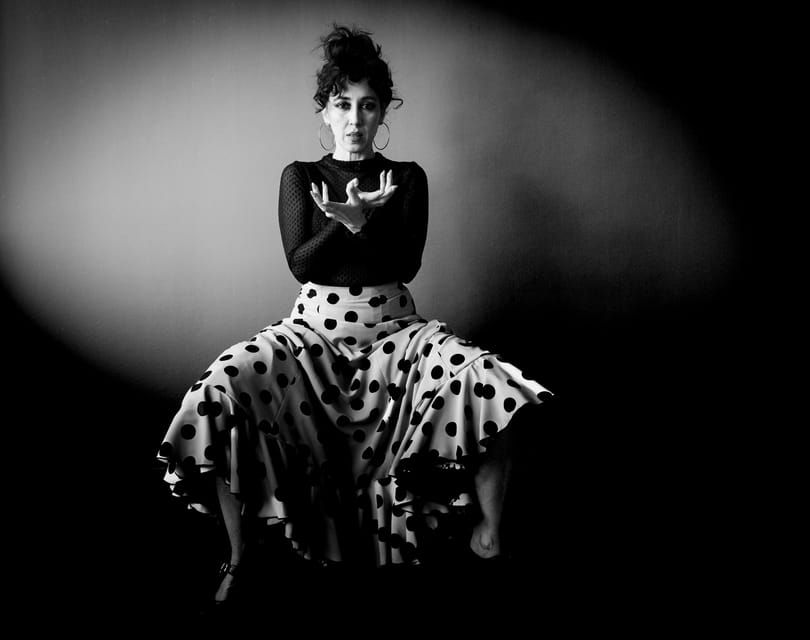
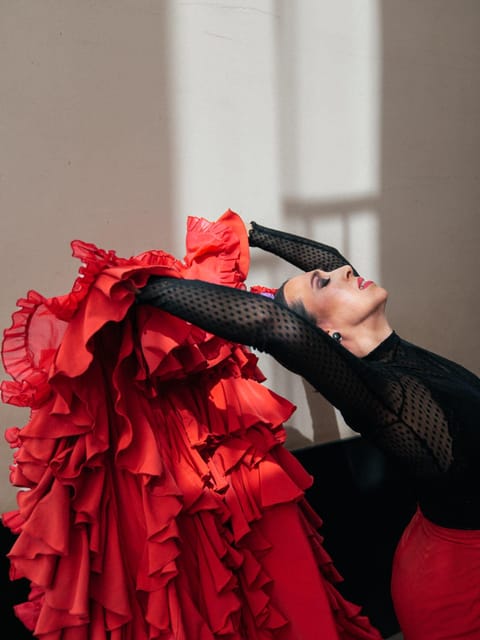
After the rhythm work, you practice the movements of the hands and arms. These gestures are among the most recognizable parts of flamenco, but they are not as easy as they look.
The arms must have shape and control, while the hands make smaller movements that can feel unfamiliar. Your instructor guides you through the positions and motion instead of expecting you to copy a complete dance immediately.
This section is useful for people who want a visual introduction to flamenco but are not ready for fast footwork. You can concentrate on posture, arm lines, and hand movement before the lesson asks your feet to do more.
It also gives you a better sense of why flamenco can look both proud and expressive. The arms are not decoration added at the end. They help communicate the mood of the dance.
A different sort of afternoon in Seville:
- Seville: Royal Alcázar Entry Ticket
★ 4.6 · 28,378 reviews - Seville: Cathedral and La Giralda Entry Ticket
★ 4.5 · 24,592 reviews - Seville: Live Flamenco Dancing Show Ticket at the Theater
★ 4.7 · 16,396 reviews - Seville: 1-Hour Guadalquivir River Sightseeing Eco Cruise
★ 4.2 · 10,281 reviews
Marking with your feet, then making a call
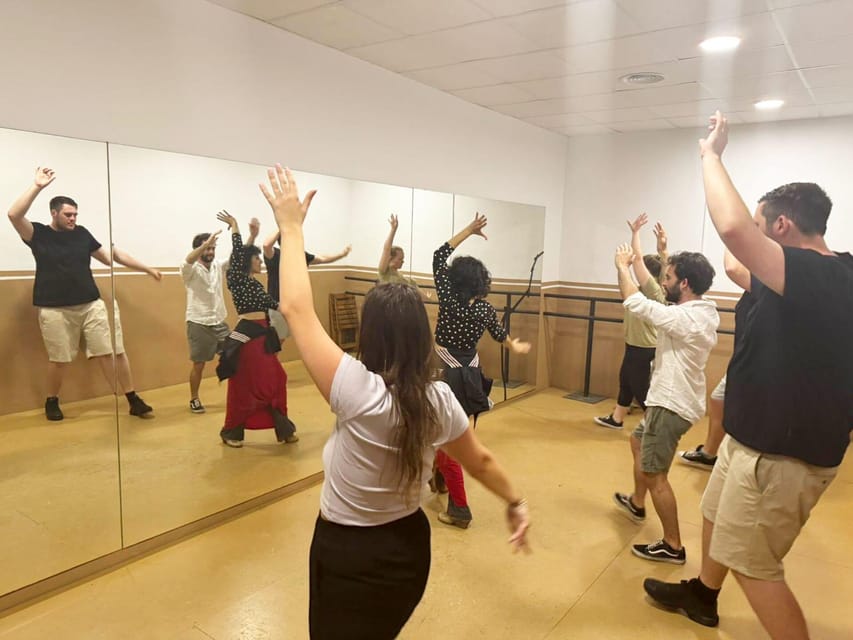
The next step is foot marking. Here you begin to coordinate the beat with your body. The movements are taught as a sequence, so you can work on rhythm and placement rather than simply stamping as hard as possible.
You then practice a llamada, or call. In flamenco, a call signals a change or draws attention within the performance. Learning one gives you a small but meaningful glimpse into how dancers communicate with the musicians and singers.
The class also includes a final remate, or ending movement. That progression, from rhythm to movement to a signal and ending, gives the hour a clear shape. You are not just collecting random steps. You are learning how pieces of flamenco fit together.
This is likely the point where the class feels most challenging. Footwork requires coordination, and a short lesson cannot give every student time to perfect it. The instructor’s patience becomes important here. Luna has been praised for working with each person and helping them get the best from their ability, rather than rushing the group through a fixed routine.
Learning a tango sequence with meaning
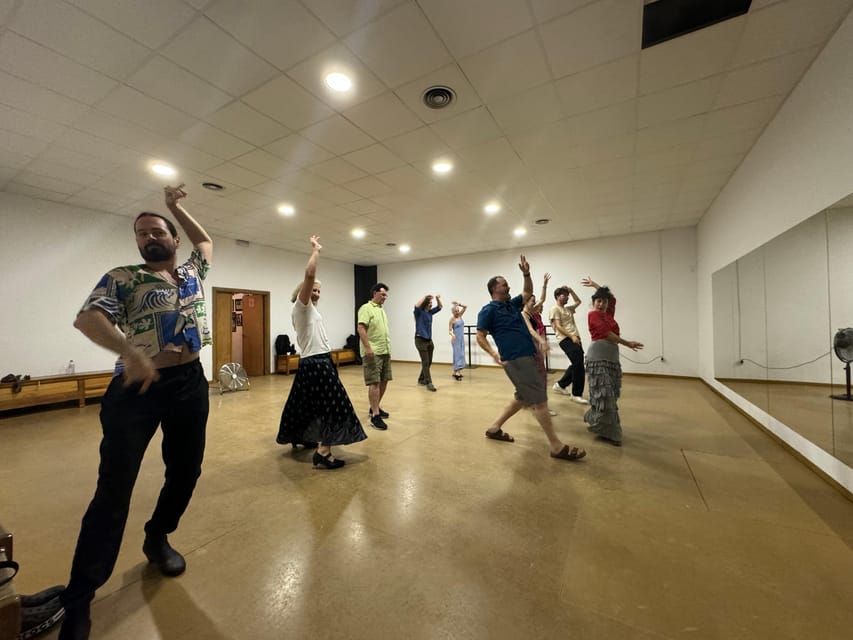
The class teaches a short combination for tangos, one of the flamenco styles. This is not the ballroom tango. Flamenco tangos have their own rhythm and character, and the lesson uses a simple sequence suitable for an introduction.
You practice the pattern with your hands, arms, and feet. The goal is not to perform a long choreography. It is to connect the separate elements you have learned during the class.
A useful part of the lesson is the explanation of how the steps relate to the singing. Flamenco can seem mysterious when you only see a dancer moving to music. Once you understand that a movement, rhythm, and vocal phrase have a relationship, the performance becomes easier to follow.
That context gives the class more value than a basic dance workout. You leave with a little cultural understanding, not just a few steps to copy. Still, expect an introduction rather than a full study of tangos. The class lasts one hour, and the emphasis is on trying the form yourself.
A teacher who keeps beginners at ease
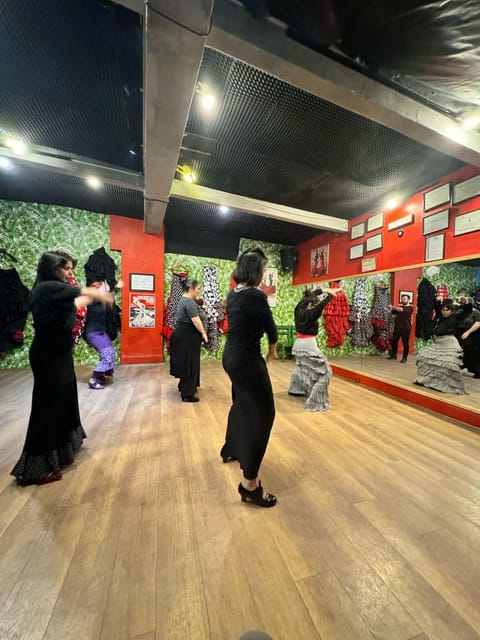
The instructor is Luna E. Vílchez, who teaches in Spanish and English. The provider is listed as DANZAORA Luna E. Vílchez. One experience record also names Elisabeth, so the teaching name may vary by session, but Luna is the instructor most clearly associated with the class.
The strongest pattern in the feedback is personal attention. Luna is described as patient, supportive, professional, and technically strong. She works with each person rather than assuming everyone learns at the same speed.
That matters in a dance class. A confident dancer may want more detail, while a first-time participant may need the rhythm repeated slowly. The class seems suited to both, within the limits of its one-hour format.
The mood is another major strength. You are encouraged to laugh, enjoy the attempt, and keep going when a step goes wrong. That makes this a better choice for a first flamenco lesson than a stern or highly formal workshop.
You should still expect to concentrate. Friendly does not mean effortless. The footwork and coordination may test you, especially if you have never taken a dance class.
How the artistic setting adds to the experience
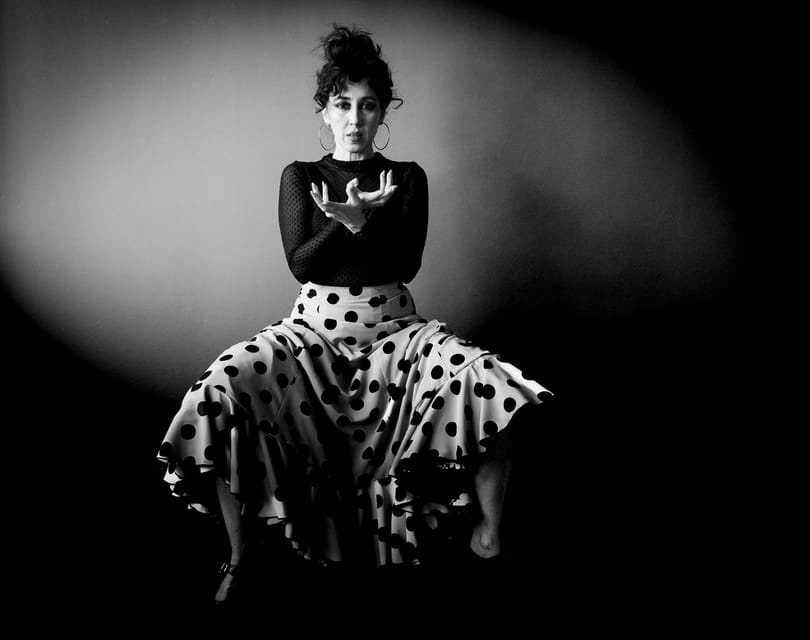
The studio is described as being in an artistic neighborhood with other musicians and dancers. That detail matters because flamenco is a living art, not just a souvenir activity created for visitors.
You may notice the atmosphere of a working creative area before or after the lesson. The setting connects your class with the wider community of music and dance in Seville, even though the activity itself remains focused on instruction.
There are no promises of a performance, live musicians, or a meal, so you should not book this expecting those additions. The value comes from direct teaching and participation. If you want a full evening of singers, guitarists, and dancers, you will need a separate flamenco show.
If you want to understand what the dancer is doing when you attend that show, this class makes a useful companion experience.
Is $41 a fair price for one hour?
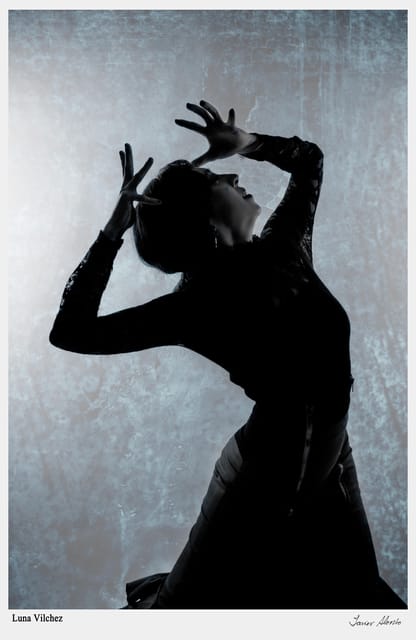
At $41 per person, this is not the cheapest way to spend an hour in Seville. It is also not simply a casual group activity. You are paying for an instructor who teaches a specific art form, offers guidance in two languages, and gives you a structured introduction to rhythm, movement, and flamenco meaning.
The price makes the most sense if you value active participation. You will get more from the class if you are willing to clap, move, make mistakes, and ask questions. If you only want to watch flamenco, a performance may be a better use of your money.
For a short introduction, the format is efficient. The class does not require a full evening, and it can fit around sightseeing or a meal. The instructor’s personal attention also improves the value, especially for a small group or for people who want to ask about the dance.
You should not judge the value by how advanced you become. After one hour, the real benefit is a physical and cultural understanding of flamenco that you could not gain from a photograph or a brief explanation.
Who should book this class
I would recommend it to first-time flamenco students, couples, families with an interest in dance, and small groups looking for something active in Seville. It also suits people who plan to attend a flamenco performance and want to understand the basic structure beforehand.
The class is a good match if you enjoy learning by doing. You will not spend the hour sitting quietly while an instructor talks. You will use your hands, arms, feet, and voice in the rhythm exercises.
It may be less suitable if you want a serious multi-hour dance workshop. The hour goes quickly, and beginners may still be working out the basic coordination when the class ends. It is also not a food experience, a sightseeing tour, or a performance.
The activity is wheelchair accessible, which is useful to know when planning. Comfortable shoes and clothes are the main practical requirements listed.
Booking flexibility and useful planning details
You can cancel up to 24 hours before the activity for a full refund. You can also reserve now and pay later, which helps if your Seville schedule is still changing.
Starting times depend on availability, so check the current schedule before booking. The class lasts one hour, and instruction is available in Spanish and English.
Because the meeting point is outside near a terrace and bicycle rack, pay attention to the location details. The instructor waits around the bike parking area in the shade, not simply at the center of the plaza.
Should you book the Seville flamenco class?
Book it if you want to feel how flamenco works rather than only watch it. The class gives you a clear hour of palmas, arm movements, foot marking, a call, a remate, and a short tango sequence, with enough explanation to connect the movement to the singing.
The best reason to choose it is the teaching style. Luna’s patience, humor, and attention to individual students make the class approachable when the steps feel unfamiliar. The main limit is its short length, so treat it as a lively first lesson, not a route to mastery.
At $41, it is a sensible choice for an active cultural experience in Seville. Wear comfortable shoes, arrive ready to laugh at your own footwork, and you will leave with a more personal understanding of flamenco.
FAQ
How long does the flamenco class last?
The class lasts one hour.
How much does the activity cost?
The price is $41 per person.
Which languages are available?
The instructor teaches in Spanish and English.
What should I wear or bring?
Bring comfortable shoes and comfortable clothing.
Is the activity wheelchair accessible?
Yes, the activity is wheelchair accessible.
Can I cancel for a full refund?
Yes. You can cancel up to 24 hours in advance for a full refund.
Just added around Seville
- The Villages of Andalusia: Full-Day Trip from Seville★ 4.8 · 19 reviews
- From Seville: White Villages Tour★ 5.0 · 9 reviews
- White Villages & Ronda 2-Days Trip & Overnight Stay★ 4.6 · 5 reviews
- Your Photo Story in Seville★ 5.0 · 16 reviews
- Triana Market Tapas Tour★ 4.9 · 12 reviews
- Seville: Guided visit of the Casa de Pilatos with entrance tickets★ 4.3 · 18 reviews
- From Seville: Wine Tourism Half Day Tour★ 4.0 · 17 reviews
- Wine tourism, visit to a traditional winery and wine tasting★ 5.0 · 3 reviews
Workshops, compared.
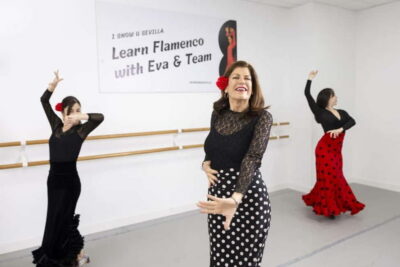
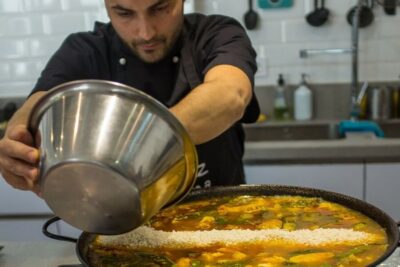
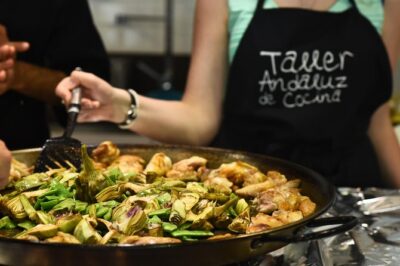
Spanish Cooking Class & Triana Market Tour in Sevilla
Read our review →
3.5-Hour Spanish Cooking Class & Triana Market Tour
Read our review →
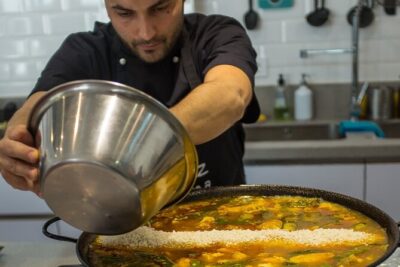
Rooftop Paella Cooking Class & 30-minute expert Q&A
Read our review →
Flamenco Dance Class in Seville with optional Flamenco Costume
Read our review →Browse the lists this tour appears in