
Reviewed · SEVILLE COOKING CLASSES
Spanish Cooking Class and Dinner in Seville
The best part of this Seville experience is that dinner begins with a trip through Spanish cooking basics, not with a plate already waiting for you. At Mercado de Triana, you learn how sofrito, fresh produce, timing, and patient cooking turn simple ingredients into a three-course meal. Paella is the star, but the cold soup and vegetable starter give the evening a fuller picture of everyday Spanish food.
I like two things right away: the recipes are practical enough to make at home, and the class includes homemade sangria plus two dinner drinks. Instructors such as Leo, Carlos, Lydia, David, Pedro, and Carlo have been praised for keeping the class friendly and making sure people of different cooking levels take part.
The main thing to know is that this is a chef-led class, not three hours of individual kitchen work. You will help with selected steps, while the chef demonstrates others for timing, technique, and safety. If you want a private workstation and constant knife work, this may feel too structured.
Key points to know before booking
- Paella Valenciana uses chicken and vegetables: This is the traditional version offered here, rather than a seafood-heavy paella.
- The class begins at 6 p.m. in Mercado de Triana: Plan to find Taller Andaluz de Cocina before the start time, since the market has several rows and entrances.
- The menu can change: Salmorejo may become gazpacho, and the second starter may be flamenco eggs, cod fritters, or garlic prawns.
- Homemade sangria is served during the class: Dinner includes up to two drinks, such as Spanish wine, local beer, or a soft drink.
- Dietary changes are possible with advance notice: Vegan, gluten-free, seafood-free, and pork-free meals can be arranged.
- The group can reach 16 people: That is small enough for group interaction, but it is not an intimate private lesson.
Cooking Spanish dinner inside Triana Market
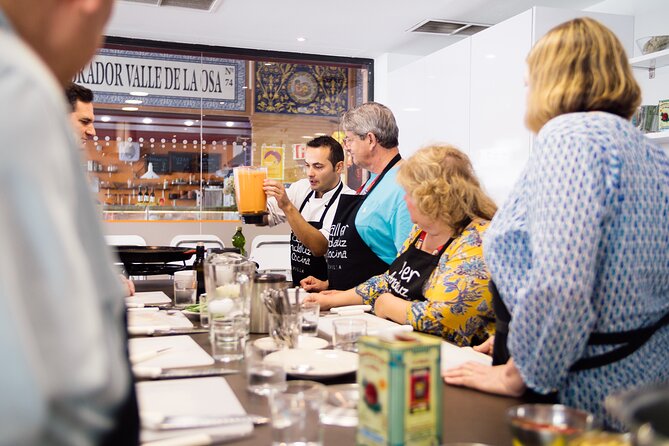
This class takes place at Taller Andaluz de Cocina in Mercado de Abastos de Triana, at Plaza del Altozano. The location matters. You are not cooking in a hotel conference room or a generic restaurant kitchen. You meet in a working market setting associated with one of Seville’s best-known neighborhoods.
Your meeting point is listed as local units 75 to 77, near the row closest to the main road. That detail is worth keeping in mind because finding the cooking school inside the market can take a few minutes. The class starts at 6 p.m., and the activity ends back at the same place, so you do not need to arrange a taxi or find a second location after dinner.
The class lasts about three hours. That gives the chef time to explain the dishes, let participants take part, serve the food in stages, and finish with dessert. I like this timing because you are not rushed through the meal, although it does make this an evening commitment rather than a quick pre-dinner activity.
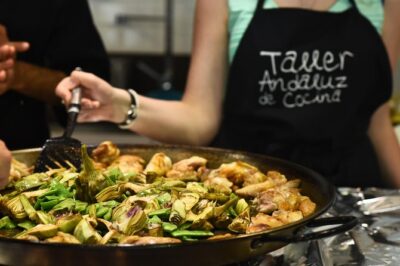
You receive an apron, cutting board, knives, and the other tools needed for the class. Ingredients are supplied, so you do not need to shop beforehand. The market setting adds local character, but the actual cooking takes place in the school’s organized kitchen area.
More Seville Cooking Classes:
- Seville: Spanish Cooking Class with Dinner
★ 4.9 · 900 reviews - Spanish Cooking Class & Triana Market Tour in Sevilla
★ 5.0 · 760 reviews - Seville: 3.5-Hour Spanish Cooking Class & Triana Market Tour
★ 4.9 · 751 reviews
Sofrito first, then the rest of the meal
The class begins with sofrito, the cooked mixture of ingredients that forms the base of many Spanish dishes. It is not a flashy step, but it teaches an important lesson: Spanish cooking often depends on careful preparation and good ingredients more than complicated equipment.
The chef explains how to combine fresh ingredients and build flavor gradually. This is useful if you want more than a recipe card. You learn why the order of ingredients matters and how a simple base can support soup, vegetables, or rice.
The teaching style can vary by instructor. Leo, Carlos, Lydia, David, Pedro, Carlo, Dom, Diana, and Sabrina are among the instructors and assistants associated with especially positive experiences. The exact chef working on your date may be different, but the class is offered in English and is designed for beginners as well as experienced home cooks.
You should expect a mixture of demonstration and participation. Some people may chop, stir, season, or help with other preparation steps. The chef handles parts where precise timing, hot pans, or food safety are more important. This arrangement keeps the meal on schedule, but it also means you will not personally prepare every component from start to finish.
Salmorejo or gazpacho for the first course
The first course is usually salmorejo cordobés, a thick cold soup made in the Andalusian tradition. It is a useful introduction to the region’s cooking because it depends on a short list of ingredients and careful balance rather than elaborate presentation.
On some dates, the class prepares gazpacho instead. Both dishes are cold tomato-based soups, but salmorejo is generally thicker and creamier, while gazpacho is lighter and more pourable. The change gives the kitchen some flexibility and means the exact menu is not guaranteed.
This part of the meal is also where you see the value of learning technique. The ingredients may look ordinary, but texture and seasoning make a major difference. If you want a recipe that is easy to repeat in a home kitchen, this is one of the most useful parts of the menu.
Spinach with chickpeas and possible starter changes
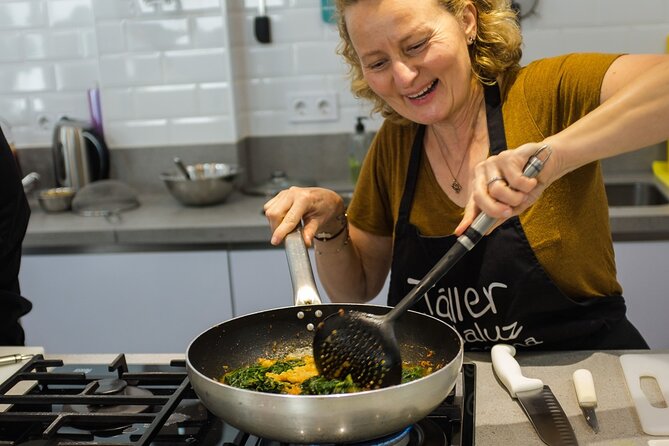
The second starter is usually spinach with chickpeas, a classic combination that shows the hearty side of Andalusian cooking. It is filling without being heavy, and it gives vegetarians something substantial before the rice course.
The alternate menu may include flamenco eggs, cod fritters, or garlic prawns. This is important for anyone with food restrictions. Do not assume that the alternative dishes will suit you. Tell the provider in advance if you need vegan, gluten-free, seafood-free, pork-free, or other changes.
The cooking school says it can accommodate dietary restrictions, including vegan and gluten-free diets. A vegetarian participant was accommodated even with little notice, but advance notice is still the sensible choice. It gives the kitchen time to adjust the full menu rather than simply remove one ingredient at the last moment.
As the food is prepared, the class usually eats the early courses while the paella continues cooking. That pacing makes the evening feel like dinner rather than a long wait beside a stove. You also receive homemade sangria during the class, which adds a social element without making the experience revolve entirely around drinking.
A different sort of afternoon in Seville:
- Seville: Royal Alcázar Entry Ticket
★ 4.6 · 28,378 reviews - Seville: Cathedral and La Giralda Entry Ticket
★ 4.5 · 24,592 reviews - Seville: Live Flamenco Dancing Show Ticket at the Theater
★ 4.7 · 16,396 reviews - Seville: 1-Hour Guadalquivir River Sightseeing Eco Cruise
★ 4.2 · 10,281 reviews
Learning chicken-and-vegetable paella
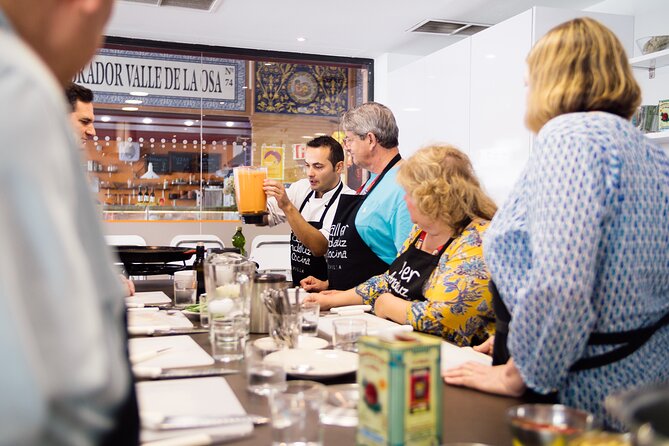
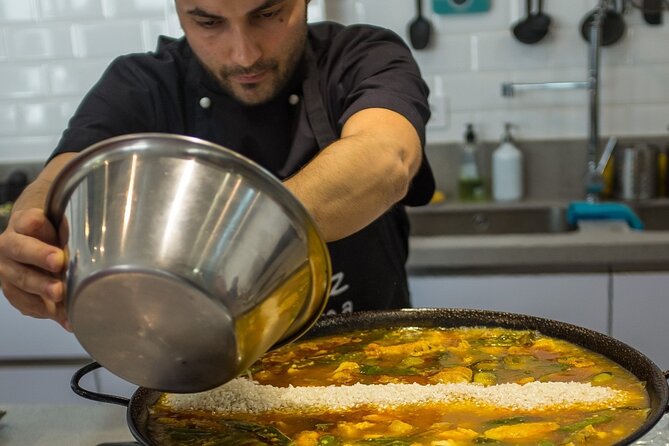
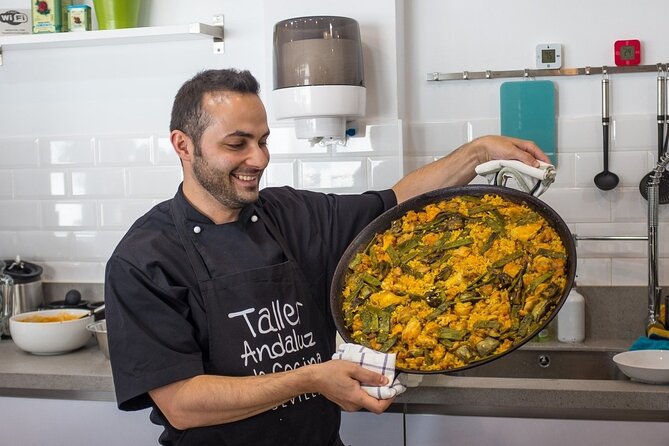
The main course is paella Valenciana with chicken and vegetables. This is not the seafood version many people picture when they hear paella. If you want shellfish, garlic prawns may appear as an alternate starter, but seafood is not the stated main course.
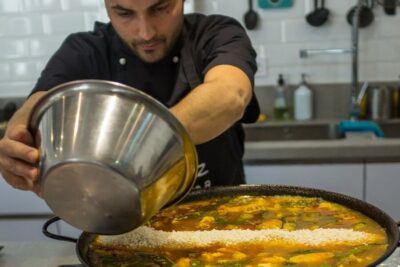
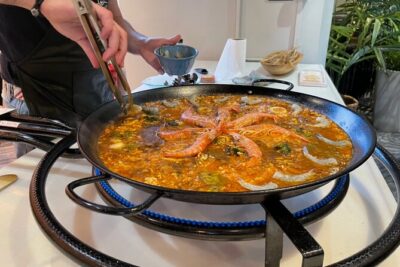
Paella is the most technique-focused part of the class. The chef explains how to build the base, add the rice, manage the liquid, and avoid disturbing the dish too much while it cooks. Timing is central, and this is where a chef-led format makes sense. A large pan shared by a group is not the place for 16 people to improvise at once.
The class is especially useful if you have tried making paella at home and ended up with uneven rice. You learn how the ingredients are added and how the rice should cook in the pan. The exact details may vary with the chef, but instructors such as Leo and Dom have been praised for explaining the correct method clearly and keeping the class involved.
The paella cooks while you eat the earlier dishes. When it is ready, it becomes the center of the dinner. You eat what the group has prepared, rather than receiving a separate restaurant meal. That is a small but meaningful distinction: your dinner is also the final test of the techniques covered during class.
Lemon sorbet, cava, and the dinner drinks
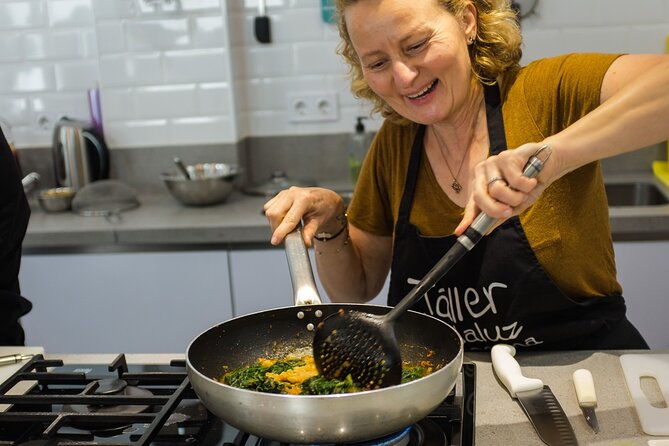
Dessert is lemon sorbet with cava, a light finish after the rice and starters. It keeps the meal from ending too heavily and gives the class a simple final course that requires little extra preparation.
Dinner includes two drinks per person. You can choose from a glass of Spanish wine, local beer, or a soft drink. Homemade sangria is also served during the class. The supplied information does not promise unlimited wine or beer, so think of the drinks as a pleasant part of the package rather than a tasting event.
The combination works well for a relaxed evening. You learn, eat, and talk with people from other places while the food moves from the kitchen to the table. Several instructors have been praised for encouraging conversation and making people feel comfortable, which matters when the class includes couples, families, solo participants, and mixed cooking abilities.
What the $84.69 price includes
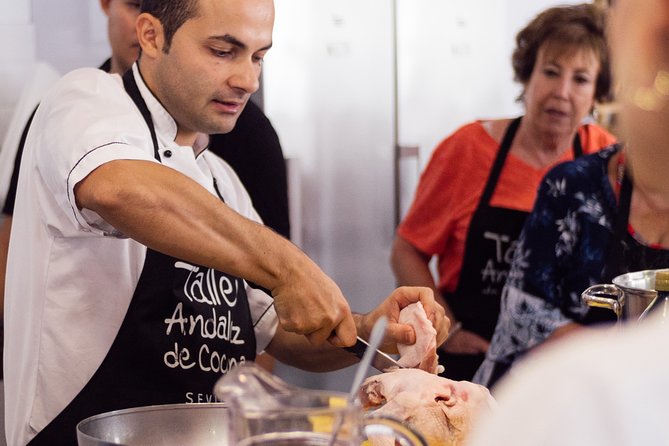
At $84.69 per person, the price is higher than simply ordering a paella dinner in Seville. You are paying for about three hours of instruction, ingredients, kitchen equipment, an apron, the meal, sangria, and two additional drinks.
I think the value depends on what you want from the evening. If your goal is only to eat paella, a restaurant will be cheaper and simpler. If you want a social activity, practical recipes, and an English-speaking chef who explains the process, the price is more reasonable.
The written recipes are an important part of the value. You receive them after the class, along with useful tips for making the dishes again at home. Several people have recreated the food after returning home, which suggests the menu is designed to be approachable rather than dependent on restaurant-only equipment.
The recipes also make this a better choice for a first cooking class than a highly technical workshop. The food is traditional and recognizable. You learn dishes that can fit into a home dinner, rather than techniques that require rare ingredients or specialized tools.
Who will enjoy this Seville cooking class
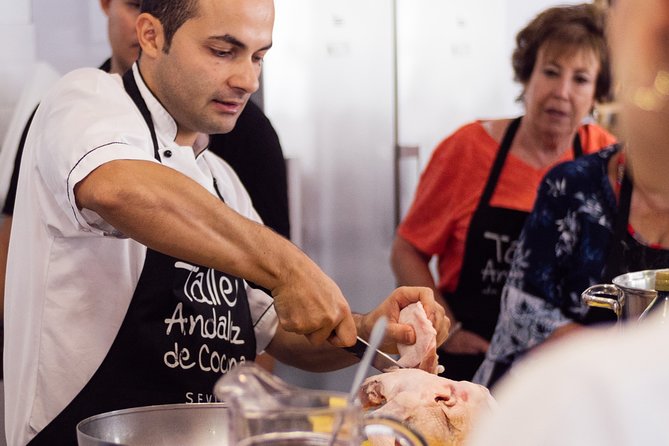
This class works well for couples, families, food-focused visitors, and anyone who wants a planned evening activity in Seville. Children can take part, though the group format means adults should decide how much kitchen work is suitable for them.
You do not need strong cooking skills. Beginners can follow the chef’s directions, and experienced cooks may still pick up useful ideas about paella, sofrito, seasoning, or Spanish pantry ingredients. The relaxed tone also helps if you are not comfortable cooking in front of other people.
It is a good choice for vegetarians and people with some dietary restrictions, provided you contact the provider ahead of time. It is less suitable for someone who wants complete control over every dish or a private lesson with a personal instructor.
Because the group may include up to 16 people, participation will not be identical for everyone. A good instructor can rotate tasks and keep the class moving, but some steps will always be demonstrations. That is the main tradeoff between this reasonably priced group class and a private cooking session.
Practical details for a smooth evening
You receive confirmation when booking, and the activity is available with a mobile ticket. The class is offered in English and begins at 6 p.m. Public transportation is nearby, but pickup and drop-off are not provided.
Give yourself time to locate the school inside Mercado de Triana. The row closest to the main road is a useful landmark, and the local numbers are 75 to 77. Arriving early is especially sensible if you have not visited the market before.
The experience requires a minimum number of participants. If the class is canceled because that number is not reached, you will be offered another date or experience, or receive a full refund. You can also cancel for a full refund up to 24 hours before the start time. Changes or cancellations inside that 24-hour window are not accepted.
The class is often booked well ahead, with an average booking lead time of about 39 days. That does not mean every date sells out, but it is a useful warning for a short Seville visit. If your schedule is fixed, booking early is wise.
Should you book it?
Book this class if you want to learn the foundations of Spanish cooking, meet other people over a shared meal, and take home recipes you can actually use. The Mercado de Triana setting, homemade sangria, approachable menu, and chance to prepare paella give the evening a clear sense of place.
Skip it if you want a quiet restaurant dinner, a private kitchen, or nonstop hands-on work. The class blends demonstration with participation, and the menu can change. For most visitors who see food as part of the trip rather than just fuel, $84.69 is a fair price for three hours of cooking, eating, and conversation in one of Seville’s traditional market areas.
FAQ
Where does the cooking class meet?
It meets at Taller Andaluz de Cocina in Mercado de Abastos de Triana, Plaza del Altozano, local units 75 to 77, 41010 Seville.
What time does the class start?
The class starts at 6 p.m.
How long does the experience last?
The cooking class and dinner last about three hours.
Is the class offered in English?
Yes. The experience is offered in English.
What dishes will I prepare?
The usual menu includes salmorejo cordobés, spinach with chickpeas, chicken-and-vegetable paella Valenciana, and lemon sorbet with cava. Salmorejo may be replaced by gazpacho, and the second starter may sometimes be flamenco eggs, cod fritters, or garlic prawns.
Are drinks included?
Yes. Homemade sangria is provided during the class, and dinner includes up to two drinks per person. Choices include Spanish wine, local beer, or a soft drink.
Can dietary restrictions be accommodated?
Yes. Vegan, gluten-free, seafood-free, pork-free, and other dietary requests can be accommodated. You should notify the provider in advance.
What happens if I need to cancel?
You can cancel at least 24 hours before the start time for a full refund. Cancellations or changes made less than 24 hours before the start time are not accepted.
More Dinner Experiences in Seville
- Seville: Flamenco Show & Roof Dinner with Cathedral Views
★ 4.7 · 203 reviews - Seville: Guadalquivir River Cruise with Lunch or Dinner
★ 4.5 · 170 reviews - Flamenco Show and Dinner in Seville
★ 4.5 · 113 reviews - Seville:Exclusive FlamencoShow with Drink, VIP, or Dinner Options
★ 4.0 · 111 reviews
More Dining Experiences in Seville
- Seville: Guadalquivir Boat Tour with Optional Lunch/Dinner
★ 4.4 · 2,193 reviews - Flamenco Show at Tablao El Arenal with Drink and Optional Dinner or Tapas
★ 4.5 · 1,415 reviews - Seville: Flamenco at El Palacio Andaluz with Optional Dinner
★ 4.5 · 1,119 reviews - Seville: Flamenco Show with Andalusian Dinner at La Cantaora
★ 4.4 · 954 reviews
Just added around Seville
- The Villages of Andalusia: Full-Day Trip from Seville★ 4.8 · 19 reviews
- From Seville: White Villages Tour★ 5.0 · 9 reviews
- White Villages & Ronda 2-Days Trip & Overnight Stay★ 4.6 · 5 reviews
- Your Photo Story in Seville★ 5.0 · 16 reviews
- Triana Market Tapas Tour★ 4.9 · 12 reviews
- Seville: Guided visit of the Casa de Pilatos with entrance tickets★ 4.3 · 18 reviews
- From Seville: Wine Tourism Half Day Tour★ 4.0 · 17 reviews
- Wine tourism, visit to a traditional winery and wine tasting★ 5.0 · 3 reviews
Seville Cooking Classes, compared.
Spanish Cooking Class & Triana Market Tour in Sevilla
Read our review →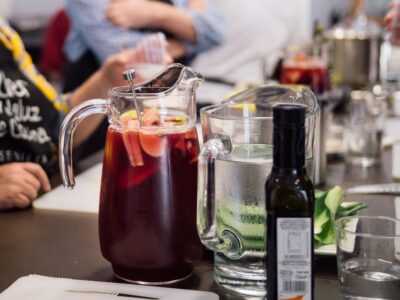
3.5-Hour Spanish Cooking Class & Triana Market Tour
Read our review →
Rooftop Paella Cooking Class & 30-minute expert Q&A
Read our review →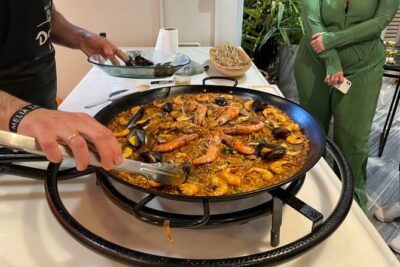
Sangria Tasting & Paella Showcooking Experience
Read our review →
Browse the lists this tour appears in